
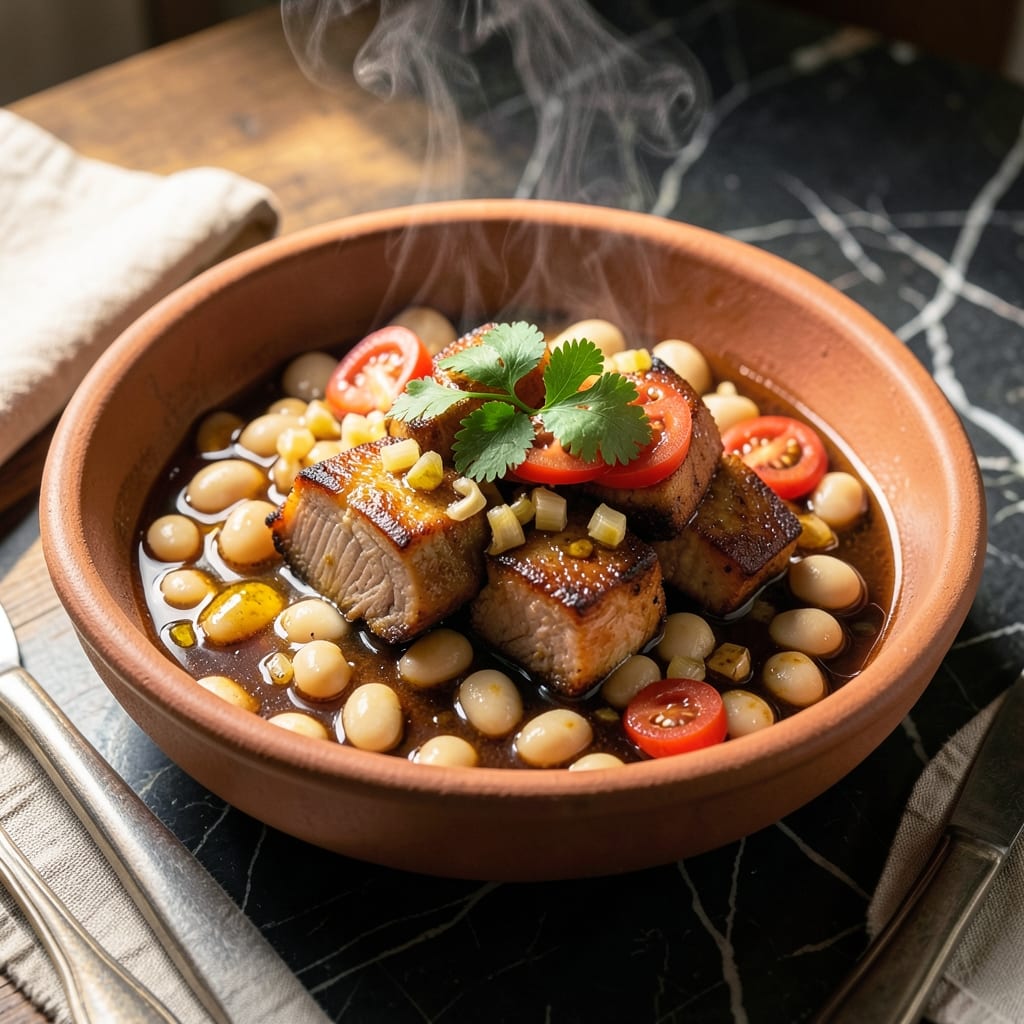
This Filipino pork and beans dish brings the classic adobo flavors to a hearty, comforting stew. The blend of sweet and savory creates a taste that’s both familiar and exciting.
I’ve refined this recipe to balance the tangy vinegar, rich soy sauce, and subtle sweetness perfectly. The pork becomes fork-tender, while the beans soak up every layer of flavor.
What makes this version stand out is its simplicity—no complicated steps, just straightforward cooking that lets the ingredients shine. It’s a dish that feels like home in every bite.
Serve it over steamed rice for a meal that’s satisfying and full of depth. Here’s how to make it right.
Ingredients for Pork and Beans Recipe Filipino
Hearty pork, tender beans, and bold adobo flavors make this stew unforgettable.
| Ingredient | Amount | Notes |
|---|---|---|
| Pork Shoulder 🥩 | 1 ½ lb | Cut into 1-inch cubes |
| Canned White Beans 🫘 | 2 cans | Drained and rinsed |
| Soy Sauce 🫒 | ½ cup | Low-sodium preferred |
| White Vinegar 🍶 | ¼ cup | Or apple cider vinegar |
| Brown Sugar 🍚 | 2 tbsp | Packed, for sweetness balance |
| Garlic Cloves 🧄 | 6 cloves | Minced for depth |
| Yellow Onion 🧅 | 1 whole | Diced, medium size |
| Bay Leaves 🍃 | 2 pieces | Dried, for aroma |
| Black Peppercorns 🌶️ | 1 tsp | Crushed, freshly ground |
| Olive Oil 🫒 | 2 tbsp | For sautéing onions and garlic |
| Tomato Paste 🍅 | 2 tbsp | For richness and color |
| Chicken Broth 🥣 | 1 cup | Low-sodium or homemade |
| Salt 🧂 | 1 tsp | Adjust to taste |
The pork shoulder is key here—look for well-marbled cuts at your butcher or Costco. The fat renders down, leaving the meat impossibly tender. For the beans, cannellini or great northern hold their shape best. Most grocery stores carry good options, but Trader Joe’s has a solid organic canned bean that works perfectly.
No pork shoulder? Pork belly or country-style ribs work too (adjust cooking time). Out of white vinegar? Apple cider vinegar at the same amount. Skip the tomato paste? The stew will be less rich but still tasty. For a deeper flavor, add a splash of fish sauce—it’s a traditional Filipino trick that won’t make it taste fishy.
This stew tastes even better the next day. Store in an airtight container in the fridge for up to 4 days or freeze for 3 months (the pork and beans freeze beautifully). Reheat gently to keep everything tender.
Why You’ll Love This Recipe
- One Pot Wonder: I just dump everything in a single pot—pork shoulder, canned beans, and the sauce—and let it simmer. No complicated steps, no fuss.
- Sweet-Savory Magic: That brown sugar caramelizes with the soy sauce and vinegar, giving the pork this ridiculously good sweet-tangy glaze.
- Feeds a Crowd: Honestly, I make a big batch and it stretches for days—great for parties or when the relatives drop by unannounced.
- Budget Stretch: Pork shoulder and canned beans are cheap, but this tastes like a restaurant dish. I’ll be real: it’s my go-to when I need to impress without overspending.
Step-by-Step Instructions for Pork and Beans Filipino
Here’s the method to create this adobo-style stew with perfect balance of sweet and savory flavors.
Step 1: Sear the Pork Shoulder
Heat the 2 tbsp olive oil in a large pot over medium-high heat. Add the 1.5 lb pork shoulder cubes and sear for 5-6 minutes until golden brown on all sides. This step builds the foundation of flavor for the dish.
Don’t overcrowd the pot—work in batches if necessary. You want a good sear, not steamed meat. The pork should release easily from the pot when it’s ready to flip. Remove the pork and set it aside temporarily.
Step 2: Sauté Aromatics and Build the Base
In the same pot, add the diced yellow onion and cook for 3-4 minutes until softened and translucent. Stir in the minced garlic cloves and cook for 30 seconds until fragrant.
Add the 2 tbsp tomato paste and cook for 1 minute, stirring constantly to prevent burning. This step deepens the color and richness of the stew. The mixture should turn a deeper red and smell intensely aromatic.
Return the pork to the pot along with any accumulated juices.
Step 3: Add Liquids and Seasonings
Pour in the 0.5 cup soy sauce, 0.25 cup white vinegar, 2 tbsp brown sugar, 1 tsp salt, 1 tsp black peppercorns, and 2 pieces bay leaves. Stir to combine all the ingredients thoroughly.
Add the 1 cup chicken broth and bring the mixture to a boil. The liquid should be a rich, deep brown color with a balanced aroma of sweet and salty notes. This is the heart of your adobo-style stew.
Step 4: Simmer and Add Beans
Reduce the heat to low, cover the pot, and let it simmer for 45-50 minutes until the pork is fork-tender. Check occasionally and stir to prevent sticking.
Add the 2 cans canned white beans (drained and rinsed) and stir gently to combine. Cook for an additional 10-15 minutes to allow the beans to absorb the flavors of the stew. The beans should be heated through and the sauce slightly thickened.
The stew is ready when the pork is easily pierced with a fork and the beans have plumped slightly from absorbing the liquid.
Pro Tips For Making Pork And Beans Recipe Filipino
- Sear the Pork First: After burning my first few batches, I figured out that browning the pork shoulder in a hot pan before simmering adds depth to the sauce—skip this and the flavor falls flat.
- Rinse the Beans: Drain and rinse the canned white beans to wash off that metallic taste, or your dish will have an odd aftertaste no matter how long it simmers.
- Balance the Vinegar: I learned this the hard way—add the white vinegar at the end, not the start, so it keeps its bright tang instead of mellowing into the sauce.
- Use Pork Fat: Sounds weird, but it works: leave a little fat on the pork shoulder for richer flavor, then skim excess later—your beans will thank you.
Storing and Reheating pork and beans recipe filipino
Refrigerator Storage
Let your stew cool to room temperature within 2 hours, then transfer to airtight containers. It keeps beautifully in the fridge at 40°F or below for up to 4 days. The flavors actually deepen overnight. ❄️
Freezing for Later
This stew freezes wonderfully for up to 3 months. Portion into quart-sized freezer bags, leaving 1 inch headspace for expansion. Squeeze out excess air before sealing to prevent freezer burn.
Stovetop Reheating
Transfer to a pot and add ¼ cup water or chicken broth to prevent sticking. Heat over medium-low heat for 10-15 minutes, stirring occasionally. Taste and adjust seasoning—you may need a pinch of salt. 🔥
Microwave Reheating
Place individual portions in a microwave-safe bowl, cover with a damp paper towel, and heat on 70% power for 2-3 minutes. Stir, then continue in 1-minute intervals until reaching 165°F.
Reviving Leftovers
If the stew thickens too much in storage, stir in a splash of water or broth while reheating. This brings back the perfect consistency. The pork and beans will still be tender and flavorful.
Nutrition Facts
Frequently Asked Questions
Can I use a different cut of pork?
Yes! Pork belly or country-style ribs work well. Adjust cooking time—belly may need 5-10 extra minutes to tenderize. Avoid lean cuts like tenderloin, as they dry out.
Why does the recipe call for both soy sauce and vinegar?
The soy sauce adds saltiness and umami, while the vinegar provides tang. Together they create the signature adobo balance—sweet, salty, and slightly sour.
Can I make this in a slow cooker?
After searing, transfer everything to a slow cooker and cook on low for 6-7 hours or high for 3-4 hours. Add beans in the last 30 minutes.
How do I fix stew that’s too salty?
Add a splash of water or broth and a diced potato. Simmer for 15 minutes, then remove the potato—it absorbs excess salt.

- Potato Candy Recipe 1933: Vintage Peanut Butter Roll Delight - October 30, 2026
- Potato Chip Cookie Recipe With Pecans: Buttery Crunch Meets Nutty Richness - October 30, 2026
- Potato Patty Recipe No Egg: Crispy Edges Without the Binder - October 30, 2026