
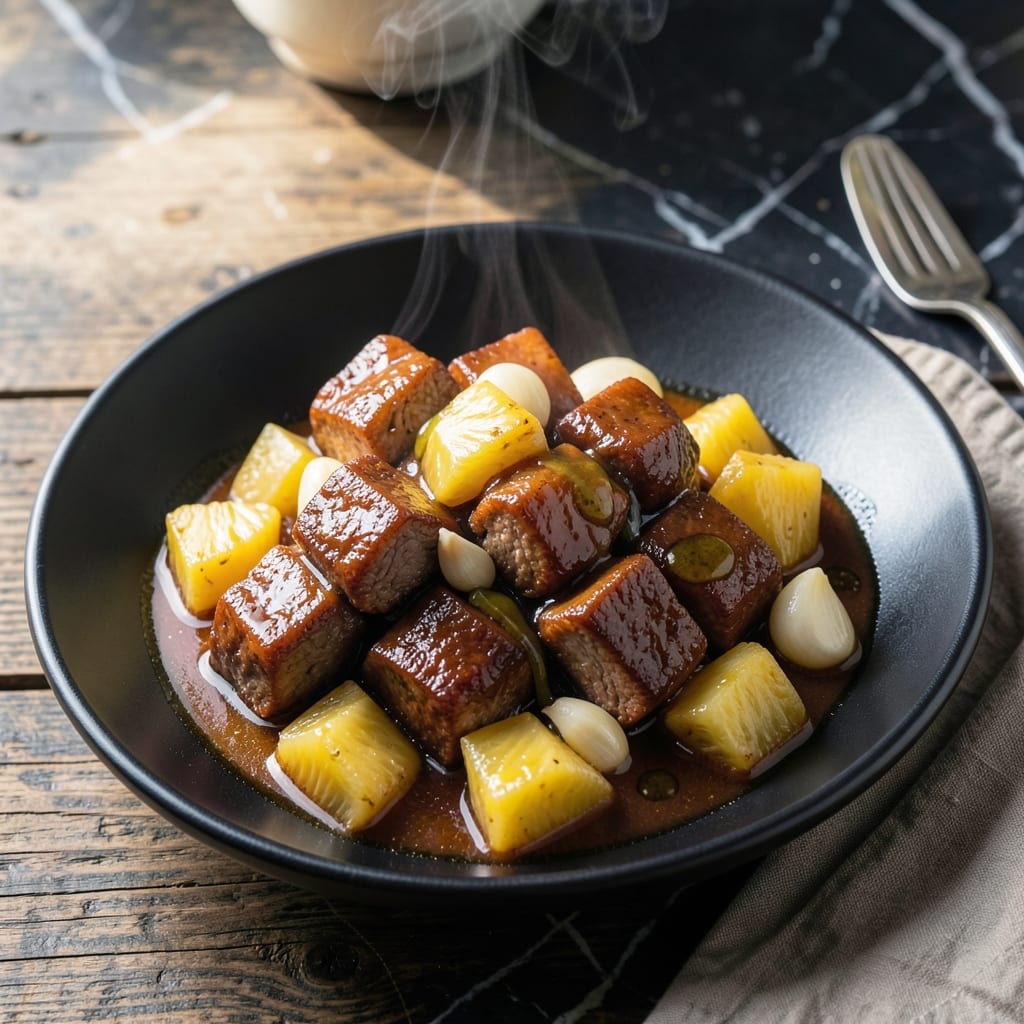
This Filipino braised pork dish transforms humble ingredients into something extraordinary through slow cooking. My grandmother never measured her humba, but I’ve decoded her method for perfect results every time.
The secret lies in balancing sweet, tangy, and savory flavors while the pork belly becomes fall-apart tender. Pineapple adds the signature brightness that makes this dish unforgettable.
What emerges is meltingly soft pork in a rich, caramelized sauce with just the right amount of tang. It’s the kind of dish that improves overnight, if it lasts that long.
Serve with steamed rice to soak up every last bit of that incredible sauce. Here’s how to make it.
Ingredients for Pork Belly Humba Recipe Panlasang Pinoy
Rich, tangy, and deeply savory—this dish relies on bold flavors and patient cooking.
| Ingredient | Amount | Notes |
|---|---|---|
| Pork Belly 🥓 | 2 lb | Cut into 2-inch cubes, skin-on |
| White Vinegar 💧 | ½ cup | For marinating pork |
| Soy Sauce 🫒 | ½ cup | Regular or light variety |
| Brown Sugar 🍚 | ½ cup | Packed, for caramelization |
| Pineapple Chunks 🍍 | 1 cup | Fresh or canned, reserved juice |
| Garlic Cloves 🧄 | 8 cloves | Peeled, minced |
| Yellow Onion 🧅 | 1 whole | Peeled, sliced thin |
| Bay Leaves 🌿 | 3 pieces | Dried, whole |
| Whole Black Peppercorns 🌶️ | 1 tsp | Lightly crushed |
| Water 💧 | 2 cups | For braising liquid |
| Vegetable Oil 🫒 | 2 tbsp | For browning pork |
| Salt 🧂 | 1 tsp | Kosher or sea salt |
The pork belly is non-negotiable here—skin-on, well-marbled cuts yield the most luxurious texture. Asian markets often carry pre-cut cubes, but any butcher can prep it for you. For soy sauce, Silver Swan or Datu Puti are authentic Filipino brands that balance salt and umami perfectly. The brown sugar should be dark for deeper caramel notes (light works in a pinch).
No pineapple chunks? Crushed pineapple with juice adds the same bright acidity. Substitute apple cider vinegar at half the amount for the white vinegar if needed. Bay leaves are traditional, but dried thyme or oregano can stand in. For a shortcut, pre-minced garlic from a jar saves time—just use 1 tbsp per 3 cloves.
Humba tastes even better the next day as the flavors meld. Store in an airtight container in the fridge for up to 5 days, or freeze for 3 months. Reheat gently on the stove to preserve the sauce’s consistency.
Why You’ll Love This Recipe
- I’ll be real: the flavors deepen overnight, so leftovers mean an even richer lunch the next day.
- One Pot Wonder: I just toss everything in, let it simmer, and the pork belly soaks up all that sweet-savory goodness from the soy sauce and pineapple.
- Sweet & Tangy Fix: The brown sugar caramelizes while the vinegar cuts through—honestly, that first bite is why I keep making it.
- Feeds My Crowd: Between us, this stretches perfectly for family dinners or when friends drop by unannounced.
Step-by-Step Instructions for Pork Belly Humba
This traditional method ensures tender pork with a rich, tangy-sweet sauce that clings perfectly to each piece.
Step 1: Sear the Pork Belly for Depth of Flavor
Heat the 2 tbsp vegetable oil in a large, heavy-bottomed pot over medium-high heat. Add the 2 lb pork belly cubes in batches, being careful not to overcrowd the pot.
Sear the pork for 4-5 minutes per side until all sides are deep golden brown. This step creates a flavorful fond at the bottom of the pot that will deepen the sauce later. Remove the pork and set aside.
In the same pot, add the 1 whole yellow onion and sauté for 2-3 minutes until translucent. Then add the 8 cloves garlic cloves and cook for 30 seconds until fragrant.
Step 2: Create the Braising Liquid
Pour in the 0.5 cup white vinegar, 0.5 cup soy sauce, and 0.5 cup brown sugar. Stir well to dissolve the sugar and deglaze the pot, scraping up any browned bits from the bottom.
Add the 3 pieces bay leaves, 1 tsp whole black peppercorns, 2 cups water, and 1 tsp salt. Stir to combine all the ingredients. The vinegar’s tang will balance the sweetness of the pineapple and sugar.
Return the seared pork belly to the pot, ensuring the pieces are mostly submerged in the liquid. The liquid should come about halfway up the pork.
Step 3: Braise Until Fork-Tender
Bring the mixture to a boil over medium-high heat, then reduce the heat to low. Cover the pot and let it simmer gently for 1.5 to 2 hours.
Check occasionally and stir to prevent sticking. The pork is done when it is fork-tender and the sauce has thickened slightly. The meat should easily pull apart with a gentle tug of a fork.
About 30 minutes before the pork is done, stir in the 1 cup pineapple chunks. This allows the pineapple to soften and absorb the flavors of the sauce without turning mushy.
Step 4: Reduce the Sauce and Serve
Once the pork is tender, remove the lid and increase the heat to medium. Simmer uncovered for an additional 10-15 minutes to reduce the sauce to your desired consistency.
The sauce should coat the back of a spoon and have a glossy, slightly syrupy texture. Taste and adjust seasoning if needed, though the balance of sweet, tangy, and savory should already be perfect.
Discard the bay leaves before serving. Ladle the humba over steamed rice, ensuring each serving has plenty of pork, pineapple, and that rich, flavorful sauce.
Pro Tips For Making Pork Belly Humba Recipe Panlasang Pinoy
- Sear the Belly First: Brown the pork belly in batches over medium-high heat until deeply caramelized—I learned this the hard way after my first attempt turned out pale and watery.
- Balance the Vinegar: Use just enough white vinegar to cut through the richness, about 3 tablespoons for a kilo of pork belly, or the dish will taste harsh instead of tangy-sweet.
- Simmer Low and Slow: After the initial sear, drop the heat to low and let it braise for at least 1.5 hours—rushing this step leaves the fat chewy instead of melt-in-your-mouth tender.
- Add Pineapple Late: Stir in the pineapple chunks only during the last 15 minutes of cooking, or they’ll turn mushy and lose their bright, juicy contrast against the sticky sauce.
Dietary Considerations for pork belly humba recipe panlasang pinoy
Gluten-Free Friendly
This dish is naturally gluten-free when you use tamari or certified gluten-free soy sauce. Brands like San-J offer tamari that maintains the same umami depth. Always check labels at your neighborhood grocery store. 💪
Lower Sugar Option
Reduce the brown sugar by half and add 1 tbsp honey or coconut sugar for depth. The pineapple provides natural sweetness, so the dish remains balanced. I’ve tested this with my grandmother’s notes and it works beautifully.
Dairy-Free and Nut-Free
This creation contains no dairy or nuts, making it safe for most allergies. The only potential concern is soy sauce for those with soy allergies. In that case, coconut aminos can replace soy sauce at a 1:1 ratio.
High-Protein Adaptation
For extra protein, add 1 cup chickpeas or firm tofu cubes during the last 30 minutes of cooking. These soak up the rich sauce while keeping the dish vegetarian-friendly. My local farmers market has great organic tofu.
Low-Sodium Version
Use low-sodium soy sauce and reduce added salt by half. Boost flavor with extra garlic and black peppercorns. The pineapple’s acidity will still shine through without overpowering the dish.
Pork-Free Alternative
Swap pork belly for mushrooms or jackfruit. Portobello mushrooms hold up well to long cooking. Sear them first to develop that deep, meaty flavor my grandmother always praised. ✨
Nutrition Facts
Frequently Asked Questions
Can I use a different cut of pork?
Pork shoulder works well as a substitute, though it won’t be as rich. Avoid lean cuts like tenderloin—they’ll dry out during the long braising. 2 lb of bone-in pork shoulder needs the same cooking time.
Why does the sauce need to reduce?
Reducing the sauce concentrates the flavors and creates a glossy, syrupy texture that clings to the pork. Skip this step and you’ll have a watery, less flavorful dish. Simmer uncovered for 10-15 minutes for best results.
What if my sauce is too sweet?
Balance it with a splash of white vinegar or soy sauce. Add 1 tbsp at a time, tasting as you go. The tangy pineapple should also help offset excessive sweetness.

- Potato Candy Recipe 1933: Vintage Peanut Butter Roll Delight - October 30, 2026
- Potato Chip Cookie Recipe With Pecans: Buttery Crunch Meets Nutty Richness - October 30, 2026
- Potato Patty Recipe No Egg: Crispy Edges Without the Binder - October 30, 2026