
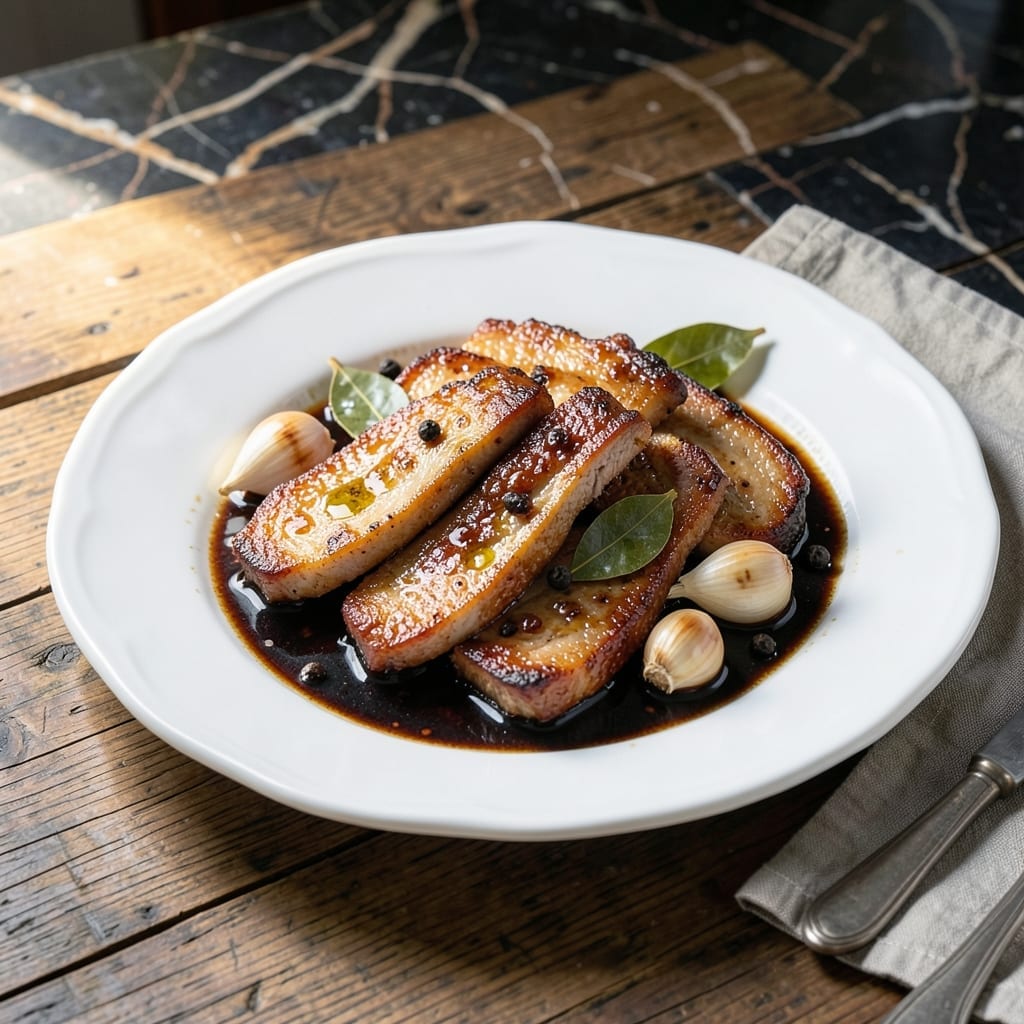
This Filipino-inspired pork belly brings bold adobo flavors to your table with a perfect balance of crisp and tender textures. The secret lies in the marinating and slow-roasting process that transforms the meat into something extraordinary.
I developed this method after studying my grandmother’s handwritten notes, adapting her intuitive techniques into precise steps anyone can follow. The adobo glaze, rich with soy sauce, vinegar, and garlic, creates a sticky, savory coating that caramelizes beautifully.
The result is pork belly with a crispy exterior giving way to succulent meat inside, each bite packed with the tangy, umami depth of traditional Filipino adobo. The aroma alone will draw everyone to the kitchen.
Serve with steamed rice to soak up every last bit of that incredible glaze. Here’s how to make it.
Ingredients for Pork Belly Recipe Pinoy Style
Pantry staples meet pork belly for that iconic crispy-tender adobo magic everyone craves.
| Ingredient | Amount | Notes |
|---|---|---|
| Pork Belly 🥩 | 2 lb | Skin-on, cut into strips |
| Soy Sauce 🫒 | ¾ cup | Regular or light variety |
| White Vinegar 🧂 | ½ cup | Cane or apple cider works |
| Garlic Cloves 🧄 | 12 cloves | Minced for marinade |
| Bay Leaves 🌿 | 4 whole | Dried or fresh |
| Black Peppercorns 🌶️ | 1 tbsp | Lightly crushed |
| Brown Sugar 🧈 | ¼ cup | For caramelization |
| Water 💧 | 1 cup | For braising liquid |
| Cooking Oil 🫒 | 2 tbsp | Neutral flavor like vegetable |
| Salt 🧂 | 1 tsp | Adjust to taste |
| Onion 🧅 | 1 whole | Sliced for braising |
| Green Onions 🌱 | 4 pieces | Chopped for garnish |
The pork belly is everything here. Look for skin-on cuts at Asian markets or butcher shops—it crisps up perfectly. I get mine from H Mart or the local Filipino grocery (they know what you need). The soy sauce should be Filipino brands like Silver Swan or Datu Puti if you can find them. They’re less salty and more balanced for adobo. Skip the low-sodium stuff; we’re going for bold flavor.
No white vinegar? Apple cider or cane vinegar both work great. Fresh garlic is non-negotiable though—never use powder here. For the bay leaves, Turkish or California are fine. If you’re missing black peppercorns, freshly ground black pepper at half the amount works. And for that sticky glaze, brown sugar is ideal, but coconut sugar (at the same ratio) adds a deeper caramel note.
Pork belly keeps in the fridge for 3-4 days after cooking. The adobo sauce actually gets better overnight—reheat gently to keep the skin crispy. Freezes beautifully for up to 3 months if you won’t eat it all at once.
Why You’ll Love This Recipe
- One Pan Wonder: I just toss pork belly with soy sauce, vinegar, garlic, and bay leaves then let it simmer—no fancy techniques needed.
- That Sauce Though: The soy-vinegar-garlic combo creates this tangy, savory glaze that clings to every bite of tender pork belly.
- Feeds a Crowd: Honestly, it’s my go-to for family gatherings since it stretches easily and everyone always asks for seconds.
- Budget-friendly Comfort: Pork belly is affordable here, and leftovers taste even better the next day over rice.
Step-by-Step Instructions for Pork Belly Pinoy Style
Here’s the foolproof method I use to get that perfect balance of crispy skin and tender meat.
Step 1: Sear the Pork Belly for Crispy Skin
Heat the 2 tbsp cooking oil in a deep pan over medium-high heat. Pat the 2 lb pork belly strips dry with paper towels—this is crucial for crispiness. Sear the pork belly in batches, skin-side down first, for 5-7 minutes until the skin turns deep golden brown.
Flip the strips and sear the other side for 3-4 minutes until evenly browned. Remove the pork belly and set aside. This step locks in the juices while creating a crispy exterior that defines this dish.
Step 2: Build the Adobo Marinade Base
In the same pan, lower the heat to medium. Add the sliced 1 whole onion and sauté for 2-3 minutes until translucent. Stir in the 12 cloves garlic cloves and cook for 30 seconds until fragrant—don’t let the garlic burn.
Pour in the 0.75 cup soy sauce, 0.5 cup white vinegar, 1 cup water, 0.25 cup brown sugar, 4 whole bay leaves, and 1 tbsp black peppercorns. Stir until the sugar dissolves, then bring the mixture to a gentle simmer.
Step 3: Braise the Pork Belly to Tenderness
Return the seared pork belly to the pan, ensuring the strips are mostly submerged in the marinade. Cover with a lid and simmer on low heat for 45-50 minutes. Turn the pork belly halfway through to ensure even cooking.
The pork is done when a fork slides in easily and the meat pulls apart with minimal resistance. The marinade should reduce slightly, creating a glossy, flavorful sauce that coats each strip beautifully.
Step 4: Reduce the Sauce and Glaze
Remove the lid and increase the heat to medium. Simmer uncovered for 10-12 minutes until the sauce thickens into a rich, syrupy glaze. Turn the pork belly occasionally to coat it evenly with the reduced sauce.
This step intensifies the flavors and ensures every bite is packed with that signature adobo tang. Keep an eye on it to prevent burning—the sugar in the marinade can caramelize quickly.
Step 5: Garnish and Serve
Transfer the pork belly to a serving dish and spoon the thickened sauce over the top. Sprinkle with the chopped 4 pieces green onions for a fresh finish. Let it rest for 5 minutes before serving to allow the juices to settle.
Serve this with steamed rice to soak up the delicious sauce. The combination of crispy, caramelized skin and melt-in-your-mouth meat is what makes this dish unforgettable.
Pro Tips For Making Pork Belly Recipe Pinoy Style
- Boil Then Braise: I learned this the hard way—parboil the pork belly for 5-10 minutes first to remove impurities, then braise it slowly in soy sauce, vinegar, and aromatics for that tender, flavorful result.
- Score the Skin: Use a sharp knife to make shallow cuts on the pork belly skin before cooking. Sounds weird, but it works: this helps the sauce penetrate deeper and gives you crispier edges when you finish it under the broiler.
- Skip the Overcrowding: Resist the urge to cram all the pork belly pieces into the pot at once. Give them space so the sauce reduces properly and each piece gets evenly coated and caramelized.
- Rest Before Slicing: After cooking, let the pork belly rest for at least 10 minutes before slicing. My grandmother swore by this, and she was right: it keeps all the juices locked in instead of spilling out on the cutting board.
Essential Equipment for This Recipe
Deep Heavy Pot
A 5-6 quart Dutch oven or heavy-bottomed pot is essential for even heat distribution. I use my Le Creuset—it’s perfect for searing the pork belly and then braising it in the adobo marinade. A deep pan prevents splattering when the sauce reduces.
Wooden Spoon
Wooden utensils won’t scratch your pot or react with the acidic vinegar in the marinade. I keep a 12-inch wooden spoon dedicated for braising—it’s sturdy enough to turn the pork belly without breaking the meat.
Tongs
For flipping the pork belly during searing, locking tongs give you precision and control. I prefer OXO Good Grips—they’re comfortable and won’t slip. Avoid forks, which can pierce the meat and release precious juices.
Paper Towels
Pat the pork belly thoroughly dry before searing to ensure maximum crispiness. I use Bounty for its absorbency. Drying the skin is non-negotiable—it’s the difference between chewy and crackling. 💪
Sharp Chef’s Knife
A 8-inch chef’s knife makes quick work of slicing the onion and garlic. I sharp mine with a Wusthof honing steel before each use. A dull knife crushes garlic instead of slicing it cleanly, which can make the marinade bitter.
Instant-Read Thermometer
For perfect doneness, I check the internal temperature reaches 195°F during braising. My ThermoPro gives fast, accurate readings. This ensures the pork belly is tender without overcooking into dryness. 🌡️
Nutrition Facts
Frequently Asked Questions
Can I use pork shoulder instead?
Pork shoulder works but won’t give the same texture. Shoulder has less fat, so the meat will be leaner and less rich than pork belly’s crispy, succulent layers. Stick with skin-on pork belly for the authentic experience.
How do I get extra crispy skin?
Pat the skin completely dry before searing. After braising, finish under a broiler for 3-4 minutes or air-fry at 400°F for 5 minutes for maximum crunch. Watch closely to avoid burning.
Can I make this ahead of time?
Yes! The flavors deepen overnight. Cook and refrigerate in the sauce for up to 3 days. Reheat in a pan with a splash of water to restore the glaze’s shine.
What if my sauce is too salty?
Balance it by adding 1-2 tbsp brown sugar or a splash of vinegar. Simmer for 2-3 minutes to blend flavors. Taste and adjust gradually—Filipino adobo should be tangy, not harsh.

- Potato Chip Cookie Recipe With Pecans: Buttery Crunch Meets Nutty Richness - October 30, 2026
- Potato Patty Recipe No Egg: Crispy Edges Without the Binder - October 30, 2026
- Paula Deen’s Potato Chip Cookies Recipe: Salty-Sweet Crunch in Every Bite - October 30, 2026