
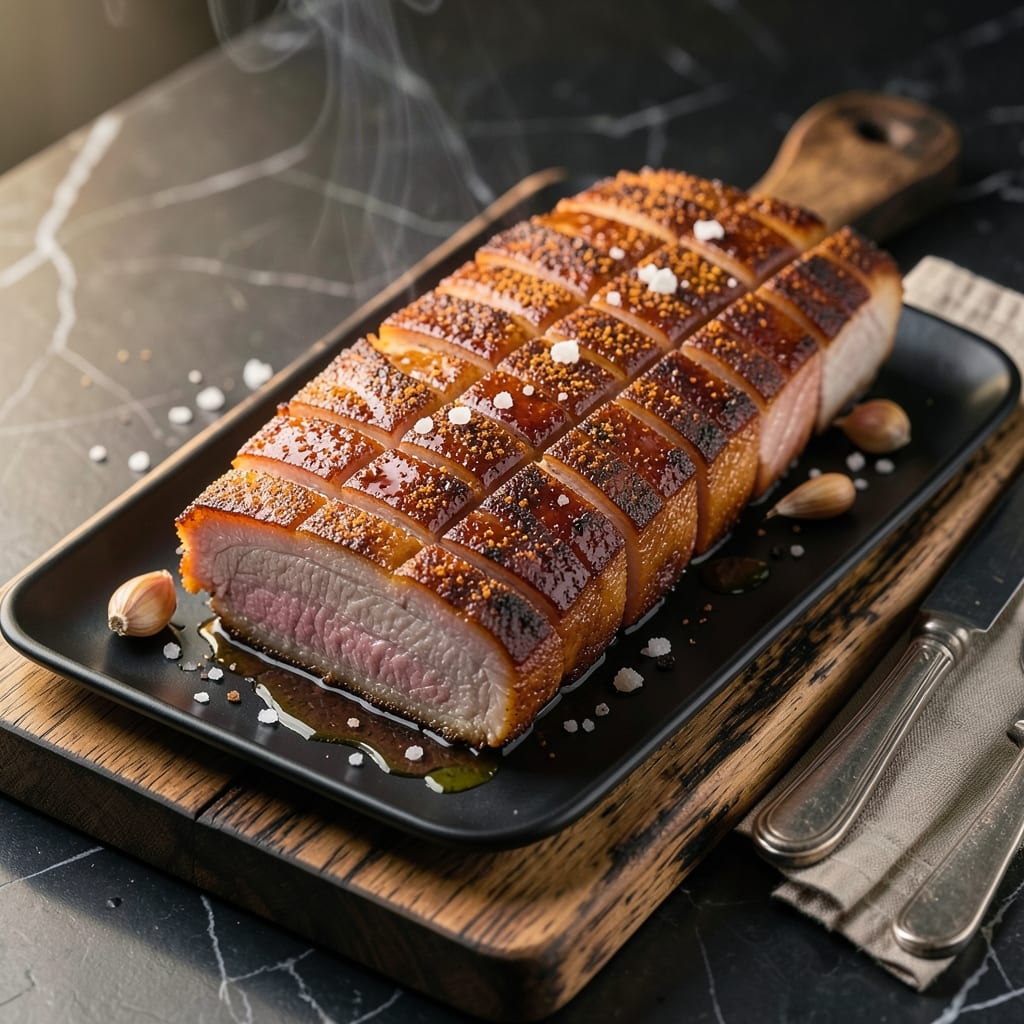
Achieving perfectly smoked pork belly on a Weber grill requires precision, not luck. This method delivers tender, smoky results every time with a simple dry rub and controlled heat.
I developed this approach after years of trial and error, learning that low and slow is the only way to transform tough pork belly into melt-in-your-mouth perfection. The Weber’s consistent heat distribution makes it ideal for this process.
The secret lies in maintaining 225°F and using fruit wood for subtle sweetness. A final sear creates that coveted crispy exterior while keeping the inside impossibly juicy.
This isn’t just cooking—it’s crafting a dish that will impress even the most discerning barbecue enthusiasts.
Ingredients for Pork Belly Recipe Weber
Simple dry rub, quality pork, and fruit wood—this is grill mastery in ingredient form.
| Ingredient | Amount | Notes |
|---|---|---|
| Pork Belly 🥓 | 2 lb | Skin-on, uniform thickness |
| Kosher Salt 🧂 | ¼ cup | Diamond Crystal preferred |
| Black Pepper 🌶️ | 2 tbsp | Freshly ground coarse |
| Brown Sugar 🍚 | ¼ cup | Light or dark variety |
| Paprika 🌶️ | 1 tbsp | Smoked or sweet variety |
| Garlic Powder 🧄 | 1 tbsp | Not garlic salt |
| Onion Powder 🧅 | 1 tbsp | Freshly ground if possible |
| Liquid Smoke 💨 | 1 tsp | Optional for extra depth |
| Apple Cider Vinegar 🍏 | ¼ cup | For spritzing during smoke |
| Fruit Wood Chunks 🪵 | 4 pieces | Apple or cherry wood |
| Yellow Mustard 🟡 | ¼ cup | For binder, optional |
| Butter 🧈 | 4 tbsp | Unsalted, for finishing |
The pork belly needs high quality—look for skin-on with even fat marbling. Most butchers or Costco carry it fresh, but frozen works if thawed properly. 2 lb slabs are ideal for the Weber, giving you enough surface area for that perfect bark. Don’t skip the uniform thickness—trim if needed so it cooks evenly. The fat cap should be at least half the total thickness for best results.
No brown sugar? Raw turbinado sugar adds a nice crunch. Out of paprika? Ancho chile powder brings smokiness. The apple cider vinegar spritz keeps the surface moist—white vinegar works too (just less flavor). For wood, hickory or pecan can sub for fruit wood, but they’re stronger—use sparingly. The mustard binder is optional but helps the rub stick better.
Store uncooked pork belly in the fridge for up to 5 days or freeze for 6 months. Once smoked, it keeps 4-5 days refrigerated. The dry rub can be mixed ahead and stored in an airtight container for 3 months—just shake before using.
Why You’ll Love This Recipe
- Set and Forget: I just rub the pork belly with salt, pepper, brown sugar, and paprika, then let the Weber do its magic—no babysitting required.
- Crispy Sweet Heat: That combo of brown sugar and paprika gives it a caramelized crust with just the right kick.
- Crowd Pleaser: Honestly, it’s the only dish I make that disappears at potlucks before the main course even hits the table.
- Leftovers? Nope: Between us, the only leftovers are the scraps I hide for my lunch the next day—if my family doesn’t find them first.
Step-by-Step Instructions for Pork Belly on a Weber Grill
Here’s my tested method for achieving competition-level bark and tender meat on your Weber.
Step 1: Score and Season the Pork Belly
Pat the 2 lb Pork Belly completely dry with paper towels. Using a sharp knife, score the skin in a crosshatch pattern, cutting about ⅛-inch deep without piercing through to the meat. This helps the fat render and allows the rub to penetrate deeply.
In a bowl, combine the 0.25 cup Kosher Salt, 2 tbsp Black Pepper, 0.25 cup Brown Sugar, 1 tbsp Paprika, 1 tbsp Garlic Powder, and 1 tbsp Onion Powder. Rub this mixture all over the pork belly, pressing it into the scored skin and meat. For extra adhesion, I first coat the meat with 0.25 cup Yellow Mustard as a binder.
Step 2: Set Up Your Weber for Indirect Smoking
Arrange your charcoal in a two-zone fire on one side of the Weber, leaving the other side empty for indirect heat. Add the 4 pieces Fruit Wood Chunks directly onto the hot coals once they’re covered with white ash. Aim for a consistent temperature of 225-250°F on the indirect side where the pork belly will cook.
Place a disposable aluminum pan filled with water on the indirect heat side to help maintain moisture. This is crucial for preventing the pork belly from drying out during the long cook. Close the lid and adjust the vents to stabilize your temperature before adding the meat.
Step 3: Smoke Until Probe-Tender
Place the pork belly skin-side up on the indirect heat side of the grill. Insert a meat probe into the thickest part of the pork belly, avoiding the fat cap. Smoke undisturbed for 4-5 hours, spritzing occasionally with the 0.25 cup Apple Cider Vinegar to keep the surface moist and build up the bark.
You’ll know it’s ready when the internal temperature reaches 195-203°F and a probe slides in with minimal resistance, like butter. If you didn’t use the 1 tsp Liquid Smoke in your rub, add a few drops to the vinegar spritz for extra smokiness. The skin should be dark mahogany and slightly crispy at this stage.
Step 4: Rest and Finish with Butter
Remove the pork belly from the grill and wrap it tightly in butcher paper or foil. Let it rest for 1 hour in a warm cooler or oven set to 170°F. This resting period allows the juices to redistribute and the collagen to fully break down, resulting in tender, sliceable meat.
Just before serving, unwrap the pork belly and brush the skin with melted 4 tbsp Butter. This adds a glossy finish and extra richness. Slice against the grain into ½-inch thick pieces for serving, ensuring each portion includes some of the crispy skin and tender meat.
Pro Tips For Making Pork Belly Recipe Weber
- Score the Skin: Use a sharp knife to cut 1/4-inch deep slits in the pork belly skin before seasoning—this lets the fat render out and the rub penetrate deeper. I learned this the hard way after my first few batches came out chewy instead of crispy.
- Dry It Overnight: After seasoning with kosher salt, black pepper, brown sugar, and paprika, leave the pork belly uncovered in the fridge for 12-24 hours. This dries the surface for maximum crust formation.
- Low and Slow First: Start at 225°F for 3-4 hours until the meat is tender, then finish at 400°F for 20-30 minutes to crisp the skin. Resist the urge to rush the low-temp phase—it’s what makes the texture melt-in-your-mouth.
- Skip the Sauce: The brown sugar and paprika rub caramelizes beautifully on its own, so don’t drown it in sauce. Sounds weird, but it works: the pork belly doesn’t need extra moisture.
Common Mistakes When Making This Dish
Skipping the Score
Cutting that crosshatch pattern into the skin isn’t just for looks—it helps fat render and lets the rub penetrate. I learned this the hard way when my first attempt came out with rubbery skin. Use a sharp knife and go ⅛-inch deep max. 💡
Temperature Swings
Weber grills hold heat well, but don’t peek every 10 minutes—you’ll lose 50°F each time. I use a dual-probe thermometer to monitor grill and meat temps without opening the lid. Stable 225°F is your target.
Rushing the Rest
That 1-hour rest isn’t optional. Slicing too soon sends all those beautiful juices onto your cutting board. I wrap mine in towels inside a cooler—grandmother’s trick that still works perfectly.
Over-Smoking
More wood chunks don’t mean better flavor. With pork belly’s high fat content, 4 apple wood chunks are plenty. Too much smoke creates a bitter taste. I learned this after ruining a batch with 8 chunks.
Skipping the Spritz
That apple cider vinegar spritz every 45-60 minutes keeps the surface moist and builds bark. Skip it, and you’ll end up with dry, tough skin. I use a simple spray bottle from the dollar store.
Wrong Wood Choice
Stick to fruit woods like apple or cherry. Hickory or mesquite can overpower pork belly’s delicate flavor. I made this mistake once—never again. The subtle sweetness of fruit wood complements perfectly. 🌡️
Nutrition Facts
Frequently Asked Questions
What’s the ideal temperature for smoking?
Maintain a steady 225-250°F on the indirect side of your Weber. Use the vents to control heat, and avoid opening the lid too often to prevent temperature drops.
How long does it take to smoke?
Plan for 4-5 hours of smoking time. The pork belly is done when it reaches 195-203°F internally and a probe slides in like butter.
Can I use a gas Weber grill?
Yes, but you’ll need to add wood chunks in a smoker box or foil packet for that essential smoky flavor. Set one burner to medium-low and place the pork on the unlit side.
What if my pork belly has uneven thickness?
Trim the thicker parts to create uniform thickness. This ensures even cooking. Aim for a slab that’s about 1-1.5 inches thick throughout.

- Potato Chip Cookie Recipe With Pecans: Buttery Crunch Meets Nutty Richness - October 30, 2026
- Potato Patty Recipe No Egg: Crispy Edges Without the Binder - October 30, 2026
- Paula Deen’s Potato Chip Cookies Recipe: Salty-Sweet Crunch in Every Bite - October 30, 2026