
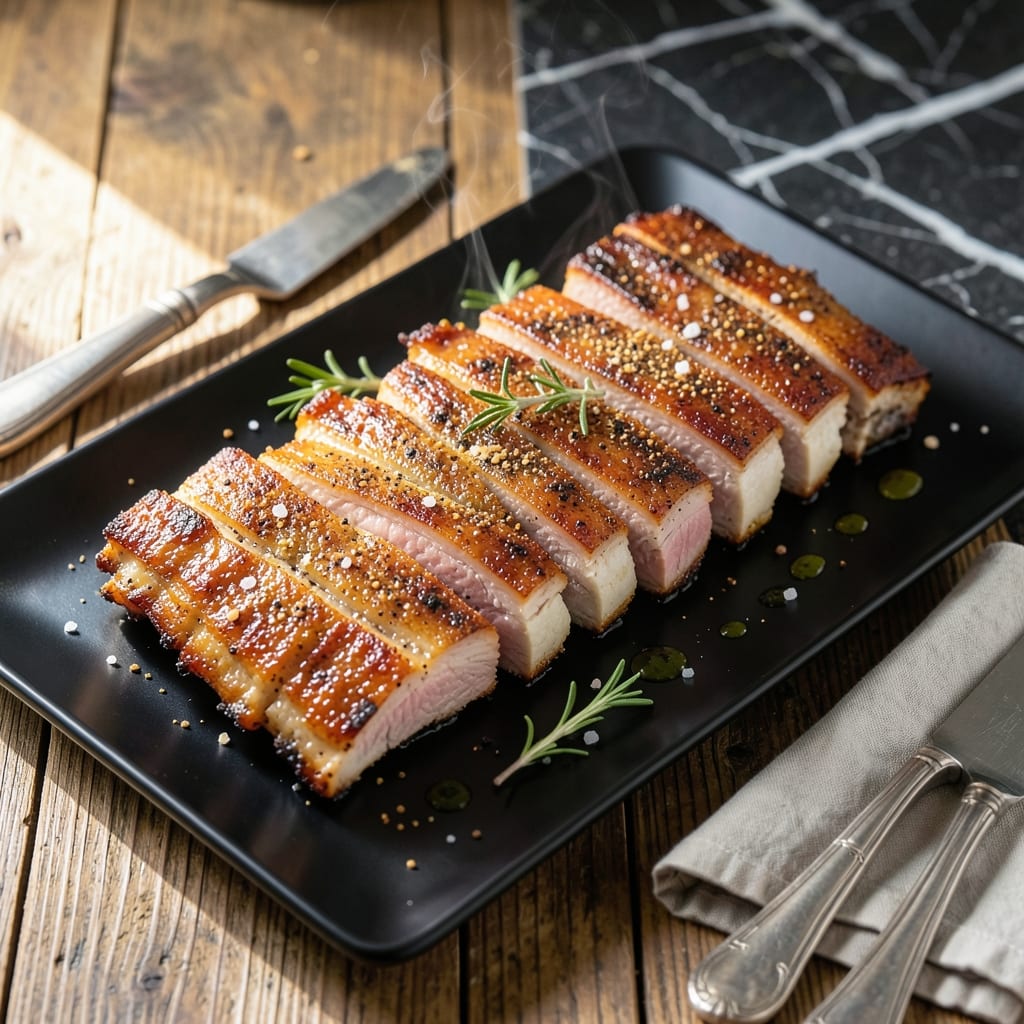
Achieving perfect pork belly ribs at home is easier than you might think. The oven does most of the work, transforming tough cuts into tender, fall-off-the-bone deliciousness with minimal effort on your part.
This method relies on low and slow cooking to break down the fat and connective tissue, resulting in meat that’s rich, juicy, and incredibly flavorful. A simple dry rub and a sticky-sweet glaze elevate the ribs to restaurant-quality.
The final step under the broiler caramelizes the glaze, creating a glossy, finger-licking finish. Each bite delivers a balance of smoky, sweet, and savory notes that’s hard to resist.
Serve with your favorite sides for a meal that feels special but comes together with ease.
Ingredients for Pork Belly Ribs Recipe Oven
Nothing exotic here—just bold flavors and a slow roast to perfection.
| Ingredient | Amount | Notes |
|---|---|---|
| Pork Belly Ribs 🥩 | 2 ½ lb | Bone-in, skin-on preferred |
| Brown Sugar 🧂 | ½ cup | Packed, light or dark |
| Kosher Salt 🧂 | 2 tbsp | Diamond Crystal preferred |
| Black Pepper 🌶️ | 2 tsp | Freshly ground for best flavor |
| Smoked Paprika 🌶️ | 2 tsp | Adds depth and smokiness |
| Garlic Powder 🧄 | 1 tbsp | Not garlic salt |
| Onion Powder 🧅 | 1 tbsp | Balances sweet and savory |
| Chili Powder 🌶️ | 1 tsp | Mild or hot variety |
| Honey 🍯 | ½ cup | For sticky-sweet glaze |
| Apple Cider Vinegar 🍏 | ¼ cup | Balances sweetness with acidity |
| Soy Sauce 🥢 | ¼ cup | Low-sodium for control |
| Olive Oil 🫒 | 2 tbsp | For brushing and moisture |
| Yellow Mustard 🟡 | 2 tbsp | Helps rub adhere to ribs |
The pork belly ribs are the star, so go for good quality. Costco often has them pre-cut, or ask your butcher to trim the skin evenly (this keeps the seasoning from sliding off). Look for pieces that are about 1.5 inches thick—thinner ones dry out, thicker take forever. The dry rub ingredients are all pantry staples, but check your spice dates—old paprika loses its punch fast.
No honey? Maple syrup or agave work just as well in the glaze. Swap apple cider vinegar for rice vinegar or lemon juice if that’s what you’ve got. Want more heat? Add a pinch of cayenne to the rub. The soy sauce can be coconut aminos for gluten-free, but regular soy is fine. If you’re out of mustard, a little Dijon mixed with water does the trick.
Ribs taste even better the next day—reheat gently in the oven with a splash of water. The dry rub keeps in an airtight container for 6 months, and the glaze can be made ahead and stored in the fridge for 1 week. Leftovers? They’ll be gone before you need to worry.
Why You’ll Love This Recipe
- Hands-Off Cooking: I just season, pop them in the oven, and let the heat work its magic—no babysitting required.
- Sweet & Smoky: That brown sugar caramelizes with the smoked paprika for a sticky, finger-licking glaze.
- Crowd Pleaser: I’ve served these at summer BBQs and lazy Sundays—always disappear first.
- Budget Stretch: Pork belly ribs are cheaper than you’d think, and they feed a hungry table with leftovers for sandwiches.
Step-by-Step Instructions for Pork Belly Ribs Oven
Here’s my foolproof method for fall-off-the-bone ribs with a sticky-sweet glaze every time.
Step 1: Prepare and Season the Ribs
Pat the 2.5 lb pork belly ribs completely dry with paper towels. This removes excess moisture so the rub adheres better. I like to trim any loose flaps of meat or fat, but leave most of the fat cap intact for flavor and moisture.
In a bowl, mix 0.5 cup brown sugar, 2 tbsp kosher salt, 2 tsp black pepper, 2 tsp smoked paprika, 1 tbsp garlic powder, 1 tbsp onion powder, and 1 tsp chili powder. Brush the ribs lightly with 2 tbsp yellow mustard—this helps the rub stick. Then rub the spice mixture all over the ribs, pressing firmly so it creates a crust.
Let the seasoned ribs sit at room temperature for 30 minutes while your oven preheats. This allows the salt to begin penetrating the meat.
Step 2: Slow-Roast Until Tender
Preheat your oven to 275°F. Place the ribs on a wire rack set over a baking sheet, meat-side up. The rack allows air to circulate underneath, ensuring even cooking. Drizzle 2 tbsp olive oil over the ribs to help them brown and prevent drying.
Cover the baking sheet tightly with aluminum foil, creating a seal to trap steam. This step is key for tender meat. Roast for 2.5 hours—you’ll know they’re ready when the meat begins to pull away from the bones slightly and a fork slides in with minimal resistance.
Step 3: Glaze and Finish Under the Broiler
In a saucepan, combine 0.5 cup honey, 0.25 cup apple cider vinegar, and 0.25 cup soy sauce. Simmer over medium heat for 5-7 minutes until reduced by about one-third and slightly thickened. This creates a glossy, sticky glaze.
Remove the ribs from the oven and carefully brush them generously with the glaze, coating all sides. Return them to the oven, uncovered, and increase the temperature to 400°F. Roast for another 15-20 minutes, basting with more glaze halfway through, until the ribs are caramelized and glossy.
Step 4: Broil for Final Crisp
For the final touch, switch the oven to broil on high. Place the ribs under the broiler for 2-3 minutes, watching closely to prevent burning. You want the surface to bubble and caramelize further, creating a crisp, sticky exterior.
Remove the ribs when they’re deeply browned and the glaze has thickened into a lacquer-like finish. Let them rest for 10 minutes before slicing—this allows the juices to redistribute, making every bite tender and flavorful.
Pro Tips For Making Pork Belly Ribs Recipe Oven
- Low and Slow First: Start at 275°F for 2 hours to render the fat without drying out the meat—I learned this the hard way after my first batch came out tough as boots.
- Score the Skin: Use a sharp knife to cut 1/4-inch slits in the skin before seasoning. Sounds weird, but it works: the rub penetrates deeper and the fat renders evenly.
- Pat It Dry: Blot the ribs with paper towels before seasoning—my grandmother swore by this, and she was right: the sugar sticks better and the crust forms faster.
- Rest Before Serving: Let the ribs rest 10 minutes under foil after baking—yes, even if you’re impatient like me. It keeps the juices from running all over the plate.
Common Mistakes When Making This Recipe
Skipping the Rest
I’ve seen too many people skip the resting period after cooking. Letting your ribs rest for 10 minutes is crucial for the juices to redistribute. Cutting too soon means all those flavorful juices end up on your cutting board instead of in your meat.
Overcrowding the Pan
Give your ribs space on the baking sheet. Crowding them steams the meat instead of roasting it, which prevents that beautiful caramelization. Use a wire rack to ensure air circulates underneath. This simple step makes a world of difference. 🔥
Rushing the Process
Low and slow is the key to tender pork belly ribs. Don’t be tempted to crank up the heat to 350°F or higher to speed things up. The 275°F slow roast breaks down the fat and connective tissue properly.
Skimping on the Glaze
Be generous with your glaze. A light brushing won’t give you that sticky-sweet finish everyone loves. I apply at least 3 coats during the final roasting stage, letting each layer set before adding the next.
Neglecting the Foil
That foil cover during the slow roast isn’t optional. It traps steam, which is essential for breaking down the tough fibers in pork belly. Without it, you risk dry, chewy ribs instead of fall-off-the-bone tenderness.
Ignoring the Broiler
The final broil step is what transforms good ribs into great ones. Those 2-3 minutes under the broiler create the glossy, caramelized crust that makes this dish special. Just don’t walk away—it can go from perfect to burnt quickly.
Nutrition Facts
Frequently Asked Questions
What temperature should I use for oven cooking?
Start with 275°F for slow-roasting until tender. Then finish at 400°F with the glaze before a final 2-3 minutes under the broiler for that perfect crisp.
Can I use a different type of vinegar?
Yes! Rice vinegar or lemon juice work well in place of apple cider vinegar. The acidity balances the sweetness just as effectively.
How do I know when they’re done?
The meat should pull away from the bones slightly and a fork should slide in with minimal resistance after about 2.5 hours of slow cooking.
Can I make these ahead of time?
Cook and glaze the ribs, then refrigerate. Reheat gently in the oven with a splash of water before serving.

- Potato Chip Cookie Recipe With Pecans: Buttery Crunch Meets Nutty Richness - October 30, 2026
- Potato Patty Recipe No Egg: Crispy Edges Without the Binder - October 30, 2026
- Paula Deen’s Potato Chip Cookies Recipe: Salty-Sweet Crunch in Every Bite - October 30, 2026