
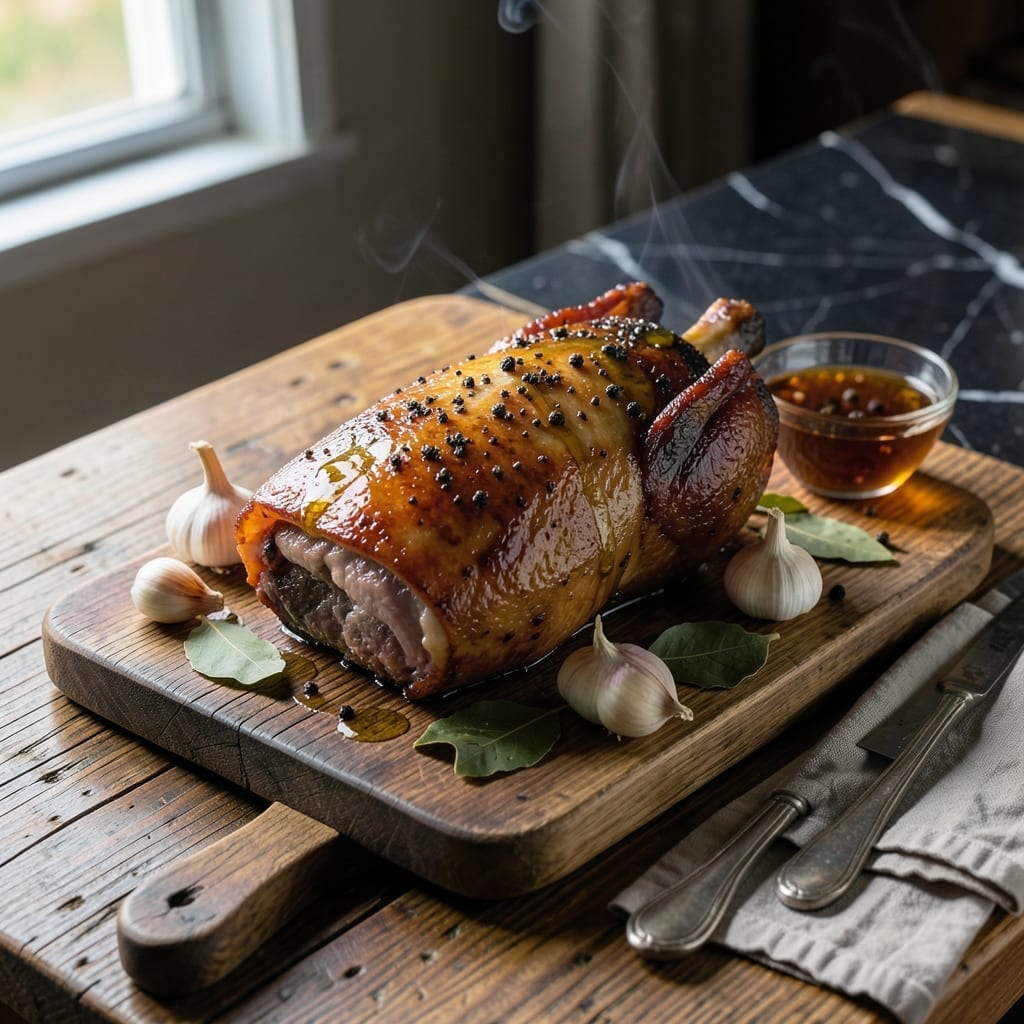
This simple brine transforms ordinary pork into juicy, flavorful cuts ready for the smoker. I developed it after years of trial and error, perfecting the balance between salt and sugar.
The foundation is straightforward: water, salt, and sugar create the perfect environment to retain moisture. A touch of brown sugar adds depth, while optional aromatics like bay leaves or garlic enhance the flavor profile.
What you get is pork that stays remarkably juicy throughout the smoking process, with every bite infused with subtle, balanced seasoning. The brine penetrates the meat, ensuring consistent results from edge to center.
Use this for any pork cut before smoking. The process takes minutes to prepare but makes all the difference in your final dish.
Ingredients for Pork Brine Recipe for Smoking
Nine simple ingredients create a brine that guarantees juicy, flavor-packed pork every time.
| Ingredient | Amount | Notes |
|---|---|---|
| Water 💧 | 4 cups | Cold, for brine base |
| Kosher Salt 🧂 | ½ cup | Diamond Crystal preferred |
| Granulated Sugar 🍚 | ½ cup | Balances salt in brine |
| Light Brown Sugar 🟤 | ¼ cup | Adds depth and caramelization |
| Bay Leaves 🍃 | 4 whole | Dried, for aromatic depth |
| Garlic Cloves 🧄 | 6 cloves | Smashed, peeled for infusion |
| Black Peppercorns 🌶️ | 1 tbsp | Whole, lightly crushed |
| Juniper Berries 🫒 | 1 tbsp | Optional, for piney note |
| Red Pepper Flakes 🔥 | ½ tsp | Optional, for heat |
The salt is non-negotiable—Diamond Crystal kosher salt dissolves cleanly and won’t overpower. I grab mine in bulk at Costco for big batches. Water should be cold to prevent the pork from cooking during brining. The brown sugar adds caramel notes that shine after smoking. For aromatics, fresh bay leaves (if you can find them) outperform dried, but either works fine.
No brown sugar? Maple syrup at half the volume works in a pinch. Skipping the juniper berries? No problem—a splash of apple cider vinegar adds a similar bright contrast. Garlic can be pre-minced from a jar (I won’t tell), but fresh cloves smashed under your knife release more flavor. For heat, cayenne pepper can replace red pepper flakes at a 1:1 ratio.
Brine keeps 1 week refrigerated, but I mix it fresh each time—takes 5 minutes. Discard after use (don’t reuse). Brined pork stays juicy in the fridge for 2-3 days before smoking, or freeze for 2 months (thaw in fridge before cooking).
Why You’ll Love This Recipe
- 5-Minute Mix: I just stir water, salts, sugars, and bay leaves in a pot—no fancy steps, no fuss.
- Juicy Every Time: The brown sugar and kosher salt pull moisture in, so the pork stays tender even after hours in the smoker.
- Smokehouse Staple: I use this brine for ribs, shoulders, or tenderloin—works for weekend BBQs or random Tuesday dinners.
- Pantry Friendly: All the ingredients are already in my kitchen, and a big batch costs pennies compared to store-bought brines.
Step-by-Step Instructions for Pork Brine for Smoking
Here’s the method I’ve perfected for pork that stays juicy through hours of smoking.
Step 1: Bloom the Aromatics in Cold Water
In a large pot, combine the 4 cups Water with the 4 whole Bay Leaves, 1 tbsp Black Peppercorns, and 1 tbsp Juniper Berries. I lightly crush the peppercorns and juniper berries with the flat side of my knife to release their essential oils—this makes a noticeable difference in flavor infusion.
Add the 6 cloves Garlic Cloves (already smashed and peeled) and the 0.5 tsp Red Pepper Flakes. Bring this mixture to a gentle simmer over medium heat for 5 minutes. You’ll see tiny bubbles and smell the aromatics waking up—that’s your cue to move to the next step.
Step 2: Dissolve the Salts and Sugars Completely
Remove the pot from heat and stir in the 0.5 cup Kosher Salt, 0.5 cup Granulated Sugar, and 0.25 cup Light Brown Sugar. I use a whisk here to ensure everything dissolves evenly without any grains left behind. The brown sugar adds a subtle molasses note that complements smoked pork beautifully.
Continue stirring until the mixture is completely clear with no visible sugar or salt crystals at the bottom of the pot. The liquid should look slightly syrupy but still pourable. This usually takes 2-3 minutes of steady stirring.
Step 3: Cool the Brine to Room Temperature
Let the brine cool completely at room temperature. I like to transfer it to a large bowl to speed up the process, stirring occasionally. You can also add a few ice cubes to hurry it along, but don’t use hot pork in warm brine—this would cook the meat unevenly and create a safety hazard.
Test the temperature with your finger—it should feel cool to the touch, about 70°F or below. This step is crucial because adding meat to hot brine can start the cooking process and lead to dry pork. The entire cooling process typically takes 30-45 minutes.
Step 4: Submerge and Brine the Pork
Place your pork in a food-safe container or resealable bag and pour the cooled brine over it, ensuring the meat is fully submerged. I use a plate or a smaller bag filled with water to weigh down the pork if needed. Any exposed areas won’t benefit from the brine’s moisture-retaining properties.
Refrigerate and brine for 12-24 hours—this is the sweet spot for flavor penetration without making the meat too salty. You’ll notice the pork plumps up slightly as it absorbs the liquid, a sign the brine is working its magic. The longer time frame works best for larger cuts like pork shoulder or ribs.
Pro Tips For Making Pork Brine Recipe For Smoking
- Dissolve Sugars First: Heat the water just enough to fully dissolve both granulated and light brown sugar—this prevents undissolved grains from settling on the meat and creating uneven sweetness.
- Chill the Brine: Always cool the brine completely before adding pork, otherwise it’ll start cooking the meat and give you a dry, overdone exterior.
- Use Kosher Salt: Stick with kosher salt for consistent results—table salt can make the brine too harsh, and I learned this the hard way after ruining a pork shoulder.
- Brine Overnight: Give it a full 12-24 hours in the fridge—any less and the flavor won’t penetrate, and I was skeptical until I tried it.
Essential Equipment for Perfect Results
Large Stock Pot
A 5-8 quart stock pot is essential for making enough brine to fully submerge pork cuts. I use my Cuisinart Multi-Clad Pro pot—its even heat distribution prevents hot spots that could scorch aromatics. Look for heavy-bottomed stainless steel for durability and easy cleaning. 🔥
Whisk and Tongs
Dissolving salt and sugar completely requires a good stainless steel whisk. I keep a 12-inch whisk from OXO in my kitchen for this exact purpose. A pair of locking tongs helps handle pork safely when transferring to and from the brine.
Food-Safe Container
For brining, use a non-reactive container large enough to hold both pork and liquid. I prefer glass or food-grade plastic containers with lids. A 2-gallon zip-top bag works well for smaller cuts—just ensure it’s freezer-safe and leak-proof.
Kitchen Scale
Precise measurements matter for consistent results. My OXO Good Grips 11lb scale ensures accurate salt and sugar ratios. Weighing ingredients is more reliable than volume measurements, especially for kosher salt which varies by brand.
Cooling Rack
Speed up the brine cooling process by pouring it into a shallow container and placing it on a wire rack in the fridge. I use a stainless steel cooling rack to create airflow underneath. This reduces cooling time by nearly half compared to leaving it in the pot.
Instant-Read Thermometer
An instant-read thermometer is your best friend for brine safety. I check the temperature with my ThermoWorks Thermapen before adding pork—brine must be below 40°F when you submerge the meat. This simple tool prevents foodborne illness and ensures perfect results.
Nutrition Facts
Frequently Asked Questions
How long should I brine pork before smoking?
Brine pork for 12-24 hours in the fridge. This timeframe ensures deep flavor penetration without making the meat too salty. Larger cuts like pork shoulder benefit from the full 24 hours.
Can I reuse the brine?
Never reuse brine. It absorbs raw meat juices and bacteria, making it unsafe. Always discard after use and make a fresh batch for each brining session. Safety comes first!
What if I don’t have kosher salt?
Use 1/2 the volume of table salt as a substitute, since it’s denser. For 1/2 cup kosher salt, use 1/4 cup table salt. Measure carefully to avoid over-salting.
Do I need to rinse the pork after brining?
Rinsing isn’t necessary and can wash away flavor. Simply pat the pork dry with paper towels before smoking. This helps the smoke adhere better to the meat’s surface.

- Potato Chip Cookie Recipe With Pecans: Buttery Crunch Meets Nutty Richness - October 30, 2026
- Potato Patty Recipe No Egg: Crispy Edges Without the Binder - October 30, 2026
- Paula Deen’s Potato Chip Cookies Recipe: Salty-Sweet Crunch in Every Bite - October 30, 2026