
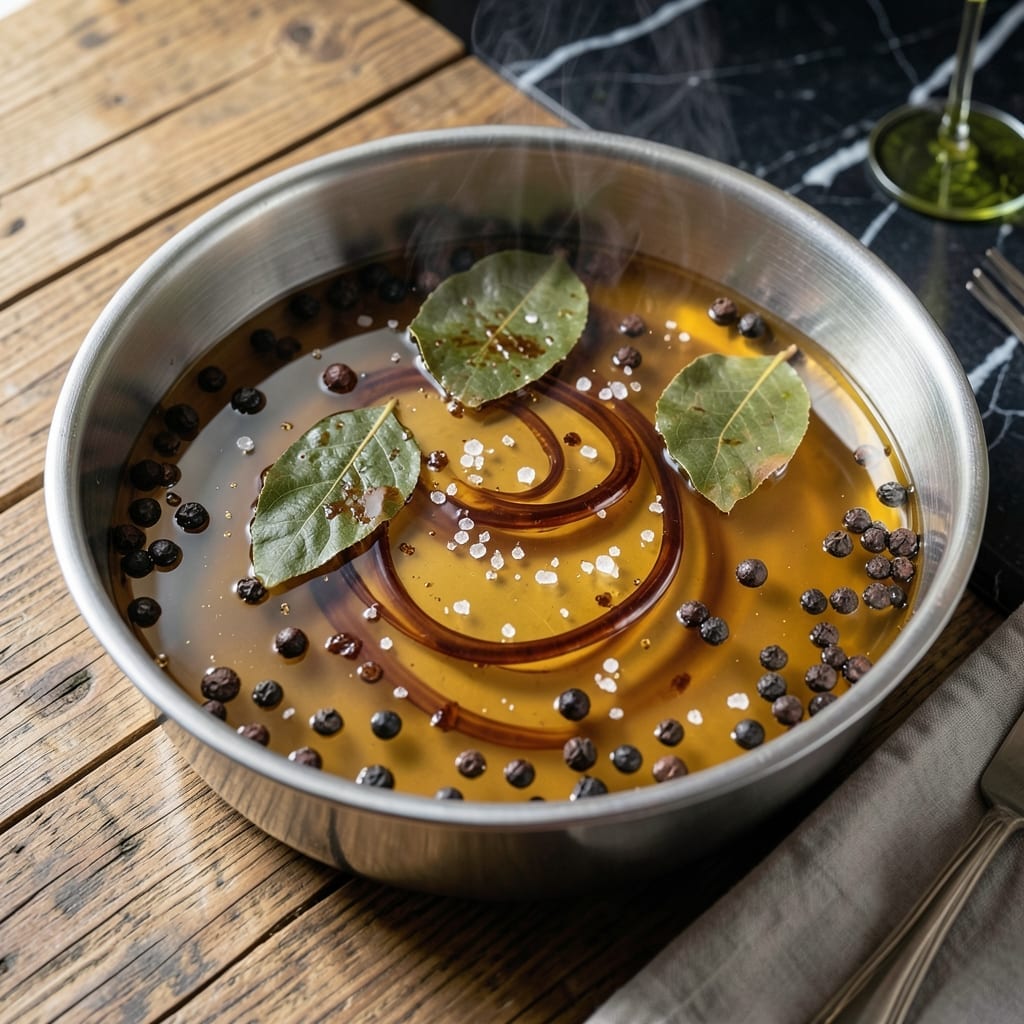
This brine transforms pork from merely good to perfectly tender and flavorful every time. Growing up in Georgia, I learned early that proper brining separates decent pork from exceptional. The science of salt and sugar working together ensures juiciness and depth.
With precise measurements and balanced aromatics, this method guarantees consistent results whether you’re cooking for Sunday supper or competition pit. The 12-hour soak allows the flavors to penetrate deeply without overpowering the natural taste of quality pork.
What emerges is meat with enhanced moisture retention and subtle seasoning throughout. The difference between brined and unbrined pork becomes immediately apparent with the first bite, making this an essential technique for any serious cook.
Use this for chops, loin, or whole hog to achieve restaurant-quality results at home. The process is simple but the impact is profound.
Ingredients for Pork Brine Recipe Thomas Keller
Nine ingredients create a brine that elevates pork to restaurant-quality perfection every time.
| Ingredient | Amount | Notes |
|---|---|---|
| Water 💧 | 1 cup | Cold, filtered for best results |
| Kosher Salt 🧂 | ½ cup | Diamond Crystal preferred for consistency |
| Granulated Sugar 🍚 | ¼ cup | Balances salt for optimal brining |
| Brown Sugar 🟤 | ¼ cup | Light or dark for depth |
| Bay Leaves 🌿 | 4 whole | Dried, whole for infusion |
| Black Peppercorns 🌶️ | 1 tbsp | Whole, lightly crushed |
| Garlic Cloves 🧄 | 6 cloves | Smashed to release aroma |
| Fresh Thyme Sprigs 🌿 | 4 whole | Stems intact for easy removal |
| Juniper Berries 🫒 | 1 tsp | Lightly crushed for flavor |
The salt is non-negotiable—Diamond Crystal kosher salt is the professional standard for precision. Sugar balance is key; the combination of granulated and brown sugar creates depth. Whole spices like bay leaves and peppercorns should be fresh (check the expiration date). Most specialty grocery stores like Whole Foods carry these in bulk, ensuring optimal potency for the 12-hour soak.
No juniper berries? Allspice berries at equal quantity offer a similar piney note. Short on thyme? Rosemary sprigs at half the amount work well. Brown sugar can be swapped for maple syrup (use one-third less), but avoid honey to maintain the clean profile. For a quicker brine, reduce water by half and use ice to chill rapidly—just don’t skip the full soak for competition-style results.
Brine keeps in the fridge for 1 week in a sealed container, but it’s best used fresh. Discard after 24 hours to prevent bacterial growth. The pork itself can be brined up to 48 hours ahead, though 12 is ideal for most cuts. Always rinse brined pork before cooking to remove excess surface salt.
Why You’ll Love This Recipe
- No-Fuss Mix: I just stir water, salts, sugars, and bay leaves—no chopping, no fuss.
- Sweet-Savory Balance: The brown sugar and kosher salt combo gives pork that perfect sweet-salty depth.
- Weekend BBQ Prep: I brine overnight, then grill for a crowd—works for ribs, chops, or tenderloin.
- Stretches the Budget: A few pantry staples transform affordable pork cuts into restaurant-quality meat.
Step-by-Step Instructions for Pork Brine
Master this precise method to transform pork cuts with balanced flavor and ideal moisture retention.
Step 1: Bloom the Aromatics and Spices
In a medium saucepan, combine the 1 cup Water with the 0.5 cup Kosher Salt, 0.25 cup Granulated Sugar, and 0.25 cup Brown Sugar. Heat over medium-high heat while stirring until the salt and sugars completely dissolve—this creates the brine base.
Remove from heat and immediately add the 4 whole Bay Leaves, 1 tbsp Black Peppercorns, 6 cloves Garlic Cloves, 4 whole Fresh Thyme Sprigs, and 1 tsp Juniper Berries. The residual heat will release their essential oils, infusing the liquid with deep, complex flavors.
Step 2: Cool the Brine to Optimal Temperature
Let the mixture steep for 10 minutes to fully extract the aromatics. Then, transfer it to a non-reactive container and chill completely. I recommend placing the container in an ice bath or refrigerating for 1-2 hours until it reaches 40°F or below.
This cooling step is non-negotiable. Introducing warm brine to pork would begin cooking the meat before you even start the actual cooking process, resulting in a tough, dry final product rather than the perfect texture you’re aiming for.
Step 3: Submerge and Brine the Pork
Place your pork cut in a brining bag or container large enough to hold both the meat and all the liquid. Pour the cooled brine over the pork, ensuring it is fully submerged. If the pork floats, use a small plate or weight to keep it under the surface.
Refrigerate and brine for 12-24 hours, depending on the size of the cut. For chops or smaller pieces, 12 hours suffices. For larger roasts like pork shoulder or loin, extend to 24 hours. This duration allows the brine to penetrate evenly without over-curing the meat.
Step 4: Rinse and Prepare for Cooking
After brining, remove the pork from the liquid and discard the used brine. Rinse the pork briefly under cold water to remove excess surface salt, then pat it thoroughly dry with paper towels. This step prevents the exterior from becoming overly salty during cooking.
The meat should feel firm but not hard, and the surface should appear slightly tacky—a sign that the brine has done its work. Allow the pork to rest for 30 minutes at room temperature before cooking to ensure even cooking throughout.
Pro Tips For Making Pork Brine Recipe Thomas Keller
- Chill the Brine: Always refrigerate the brine completely before adding pork—I learned this the hard way after my first batch came out mushy from warm brine starting to cook the meat.
- Weigh Your Salt: Use a kitchen scale for the kosher salt and sugars; eyeballing it leads to inconsistent results, and Thomas Keller’s ratios are precise for a reason.
- Strain the Bay Leaves: After simmering the brine, strain out the bay leaves and any other solids—nobody wants chewy bits clinging to their pork.
- Brine Overnight Minimum: Give the pork at least 12 hours in the brine, but 24 is better; I was skeptical until I tried it and noticed the depth of flavor and moisture.
Perfect Pairings for This Dish
Pork Cuts Pairing
This brine works wonders with pork chops—I brine mine for 12 hours before grilling. For pork loin, extend to 24 hours for deeper penetration. The salt and sugar balance enhances the natural sweetness of heritage breeds like my Gloucestershire Old Spots. 💪
Vegetable Sides
Serve with roasted Brussels sprouts tossed in olive oil and a pinch of salt. Or try mashed sweet potatoes with a touch of brown sugar—they complement the brine’s depth beautifully. Both are staples at my Atlanta restaurant.
Beverage Matches
A crisp Georgia peach sweet tea balances the brine’s savory notes. For beer lovers, a Charleston-style light lager cleanses the palate. I also enjoy a dry Riesling with brined pork chops for a touch of elegance. 🍷
Sauce Pairings
Pair with a tangy Carolina-style vinegar sauce for contrast. Or try a peach-Bourbon glaze—simmer 1 cup peach preserves with ¼ cup Bourbon for 10 minutes. Both highlight the brine’s subtle sweetness.
Bread Accompaniments
Warm cornbread or biscuits soak up the juices beautifully. I love serving brined pork with buttermilk biscuits from my local Atlanta bakery. The buttery layers are the perfect match.
Nutrition Facts
Frequently Asked Questions
How long should I brine pork chops?
For pork chops, 12 hours is ideal. This duration allows the brine to penetrate without over-curing the meat. For larger cuts like loin, extend to 24 hours for deeper flavor.
Can I reuse the brine?
No, discard the brine after use to prevent bacterial growth. Always make fresh brine for each batch of pork. This ensures safety and consistent flavor results.
What if I don’t have juniper berries?
Substitute with allspice berries at equal quantity for a similar piney note. The flavor profile will be slightly different but still complementary to the pork.
Do I need to rinse the pork after brining?
Yes, always rinse briefly under cold water to remove excess surface salt. Pat dry thoroughly before cooking to prevent over-salting and ensure proper browning.

- Potato Chip Cookie Recipe With Pecans: Buttery Crunch Meets Nutty Richness - October 30, 2026
- Potato Patty Recipe No Egg: Crispy Edges Without the Binder - October 30, 2026
- Paula Deen’s Potato Chip Cookies Recipe: Salty-Sweet Crunch in Every Bite - October 30, 2026