
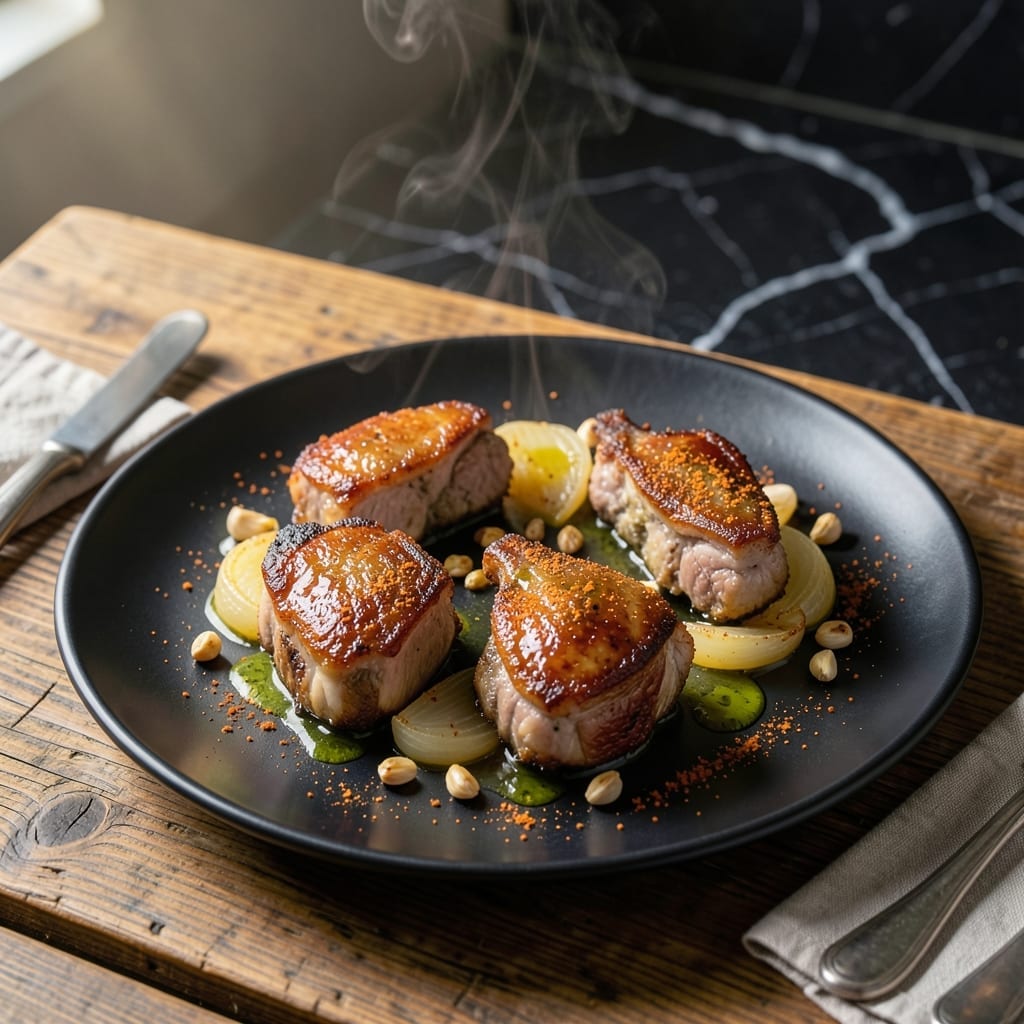
I discovered the magic of slow-braised pork cheek on a trip to Andalusia, where this humble cut transforms into melt-in-your-mouth perfection. The Spanish tradition uses simple ingredients to elevation this affordable protein.
This method relies on patience—not fancy techniques. Low heat and time work together to break down tough fibers into tender, flavorful bites. The key is building layers of flavor through careful browning and slow simmering.
What emerges after hours is pork so succulent it falls apart at the touch of a fork. The sauce reduces to a rich, velvety consistency that coats every piece, carrying the deep flavors of garlic, paprika, and white wine.
The result is a dish that feels special enough for company but simple enough for a Sunday supper. Serve with crusty bread to soak up every drop of the incredible sauce.
Ingredients for Pork Cheek Recipe Spanish
Transform humble pork cheeks into Andalusian perfection with these carefully selected ingredients.
| Ingredient | Amount | Notes |
|---|---|---|
| Pork Cheeks 🐷 | 2 lb | Trimmed of excess fat |
| Olive Oil 🫒 | 3 tbsp | Extra-virgin for depth |
| Yellow Onion 🧅 | 1 whole | Large, finely diced |
| Garlic Cloves 🧄 | 6 cloves | Minced for aromatic base |
| Smoked Paprika 🌶️ | 2 tsp | Spanish pimentón preferred |
| Sweet Paprika 🌶️ | 1 tsp | For color and balance |
| Dried Oregano 🍃 | 1 tsp | Mediterranean variety ideal |
| Bay Leaves 🌿 | 2 whole | Dried, for slow infusion |
| Dry White Wine 🍷 | 1 ½ cups | Sauvignon Blanc or Albariño |
| Chicken Stock 🥣 | 2 cups | Low-sodium preferred |
| Canned Diced Tomatoes 🍅 | 1 can | 14.5 oz, with juices |
| Kosher Salt 🧂 | 1 ½ tsp | Diamond Crystal brand |
| Freshly Ground Black Pepper 🌶️ | 1 tsp | Coarse grind preferred |
| Fresh Flat-Leaf Parsley 🌿 | ¼ cup | Chopped, for garnish |
The pork cheeks are the foundation—source them from a reputable butcher or specialty grocer like Whole Foods. Look for cheeks with good marbling; this fat renders down during the long braise, creating that signature melt-in-your-mouth texture. Spanish pimentón (smoked paprika) is non-negotiable for authenticity; La Chinata brand is ideal if available. Freshness matters for the garlic and herbs—avoid pre-minced or dried substitutes for these.
No white wine? Dry vermouth works in a pinch, or substitute with additional chicken stock plus 1 tbsp apple cider vinegar for acidity. For the tomatoes, San Marzano whole tomatoes (hand-crushed) elevate the sauce, but standard diced are fine. If you can’t find pork cheeks, pork shoulder cut into chunks is the closest alternative, though the texture won’t be identical. The bay leaves can be Turkish or California—both work.
This dish improves overnight. Refrigerate in its braising liquid for up to 3 days—the flavors deepen remarkably. Freezes beautifully for 3 months. Reheat gently on the stovetop, adding a splash of water or stock if the sauce has thickened too much. Always serve with crusty bread to soak up every last bit of that velvety sauce.
Why You’ll Love This Recipe
- One Pot Wonder: I toss everything in a single pan—pork cheeks, onions, garlic—and let the smoked paprika do its magic while I set the table.
- Rich and Smoky: That first bite of tender pork with the deep, earthy kick of smoked paprika? I’ll admit, I’ve licked the plate.
- Feeds a Crowd: I made this for a Sunday family dinner and everyone, even the picky cousins, went back for seconds.
- Leftovers for Days: Honestly, it tastes even better the next day—tossed into tacos or over rice for an easy lunch.
Step-by-Step Instructions for Slow-Braised Pork Cheeks
Master this traditional technique for melt-in-your-mouth texture and rich, complex flavor development.
Step 1: Sear the Pork Cheeks for Depth
Pat the 2 lb Pork Cheeks thoroughly dry with paper towels. This ensures a proper sear rather than steaming. Season all sides evenly with the 1.5 tsp Kosher Salt and 1 tsp Freshly Ground Black Pepper.
Heat the 3 tbsp Olive Oil in a heavy Dutch oven over medium-high heat until shimmering. Working in batches to avoid crowding, sear the pork cheeks for 4-5 minutes per side until deeply browned. The meat should release easily from the pan when properly seared. Transfer to a plate and set aside.
Step 2: Build the Aromatic Base
In the same pot, reduce heat to medium and add the 1 whole Yellow Onion (finely diced). Cook for 5-6 minutes, stirring occasionally, until softened and just beginning to caramelize at the edges.
Add the 6 cloves Garlic Cloves, 2 tsp Smoked Paprika, 1 tsp Sweet Paprika, 1 tsp Dried Oregano, and 2 whole Bay Leaves. Stir constantly for 30-45 seconds until the spices become fragrant—this prevents burning while developing their full potential.
Step 3: Deglaze and Create the Braising Liquid
Pour in the 1.5 cups Dry White Wine and scrape up all browned bits from the bottom with a wooden spoon. Simmer for 3-4 minutes until the liquid reduces by about half, allowing the alcohol to cook off while concentrating flavors.
Add the 1 can Canned Diced Tomatoes (with juices) and 2 cups Chicken Stock. Return the seared pork cheeks to the pot along with any accumulated juices. The liquid should just cover the meat—add a splash of water if needed.
Step 4: Braise to Tender Perfection
Bring the mixture to a gentle simmer, then reduce heat to low. Cover and cook for 2 to 2.5 hours, turning the pork cheeks occasionally, until they’re fork-tender and nearly falling apart. The sauce should have thickened slightly and taken on a deep, rich color.
During cooking, check periodically and add a small amount of water if the liquid reduces too much. The pork cheeks are done when a fork slips in with no resistance and the meat easily pulls apart.
Step 5: Finish and Serve
Remove the pork cheeks from the sauce and set aside. Skim any excess fat from the surface of the sauce if desired. Return the pork to the pot and warm through for 5 minutes to allow the flavors to meld.
Discard the bay leaves and adjust seasoning if needed. Garnish with the 0.25 cup Fresh Flat-Leaf Parsley before serving. The sauce should cling to the meat, and each bite should deliver the perfect balance of tender pork and rich, spiced braising liquid.
Pro Tips For Making Pork Cheek Recipe Spanish
- Brown the Cheeks: Sear the pork cheeks in olive oil over medium-high heat until deeply browned—about 4-5 minutes per side. I learned this the hard way: skipping this step leaves the meat tough and flavorless.
- Bloom the Paprika: Toast the smoked paprika in the oil for 30 seconds before adding onions. Sounds weird, but it works: this wakes up the spice and prevents a raw, bitter taste.
- Low and Slow: After browning, drop the heat to low and let the cheeks simmer gently in liquid for at least 2 hours. Resist the urge to rush—this is the only way to get that fall-apart texture.
- Use Fresh Garlic: Mince the garlic cloves just before adding them to the pot. My grandmother swore by this, and she was right: pre-minced garlic from a jar just doesn’t have the same punch in a long-cooked dish like this.
Flavor Customization for This Dish
Spice Level Variations
For a milder version, reduce the smoked paprika to 1 tsp and add ½ tsp ground cumin for warmth without heat. I find this works well when serving to kids or sensitive palates. 🌶️
Herb Infusions
Swap the dried oregano for 1 tsp fresh rosemary or thyme from my garden. These herbs add a piney note that pairs beautifully with the pork. Fresh herbs need less cooking time to release their oils.
Wine Choices
Try substituting the dry white wine with 1.5 cups dry sherry for a more authentic Spanish touch. A fino sherry from Jerez adds nutty complexity. Avoid cooking wines—they lack depth.
Tomato Alternatives
Replace the canned diced tomatoes with 1 cup tomato passata for a smoother sauce. Or use 6-8 sun-dried tomatoes (rehydrated) for intense, concentrated flavor. Both work well in this slow braise.
Umami Boosters
Add 2 tbsp tomato paste when building the aromatic base for deeper richness. Or stir in 1 tsp anchovy paste—it dissolves completely and adds a savory backbone without fishiness.
Citrus Brightness
Finish the dish with the zest of 1 orange or 1 lemon before serving. This brightens the rich sauce beautifully. I learned this trick from a chef in Seville during my Andalusia trip. ✨
Nutrition Facts
Frequently Asked Questions
Where can I buy pork cheeks?
Check with local butchers or specialty grocers like Whole Foods. Order online from purveyors like Snake River Farms or D’Artagnan. Call ahead to confirm availability as this cut isn’t always stocked.
Can I make this ahead of time?
The flavors improve after 1-2 days in the fridge. Store in an airtight container with the braising liquid. Reheat gently on the stovetop before serving.
What should I serve with this dish?
Crusty bread is essential for soaking up the sauce. Pair with simple sides like roasted potatoes, sautéed greens, or a fresh salad to balance the richness.
Can I use a different cut of pork?
Pork shoulder works as a substitute, though the texture won’t be identical. Cut into large chunks and increase cooking time to 3-4 hours for similar tenderness.

- Potato Chip Cookie Recipe With Pecans: Buttery Crunch Meets Nutty Richness - October 30, 2026
- Potato Patty Recipe No Egg: Crispy Edges Without the Binder - October 30, 2026
- Paula Deen’s Potato Chip Cookies Recipe: Salty-Sweet Crunch in Every Bite - October 30, 2026