
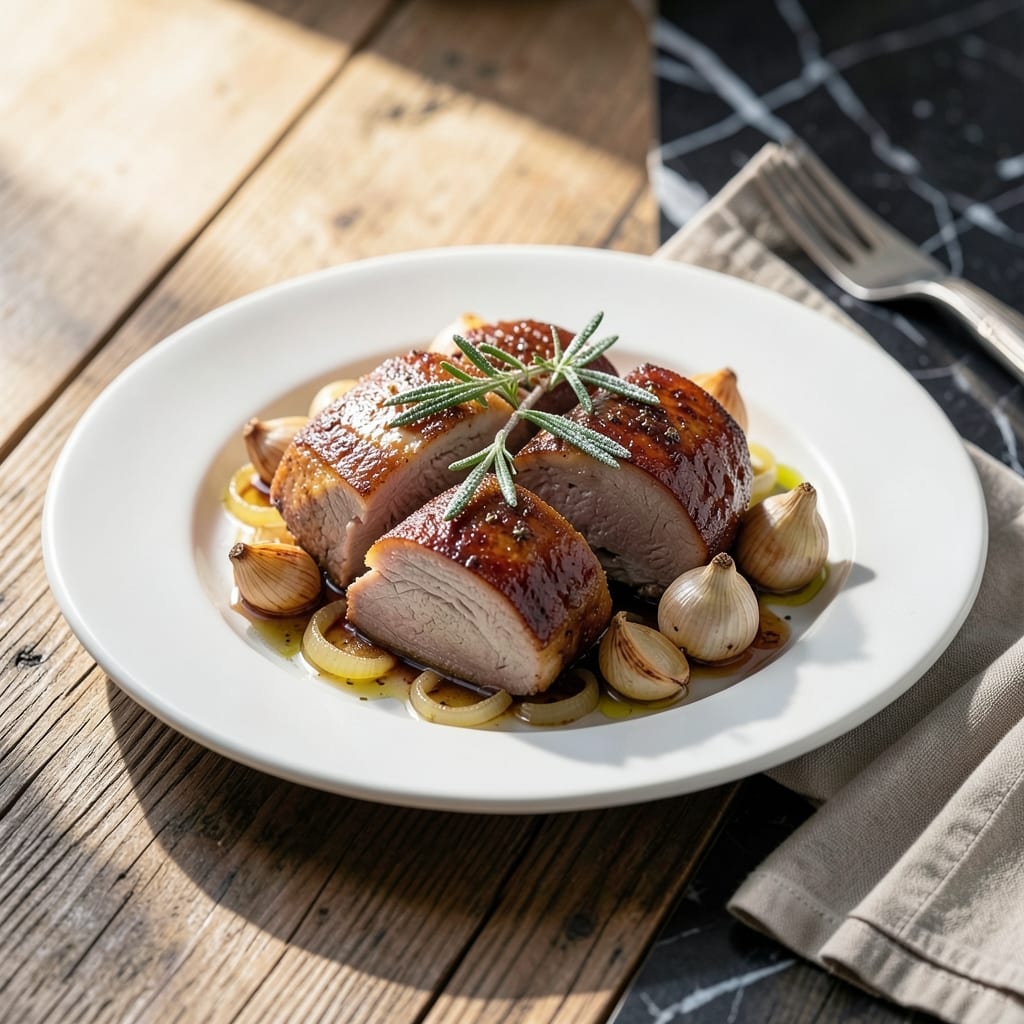
I discovered pork cheek at a local Portland butcher, and it changed how I cook tough cuts forever. Slow-braising transforms this inexpensive, flavorful piece into something tender and luxurious.
This method uses Italian classics—rosemary, garlic, and red wine—to build deep, complex flavors. The meat becomes fall-apart tender after 3 hours in the oven, soaking up every rich note.
You’ll end up with meltingly soft pork cheek in a velvety sauce that’s perfect over polenta or crusty bread. It’s a restaurant-worthy dish with minimal effort.
The aroma alone will have your kitchen smelling like a Tuscan trattoria. Here’s how to make it right.
Ingredients for Pork Cheek Recipe Italian
Rich, tender pork cheek meets Italian herbs and wine for a luxurious slow-braised dish.
| Ingredient | Amount | Notes |
|---|---|---|
| Pork Cheeks 🐷 | 2 lb | Boneless, trimmed of excess fat |
| Red Wine 🍷 | 2 cups | Dry Italian variety preferred |
| Chicken Stock 🥣 | 1 ½ cups | Low-sodium recommended |
| Fresh Rosemary 🌿 | 2 tbsp | Finely chopped, stems discarded |
| Garlic Cloves 🧄 | 6 cloves | Smashed, peeled |
| Yellow Onion 🧅 | 1 whole | Large, diced |
| Tomato Paste 🍅 | 2 tbsp | Double-concentrated preferred |
| Olive Oil 🫒 | ¼ cup | Extra-virgin for depth |
| Bay Leaves 🍃 | 2 pieces | Dried, whole |
| Kosher Salt 🧂 | 1 tsp | Diamond Crystal preferred |
| Black Pepper 🌶️ | 1 tsp | Freshly cracked |
| Polenta 🌽 | 1 cup | Dry, for serving |
| Fresh Parsley 🌿 | ¼ cup | Chopped, for garnish |
Pork cheeks can be tricky to find—local butchers or Whole Foods usually carry them (call ahead to save a trip). Look for pieces with good marbling; the fat renders down into the sauce. The wine is key here, so don’t skimp. A bold Chianti or Sangiovese adds that authentic Tuscan depth. If you’re in Portland, Pine State Biscuits sometimes has them in stock.
No red wine? Substitute 1.5 cups beef stock plus 0.5 cup balsamic vinegar—it’s not the same, but it works. Fresh rosemary is ideal, but dried at one-third the amount is fine in a pinch. Out of tomato paste? Crushed tomatoes cooked down will do. The pork can be swapped for pork shoulder (cut into chunks), though the texture won’t be quite as luxurious.
The braise tastes even better the next day. Store leftovers in an airtight container for up to 4 days in the fridge or freeze for 3 months. Reheat gently to keep the meat tender (don’t boil the sauce). The polenta soaks up the sauce beautifully—make extra.
Why You’ll Love This Recipe
- I’ll be real: the flavors taste even better the next day, and the meat shreds beautifully for sandwiches.
- One Pot Wonder: I toss everything in a Dutch oven and let the wine and rosemary work their magic while I set the table.
- Deep, Rich Taste: That slow braise turns the cheeks fall-apart tender, and the garlic-red wine sauce is downright luxurious.
- Feeds a Crowd: Honestly, it’s my go-to for Sunday suppers—elegant enough for guests, cozy enough for a family night.
Step-by-Step Instructions for Pork Cheek Italian
This method transforms humble pork cheeks into a dish that tastes like it simmered for hours.
Step 1: Sear the Pork Cheeks to Lock in Flavor
Heat the 0.25 cup Olive Oil in a Dutch oven over medium-high heat until it shimmers. Pat the 2 lb Pork Cheeks dry with paper towels, then season both sides with the 1 tsp Kosher Salt and 1 tsp Black Pepper. Sear the pork cheeks in batches to avoid crowding the pan.
Cook each piece for 3-4 minutes per side until deeply browned and a crust forms. The sear creates a flavorful fond that will enrich the braising liquid. Transfer the seared pork cheeks to a plate and set aside.
Step 2: Build a Rich Aromatic Base
In the same pot, reduce heat to medium and add the diced 1 whole Yellow Onion. Cook for 5 minutes, stirring occasionally, until softened and translucent. Add the 6 cloves Garlic Cloves, 2 tbsp Fresh Rosemary, and 2 tbsp Tomato Paste, stirring constantly for 1-2 minutes until the tomato paste darkens slightly.
This step develops deep, complex flavors. The tomato paste should turn a brick-red color, signaling that its natural sugars have caramelized. Be careful not to let the garlic burn—it should be fragrant but not browned.
Step 3: Deglaze and Braise Until Fork-Tender
Pour in the 2 cups Red Wine and 1.5 cups Chicken Stock, using a wooden spoon to scrape up the browned bits from the bottom of the pot. Add the 2 pieces Bay Leaves and return the seared pork cheeks to the pot, along with any accumulated juices.
The liquid should just cover the pork cheeks. Bring to a gentle simmer, then reduce heat to low. Cover and braise for 2.5 to 3 hours, turning the pork cheeks occasionally, until they are fork-tender and the liquid has reduced slightly. The meat should pull apart easily when tested with a fork.
Step 4: Finish and Serve with Creamy Polenta
Once the pork cheeks are tender, remove them from the braising liquid and set aside. Skim any excess fat from the surface of the liquid, then simmer uncovered for 5-10 minutes to reduce slightly and intensify the flavors. Return the pork cheeks to the pot to warm through.
Cook the 1 cup Polenta according to package instructions until creamy. Serve the braised pork cheeks over the polenta, spooning the rich sauce on top. Garnish with the 0.25 cup Fresh Parsley for a pop of color and freshness.
Pro Tips For Making Pork Cheek Recipe Italian
- Sear the Cheeks: Brown them well in batches—about 4-5 minutes per side over medium-high heat. I learned this the hard way: crowding the pan steams them instead of searing, and you lose that deep, caramelized base flavor.
- Deglaze with Wine: After searing, pour in the red wine while the pan’s still hot to scrape up all those browned bits. Sounds obvious, but skipping this step leaves a ton of flavor stuck to the pan.
- Simmer, Don’t Boil: Keep the heat low enough that the stock and wine barely bubble—around 180-190°F. A rolling boil makes the cheeks tough; a gentle simmer keeps them fork-tender after 2-3 hours.
- Crush the Garlic: Smash the garlic cloves with the flat of your knife before adding them whole. This releases the aroma without burning the pieces, and you can easily fish them out later if you prefer.
Pro Cooking Tips for This Recipe
Perfect Dutch Oven
Use a heavy enamel-coated Dutch oven like Le Creuset or Lodge—it distributes heat evenly and retains moisture. I found mine at a Portland flea market, and it’s been my braising workhorse ever since. The tight-fitting lid traps steam, which is crucial for breaking down the collagen in pork cheek. 💪
Pat Dry Thoroughly
Don’t skip patting the pork cheeks completely dry before searing. Any moisture prevents proper browning and creates steam instead of a crust. I use paper towels and press firmly—this step takes 2-3 minutes but makes all the difference in flavor development.
Don’t Crowd the Pan
Sear the pork cheeks in batches if needed to avoid crowding. Overcrowding lowers the pan temperature, causing the meat to steam rather than brown. I test by adding one piece—if it sizzles immediately, the oil is ready. If not, wait 30 seconds longer.
Low and Slow Wins
Maintain a gentle simmer during braising—no boiling! I check by peeking under the lid every 30-45 minutes. If the liquid is bubbling vigorously, reduce the heat slightly. The ideal temperature is 275-300°F in your oven.
Skimming Fat
After braising, skim excess fat from the sauce using a fine-mesh skimmer or spoon. I tilt the pot slightly to pool the fat at one edge. For extra richness, chill the sauce and remove the solidified fat layer before reheating. 🔥
Rest Before Serving
Let the pork cheeks rest in the warm sauce for 10-15 minutes off the heat. This allows the juices to redistribute, ensuring each bite is moist and flavorful. I use this time to finish cooking the polenta.
Nutrition Facts
Frequently Asked Questions
Can I substitute pork shoulder for cheeks?
Yes, pork shoulder works as a substitute. Cut it into 2-inch chunks and follow the same method. The texture will be slightly different, but still delicious.
What’s the best wine for this recipe?
A bold Chianti or Sangiovese works perfectly. Use a dry red wine you’d drink—avoid cooking wines with added salt.
How do I know when it’s done?
The pork is ready when it pulls apart easily with a fork. This typically takes 2.5 to 3 hours at a gentle simmer.
Can I make this ahead of time?
The flavors deepen overnight. Store in an airtight container for up to 4 days in the fridge.

- Potato Chip Cookie Recipe With Pecans: Buttery Crunch Meets Nutty Richness - October 30, 2026
- Potato Patty Recipe No Egg: Crispy Edges Without the Binder - October 30, 2026
- Paula Deen’s Potato Chip Cookies Recipe: Salty-Sweet Crunch in Every Bite - October 30, 2026