
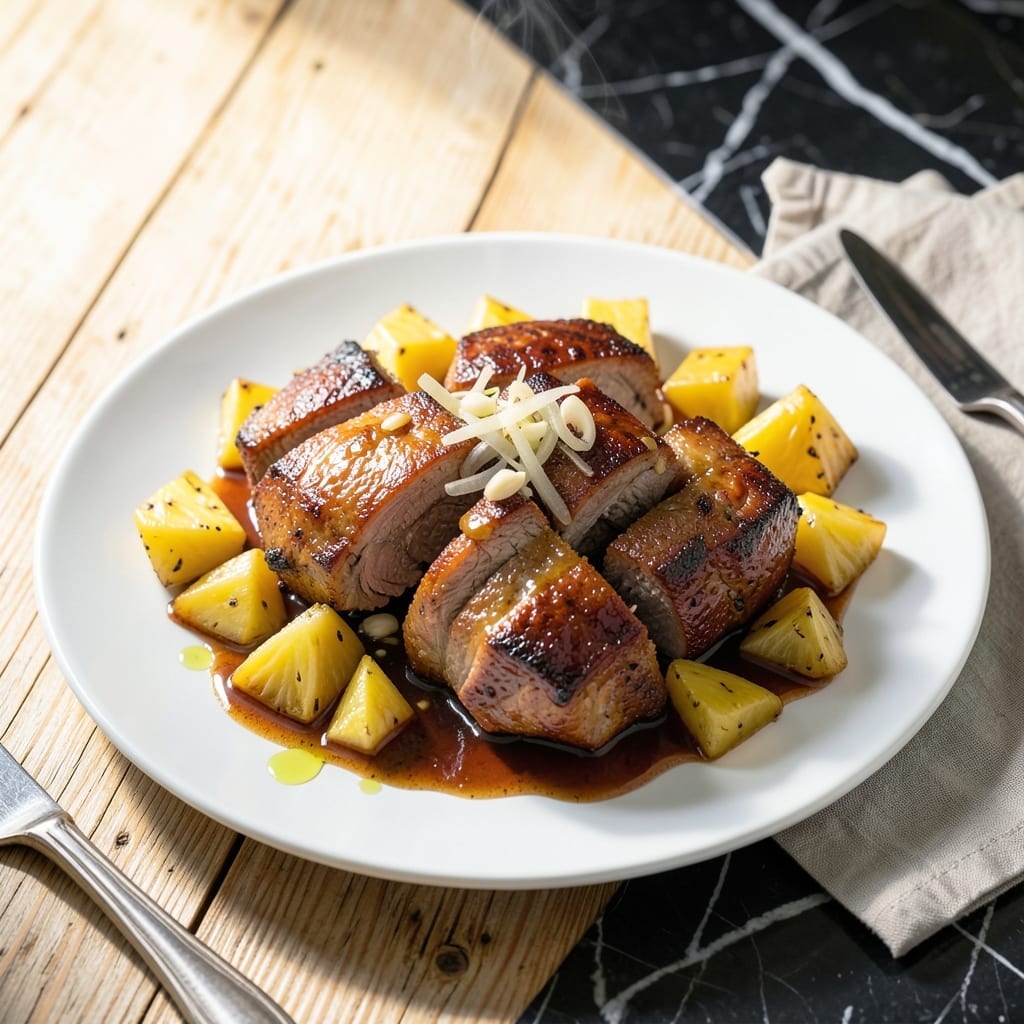
This Filipino pork asado delivers rich, sweet-savory flavors through slow braising in a pineapple-infused sauce. My grandmother’s handwritten notes guided the technique, though her measurements were always frustratingly vague.
Tender pork shoulder absorbs the caramelized sauce, balancing tangy vinegar with pineapple’s natural sweetness. The method requires patience but rewards with fall-apart tender meat and a glossy, deeply flavorful glaze.
What sets this apart is the slow cooking process, allowing the pork to soak up every layer of flavor. The sauce reduces to a perfect consistency, coating each piece evenly.
Serve with steamed rice to soak up the savory-sweet sauce. This dish proves authentic flavor doesn’t require complicated steps.
Ingredients for Pork Asado Recipe Panlasang Pinoy
Rich, slow-braised pork with pineapple and warm spices. Authentic flavor in every bite.
| Ingredient | Amount | Notes |
|---|---|---|
| Pork Shoulder 🐖 | 2 lb | Cut into 2-inch cubes, visible fat trimmed |
| Pineapple Chunks 🍍 | 2 cups | Fresh or canned, reserve juice |
| Soy Sauce 🫙 | ½ cup | Low-sodium preferred for balance |
| White Vinegar 🧪 | ½ cup | Cane or distilled, not apple cider |
| Brown Sugar 🍚 | ½ cup | Light or dark, packed firmly |
| Garlic Cloves 🧄 | 8 cloves | Minced finely for even distribution |
| Yellow Onion 🧅 | 1 whole | Large, thinly sliced into rings |
| Bay Leaves 🌿 | 2 pieces | Dried, removed before serving |
| Black Peppercorns 🌶️ | 1 tsp | Whole, crushed lightly |
| Star Anise Pods ⭐ | 2 pieces | Whole, removed after cooking |
| Vegetable Oil 🫒 | 2 tbsp | Neutral-flavored for browning |
| Green Onions 🌱 | 4 pieces | Thinly sliced, for garnish |
The pork shoulder is non-negotiable here—bone-in or boneless both work, but avoid lean cuts like tenderloin. Asian grocery stores often have pre-cut chunks labeled for stewing. Look for pieces with good marbling (about 20-30% fat) for that melt-in-your-mouth texture. Star anise can be tricky to find—check the bulk spice section at Whole Foods or order online from Penzeys.
No fresh pineapple? Canned chunks in juice (not syrup) work perfectly. Out of soy sauce? Coconut aminos at one-to-one ratio adds a similar umami depth. Brown sugar can be swapped for coconut sugar, but the caramel notes will differ slightly. If star anise isn’t available, half a teaspoon of ground anise works in a pinch—just add it directly to the sauce.
Pork asado tastes even better the next day as the flavors meld. Store in an airtight container for up to 4 days in the fridge or freeze for 3 months. Reheat gently on the stove with a splash of water to revive the sauce’s glossy consistency.
Why You’ll Love This Recipe
- One Pot Wonder: I just toss everything in a pot—pork, pineapple, soy sauce, vinegar, sugar—and let it simmer. No fancy techniques, just set it and forget it.
- Sweet-Tangy Magic: The brown sugar caramelizes while the vinegar cuts through, and the pineapple? It soaks up all that richness. Honestly, the sauce alone is worth making this.
- Feeds a Crowd: I made this for a family gathering last weekend and it disappeared faster than I could serve it. Leftovers? Even better the next day.
- Budget Stretcher: Pork shoulder is cheap, and a little goes a long way with these bold flavors. I’ll be real: it’s my go-to when I need to impress without breaking the bank.
Step-by-Step Instructions for Slow-Braised Pork in Pineapple-Infused Sauce
Here’s the method. Straightforward, tested, works every time.
Step 1: Sear the Pork Shoulder to Develop Depth
Heat the 2 tbsp vegetable oil in a large, heavy-bottomed pot over medium-high heat until shimmering. Add the 2 lb pork shoulder cubes in a single layer, working in batches if necessary to avoid overcrowding.
Sear undisturbed for 4-5 minutes until the bottoms develop a deep, golden-brown crust. Flip and repeat on all sides. This Maillard reaction creates complex flavors that form the foundation of your dish. Transfer the browned pork to a plate and set aside.
Step 2: Build the Aromatic Base for the Braising Liquid
In the same pot, reduce heat to medium and add the 1 whole yellow onion and 8 cloves minced garlic cloves. Sauté for 3-4 minutes until the onions soften and become translucent, stirring frequently to prevent burning.
Add the 0.5 cup brown sugar and cook for 1-2 minutes until it begins to caramelize slightly. The sugar should melt into a light amber syrup that coats the aromatics. This step develops the sweet-savory balance characteristic of this preparation.
Step 3: Create the Braising Liquid and Add Pork
Pour in the 0.5 cup soy sauce, 0.5 cup white vinegar, 2 cups pineapple chunks with any reserved juice, 1 tsp crushed black peppercorns, 2 pieces bay leaves, and 2 pieces star anise pods.
Stir to combine, scraping up any browned bits from the bottom of the pot. Return the seared pork to the pot, ensuring it’s mostly submerged in the liquid. The liquid should come about three-quarters up the pork cubes. This ensures even cooking and maximum flavor absorption.
Step 4: Slow-Braise to Tenderness
Bring the mixture to a boil over high heat, then reduce to a gentle simmer. Cover the pot and cook for 1.5 to 2 hours, stirring occasionally and turning the pork pieces halfway through for even cooking.
You’ll know it’s ready when the pork is fork-tender and the sauce has thickened slightly, coating the back of a spoon. The star anise pods and bay leaves will have infused the sauce with their distinctive aromatic qualities.
Step 5: Finish and Garnish for Service
Remove the pot from heat and discard the bay leaves and star anise pods. Taste and adjust seasoning if needed, though the balance of sweet, sour, and savory should be perfect.
Transfer to a serving dish and garnish with the 4 pieces thinly sliced green onions. The green onions add a fresh, oniony brightness that cuts through the richness of the braised pork. Serve hot with steamed rice to soak up the flavorful sauce.
Pro Tips For Making Pork Asado Recipe Panlasang Pinoy
- Marinate Overnight: I learned this the hard way—pork shoulder needs at least 4 hours in the soy-vinegar-brown sugar mix to really soak up the flavor, but overnight makes it taste like it simmered all day.
- Brown the Meat: Sear the pork shoulder in the pot before adding liquids—about 3-4 minutes per side on medium-high heat. It adds a depth that skipping this step just can’t match.
- Use Fresh Pineapple: Canned pineapple works in a pinch, but fresh chunks hold their shape better and give the dish a brighter, less syrupy sweetness.
- Simmer, Don’t Boil: After the initial sear, keep the heat low so the sauce barely bubbles. Boiling toughens the pork and turns the sauce into a sticky, over-reduced mess.
Essential Equipment for This Dish
Heavy-Bottomed Pot
A sturdy 5-6 quart Dutch oven is ideal for even heat distribution. I swear by my Lodge enameled cast iron—it sears beautifully and maintains a steady simmer without hot spots. Avoid thin aluminum pots that can scorch your sauce. 🔥
Wooden Spoon
Use a long wooden spoon to stir and scrape the fond from the pot bottom. Unlike metal, wood won’t scratch your cookware or react with acidic ingredients like vinegar. I keep mine in a crock by the stove for easy access.
Sharp Chef’s Knife
A 8-inch chef’s knife makes quick work of cubing the pork and slicing onions evenly. I use my Victorinox Fibrox—it’s affordable, razor-sharp, and lasts forever. Dull knives slip and make prep dangerous and tedious.
Measuring Cups
Precise measurements matter here, especially for the soy sauce and vinegar balance. I keep a set of stainless steel measuring cups from OXO in my drawer. They nest together and won’t absorb odors like plastic can.
Tongs for Turning
Use 12-inch locking tongs to flip pork cubes while searing. They give you control without piercing the meat, keeping juices inside. I prefer the OXO Good Grips version—the silicone heads won’t scratch my Dutch oven.
Fine-Mesh Strainer
If you want ultra-smooth sauce, strain it through a fine-mesh sieve before reducing. This removes stray spices while keeping all the flavor. I use a Cuisinox strainer that fits over my largest bowl. 💡
Nutrition Facts
Frequently Asked Questions
Can I use pork loin instead of shoulder?
Shoulder is ideal for its fat content, but loin can work if you adjust. Cook at low heat and add 30 minutes extra braising time to prevent dryness.
Why does the sauce need both soy sauce and vinegar?
The soy sauce adds umami depth while vinegar balances sweetness with tang. This contrast is key to authentic Filipino flavor.
Can I make this in a slow cooker?
Yes! Sear pork first, then cook on low for 6-7 hours. Skip the final reduction step for best results.
How do I fix sauce that’s too sweet?
Add 1-2 tbsp vinegar or soy sauce and simmer 5 minutes to blend flavors. Taste before adjusting further.

- Potato Chip Cookie Recipe With Pecans: Buttery Crunch Meets Nutty Richness - October 30, 2026
- Potato Patty Recipe No Egg: Crispy Edges Without the Binder - October 30, 2026
- Paula Deen’s Potato Chip Cookies Recipe: Salty-Sweet Crunch in Every Bite - October 30, 2026