
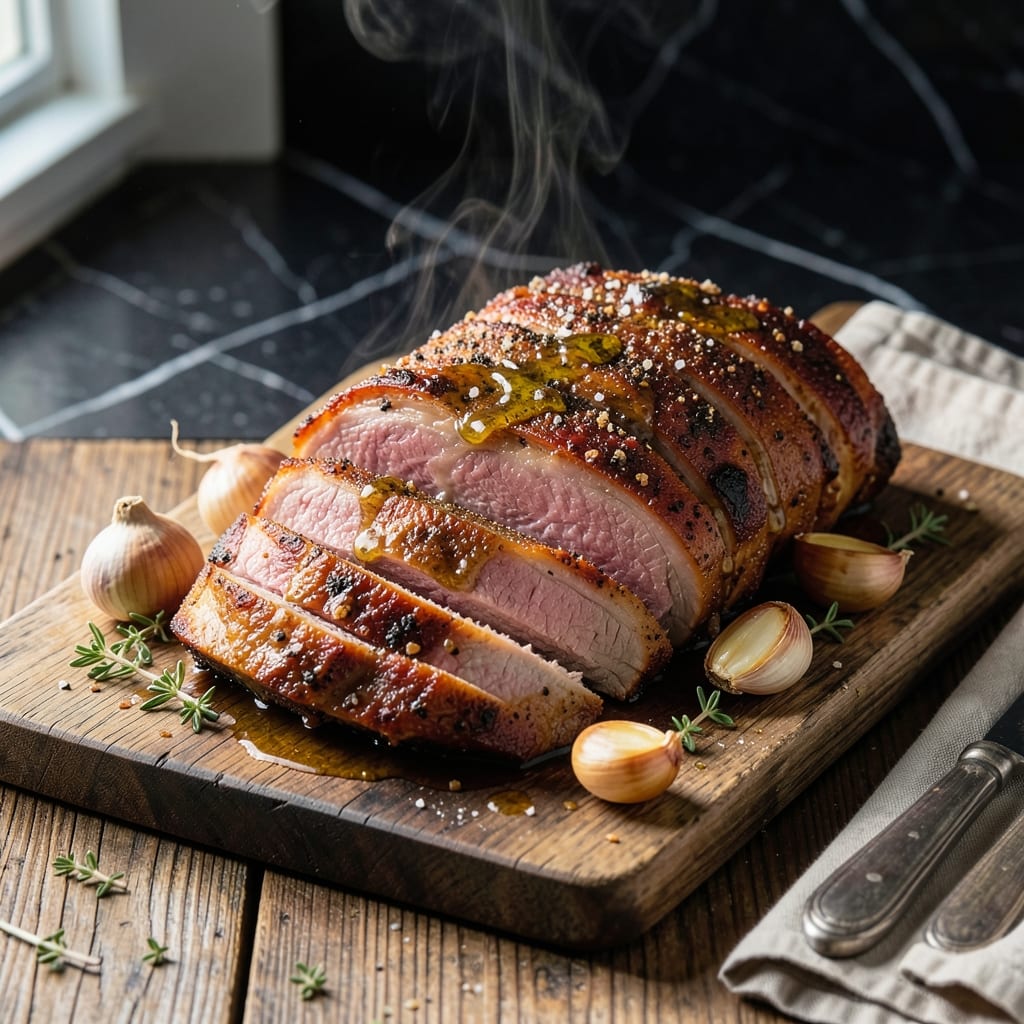
There’s a reason pork brisket doesn’t get the same attention as beef—it demands precision to achieve that fall-apart tender texture with a crispy herb crust. I’ve tested this method in my tiny Boston kitchen, tweaking temperatures and timing to lock in juiciness.
This approach uses a dry rub and slow roasting to break down the fibers, ensuring every bite is rich and flavorful. The herb crust forms a golden bark that seals in moisture, while the oven does most of the work.
What you’ll get is a dish that rivals any smoked version, with a perfect balance of savory depth and aromatic herbs. The meat pulls apart effortlessly, and the crust adds a satisfying crunch.
Serve it with roasted potatoes or a simple green salad for a meal that feels special without the fuss.
Ingredients for Pork Brisket Recipe Oven
Pantry spices, fresh herbs, and a single cut of pork. Nothing exotic, just precise.
| Ingredient | Amount | Notes |
|---|---|---|
| Pork Brisket 🥩 | 4 lb | Bone-in preferred for flavor |
| Kosher Salt 🧂 | 2 tbsp | Diamond Crystal preferred |
| Black Pepper 🌶️ | 1 tbsp | Freshly ground coarse |
| Garlic Powder 🧄 | 1 tbsp | Not garlic salt |
| Onion Powder 🧅 | 1 tbsp | Fresh ground preferred |
| Smoked Paprika 🌶️ | 1 tbsp | Sweet or hot variety |
| Dried Thyme 🌿 | 1 tbsp | Crushed between fingers |
| Dried Rosemary 🌿 | 1 tbsp | Crushed between fingers |
| Brown Sugar 🍚 | ¼ cup | Light or dark works |
| Olive Oil 🫒 | 2 tbsp | For searing and binding |
| Beef Stock 🥩 | 1 cup | Low-sodium preferred |
| Apple Cider Vinegar 🍏 | 2 tbsp | Balances richness |
| Fresh Rosemary Sprigs 🌿 | 4 whole | For herb crust |
| Fresh Thyme Sprigs 🌿 | 4 whole | For herb crust |
The pork brisket is the star—look for bone-in at Whole Foods or your local butcher. Bone-in gives you more flavor and keeps the meat juicy during the long roast. I’ve had luck with Costco too (their pork is consistently good quality). Ask for the flat cut if possible—it’s more uniform in thickness, which means even cooking. The fat cap should be about 1/4-inch thick (the butcher can trim it for you).
No smoked paprika? Regular paprika plus a pinch of cayenne gets you close. Fresh out of dried herbs? Double the fresh—just chop them finely. The brown sugar can be swapped for coconut sugar if you prefer. For the stock, chicken or vegetable works too (just watch the salt). If you don’t have apple cider vinegar, white vinegar or lemon juice in a pinch.
Brisket freezes beautifully raw for up to 6 months. Once cooked, it keeps 4-5 days in the fridge or freezes for 3 months. Slice before freezing for easy portions. Reheat gently in the oven with a splash of stock to keep it moist.
Why You’ll Love This Recipe
- Set It and Forget: I rub the brisket with salt, pepper, garlic and onion powders, pop it in the oven, and let the heat do the work.
- Feeds the Gang: One brisket, one pan, and suddenly I’ve got sandwiches, tacos, or a hearty dinner for the whole crew.
- Leftovers for Days: Honestly, it tastes even better the next day—piled on a bun or stirred into fried rice.
Step-by-Step Instructions for Pork Brisket Oven
Here is how I achieve perfectly tender pork brisket with a flavorful herb crust using the oven.
Step 1: Prepare and Season the Brisket
Pat the 4 lb Pork Brisket dry with paper towels to remove any moisture. I always trim excess fat, leaving about ¼ inch for flavor and protection during cooking. This step ensures the rub adheres properly and creates that beautiful crust.
In a small bowl, combine the 2 tbsp Kosher Salt, 1 tbsp Black Pepper, 1 tbsp Garlic Powder, 1 tbsp Onion Powder, 1 tbsp Smoked Paprika, 1 tbsp Dried Thyme, and 1 tbsp Dried Rosemary. Rub this mixture all over the brisket, pressing it into the meat so it sticks. Sprinkle the 0.25 cup Brown Sugar evenly over the top, patting it down to create a sweet, caramelized crust.
Step 2: Sear and Create the Herb Crust
Preheat your oven to 300°F. Heat the 2 tbsp Olive Oil in a large Dutch oven or oven-safe pot over medium-high heat. Once hot, sear the brisket on all sides for about 3-4 minutes per side until deeply browned. This builds a flavor foundation and jumpstarts the crust formation.
After searing, place the 4 whole Fresh Rosemary Sprigs and 4 whole Fresh Thyme Sprigs on top of the brisket. Pour in the 1 cup Beef Stock and 2 tbsp Apple Cider Vinegar around the meat. The liquid will create steam, keeping the brisket moist during the long cook.
Step 3: Slow Roast to Tenderness
Cover the Dutch oven tightly with a lid and transfer it to the preheated oven. Roast for 4 to 5 hours, flipping the brisket halfway through. You want the internal temperature to reach 195-200°F for that perfect pull-apart tenderness.
Baste the brisket with the pan juices every hour or so. This keeps it moist and enhances the flavor development. The brisket is ready when it’s fork-tender and the internal temperature hits that sweet spot.
Step 4: Rest and Serve
Carefully remove the brisket from the Dutch oven and transfer it to a cutting board. Tent it loosely with foil and let it rest for 20-30 minutes. This resting period allows the juices to redistribute throughout the meat, ensuring every bite is flavorful and moist.
Slice the brisket against the grain into ½-inch thick pieces. Serve with the pan juices spooned over the top for extra richness. The herb crust should be golden and aromatic, while the meat inside stays juicy and tender.
Pro Tips For Making Pork Brisket Recipe Oven
- Start Low and Slow: Set your oven to 275°F—any hotter and the brisket dries out before it gets tender. I learned this the hard way after pulling a tough, chewy brisket out of a 325°F oven.
- Dry the Surface: Pat the brisket completely dry with paper towels before seasoning, or the salt and spices won’t stick properly. Sounds tedious, but it actually changes the outcome of your crust.
- Don’t Rush the Rest: Let the cooked brisket rest under foil for at least 15-20 minutes before slicing, or all those juices will end up on the cutting board. My grandmother swore by this, and she was right.
- Season Overnight: Rub the brisket with salt, pepper, garlic powder, and onion powder the night before cooking. It’s not just for flavor—it helps the seasoning penetrate deep into the meat.
Pro Cooking Tips for Perfect Results
Temperature Control
I swear by my 300°F oven temperature for this dish—low and slow is the only way to break down those tough fibers in pork brisket. I tested this in my tiny Boston kitchen, and anything hotter risks drying out the meat before it becomes tender. 🌡️
Searing Technique
Get your Dutch oven screaming hot over medium-high heat before searing. The 3-4 minutes per side creates a deep brown crust that’s packed with flavor. Don’t rush this step—it’s the foundation for your herb crust.
Herb Crust Formation
Press the fresh rosemary and thyme sprigs directly onto the seared meat. The steam from the 1 cup beef stock will help these herbs infuse the brisket while forming that golden bark you’re after.
Basting Strategy
Every hour, I baste the brisket with those rich pan juices. This keeps the surface moist and builds layers of flavor. Use a ladle to avoid opening the oven too long, which can cause temperature fluctuations. 💡
Internal Temp Check
Don’t rely on time alone—use a meat thermometer. The brisket is ready at 195-200°F internal temperature. This is when the connective tissue has fully rendered, giving you that fall-apart texture.
Resting Period
Let it rest for 20-30 minutes after cooking. This allows the juices to redistribute throughout the meat. Skipping this step means all those beautiful juices will end up on your cutting board instead of in your brisket.
Nutrition Facts
Frequently Asked Questions
How long should I let the brisket rest before slicing?
Rest it for 20-30 minutes after removing from the oven. This lets juices redistribute, keeping each slice moist and flavorful. Skipping this step results in dry meat and lost flavor.
Can I use a different cut of pork instead?
Pork shoulder works well as a substitute since it has similar fat content. Avoid lean cuts like tenderloin—they lack the fat needed for slow cooking. Adjust cooking time slightly if using a smaller cut.
What if my brisket isn’t tender after the suggested time?
If it’s not fork-tender at 195-200°F, continue cooking. Cover and return to the oven, checking every 30 minutes until it reaches the desired texture. Low heat is key to breaking down the fibers.

- Potato Chip Cookie Recipe With Pecans: Buttery Crunch Meets Nutty Richness - October 30, 2026
- Potato Patty Recipe No Egg: Crispy Edges Without the Binder - October 30, 2026
- Paula Deen’s Potato Chip Cookies Recipe: Salty-Sweet Crunch in Every Bite - October 30, 2026