
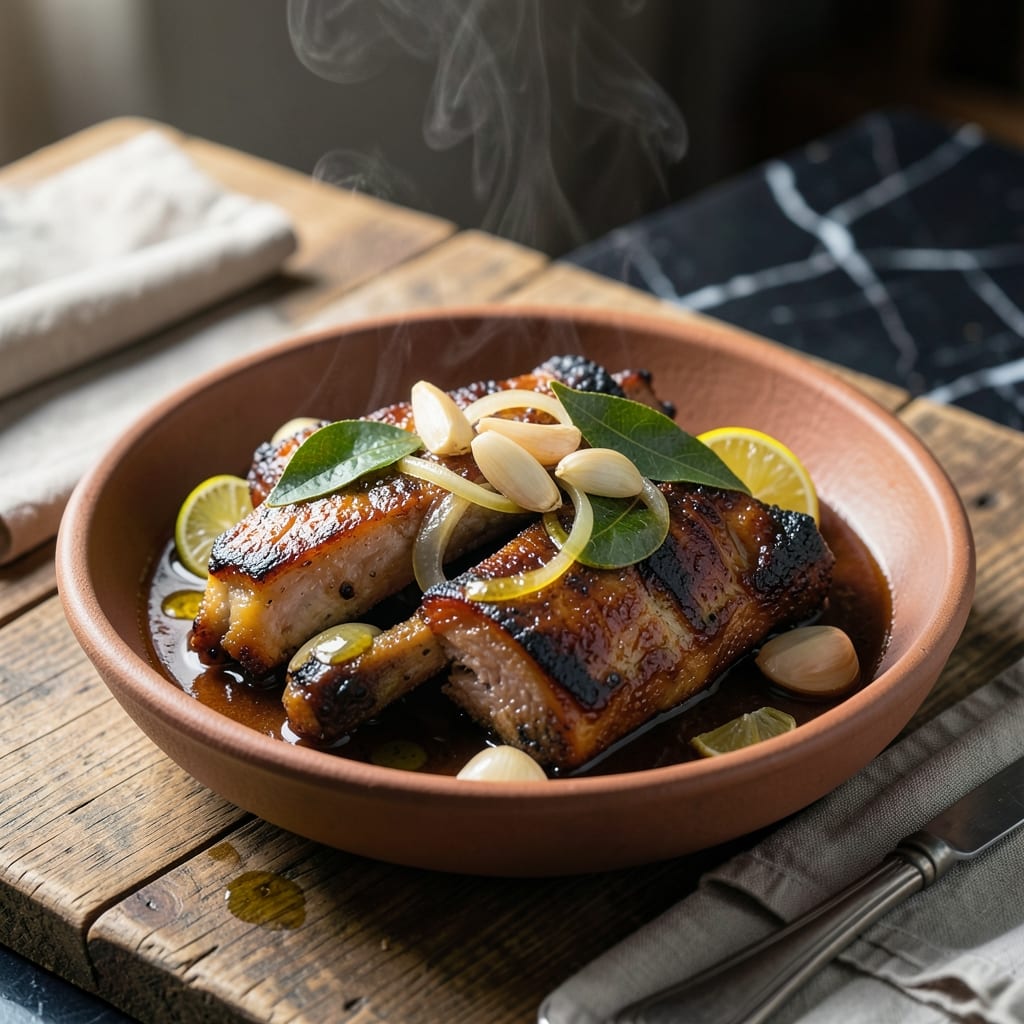
This Filipino pork stew brings comfort in every spoonful, with tender bone-in cuts slow-simmered in a rich, savory sauce. I developed this version after testing multiple ratios to achieve the perfect balance of meat, fat, and broth.
The secret lies in the patient simmering process, which coaxes maximum flavor from the pork bones while creating a deeply aromatic broth. Traditional ingredients like soy sauce and calamansi provide the authentic taste that defines this dish.
What emerges is a hearty stew with fall-off-the-bone meat and a sauce so flavorful you’ll want to soak it up with rice. The slow cooking transforms simple ingredients into something truly special.
Perfect for family dinners or when you need a meal that warms both body and soul.
Ingredients for Pork Buto Buto Recipe Panlasang Pinoy
Bone-in pork and a handful of pantry staples transform into this Filipino comfort classic.
| Ingredient | Amount | Notes |
|---|---|---|
| Pork Ribs 🍖 | 2 lb | Bone-in, cut into 2-inch pieces |
| Soy Sauce 🫕 | ½ cup | Filipino brand preferred |
| Calamansi Juice 🍋 | ¼ cup | Freshly squeezed or bottled |
| Garlic Cloves 🧄 | 8 cloves | Peeled and minced |
| Yellow Onion 🧅 | 1 whole | Large, quartered |
| Bay Leaves 🌿 | 3 pieces | Dried or fresh |
| Black Peppercorns 🌶️ | 1 tsp | Whole or ground |
| Water 💧 | 4 cups | For simmering broth |
| Potatoes 🥔 | 2 whole | Medium, peeled and quartered |
| Carrots 🥕 | 2 whole | Medium, peeled and sliced |
| Green Beans 🌱 | 1 cup | Trimmed, cut into 2-inch pieces |
| Fish Sauce 🐟 | 2 tbsp | Optional umami boost |
| Brown Sugar 🍚 | 1 tbsp | Light or dark variety |
| Cooking Oil 🫒 | 2 tbsp | Neutral flavor like vegetable |
| Salt 🧂 | 1 tsp | Adjust to taste |
The pork ribs are non-negotiable for authentic flavor and texture. Look for meaty, bone-in cuts at your local Asian market—Seafood City or Filipino grocers will have the best selection. If you can only find pre-cut ribs, that’s fine (the good stuff, not the pre-shredded kind). The soy sauce should be Filipino—Silver Swan or Datu Puti are reliable brands. Calamansi juice is the magic touch, but lime works in a pinch.
No calamansi? Lime or lemon juice at a 1:1 ratio gets you 90% there. Out of fish sauce? More soy sauce plus a pinch of sugar mimics the saltiness. The potatoes can be swapped for sweet potatoes (peel and cube them the same size). If green beans aren’t your thing, cabbage or bok choy soak up the sauce beautifully. Don’t skip the bay leaves—they’re worth the extra minute to find.
Leftovers taste even better the next day after the flavors meld. Keeps 4-5 days in the fridge, freezes for 3 months. I always make a double batch—this stew disappears fast.
Why You’ll Love This Recipe
- Minimal Effort: I just toss the ribs with soy sauce, calamansi, garlic, and onion then let it simmer—no fancy steps.
- Tangy & Savory: The calamansi juice cuts through the richness of the pork ribs while the soy sauce deepens every bite.
- Feeds the Crew: Between us, it’s my go-to for family dinners since everyone loves the fall-off-the-bone tenderness.
- Budget Stretcher: Pork ribs are affordable here, and the simple pantry staples keep costs low without skimp on flavor.
Step-by-Step Instructions for Slow-Simmered Filipino Bone-In Pork Stew
Here’s my proven method for building layers of rich, tangy flavor in this comforting dish.
Step 1: Sear the Pork Ribs to Lock in Flavor
Heat the 2 tbsp cooking oil in a large pot over medium-high heat. Add the 2 lb pork ribs and sear for 3-4 minutes per side until deeply browned. Don’t overcrowd the pot—work in batches if needed.
This browning step creates a flavorful fond at the bottom of the pot that will deepen your stew’s taste. You’ll know it’s ready to flip when the meat releases easily from the pot and has developed a rich, caramelized crust.
Step 2: Sauté Aromatics and Build the Base
In the same pot, add the 8 cloves garlic cloves and 1 whole yellow onion. Sauté for 2-3 minutes until the onion softens and the garlic becomes fragrant. Be careful not to burn the garlic—it should turn light golden, not dark brown.
Pour in the 0.5 cup soy sauce and 0.25 cup calamansi juice, using a wooden spoon to scrape up all the browned bits from the bottom of the pot. Add the 3 pieces bay leaves, 1 tsp black peppercorns, and 1 tbsp brown sugar. Stir to combine all these bold flavors.
Step 3: Simmer the Pork Until Tender
Return the pork ribs to the pot and add the 4 cups water. Bring to a boil, then reduce heat to low. Cover and let it simmer for 1 to 1.5 hours, or until the pork is fork-tender and nearly falling off the bone.
Check occasionally and add a splash of water if the liquid reduces too much. The pork should be so tender that it easily pulls apart with a fork. This slow cooking process allows the meat to absorb all the bold flavors of the soy-calamansi broth.
Step 4: Add Vegetables and Finish the Stew
Once the pork is tender, add the 2 whole potatoes, 2 whole carrots, and 1 cup green beans. Simmer uncovered for 15-20 minutes until the vegetables are tender but still hold their shape.
Stir in the 2 tbsp fish sauce and 1 tsp salt. Taste and adjust seasoning as needed—the flavors should be balanced between salty, tangy, and slightly sweet. The stew is ready when the potatoes are easily pierced with a fork and the sauce has thickened slightly.
Pro Tips For Making Pork Buto Buto Recipe Panlasang Pinoy
- Sear the Ribs First: I learned this the hard way—browning the pork ribs in a hot pan for 3-4 minutes per side before simmering locks in flavor and keeps the meat from falling apart in the sauce.
- Marinate Overnight: Sounds like a hassle, but letting the ribs soak in soy sauce, calamansi, and crushed garlic for at least 4 hours (or overnight) makes the meat absurdly tender and the flavors run deep.
- Skip the Overcrowding: After burning three batches, I finally figured out that simmering the ribs in a single layer prevents steaming and ensures they cook evenly in the sauce.
- Strain the Sauce: My grandmother swore by this, and she was right: straining the sauce after cooking removes stray garlic skins and onion bits, giving you a silky, restaurant-style finish.
Health Benefits of pork buto buto recipe panlasang pinoy
Rich Protein Source
This stew delivers a serious protein punch with 2 lb of pork ribs providing approximately 100g of protein per serving. Protein is essential for muscle repair and growth, and the slow cooking process helps break down collagen into gelatin, which supports joint health. I love how it keeps me full for hours. 💪
Bone Broth Benefits
The long simmering extracts minerals like calcium, magnesium, and phosphorus from the pork bones into the broth. These nutrients support strong bones and teeth. The 4 cups of water transforms into a nutrient-dense liquid that’s as nourishing as it is flavorful.
Vitamin-Rich Vegetables
The 2 potatoes and 2 carrots add significant vitamins to this dish. Potatoes provide vitamin B6 and potassium, while carrots are packed with beta-carotene for eye health. The 1 cup green beans contributes fiber and vitamin C to round out the nutritional profile.
Healthy Fats Balance
While pork ribs contain fat, the slow cooking method renders much of it out, creating a balanced dish. The 2 tbsp cooking oil used for searing adds healthy unsaturated fats when you choose a quality oil like vegetable or canola. The fat also helps your body absorb the fat-soluble vitamins in the vegetables.
Immune-Boosting Aromatics
The 8 garlic cloves and 1 onion aren’t just for flavor—they’re packed with immune-boosting compounds. Garlic contains allicin, which has antimicrobial properties, while onions provide quercetin, a powerful antioxidant. I always feel like I’m giving my immune system a boost when I cook with these. ✨
Low-Calorie Flavor Enhancers
The 0.5 cup soy sauce and 0.25 cup calamansi juice add incredible depth of flavor with minimal calories. This means you can enjoy a rich, satisfying dish without excessive calories. The 1 tbsp brown sugar provides just enough sweetness to balance the savory and tangy notes.
Nutrition Facts
Frequently Asked Questions
What can I use if I don’t have calamansi juice?
Lime or lemon juice in a 1:1 ratio works perfectly as a substitute. The acidity is similar, so the tangy flavor profile stays intact.
How long should I simmer the pork ribs?
Simmer covered on low heat for 1 to 1.5 hours. The pork is done when it’s fork-tender and nearly falling off the bone. Check occasionally to ensure the liquid doesn’t reduce too much.
Can I use a different cut of pork?
Bone-in cuts like pork shoulder or neck bones work well. Avoid lean cuts like tenderloin—they won’t hold up to the long simmering time.
How do I store leftovers?
Store in an airtight container in the fridge for 4-5 days or freeze for up to 3 months. The flavors deepen overnight.

- Potato Chip Cookie Recipe With Pecans: Buttery Crunch Meets Nutty Richness - October 30, 2026
- Potato Patty Recipe No Egg: Crispy Edges Without the Binder - October 30, 2026
- Paula Deen’s Potato Chip Cookies Recipe: Salty-Sweet Crunch in Every Bite - October 30, 2026