
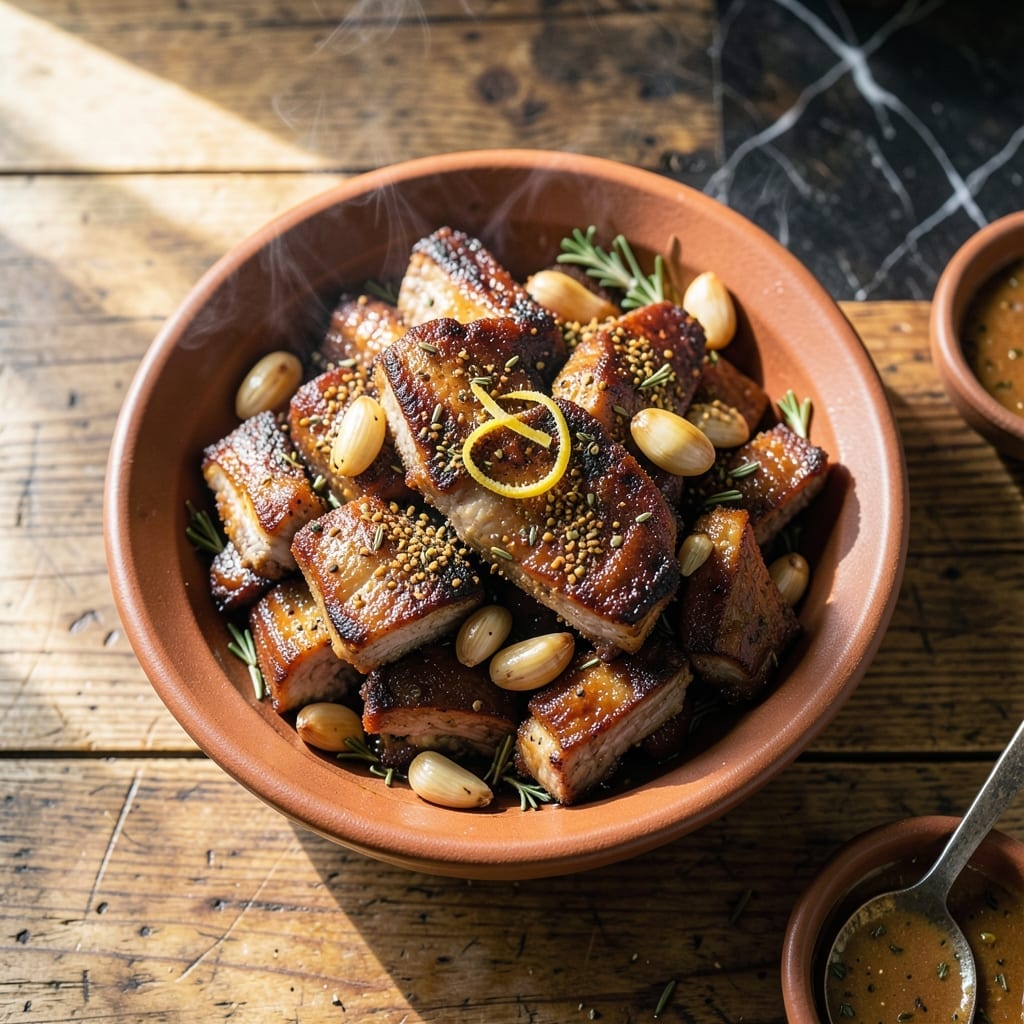
I developed this stove top method after realizing not everyone has an oven that fits a large Dutch oven. The secret is patience—not rushing the browning process.
This technique delivers crispy pork without the oven by using a heavy skillet and careful timing. The meat caramelizes in its own juices, creating that signature tender-crisp texture carnitas are known for.
You’ll end up with golden, shatteringly crispy edges and fall-apart tender centers, all infused with garlic, citrus, and spices. It’s the kind of dish that makes weeknight dinners feel like a fiesta.
Serve in warm tortillas with all the fixings. Here’s how to make it.
Ingredients for Pork Carnitas Recipe Stove Top
Pork shoulder and bold spices create that signature carnitas texture and flavor on the stovetop.
| Ingredient | Amount | Notes |
|---|---|---|
| Boneless Pork Shoulder 🥩 | 2 lb | Cut into 2-inch chunks, fat left on |
| Kosher Salt 🧂 | 1 ½ tsp | Diamond Crystal preferred for texture |
| Freshly Ground Black Pepper 🌶️ | 1 tsp | Coarsely ground for depth |
| Ground Cumin 🌿 | 1 tbsp | Toasted lightly for aroma |
| Dried Oregano 🍃 | 1 tbsp | Mexican oregano if available |
| Garlic Cloves 🧄 | 6 cloves | Minced for even distribution |
| Orange Juice 🍊 | ¾ cup | Freshly squeezed for brightness |
| Lime Juice 🍈 | ¼ cup | Freshly squeezed for acidity |
| Yellow Onion 🧅 | 1 whole | Diced medium for texture |
| Jalapeño Pepper 🌶️ | 1 whole | Seeded and minced for heat |
| Cinnamon Stick 🌰 | 1 whole | For warm spice infusion |
| Bay Leaf 🍃 | 1 whole | Dried for subtle depth |
| Olive Oil 🫒 | 2 tbsp | Divided for browning and finishing |
| Chicken Stock 🥫 | ½ cup | Low-sodium preferred for control |
The pork shoulder is non-negotiable here. Bone-in or boneless both work, but avoid lean cuts like tenderloin—they won’t caramelize properly. Look for well-marbled meat at Whole Foods or your local butcher. The fat renders down, creating that crispy exterior while keeping the interior moist. If your grocery store only carries pre-cut stew meat, that’s fine too (just check the marbling).
No fresh citrus? Bottled orange juice works in a pinch, but fresh delivers brighter acidity. Out of jalapeños? Serrano peppers add similar heat with slightly different character. The cinnamon stick can be swapped for ground cinnamon at one-quarter teaspoon. For the stock, vegetable broth makes a fine vegetarian alternative without affecting flavor much.
The carnitas keep wonderfully—actually improve overnight as flavors meld. Store in the fridge for up to 4 days, or freeze for 3 months. Reheat in a dry skillet to recrispen the edges before serving (the microwave makes them soggy).
Why You’ll Love This Recipe
- One Pot Magic: I just brown the pork, add the spices, and let the stove do the work—no oven, no fuss.
- Cumin & Oregano Pop: That earthy cumin with the oregano hits just right, and the pork soaks it all up.
- Taco Night Hero: I use these carnitas in tacos, burrito bowls, or even on nachos—endless options.
- Budget Stretch: A big pork shoulder feeds us for days, and it’s way cheaper than takeout.
Step-by-Step Instructions for Pork Carnitas Stove Top
Master the technique for achieving fall-apart tender meat with golden, crispy edges right on your stovetop.
Step 1: Season and Sear the Pork
Pat the 2 lb boneless pork shoulder chunks dry with paper towels. In a bowl, combine 1.5 tsp kosher salt, 1 tsp freshly ground black pepper, 1 tbsp ground cumin, and 1 tbsp dried oregano. Rub this mixture evenly over all surfaces of the pork, pressing it in gently.
Heat 1 tbsp olive oil in a large, heavy Dutch oven over medium-high heat. Working in batches to avoid crowding, add the pork and sear undisturbed for 4-5 minutes per side until deeply browned. This creates the flavor foundation for your carnitas. Transfer seared pork to a plate and set aside.
Step 2: Build the Flavor Base
In the same pot, reduce heat to medium and add the remaining 1 tbsp olive oil. Add the diced yellow onion and cook for 3-4 minutes until softened. Stir in the minced jalapeño pepper and 6 minced garlic cloves, cooking for 1 minute until fragrant.
Pour in 0.75 cup orange juice, 0.25 cup lime juice, and 0.5 cup chicken stock. Add the cinnamon stick and bay leaf, scraping up any browned bits from the bottom of the pot. These aromatic elements infuse the cooking liquid with complex, balanced flavors.
Step 3: Braise Until Tender
Return the seared pork to the pot along with any accumulated juices. The liquid should come about halfway up the pork. Bring to a simmer, then reduce heat to medium-low, cover, and cook for 1.5 to 2 hours, stirring occasionally.
You’ll know it’s ready when the meat shreds easily with a fork. The pork should be fork-tender and the cooking liquid reduced by about half. This slow braise transforms the tough shoulder into meltingly tender carnitas while allowing the flavors to meld deeply.
Step 4: Crisp the Carnitas
Once the pork is tender, remove the lid and increase heat to medium-high. Cook for an additional 10-15 minutes, stirring frequently, until the liquid has mostly evaporated and the pork begins to crisp at the edges.
Use a wooden spoon to break the pork into smaller pieces as it crisps. Watch for the edges to turn deep golden brown and develop that signature crispy texture. The pork should sizzle slightly in the pan as the remaining liquid cooks off.
Pro Tips For Making Pork Carnitas Recipe Stove Top
- Brown the Pork Well: I learned this the hard way—don’t rush the browning step. Let the pork shoulder develop a deep golden crust in the pot before adding liquids; this builds the rich, caramelized flavor that defines good carnitas.
- Cut Evenly: Slice the boneless pork shoulder into 1.5 to 2-inch chunks, not too small. Uniform pieces cook at the same rate and stay tender without turning to shreds too early.
- Skip the Overcrowding: Resist the urge to cram all the pork in at once if your pot is small. Cook in batches if needed—steaming from overcrowding boils the meat instead of browning it.
- Use Fresh Oregano: Sounds weird, but it works: if you have fresh oregano, use it instead of dried. It’s brighter and more aromatic, and I was skeptical until I tried it—now I always keep some on hand.
Essential Equipment for This Dish
Heavy Dutch Oven
I use my 5.5-quart Le Creuset Dutch oven for this recipe—its weight distributes heat evenly and maintains steady temperatures. A heavy pot prevents hot spots that could burn the pork before it caramelizes properly. 🔥
Wooden Spoon
A sturdy wooden spoon is essential for breaking up the pork as it crisps. I prefer mine with a flat edge to scrape up browned bits from the bottom. Avoid metal utensils that might scratch your cookware.
Tongs for Searing
Use 12-inch locking tongs to flip pork chunks during searing. This gives you precision without getting too close to the hot pan. I keep a pair dedicated to meat to avoid cross-contamination.
Dual-Probe Thermometer
While not strictly necessary, my ThermoWorks Smoke helps track both the pork’s internal temp and the cooking liquid. The pork is done at 195-200°F internal when it shreds easily. This takes the guesswork out of timing.
Cast Iron Skillet
For smaller batches, a 12-inch Lodge cast iron skillet works beautifully. It retains heat well for both searing and crisping. Just be sure to preheat it thoroughly to prevent sticking.
I inherited mine from Mrs. Henderson—it’s my most treasured kitchen tool. 💛
Nutrition Facts
Frequently Asked Questions
Can I use a different cut of pork?
Stick with pork shoulder for best results. Its high fat content renders down, creating crispy edges. Lean cuts like tenderloin won’t caramelize properly and dry out during the long cook.
How do I know when the carnitas are done?
The pork should shred easily with a fork. Internal temperature should reach 195-200°F. The liquid will reduce by half, and edges will crisp when ready.
Why did my carnitas turn out dry?
Likely cooked too hot or too long. Keep heat at medium-low during braising and don’t skip the crisping step. The fat should render slowly to keep meat moist.
Can I make this ahead of time?
Yes! Carnitas actually improve overnight. Store in fridge for up to 4 days or freeze for 3 months. Reheat in a dry skillet to recrispen.

- Potato Chip Cookie Recipe With Pecans: Buttery Crunch Meets Nutty Richness - October 30, 2026
- Potato Patty Recipe No Egg: Crispy Edges Without the Binder - October 30, 2026
- Paula Deen’s Potato Chip Cookies Recipe: Salty-Sweet Crunch in Every Bite - October 30, 2026