
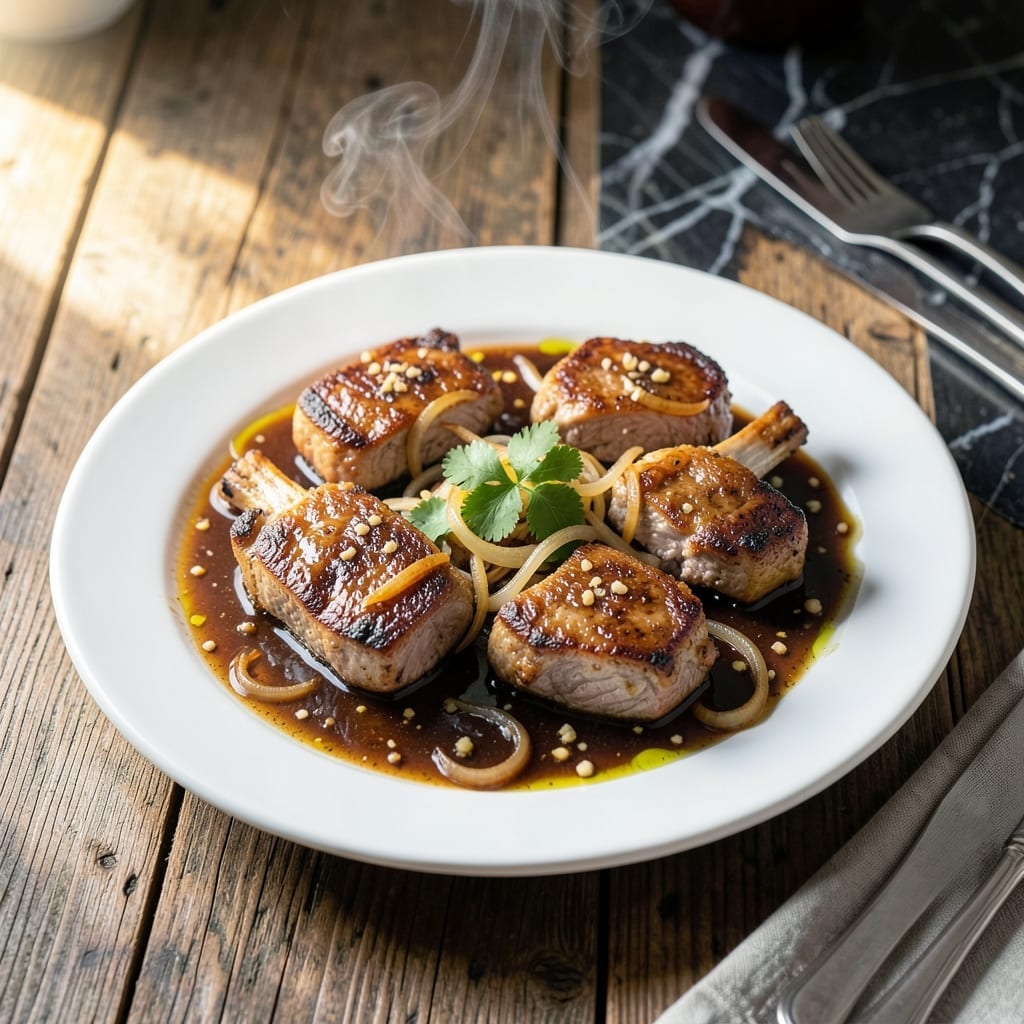
Filipino-style pork chops deliver a savory depth that’s hard to match, with a tangy garlic sauce that elevates every bite. This dish brings together simple ingredients to create something truly special.
I’ve perfected this braising method over years of working with pork, ensuring each chop stays tender while soaking up the rich, garlicky sauce. The balance of tangy and savory is what makes this recipe unforgettable.
The sauce clings to the meat, creating a restaurant-quality finish that’s easy to achieve at home. It’s the kind of dish that turns a weeknight meal into a celebration.
Serve with steamed rice to soak up every drop of that flavorful sauce. This is comfort food at its finest.
Ingredients for Pork Chop Recipe Pinoy with Sauce
Simple, bold ingredients create that signature Filipino tangy-savory braise everyone loves.
| Ingredient | Amount | Notes |
|---|---|---|
| Bone-In Pork Chops 🥩 | 4 whole | About 1 inch thick, center-cut |
| Soy Sauce 🫒 | ½ cup | Low-sodium preferred for balance |
| Calamansi Juice 🍋 | ¼ cup | Or substitute lime juice |
| White Vinegar 💧 | 2 tbsp | For tangy acidity |
| Garlic Cloves 🧄 | 8 cloves | Minced for maximum flavor |
| Brown Sugar 🍚 | 2 tbsp | Light or dark, packed |
| Black Peppercorns 🌶️ | 1 tsp | Freshly cracked preferred |
| Bay Leaves 🌿 | 2 whole | Fresh or dried |
| Onion 🧅 | 1 whole | Medium, thinly sliced |
| Olive Oil 🫒 | 2 tbsp | For searing pork chops |
| Water 💧 | 1 cup | For braising liquid |
| Cornstarch 🌾 | 1 tbsp | Mixed with water for thickening |
The pork chops are the foundation here. Bone-in, center-cut stays juicy through the long braise—avoid thin chops, they dry out. I source mine from local Asian markets where the selection is better, but any supermarket with a decent meat counter will have what you need. Look for chops with good marbling (those white fat streaks) for the best flavor and tenderness.
No calamansi? Lime or lemon juice works in a pinch, though calamansi has that unique citrus depth. For the soy sauce, Silver Swan or Datu Puti are authentic Filipino brands—if you can’t find them, any low-sodium soy sauce prevents the dish from getting too salty. The brown sugar balances the acidity, so don’t skip it (dark brown adds a molasses note I love).
The sauce thickens beautifully as it cools. Stores in the fridge for 4-5 days—reheat gently to avoid breaking the sauce. Freezes for 3 months if you want to make a batch. Always serve with steamed rice (that sauce is too good to waste).
Why You’ll Love This Recipe
- One Pan Magic: I love that I only need a single pan and 20 minutes to get these juicy pork chops with that glossy soy-calamansi sauce.
- Tangy Umami Bomb: The mix of calamansi and vinegar with soy sauce creates this bright, savory depth that makes me go back for seconds every time.
- Feeds the Fam: Between us, this is my go-to when I need to please both kids and adults—bone-in chops stay tender while the sauce soaks into rice perfectly.
- Leftovers Win: Honestly, the flavors taste even better the next day, and the pork stays moist when reheated with a splash of water.
Step-by-Step Instructions for Filipino-Style Braised Pork Chops
Here’s the method. Straightforward, tested, works every time.
Step 1: Sear the Bone-In Pork Chops
Pat the 4 whole Bone-In Pork Chops dry with paper towels to ensure a good sear. Heat 2 tbsp Olive Oil in a large, heavy skillet over medium-high heat until shimmering but not smoking.
Carefully add the pork chops and cook for 4-5 minutes per side until deeply browned. You want a rich, golden crust—this builds the flavor foundation. Don’t overcrowd the pan; work in batches if necessary. Remove the chops and set aside.
Step 2: Sauté Aromatics and Build the Braising Liquid
In the same skillet, add the thinly sliced Onion and cook for 3-4 minutes until softened and lightly browned. Stir in the 8 cloves Garlic Cloves and cook for 30 seconds until fragrant—don’t let it burn.
Pour in the 0.5 cup Soy Sauce, 0.25 cup Calamansi Juice, 2 tbsp White Vinegar, 2 tbsp Brown Sugar, 1 tsp Black Peppercorns, and 2 whole Bay Leaves. Stir to combine and deglaze the pan, scraping up any browned bits.
Step 3: Braise the Pork Chops to Tenderness
Return the pork chops to the skillet along with any accumulated juices. Add 1 cup Water and bring to a gentle simmer. Reduce the heat to low, cover, and braise for 40-45 minutes, flipping the chops halfway through.
Check occasionally to ensure the liquid doesn’t reduce too much—add a splash of water if needed. The pork chops are done when they’re fork-tender and the meat easily pulls away from the bone.
Step 4: Thicken the Sauce and Finish
Transfer the pork chops to a serving dish. Mix 1 tbsp Cornstarch with 2 tbsp of the braising liquid until smooth, then stir this slurry into the skillet. Cook over medium heat for 2-3 minutes, stirring constantly, until the sauce thickens to a glossy consistency.
Taste and adjust seasoning if needed, though the soy sauce and calamansi should provide a balanced savory-tangy flavor. Pour the sauce over the pork chops and serve hot with steamed rice.
Pro Tips For Making Pork Chop Recipe Pinoy With Sauce
- Sear Hot, Finish Low: Start the pork chops on high heat to get that golden crust—about 2-3 minutes per side—then drop to medium-low to cook through without burning the garlic in the sauce.
- Pound the Chops: Use the flat side of your knife to gently pound the bone-in chops to even thickness—prevents the thin parts from drying out while the thick parts finish cooking.
- Balance the Sour: Taste your calamansi-vinegar mix before adding to the pan; if it’s too sharp, a teaspoon of brown sugar mellows it out without overpowering the soy sauce.
- Rest Before Serving: Let the chops rest 5 minutes after cooking so the juices redistribute—skip this and you’ll lose half the flavor to the plate, not your mouth.
Flavor Customization for These Flavors
Spice It Up
For heat lovers, add 1-2 siling labuyo (Filipino bird’s eye chilies) when sautéing the garlic. The spice complements the tangy sauce beautifully. I also like a dash of chili flakes for a milder kick.
Sweet and Sour
Enhance the sweetness by adding ¼ cup pineapple juice to the braising liquid. It deepens the sauce’s complexity and pairs well with the calamansi. The natural acidity balances the dish perfectly.
Herb Infusion
Stir in 1 tbsp fresh thyme leaves or 3-4 kaffir lime leaves during braising for an aromatic twist. These herbs add layers of flavor without overpowering the dish. 🌿
Umami Boost
Add 1 tbsp oyster sauce or 1 tsp fish sauce to the braising liquid for extra depth. This small addition intensifies the savory notes, making the sauce richer and more complex.
Creamy Finish
Stir in 2 tbsp coconut milk at the end for a silky, slightly sweet finish. It mellows the tanginess and adds a luxurious texture to the sauce. Perfect for those who prefer a creamier dish.
Citrus Variation
Swap the calamansi juice for orange juice and add a strip of orange zest while braising. This gives a brighter, slightly sweeter citrus note that still complements the soy and garlic. ✨
Nutrition Facts
Frequently Asked Questions
What can I use if I don’t have calamansi?
Lime or lemon juice works as a great substitute. Use the same amount for that signature tangy kick.
How do I know when the pork is fully cooked?
Check for fork-tenderness—the meat should pull away from the bone easily. Internal temperature should reach 145°F.
Can I make this ahead of time?
The flavors deepen overnight. Store in an airtight container for up to 5 days or freeze for 3 months.
Why is my sauce too thin?
Simmer uncovered for 5-10 minutes to reduce, or mix 1 tbsp cornstarch with water and stir in. Thickens instantly!

- Potato Chip Cookie Recipe With Pecans: Buttery Crunch Meets Nutty Richness - October 30, 2026
- Potato Patty Recipe No Egg: Crispy Edges Without the Binder - October 30, 2026
- Paula Deen’s Potato Chip Cookies Recipe: Salty-Sweet Crunch in Every Bite - October 30, 2026