
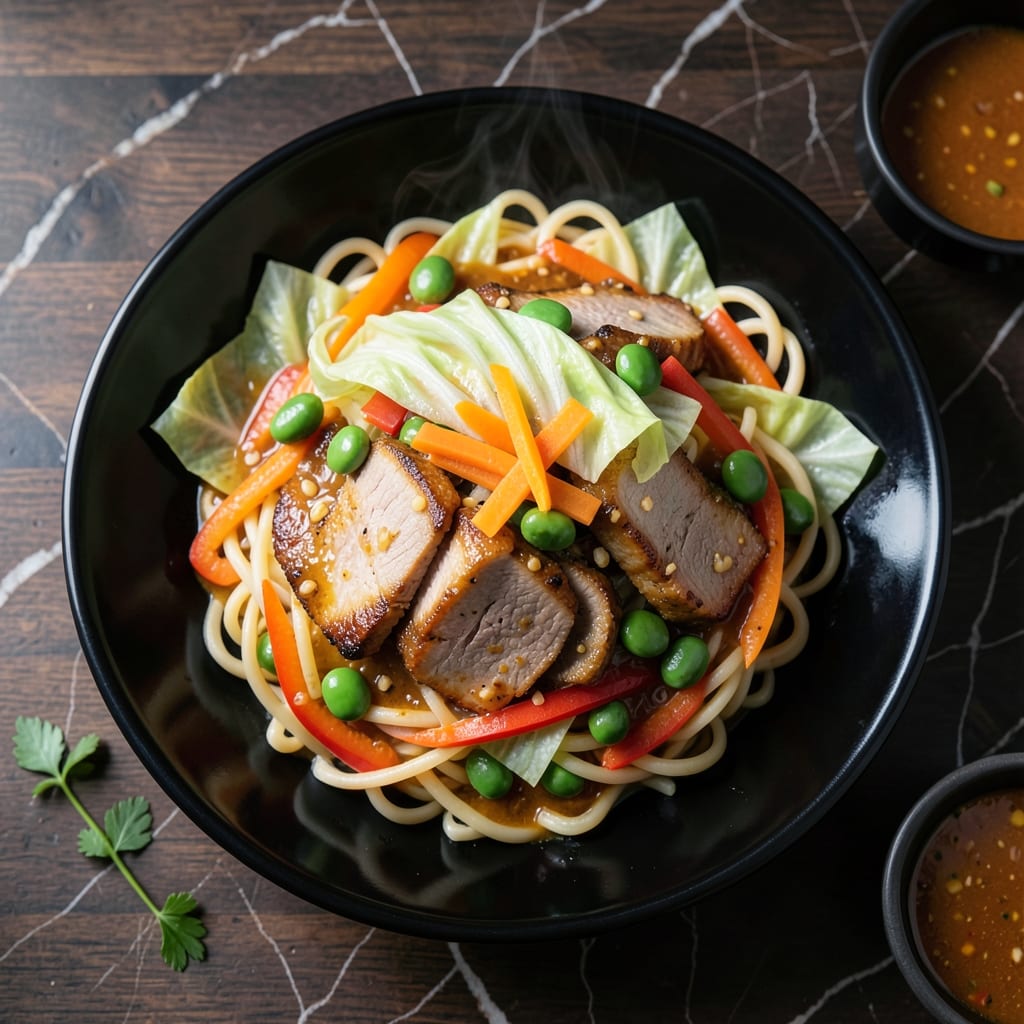
This Filipino-inspired stir-fry brings restaurant-quality flavors to your home kitchen. I perfected this version after testing multiple noodle types and vegetable combinations to achieve the ideal texture balance.
The secret lies in high-heat stir-frying and precise ingredient timing. Thinly sliced pork cooks quickly while maintaining tenderness, and the vegetables retain their crunchy texture. A simple soy-based sauce ties everything together without overpowering the fresh ingredients.
What results is a colorful, aromatic dish with perfectly cooked noodles, savory pork, and crisp vegetables. The sauce coats every component evenly, creating a harmonious blend of flavors and textures that defines authentic chop suey.
Serve hot for the best experience, as the noodles absorb the flavors beautifully when fresh from the wok.
Ingredients for Pork Chop Suey Recipe Panlasang Pinoy
Thin pork, crisp veggies, and chewy noodles make this dish sing with texture.
| Ingredient | Amount | Notes |
|---|---|---|
| Pork Shoulder 🥩 | 1 lb | Thinly sliced for quick cooking |
| Egg Noodles 🍜 | 8 oz | Fresh or dried, cooked al dente |
| Napa Cabbage 🥬 | 2 cups | Shredded, for crunchy texture |
| Carrots 🥕 | 2 whole | Julienned for even cooking |
| Snow Peas 🌱 | 1 cup | Trimmed, fresh or frozen |
| Bell Peppers 🌶️ | 1 whole | Thinly sliced, any color |
| Garlic Cloves 🧄 | 4 cloves | Minced for aromatic base |
| Fresh Ginger 🌿 | 1 tbsp | Grated for depth of flavor |
| Soy Sauce 🫒 | ¼ cup | Low-sodium preferred for balance |
| Oyster Sauce 💧 | 2 tbsp | Vegan alternative if needed |
| Sesame Oil 🫒 | 1 tbsp | Toasted for nutty aroma |
| Chicken Broth 🥣 | ½ cup | Low-sodium for controlled seasoning |
| Cornstarch 🌾 | 1 tbsp | Mixed with water for thickening |
| Green Onions 🧅 | ½ cup | Sliced for garnish and freshness |
| Vegetable Oil 🫒 | 2 tbsp | High smoke point for stir-frying |
The pork needs to be thinly sliced—ask your butcher to do it, or freeze the meat for 30 minutes first to make slicing easier. Asian markets will have the best selection for egg noodles, but regular spaghetti works in a pinch. Napa cabbage and snow peas are non-negotiable for that signature crunch (the good stuff, not the pre-shredded kind). Look for bright, firm vegetables—they should snap when bent.
No oyster sauce? Hoisin or vegetarian oyster sauce at one-to-one ratio. Swap pork for chicken or tofu if you prefer—just slice it thin. Bell peppers not your thing? Bok choy or snap peas work great. The soy sauce can be tamari for gluten-free. Fresh ginger is key—don’t substitute ground (or whatever you’ve got), it’s worth the extra minute.
This tastes best fresh from the wok, but leftovers keep 3-4 days in the fridge. Reheat in a pan with a splash of water to revive the noodles. Freezing isn’t ideal—textures go mushy. always slice pork thinly for even cooking.
Why You’ll Love This Recipe
- One Pan Meal: I toss everything in a single pan—the pork shoulder, veggies, and noodles—and it’s done before I can set the table.
- Umami Bomb: The soy sauce and pork shoulder create this deep, savory richness that coats every bite of egg noodles and napa cabbage.
- Feeds the Crowd: I’ve stretched this to six portions without breaking a sweat, and honestly, leftovers taste even better the next day.
- Budget Stretch: Pork shoulder and seasonal veggies keep the cost low, and I always have carrot and cabbage scraps to use up.
Step-by-Step Instructions for Pork Chop Suey with Stir-Fried Noodles
Here’s my proven method for achieving perfectly tender pork and crisp vegetables every time.
Step 1: Prepare the Pork and Sauce Base
Thinly slice the 1 lb Pork Shoulder into bite-sized strips, working against the grain for maximum tenderness. In a small bowl, whisk together the 0.25 cup Soy Sauce, 2 tbsp Oyster Sauce, and 1 tbsp Cornstarch until smooth. This creates your flavorful marinade and thickening agent in one.
Place the pork in a bowl and pour half of the soy-oyster mixture over it, tossing to coat evenly. Let it marinate while you prep the vegetables. The cornstarch in the marinade will help the pork retain moisture during high-heat cooking.
Step 2: Stir-Fry the Pork to Perfection
Heat 1 tbsp Vegetable Oil in a wok or large skillet over high heat until it shimmers. Add the marinated pork in a single layer, being careful not to overcrowd the pan. Cook undisturbed for 1-2 minutes to develop a light sear.
Stir-fry for another 2-3 minutes until the pork is cooked through and lightly browned. Remove the pork to a plate and set aside. The pork should be just cooked at this stage—it will finish cooking when combined with the vegetables later.
Step 3: Cook the Vegetables Until Crisp-Tender
In the same pan, add the remaining 1 tbsp Vegetable Oil. Add the 4 cloves Garlic Cloves and 1 tbsp Fresh Ginger, stir-frying for 30 seconds until fragrant. Immediately add the 2 whole Carrots, 1 whole Bell Peppers, and 1 cup Snow Peas.
Stir-fry for 3-4 minutes until the vegetables are bright in color and just beginning to soften. Add the 2 cups Napa Cabbage and cook for an additional 2 minutes until wilted but still crisp. The vegetables should retain some bite—overcooking will make them mushy.
Step 4: Combine Everything with the Noodles
Return the pork to the pan along with any accumulated juices. Pour in the remaining soy-oyster mixture and the 0.5 cup Chicken Broth. Stir well to combine and cook for 1-2 minutes until the sauce thickens slightly and coats the pork and vegetables.
Add the cooked 8 oz Egg Noodles and toss everything together for 1 minute to heat through and distribute the sauce evenly. The noodles should be well-coated but not soggy. Drizzle with the 1 tbsp Sesame Oil for a nutty finish.
Step 5: Garnish and Serve Immediately
Transfer the chop suey to a serving platter and garnish with the 0.5 cup Green Onions. The green onions add a fresh, oniony crunch that brightens up the dish. Serve immediately while hot—the noodles will continue to absorb the sauce as it sits.
Each serving should have a good balance of pork, vegetables, and noodles, all glistening with the savory sauce. The pork should be tender, the vegetables crisp-tender, and the noodles perfectly coated.
Pro Tips For Making Pork Chop Suey Recipe Panlasang Pinoy
- Velvet the Pork: Slice the pork shoulder thinly against the grain, then marinate with 1 tsp baking soda for 15 minutes before cooking. I learned this the hard way—it keeps the meat tender even when stir-fried at high heat.
- Blanch the Noodles: Parboil the egg noodles for just 2 minutes before adding to the wok. Sounds weird, but it works: they’ll soak up the sauce without turning mushy in the final stir-fry.
- Skip the Overcrowding: Stir-fry the pork in batches to avoid steaming. After burning three batches, I finally figured out that crowded pans boil the meat instead of browning it.
- Prep Veggies First: Have your napa cabbage, carrots, and snow peas all sliced and ready before you start cooking. My grandmother swore by this, and she was right: chop suey comes together fast once the heat is on.
Serving Suggestions for This Recipe
Family-Style Plating
I love serving this on a large, warm platter with the pork and vegetables mounded in the center, surrounded by the noodles. This presentation lets everyone dig in and customize their portions. The colors pop beautifully against a dark wooden serving board. 💛
Individual Bowls
For a more refined approach, divide the noodles among bowls first, then top with equal portions of pork and vegetables. Drizzle any extra sauce from the pan over each bowl. This ensures everyone gets a perfect balance of all components.
Garnish Ideas
Beyond green onions, try adding toasted sesame seeds or crushed peanuts for extra crunch. A sprinkle of red pepper flakes adds a nice kick for those who enjoy heat. Fresh cilantro also works well if you’re a fan of its bright flavor.
Side Dish Pairings
A simple cucumber salad with rice vinegar and a pinch of sugar makes a refreshing contrast to the rich stir-fry. I also like serving with steamed jasmine rice for those who want extra carbs. The rice soaks up the leftover sauce beautifully.
Beverage Pairings
Cold jasmine tea or San Pellegrino with a lime wedge cuts through the savory flavors. For beer lovers, a crisp pilsner like San Miguel complements the dish perfectly. These pairings work especially well in Portland’s craft beer culture. ✨
Kid-Friendly Serving
My daughter Lily prefers her portion with just noodles and pork, so I serve the vegetables on the side. She also loves dipping her chop suey in a little extra soy sauce. It’s a great way to introduce kids to new flavors gradually.
Nutrition Facts
Frequently Asked Questions
Can I use chicken instead of pork?
Swap the pork for 1 lb boneless chicken breast or thigh, sliced thin. Chicken cooks faster, so reduce stir-fry time to 2-3 minutes total. The flavors work just as well with poultry.
What if I don’t have a wok?
A large skillet with high sides works fine. Use medium-high heat and cook in batches to avoid steaming the ingredients. The key is maintaining that high heat for proper stir-frying.
How do I keep the vegetables crisp?
Cut them uniformly and stir-fry in small batches. Overcrowding causes steaming instead of searing. Add the most delicate veggies (Napa cabbage) last to prevent overcooking.
Can I make this gluten-free?
Yes! Use tamari instead of soy sauce and gluten-free noodles. Check that your oyster sauce is gluten-free or use a certified GF alternative. The dish will taste just as delicious.

- Potato Chip Cookie Recipe With Pecans: Buttery Crunch Meets Nutty Richness - October 30, 2026
- Potato Patty Recipe No Egg: Crispy Edges Without the Binder - October 30, 2026
- Paula Deen’s Potato Chip Cookies Recipe: Salty-Sweet Crunch in Every Bite - October 30, 2026