
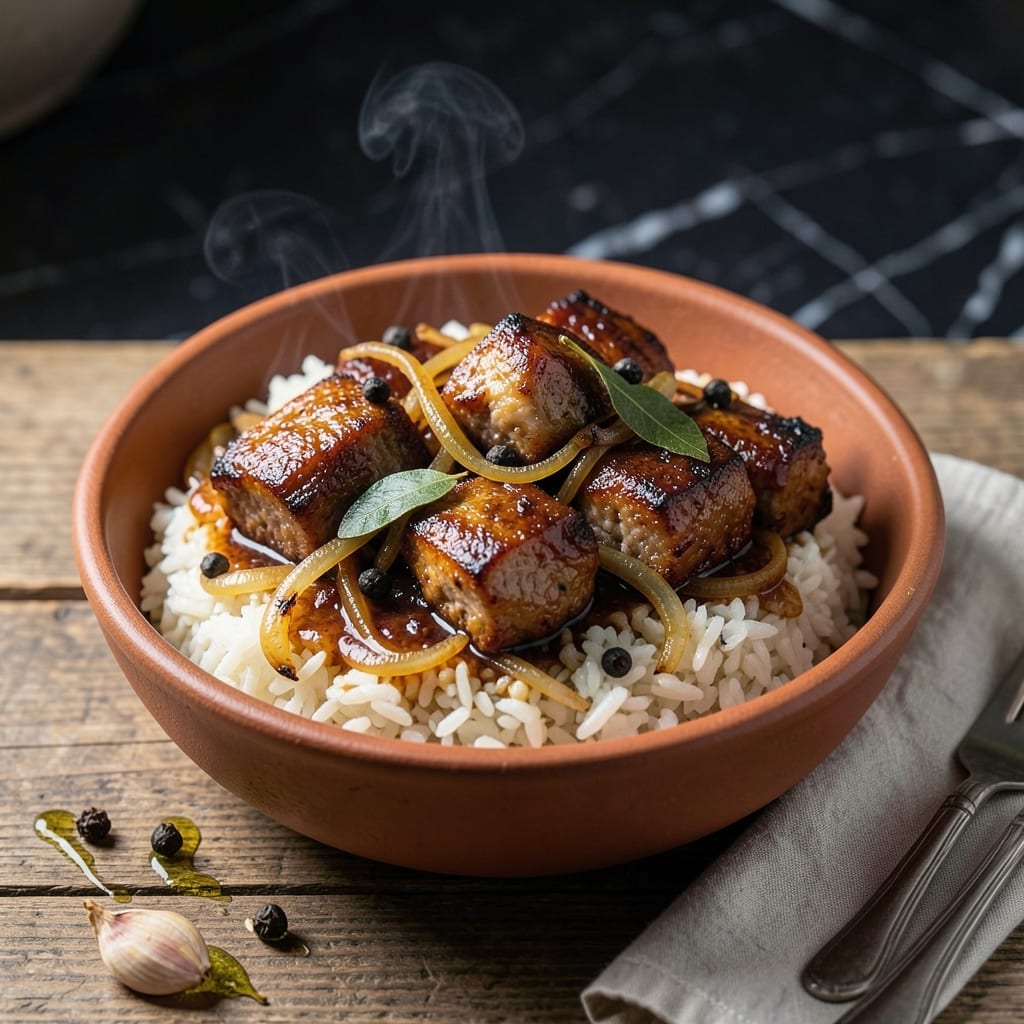
This Pinoy-style pork cubes recipe brings authentic Filipino flavors to your kitchen with a simple yet foolproof method.
Tender pork pieces are marinated in a bold blend of soy sauce, vinegar, garlic, and black peppercorns, then braised until fork-tender. The result is deeply savory bites with a rich, tangy sauce that clings to every piece.
The adobo-style preparation ensures a perfect balance of salty, sour, and umami notes. Each bite delivers the comfort of traditional Filipino cooking without complicated techniques.
Serve with steamed rice to soak up every drop of the flavorful sauce. This dish is ready in under 1 hour.
Ingredients for Pork Cubes Recipe Pinoy
Authentic Filipino flavors start with these bold ingredients for fork-tender adobo-style pork.
| Ingredient | Amount | Notes |
|---|---|---|
| Pork Shoulder 🥩 | 2 lb | Cut into 1.5-inch cubes |
| Soy Sauce 🫒 | ¾ cup | Filipino brand preferred |
| White Vinegar 💧 | ½ cup | Cane or distilled |
| Garlic Cloves 🧄 | 12 cloves | Peeled and smashed |
| Black Peppercorns 🌶️ | 1 tbsp | Whole, lightly crushed |
| Bay Leaves 🍃 | 3 whole | Dried or fresh |
| Water 💧 | 1 cup | For braising liquid |
| Brown Sugar 🍚 | 2 tbsp | Light or dark |
| Cooking Oil 🫒 | 2 tbsp | Neutral-flavored preferred |
| Onion 🧅 | 1 whole | Medium, sliced thin |
| Salt 🧂 | 1 tsp | Adjust to taste |
| Green Onions 🌿 | 3 whole | Thinly sliced for garnish |
The pork shoulder is essential for that melt-in-your-mouth texture—avoid lean cuts like tenderloin. Most Asian markets carry Filipino soy sauce brands like Silver Swan or Datu Puti which have the right balance of salt and umami. For the peppercorns, whole and freshly crushed release more aroma than pre-ground. Bay leaves should be whole; crushed ones can make the sauce bitter.
No Filipino soy sauce? Regular soy sauce plus a pinch of MSG gets you close. Out of vinegar? Apple cider or rice vinegar work at the same ratio. The brown sugar can be swapped for coconut sugar (common in Filipino cooking) or omitted entirely. Pork belly can substitute shoulder if you want richer, fattier bites, but reduce braising time by half.
Marinated pork keeps in the fridge for 24-48 hours before cooking, allowing flavors to develop. Leftovers store in airtight containers for 4-5 days or freeze for 3 months. The sauce thickens as it cools—reheat gently with a splash of water.
Why You’ll Love This Recipe
- One Pot Wonder: I just dump the pork shoulder, soy sauce, vinegar, garlic, and peppercorns in a pot and let it simmer—no fancy steps.
- Garlic Soy Magic: The combination of soy sauce, vinegar, and garlic gives it that tangy, savory taste I crave every time.
- Feeds the Family: It’s my go-to for gatherings or meal prep since it stretches easily and everyone loves it.
- Budget Keeper: Pork shoulder is affordable, and this recipe makes it taste like a million bucks.
Step-by-Step Instructions for Pork Cubes Recipe Pinoy
Master the technique for tender, flavorful adobo-style pork with this professional method.
Step 1: Sear the Pork Shoulder Cubes
Heat the 2 tbsp cooking oil in a large pot over medium-high heat until shimmering. Add the 2 lb pork shoulder cubes in a single layer, working in batches if needed. Sear undisturbed for 3-4 minutes per side until deeply browned on all surfaces.
This initial sear develops a rich fond that will deepen the sauce’s flavor. Don’t overcrowd the pot or the temperature will drop, causing the meat to steam rather than brown. Transfer seared pork to a plate and set aside.
Step 2: Build the Aromatic Base
In the same pot, add the sliced onion and cook for 2-3 minutes until softened. Add the 12 cloves garlic cloves, 1 tbsp black peppercorns, and 3 whole bay leaves, stirring constantly for 1 minute until fragrant.
The garlic should turn pale gold but not brown. These aromatics form the flavor foundation of the dish. The residual oil and pork fond will infuse into the vegetables, creating a complex base for your braising liquid.
Step 3: Create the Braising Liquid
Pour in the 0.75 cup soy sauce, 0.5 cup white vinegar, 1 cup water, and 2 tbsp brown sugar. Stir well to combine, scraping up any browned bits from the bottom. Bring to a gentle boil over medium heat.
This liquid should be balanced—salty from the soy, tangy from the vinegar, and subtly sweet from the sugar. The vinegar’s acidity will tenderize the pork as it braises. Taste and adjust with the 1 tsp salt if needed, though the soy sauce may provide enough seasoning.
Step 4: Braise to Tender Perfection
Return the pork to the pot, ensuring it’s mostly submerged in the liquid. Reduce heat to low, cover, and simmer for 1.5-2 hours, stirring occasionally.
The pork is done when it’s fork-tender and the liquid has reduced to a glossy, syrupy consistency. Towards the end of cooking, uncover the pot to allow the sauce to thicken. The pork should easily pull apart with a fork but still hold its shape.
Step 5: Finish and Serve
Discard the bay leaves. Skim any excess fat from the surface if desired. Garnish with the 3 whole green onions, thinly sliced. Serve hot over steamed rice, allowing each bite to soak up the rich, garlicky sauce.
The sauce should be thick enough to cling to the pork but still pourable. If it’s too thin, simmer uncovered for an additional 5-10 minutes. The flavors will continue to meld as it rests.
Pro Tips For Making Pork Cubes Recipe Pinoy
- Sear the Pork First: I learned this the hard way—browning the pork cubes in a hot pan before adding the soy-vinegar mixture deepens the flavor and keeps them juicy.
- Marinate Overnight: Sounds like extra work, but letting the pork soak in soy sauce, vinegar, and crushed garlic for at least 4 hours (or overnight) makes the meat absurdly tender.
- Skip the Overcrowding: After burning three batches, I finally figured out that cooking the pork in a single layer—never piling it up—ensures even browning and proper caramelization.
- Use Fresh Peppercorns: My grandmother swore by this, and she was right: crushing whole black peppercorns just before cooking releases way more aroma than pre-ground pepper.
Storing and Reheating This Recipe
Refrigerator Storage
Let the pork cubes cool completely before storing—I usually wait about 1 hour. Transfer to airtight containers with some sauce. They’ll stay fresh in the fridge at 40°F or below for 4-5 days. The flavors deepen overnight, making leftovers even tastier. ❄️
Freezer Storage
For longer storage, portion into freezer-safe containers or heavy-duty zip-top bags. Leave ½ inch headspace for expansion. These freeze beautifully for up to 3 months without losing texture. I always label with the date to keep track.
Stovetop Reheating
My preferred method: warm in a saucepan over medium-low heat with a splash of water or broth. Stir occasionally for 8-10 minutes until heated through. This keeps the pork moist and the sauce from breaking.
Microwave Reheating
For quick meals, microwave individual portions covered with a damp paper towel. Use 50% power in 1-minute intervals, stirring between each. This prevents the edges from drying out. 🔥
Sauce Consistency Tip
The sauce thickens as it cools. If it seems too thick when reheating, add 2-3 tbsp water and stir well. If too thin, simmer uncovered for 3-5 minutes to reduce. Taste and adjust seasoning with a pinch of salt if needed.
Nutrition Facts
Frequently Asked Questions
Can I use a different cut of pork?
Pork shoulder is ideal, but pork belly works too for richer flavor. Avoid lean cuts like tenderloin as they dry out during braising.
What if I don’t have Filipino soy sauce?
Use regular soy sauce plus a pinch of MSG for similar depth. The dish will still be delicious with standard soy.
Why is my sauce too thin?
Uncover and simmer for 5-10 minutes to reduce. The vinegar content prevents it from thickening as much as other sauces.
How can I make it less salty?
Balance with extra brown sugar or a splash of coconut milk. Taste before adding more salt.

- Potato Chip Cookie Recipe With Pecans: Buttery Crunch Meets Nutty Richness - October 30, 2026
- Potato Patty Recipe No Egg: Crispy Edges Without the Binder - October 30, 2026
- Paula Deen’s Potato Chip Cookies Recipe: Salty-Sweet Crunch in Every Bite - October 30, 2026