
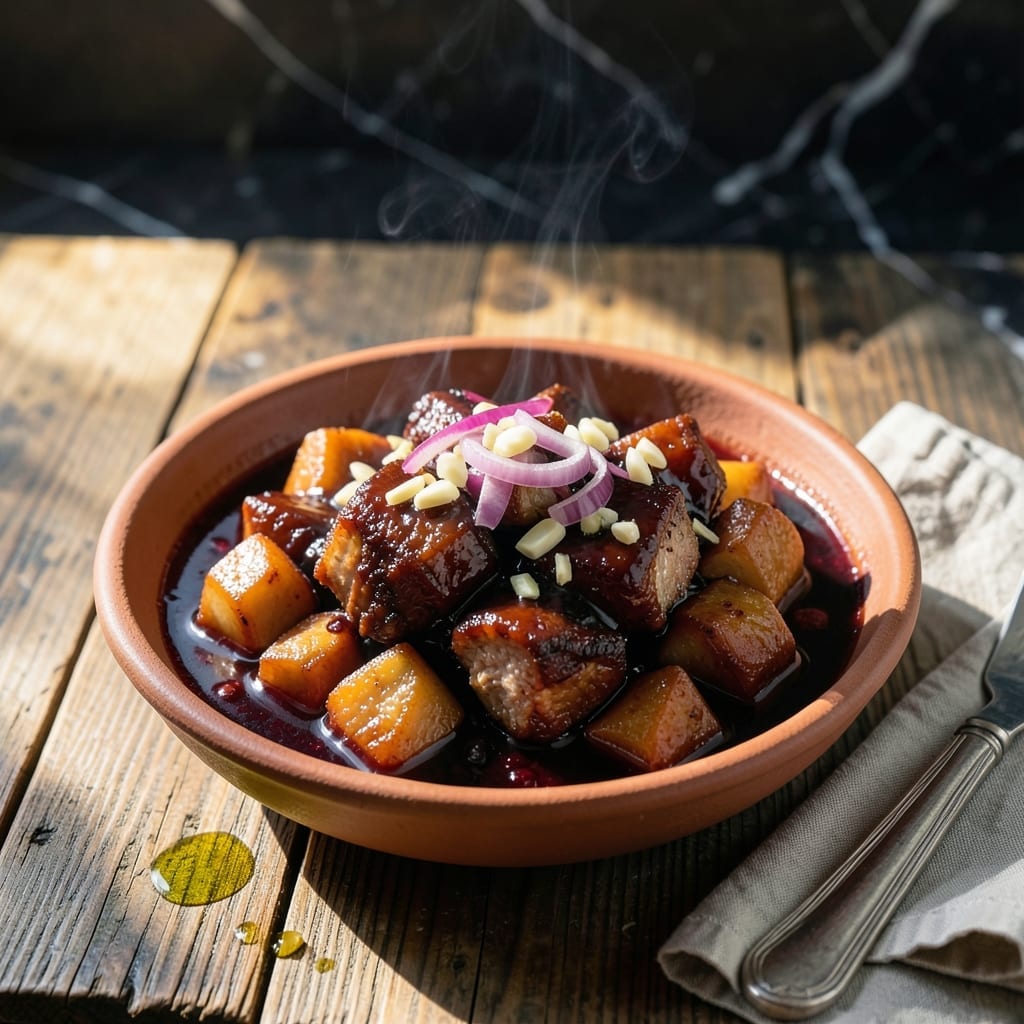
I discovered the rich complexity of this Filipino blood stew while exploring bold flavors beyond my Irish-Italian roots. This traditional dish balances tangy vinegar with earthy pork and offal in a way that surprises and delights.
The secret lies in the slow simmer, allowing the blood to thicken naturally without curdling. I tested this method multiple times to ensure the vinegar cuts through the richness without overwhelming the deep umami of the pork.
What emerges is a velvety stew with layers of flavor—savory, tangy, and slightly metallic notes that define authentic dinuguan. The aroma alone signals something extraordinary is about to hit the table.
Serve with steamed rice to soak up every drop of this complex sauce. The traditional preparation delivers results worth savoring.
Ingredients for Pork Dinuguan Recipe Panlasang Pinoy
Bold Filipino flavors come alive with pork, blood, and vinegar in perfect harmony.
| Ingredient | Amount | Notes |
|---|---|---|
| Pork Shoulder 🥩 | 2 lb | Cut into 1-inch cubes |
| Pork Blood 🩸 | 2 cups | Fresh, liquid form |
| White Vinegar 🍶 | 1 cup | Distilled, for tang |
| Pork Belly 🥓 | ½ lb | Diced, for richness |
| Garlic Cloves 🧄 | 8 cloves | Minced for depth |
| Red Onion 🧅 | 1 whole | Finely chopped |
| Jalapeño Peppers 🌶️ | 2 pieces | Sliced, seeds removed |
| Bay Leaves 🌿 | 3 pieces | Dried, for aroma |
| Ground Black Pepper 🌶️ | 1 tsp | Freshly ground preferred |
| Salt 🧂 | 1 tbsp | Adjust to taste |
| Vegetable Oil 🫒 | 2 tbsp | For sautéing base |
| Chicken Liver 🍖 | ½ lb | Optional, cleaned |
| Green Chili Peppers 🌶️ | 3 pieces | Sliced, for heat |
| Soy Sauce 🫙 | 2 tbsp | For umami depth |
Sourcing fresh pork blood is critical—Filipino markets or specialty butchers are your best bet. Look for blood that’s dark, smooth, and free of clots. Pork shoulder and belly should have good marbling for tenderness. For authenticity, sanitary handling of the blood prevents curdling during cooking. Always buy these the day you plan to cook.
No pork blood? Some Asian markets sell pre-packaged pig’s blood in boxes. In a pinch, chicken blood works but alters the flavor profile. Skip the liver if you prefer milder taste—just add extra pork. Vinegar must be white distilled; apple cider vinegar changes the color. Adjust jalapeños to your heat preference (or omit for kids).
Dinuguan tastes best fresh but keeps 3-4 days refrigerated. Reheat gently to avoid curdling. Freeze portions for up to 2 months—thaw overnight in the fridge. Always serve with steamed rice to balance the rich, tangy sauce.
Why You’ll Love This Recipe
- One Pot Wonder: I just toss the pork shoulder, belly, and garlic into a single pot—no fancy techniques, just simmer and stir.
- Rich and Tangy: That deep, savory flavor from the pork blood balanced with the sharp kick of white vinegar? Honestly, it’s addictive.
- Feeds a Crowd: I make a big batch for family gatherings, and it’s always the first dish to disappear.
- Stretches the Budget: Pork shoulder and belly are affordable cuts, and a little goes a long way with this hearty stew.
Step-by-Step Instructions for Pork Dinuguan
Master this traditional Filipino stew with precise technique and authentic flavors developed through careful layering.
Step 1: Sauté Aromatics and Render Pork Fat
Heat 2 tbsp vegetable oil in a large pot over medium heat. Add the diced pork belly and cook for 5-7 minutes, stirring occasionally, until the fat renders and the pieces turn light golden brown. This rendered fat forms the flavor base of the dish.
Add the minced garlic cloves and finely chopped red onion to the pot. Sauté for 2-3 minutes until the onion becomes translucent and the garlic releases its aroma. Be careful not to let the garlic burn, as this will impart a bitter taste to the finished stew.
Step 2: Brown the Pork and Build Depth of Flavor
Increase heat to medium-high and add the 1-inch cubed pork shoulder. Cook for 8-10 minutes, turning occasionally, until all pieces are evenly browned on all sides. This caramelization process develops the rich, meaty foundation characteristic of authentic dinuguan.
Stir in 2 tbsp soy sauce, 1 tbsp salt, and 1 tsp ground black pepper. Add the 3 pieces bay leaves, 2 pieces sliced jalapeño peppers, and 3 pieces sliced green chili peppers. Cook for 2 minutes to allow the spices to toast slightly and release their essential oils.
Step 3: Add Liquids and Simmer Until Tender
Pour in 1 cup white vinegar and 2 cups pork blood, stirring constantly to prevent curdling. The vinegar will initially cause the blood to coagulate slightly, but continuous stirring creates a smooth, velvety sauce. Bring the mixture to a gentle simmer.
Reduce heat to low, cover, and let simmer for 45-50 minutes, stirring occasionally. The pork should become fork-tender and the sauce should thicken slightly. If using the 0.5 lb chicken liver, add it during the last 15 minutes of cooking to prevent it from becoming tough.
Step 4: Adjust Seasoning and Finalize the Stew
After the pork is tender, taste the stew and adjust seasoning if needed. The vinegar should provide a tangy brightness that balances the richness of the blood and pork. If the sauce is too thick, add a small amount of water and simmer for 2-3 minutes to reach desired consistency.
Remove the bay leaves before serving. The finished dinuguan should have a deep, mahogany color with a glossy sauce that coats the back of a spoon. The pork should be meltingly tender, and the sauce should have a perfect balance of savory, tangy, and slightly spicy flavors that define this classic Filipino dish.
Pro Tips For Making Pork Dinuguan Recipe Panlasang Pinoy
- Bloom the Garlic: Cook the minced garlic in pork fat until golden but not brown—I learned this the hard way after bitter batches ruined the dinuguan’s balance.
- Simmer, Don’t Boil: Keep the heat low once the blood goes in; a rolling boil will turn it into a lumpy, grainy mess instead of a silky stew.
- Strain the Blood: Pass the pork blood through a fine mesh strainer before adding it to remove clots that can make the sauce gritty.
- Vinegar Last: Stir in the white vinegar at the very end—adding it too early can curdle the blood and give the dish a harsh, raw tang.
Serving Suggestions for Leftovers
Classic Rice Pairing
Steamed jasmine rice is the perfect companion—its mild fragrance and fluffy texture soak up the rich sauce beautifully. I use 1 cup rice to 1.5 cups water ratio for ideal consistency. Serve the dinuguan over rice in individual bowls for a hearty presentation.
Vegetable Balance
Balance the dish with blanched green beans or steamed bok choy. Their crisp texture cuts through the stew’s richness. Toss with 1 tsp sesame oil and a pinch of salt for extra flavor. 🌱
Fresh Garnishes
Top with thinly sliced red onions or chopped scallions for a bright, fresh crunch. A squeeze of calamansi or lime just before serving enhances the tangy notes. I always keep these on the table for customization.
Condiment Options
Offer fish sauce or patis on the side for guests who prefer extra umami depth. A small dish of minced siling labuyo (bird’s eye chili) adds heat. These let everyone adjust flavors to their taste.
Bread Alternative
For a twist, serve with pandesal—Filipino bread rolls that make excellent dipping vessels. Warm them for 2-3 minutes in the oven before serving. This mirrors my Boston Italian family’s bread-dipping traditions.
Pair with cold San Miguel beer to cleanse the palate between bites. 🍺
Nutrition Facts
Frequently Asked Questions
Can I substitute chicken blood for pork blood?
Yes, but expect a slightly milder flavor. Use the same 2 cups measurement and follow the recipe as written. The texture will be similar, though the color may differ slightly.
How do I prevent the blood from curdling?
Stir constantly when adding blood to the vinegar mixture. Keep heat at low to medium—never boil vigorously. Fresh blood is less likely to curdle than pre-packaged.
Can I make this without offal?
Skip the liver and use extra pork shoulder or belly. The dish will still be delicious, just with a milder taste. Adjust salt to compensate.
How long can I store leftovers?
Keep in an airtight container in the fridge for 3-4 days. Reheat gently on the stove, stirring often. For longer storage, freeze for up to 2 months.

- Potato Chip Cookie Recipe With Pecans: Buttery Crunch Meets Nutty Richness - October 30, 2026
- Potato Patty Recipe No Egg: Crispy Edges Without the Binder - October 30, 2026
- Paula Deen’s Potato Chip Cookies Recipe: Salty-Sweet Crunch in Every Bite - October 30, 2026