
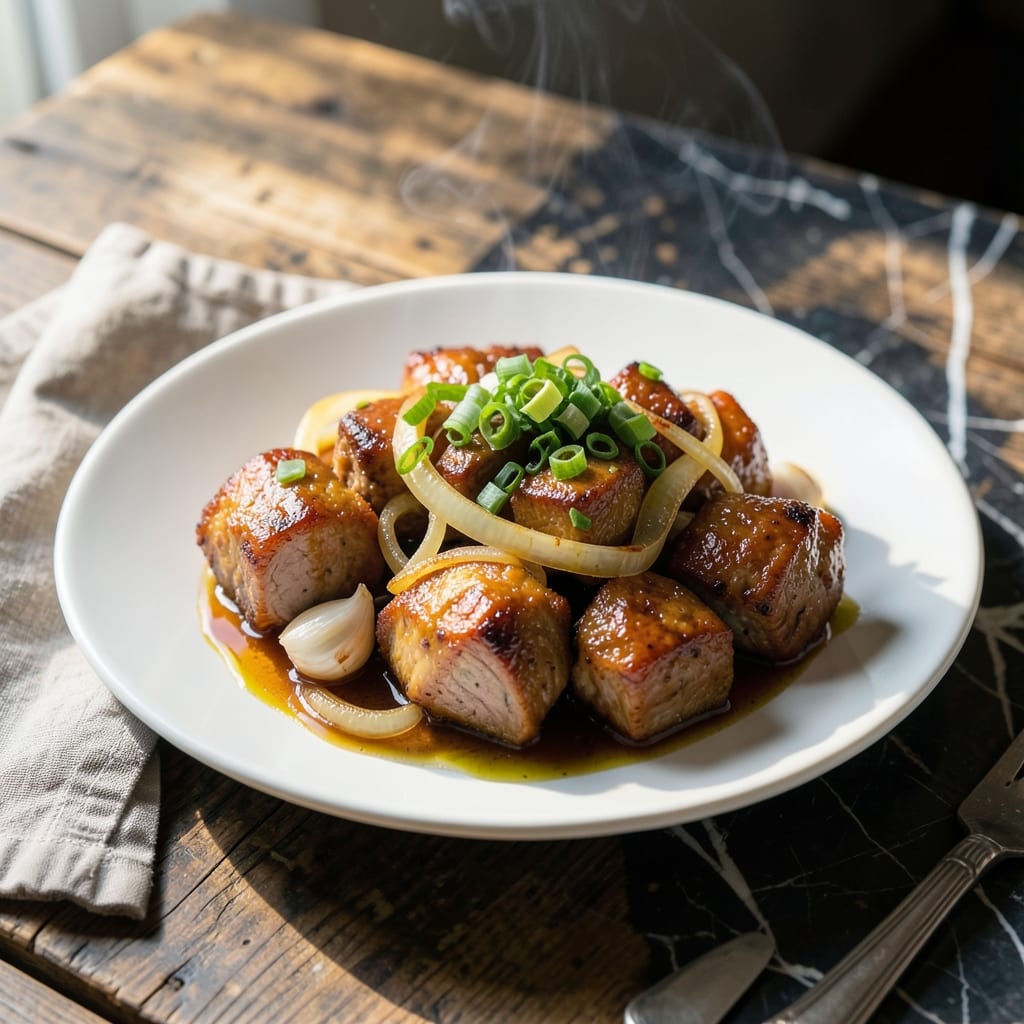
This Filipino stew combines tender pork with a perfect balance of sweet, sour, and savory flavors that define comfort food at its best.
I developed this version after testing multiple ratios to capture the authentic taste of home-style cooking. The dish simmers slowly, allowing the meat to absorb the rich sauce.
What emerges is fall-off-the-bone pork in a glossy, deeply flavorful sauce that’s ideal over steamed rice. Each bite delivers complex layers that make it irresistible.
The beauty lies in its simplicity—basic ingredients transform into something extraordinary through careful cooking. This is the kind of dish that brings families together.
Ingredients for Pork Estofado Recipe in Tagalog
Tender pork meets sweet-sour savory depth in this classic Filipino stew. Simple ingredients, extraordinary results.
| Ingredient | Amount | Notes |
|---|---|---|
| Pork Shoulder 🐖 | 2 lb | Cut into 2-inch cubes, bone-in preferred |
| Soy Sauce 🫙 | ½ cup | Use Filipino brands like Silver Swan |
| White Vinegar 🍶 | ½ cup | Cane vinegar if available |
| Brown Sugar 🍚 | ¼ cup | Packed, for sweetness balance |
| Garlic Cloves 🧄 | 8 cloves | Peeled and minced |
| Yellow Onion 🧅 | 1 whole | Large, thinly sliced |
| Bay Leaves 🍃 | 3 pieces | Dried, for aromatic depth |
| Black Peppercorns 🌶️ | 1 tsp | Whole, lightly crushed |
| Potatoes 🥔 | 2 whole | Medium, peeled and quartered |
| Carrots 🥕 | 2 whole | Large, sliced into chunks |
| Tomato Sauce 🍅 | ½ cup | For richness and color |
| Water 💧 | 1 ½ cups | For braising liquid |
| Cooking Oil 🫒 | 2 tbsp | Neutral oil for searing |
| Salt 🧂 | 1 tsp | Adjust to taste |
The pork shoulder is non-negotiable for that melt-in-your-mouth texture. Asian markets often carry pre-cut pork specifically for stews, saving prep time. Look for pieces with good fat marbling—bone-in cuts add richness to the sauce. For soy sauce, Silver Swan or Datu Puti are authentic Filipino brands that balance salt and umami perfectly. Avoid low-sodium varieties here; the dish relies on that bold flavor.
No cane vinegar? White vinegar with a pinch of sugar mimics the mildness. Brown sugar can be swapped for muscovado or coconut sugar for deeper caramel notes. If you’re missing tomato sauce, 2 tbsp tomato paste plus extra water works. The bay leaves are traditional, but a pinch of dried thyme adds a similar earthy note. Potatoes and carrots can be swapped for sweet potatoes or taro for variation.
This tastes even better the next day as flavors meld. Store in an airtight container for up to 4 days in the fridge or 3 months frozen. Reheat gently to avoid breaking the pork. Always skim excess fat from the surface before serving for the cleanest presentation.
Why You’ll Love This Recipe
- One Pot Wonder: I just toss everything in and let the pork shoulder simmer in that soy-vinegar-sugar mix—minimal cleanup, maximum flavor.
- Sweet-Savory Magic: The brown sugar caramelizes with the soy sauce, and the vinegar cuts through it just right. Honestly, it’s the balance that gets me every time.
- Feeds the Crowd: I make a big batch for family gatherings, and it’s always the first dish to disappear. (Yes, even the picky eaters go back for seconds.)
- Budget Stretcher: Pork shoulder is affordable, and this recipe turns it into something crave-worthy. Between us, leftovers taste even better the next day.
Step-by-Step Instructions for Filipino-Style Sweet and Savory Stew
This method ensures tender pork and a perfectly balanced sauce every time.
Step 1: Sear and Brown the Pork Shoulder
Heat the 2 tbsp cooking oil in a large pot over medium-high heat. Add the 2 lb pork shoulder cubes in batches, being careful not to overcrowd the pan. Sear until all sides develop a deep golden brown crust, about 4-5 minutes per batch.
The searing process creates a flavorful fond at the bottom of the pot, which will enhance the depth of your stew. Remove the pork and set aside temporarily—it will finish cooking in the braising liquid later.
Step 2: Sauté Aromatics and Build the Base
In the same pot, add the 8 cloves garlic cloves and sauté for 30 seconds until fragrant. Add the 1 whole yellow onion and cook for 2-3 minutes until softened and translucent.
Stir in the 0.5 cup tomato sauce and cook for 2 minutes, then add the 0.5 cup soy sauce, 0.5 cup white vinegar, 0.25 cup brown sugar, 3 pieces bay leaves, and 1 tsp black peppercorns. Let this mixture simmer for 3 minutes to meld the flavors.
Step 3: Braise the Pork and Vegetables
Return the seared pork to the pot along with any accumulated juices. Add the 2 whole potatoes (peeled and quartered), 2 whole carrots (sliced into chunks), and 1.5 cups water. Stir to combine and bring to a boil.
Once boiling, reduce the heat to low, cover, and simmer for 45-50 minutes until the pork is fork-tender and the potatoes are easily pierced with a knife. Stir occasionally and add the 1 tsp salt halfway through cooking.
Step 4: Reduce and Perfect the Sauce
Uncover the pot and increase the heat to medium. Let the stew simmer for an additional 10-15 minutes to allow the sauce to thicken slightly and reduce to your desired consistency.
Taste and adjust seasoning if needed—the sauce should have a balanced sweet-savory flavor with a slight tang from the vinegar. The pork should be fall-apart tender, and the vegetables soft but still holding their shape.
Remove the bay leaves before serving. This dish tastes even better the next day as the flavors continue to develop.
Pro Tips For Making Pork Estofado Recipe In Tagalog
- Brown the Pork First: I learned this the hard way—searing the pork shoulder cubes in batches over medium-high heat for 2-3 minutes per side adds depth to the estofado that boiling alone can’t. Sounds like extra work, but it’s worth the 10 minutes.
- Balance the Vinegar: After making a few too-sour batches, I now use a 1:1 ratio of white vinegar to water (about ½ cup each for 1 kg pork) to mellow the acidity while keeping that tangy estofado flavor.
- Skip Early Stirring: Resist the urge to stir the pot for the first 15 minutes of simmering—this lets the pork release its juices and the sugar caramelize slightly at the bottom, building richer flavor.
- Add Sugar Late: My grandmother swore by this: stir in the brown sugar only after the pork is tender (about 40 minutes in) to prevent burning and ensure it thickens the sauce just right.
Wine and Beer Pairings for These Flavors
White Wine Choices
A crisp Riesling from Germany or Washington State cuts through the richness beautifully. The slight sweetness complements the dish’s caramel notes while the acidity cleanses your palate. I love how the citrus undertones enhance the vinegar tang in the estofado.
Red Wine Options
For red lovers, a light-bodied Pinot Noir from Oregon’s Willamette Valley works wonderfully. Its bright acidity and red fruit flavors won’t overpower the stew. Avoid heavy tannic wines like Cabernet—they’ll clash with the vinegar.
Beer Pairings
A Filipino San Miguel Pale Pilsen is my top choice—the crisp, clean profile refreshes between bites. For craft options, try a Belgian witbier with its citrus and spice notes. The carbonation helps cut through the dish’s richness. 🍺
Non-Alcoholic Pairings
Sparkling calamansi juice offers the perfect balance of sweet and tart to match the estofado. I also enjoy iced tea with lemon—the bitterness contrasts nicely with the sweet sauce. Both options let the dish’s flavors shine.
Serving Temperature
Serve white wines chilled at 45-50°F and reds slightly cooler than room temp at 60°F. For beer, aim for 40-45°F. Proper temperature enhances the pairing experience significantly.
Portland Favorites
Locally, I love pairing this with Sokol Blosser Pinot Noir or Breakside Brewery’s Wanderlust IPA. Both are available at New Seasons Market and complement the dish’s complexity beautifully. 💫
Nutrition Facts
Frequently Asked Questions
Can I use a different cut of pork?
Pork belly works well for extra richness, but it needs 5-10 minutes longer to tenderize. Avoid lean cuts like tenderloin—they dry out during the 45-50 minute simmer.
Why does my sauce taste too sour?
Balance is key! Add 1-2 tbsp brown sugar to mellow the vinegar. If still sharp after 10 minutes, a pinch of baking soda neutralizes excess acid.
How do I thicken the sauce?
Uncover and simmer on medium heat for 10-15 minutes to reduce. For faster results, mix 1 tbsp cornstarch with water and stir in.

- Potato Candy Recipe 1933: Vintage Peanut Butter Roll Delight - October 30, 2026
- Potato Chip Cookie Recipe With Pecans: Buttery Crunch Meets Nutty Richness - October 30, 2026
- Potato Patty Recipe No Egg: Crispy Edges Without the Binder - October 30, 2026