
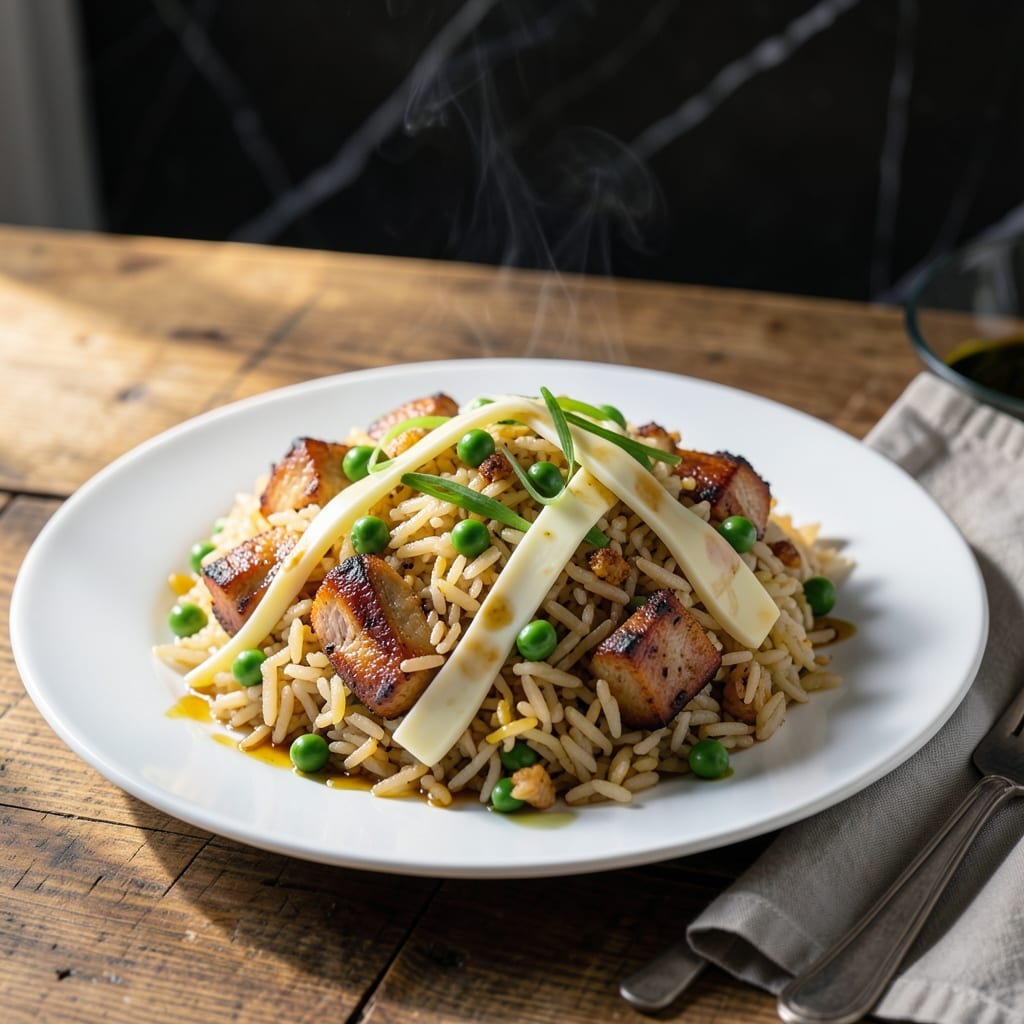
This restaurant-style pork fried rice delivers the authentic taste you crave without leaving home. I developed this recipe after testing countless versions in my Boston kitchen to perfect the wok-tossed texture.
The secret lies in using day-old rice and high heat to achieve that signature smoky flavor. Each grain stays separate while absorbing the savory pork and egg richness, with peas adding a pop of color and texture.
You’ll get perfectly tender pork pieces, fluffy scrambled eggs, and a dish that tastes like it came straight from your favorite Chinese takeout. The technique ensures every bite is packed with flavor.
Ready in 20 minutes with simple ingredients, this recipe brings professional results to your stovetop. Here’s how to make it right.
Ingredients for Pork Fried Rice Recipe Restaurant Style
Pantry staples meet takeout flavors. Nothing exotic, just smart technique and good ingredients.
| Ingredient | Amount | Notes |
|---|---|---|
| Day-Old Cooked White Rice 🍚 | 4 cups | Chilled, grains separated |
| Pork Shoulder 🥩 | ½ lb | Trimmed, cut into small dice |
| Large Eggs 🥚 | 3 whole | Lightly beaten |
| Frozen Green Peas 🌱 | ¾ cup | Thawed and drained |
| Green Onions 🧅 | 3 whole | Thinly sliced, whites and greens separated |
| Garlic Cloves 🧄 | 3 cloves | Minced finely |
| Soy Sauce 🫒 | 3 tbsp | Low-sodium preferred |
| Oyster Sauce 🫒 | 1 tbsp | Optional but recommended |
| Sesame Oil 🫒 | 1 tsp | Toasted variety |
| Vegetable Oil 🫒 | 3 tbsp | High smoke point for wok-frying |
| Kosher Salt 🧂 | ½ tsp | Adjust to taste |
| Ground White Pepper 🌶️ | ¼ tsp | Authentic flavor touch |
| Shaoxing Wine 🍶 | 1 tbsp | Or dry sherry substitute |
The rice must be day-old and cold—freshly cooked rice turns mushy. I always make extra rice the night before (jasmine or long-grain white are ideal). For the pork, pork shoulder has the right fat content for tender, juicy bites. Grab it from Whole Foods or any well-stocked market. The soy sauce? Pearl River Bridge or Kikkoman are my go-tos for consistent flavor.
No pork? Chicken thighs or shrimp work great—just adjust cooking time. Out of Shaoxing wine? Dry sherry at a 1:1 ratio. Vegetarian? Swap pork for firm tofu and use vegetarian oyster sauce. The peas can be fresh if you prefer, but frozen are more convenient (and just as good). Don’t skip the sesame oil—it adds that signature aroma.
Leftovers reheat like a dream in a skillet or microwave. Keeps 3-4 days in the fridge, but honestly, it’s best fresh. The flavors meld and the rice absorbs moisture over time. Freeze for up to 3 months if you’ve got extras—just thaw in the fridge overnight before reheating.
Why You’ll Love This Recipe
- One Pan Wonder: I toss everything into the wok and 15 minutes later it’s done—no extra pots, no fuss.
- Umami Bomb: The pork shoulder and day-old rice soak up that soy-garlic flavor like a sponge, every bite packed with savory depth.
- Weeknight Hero: Honestly, it’s my Tuesday lifesaver when I need something fast that still feels like a treat.
- Stretch Your Dollar: A pound of pork shoulder and leftover rice feed my family for two meals without breaking the bank.
Step-by-Step Instructions for Pork Fried Rice Restaurant Style
Here’s my tested technique for achieving that signature wok hei flavor at home.
Step 1: Prepare and Season the Pork
Heat 1 tbsp Vegetable Oil in your wok over high heat until it shimmers. Add the 0.5 lb Pork Shoulder and spread it in a single layer. Let it sear undisturbed for 30 seconds to develop color.
Stir-fry for 2-3 minutes until the pork is lightly browned but not fully cooked. Season with 0.5 tsp Kosher Salt and 0.25 tsp Ground White Pepper. Add the 3 cloves Garlic Cloves and stir-fry for another 15-20 seconds until fragrant. Transfer to a plate and set aside.
This initial searing builds a flavor foundation. The pork will finish cooking later when combined with the other ingredients, so don’t overcook it at this stage.
Step 2: Scramble the Eggs
Return the wok to high heat and add another 1 tbsp Vegetable Oil. Pour in the 3 whole Large Eggs and let them set for 5-10 seconds before gently stirring with a spatula.
Scramble the eggs until just set but still slightly runny—about 30-45 seconds. The residual heat will finish cooking them once combined with the hot rice. Transfer the eggs to the plate with the pork.
I keep the eggs slightly underdone here because they’ll continue to cook when mixed with the other hot ingredients, preventing them from becoming rubbery.
Step 3: Stir-Fry the Aromatics and Rice
Add the remaining 1 tbsp Vegetable Oil to the wok. Toss in the whites of the 3 whole Green Onions and stir-fry for 10-15 seconds until they soften slightly. Add the 4 cups Day-Old Cooked White Rice, breaking up any clumps with your spatula.
Stir-fry for 2-3 minutes, pressing the rice against the hot wok surface to create some crispy bits. The rice should be heated through and starting to develop a slight toasted aroma.
This is where the magic happens—the high heat and constant stirring create that characteristic wok-tossed texture.
Step 4: Combine and Finish with Sauces
Return the pork and eggs to the wok. Add the 0.75 cup Frozen Green Peas and stir-fry for 1 minute to heat through. Drizzle the 3 tbsp Soy Sauce, 1 tbsp Oyster Sauce, and 1 tbsp Shaoxing Wine around the edges of the wok.
Stir everything together and cook for another 1-2 minutes until all ingredients are well coated and heated through. The rice should be glossy from the sauces and have an even, slightly caramelized appearance.
Toss in the green onion tops and drizzle with the 1 tsp Sesame Oil. Give it one final stir to combine.
Serve immediately while hot, with each grain of rice distinct yet coated in the savory sauce, and the pork perfectly tender.
Pro Tips For Making Pork Fried Rice Recipe Restaurant Style
- Use Cold Rice: Day-old, refrigerated rice is non-negotiable—it fries up dry and separate, not mushy. I learned this the hard way after ruining two batches with fresh rice.
- Velvet The Pork: Marinate the pork shoulder with a teaspoon of cornstarch and soy sauce for 10 minutes before cooking. Sounds weird, but it keeps the meat tender and juicy in the high heat.
- Skip Thawing Peas: Toss the frozen peas in straight from the freezer—they’ll warm through without turning to mush. After overcooking them once, I never thaw again.
- Push Eggs Aside: Scramble the eggs in the wok first, then move them to one side before adding the pork. This guarantees soft, distinct curds instead of rubbery bits mixed in.
Health Benefits of This Recipe
Complete Protein Source
The pork in this dish provides 20 grams of protein per 3-ounce serving, helping build and repair tissues. Combined with eggs, you get a complete amino acid profile that supports muscle health and keeps you full for hours. I love how satisfying this meal feels. 💪
Rich in Essential Vitamins
You’ll get a boost of vitamin B12 from the pork, which is vital for nerve function and energy metabolism. The eggs add choline, supporting brain health and memory—important for busy days in my Boston kitchen.
Healthy Fats Balance
While fried rice is often seen as indulgent, the monounsaturated fats in pork shoulder and the polyunsaturated fats in vegetable oil provide energy and support cell growth. The dish balances these with the fiber from peas.
Micronutrient Boost
Green onions and garlic add vitamin K and antioxidants, while peas contribute vitamin A and iron. These small additions make a big difference in the nutritional profile of your meal.
Quick Energy Source
The rice provides complex carbohydrates for sustained energy, while the pork and eggs offer protein for endurance. This combo helps maintain stable blood sugar, perfect for a busy afternoon. 💡
Low-Calorie Flavor
At around 400 calories per serving, this dish delivers big flavor without excessive calories. The high heat cooking method preserves nutrients while adding that signature restaurant-style taste.
Nutrition Facts
Frequently Asked Questions
Why must the rice be cold and day-old?
Cold rice has less moisture, preventing mushiness during stir-frying. Day-old grains are firmer and separate easily, giving that classic restaurant texture.
Can I substitute chicken for pork?
Yes! Use 0.5 lb boneless chicken thighs, diced. Cook slightly longer than pork—3-4 minutes total—to reach 165°F internal temperature.
How do I prevent the eggs from overcooking?
Scramble them just until set but still slightly runny, then remove from the wok. They’ll finish cooking when mixed with the hot rice and pork.
What if I don’t have a wok?
A large, heavy skillet works fine. Use high heat and cook in batches if needed to avoid crowding. The key is keeping the temperature hot.

- Potato Candy Recipe 1933: Vintage Peanut Butter Roll Delight - October 30, 2026
- Potato Chip Cookie Recipe With Pecans: Buttery Crunch Meets Nutty Richness - October 30, 2026
- Potato Patty Recipe No Egg: Crispy Edges Without the Binder - October 30, 2026