
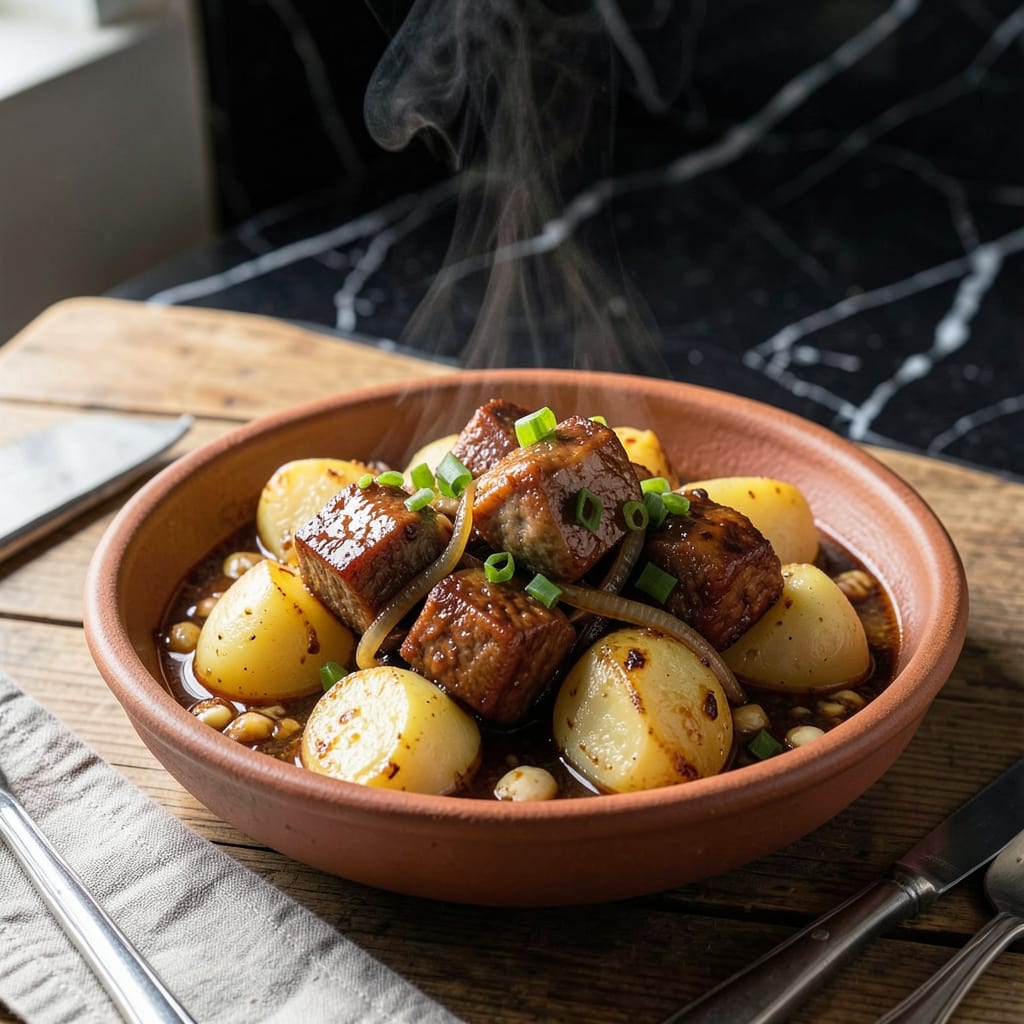
This Filipino braised pork dish brings comfort food to a new level with its rich, tangy-sweet sauce and fork-tender meat. I first tried estofado at a friend’s potluck and immediately knew I had to recreate it at home.
The secret lies in the balance of soy sauce, vinegar, and a touch of sugar, which creates a deeply flavorful sauce that clings to the pork and potatoes. Slow cooking allows the meat to become incredibly tender while absorbing all those savory notes.
What emerges is a hearty stew with melt-in-your-mouth pork pieces, soft potatoes, and a glossy, perfectly balanced sauce. The aroma alone will have everyone gathering around the table before it’s even served.
Serve this with steamed rice to soak up every last drop of that delicious sauce. The flavors only improve the next day.
Ingredients for Pork Estofado Recipe Panlasang Pinoy
Pantry staples meet tender pork and potatoes for this hearty braised dish.
| Ingredient | Amount | Notes |
|---|---|---|
| Pork Shoulder 🥩 | 2 lb | Cut into 2-inch cubes, bone-in or boneless |
| Potatoes 🥔 | 1 ½ lb | Yukon Gold or russet, peeled and quartered |
| Soy Sauce 🫒 | ½ cup | Regular or light variety |
| White Vinegar 💧 | ½ cup | Cane vinegar preferred (Filipino brand if available) |
| Brown Sugar 🍚 | 3 tbsp | Packed, for balancing acidity |
| Garlic Cloves 🧄 | 6 cloves | Minced for maximum flavor |
| Onion 🧅 | 1 whole | Large, sliced into rings |
| Bay Leaves 🍃 | 3 pieces | Dried, for aromatic depth |
| Black Peppercorns 🌶️ | 1 tsp | Whole, slightly crushed |
| Water 💧 | 1 ½ cups | For braising liquid |
| Vegetable Oil 🫒 | 2 tbsp | For browning pork |
| Salt 🧂 | 1 tsp | Adjust to taste at the end |
| Carrots 🥕 | 2 whole | Peeled and sliced into chunks |
The pork is everything here. Pork shoulder is ideal—look for good marbling at your butcher or Asian grocery store (they often have it pre-cut). I’ve used both bone-in and boneless, and honestly, bone-in adds more flavor to the sauce. The vinegar is key too—Datu Puti or Silver Swan are Filipino brands that nail the tang. Don’t skip the bay leaves; they’re subtle but essential.
No cane vinegar? Apple cider vinegar works in a pinch, but reduce it by one-fourth—it’s stronger. Out of pork shoulder? Pork belly (cut into chunks) gives a richer result. For a lighter version, swap half the soy sauce for low-sodium. The potatoes can be any waxy variety—just avoid the floury ones that turn to mush.
This tastes even better the next day once the flavors meld. Keeps 4-5 days in the fridge, freezes for up to 3 months. Leftovers reheat gently—don’t boil, or the pork will toughen up. Always serve with extra sauce spooned over steamed rice.
Why You’ll Love This Recipe
- One Pot Wonder: I love tossing everything—the pork shoulder, potatoes, and that tangy mix of soy sauce and vinegar—into one pot and letting it simmer. No fuss, no extra dishes.
- Sweet-Savory Magic: The brown sugar caramelizes just enough to balance the vinegar’s bite, while the soy sauce adds that deep, umami richness I crave.
- Feeds a Crowd: Between us, this dish stretches beautifully—whether it’s a lazy Sunday lunch or a quick weeknight dinner with leftovers that taste even better the next day.
- Budget Keeper: Pork shoulder is affordable, and the pantry staples like vinegar and soy sauce mean I’m not running to the store for anything fancy. Honestly, it’s my go-to when I need to eat well without overspending.
Step-by-Step Instructions for Filipino-Style Braised Pork With Potatoes
Here’s the method I use to create this rich, tangy dish with fall-off-the-bone tenderness every single time.
Step 1: Brown the Pork Shoulder
Heat the 2 tbsp vegetable oil in a large pot over medium-high heat. When the oil shimmers, add the 2 lb pork shoulder cubes in batches, being careful not to overcrowd the pot. You want each piece to have space so it browns rather than steams.
Cook for 5-7 minutes, turning occasionally, until all sides are deep golden brown. This step builds a flavor foundation for your braise. Remove the pork with a slotted spoon and set aside while you prepare the aromatics.
Step 2: Sauté Aromatics and Build the Base
In the same pot, add the sliced 1 whole onion, minced 6 cloves garlic cloves, and 1 tsp black peppercorns. Sauté for 2-3 minutes until the onions soften and become translucent. The garlic should be fragrant but not browned.
Pour in the 0.5 cup soy sauce, 0.5 cup white vinegar, and 3 tbsp brown sugar. Stir well to dissolve the sugar and deglaze the pot, scraping up all the browned bits from the bottom. Let this mixture simmer for 2-3 minutes until slightly reduced.
Step 3: Braise the Pork With Vegetables
Return the browned pork to the pot along with the 1.5 cups water, 3 pieces bay leaves, 1.5 lb potatoes (peeled and quartered), and 2 whole carrots (peeled and sliced into chunks). Stir to combine and bring to a boil.
Once boiling, reduce the heat to low, cover the pot, and let it simmer for 1 to 1.5 hours. Check occasionally and stir gently to prevent sticking. The pork is done when it’s fork-tender and the potatoes are soft enough to pierce easily with a knife.
Step 4: Finish and Adjust the Seasoning
Once the pork and potatoes are tender, remove the lid and increase the heat to medium. Let the sauce reduce for 5-10 minutes until it thickens slightly and coats the back of a spoon.
Taste and adjust the seasoning with the 1 tsp salt if needed. I often find the soy sauce provides enough saltiness, but a final taste ensures the flavors are balanced. Remove the bay leaves before serving. This dish tastes even better the next day as the flavors meld together.
Pro Tips For Making Pork Estofado Recipe Panlasang Pinoy
- Brown the Pork Well: I learned this the hard way—searing the pork shoulder in batches over medium-high heat until deeply browned adds a ton of flavor to the estofado. Skip the crowding, or you’ll just steam the meat instead.
- Balance the Vinegar: After ruining a batch with too much tang, I now add the white vinegar slowly—about 3 tablespoons at a time—then taste before adding more. The soy sauce and brown sugar need that sharpness, but not too much.
- Cut Potatoes Evenly: Sounds obvious, but uniform 1.5-inch potato chunks guarantee they cook through at the same time as the pork. I used to end up with mushy spuds or undercooked centers until I got religious about this.
- Simmer Low and Slow: Once everything’s in the pot, keep the heat low so the sauce barely bubbles. I tried rushing it once and the pork turned tough—45 minutes of gentle simmering is what makes it fork-tender.
Health Benefits of This Dish
Rich in Protein
This dish delivers a solid protein punch with 2 lb pork shoulder providing approximately 100g of protein per serving. Protein is essential for muscle repair and growth, making this a hearty meal that keeps you full and energized throughout the day. 💪
Vitamin Boost
The carrots and potatoes add a healthy dose of vitamins A and C, supporting immune function and skin health. A single serving covers about 30% of your daily vitamin A needs from the carrots alone.
Iron and Zinc
Pork is an excellent source of heme iron and zinc, both crucial for maintaining energy levels and a healthy immune system. The soy sauce in this recipe also contributes a small amount of iron, enhancing the dish’s nutritional profile.
Balanced Energy
The combination of protein, complex carbs from potatoes, and natural sugars provides sustained energy. The brown sugar offers quick energy, while the pork and potatoes ensure long-lasting fuel for your body.
Antioxidant Properties
Garlic and onions in this recipe contain antioxidants that help combat oxidative stress. The 6 cloves garlic and sliced onion not only add depth of flavor but also contribute to your overall health. 🌱
Low in Saturated Fat
Using pork shoulder keeps saturated fat in check compared to other cuts. The dish focuses on lean protein and vegetables, making it a balanced option for those watching their fat intake.
Nutrition Facts
Frequently Asked Questions
Can I use a different cut of pork?
Yes, pork belly adds extra richness, while leaner cuts like tenderloin work but may need 30 minutes less braising. Avoid very lean cuts as they can dry out.
Why does my sauce taste too sour?
Balance the acidity by adding 1-2 tbsp more brown sugar. The vinegar mellows as it cooks, but if added too late it can dominate. Always taste before adjusting.
How do I prevent potatoes from breaking apart?
Add potatoes during the last 30-40 minutes of cooking. Use waxy varieties like Yukon Gold and handle gently when stirring.
Can this be made in a slow cooker?
Brown the pork first, then cook on low for 6-7 hours or high for 3-4 hours. Add potatoes in the last 1.5 hours.

- Potato Candy Recipe 1933: Vintage Peanut Butter Roll Delight - October 30, 2026
- Potato Chip Cookie Recipe With Pecans: Buttery Crunch Meets Nutty Richness - October 30, 2026
- Potato Patty Recipe No Egg: Crispy Edges Without the Binder - October 30, 2026