
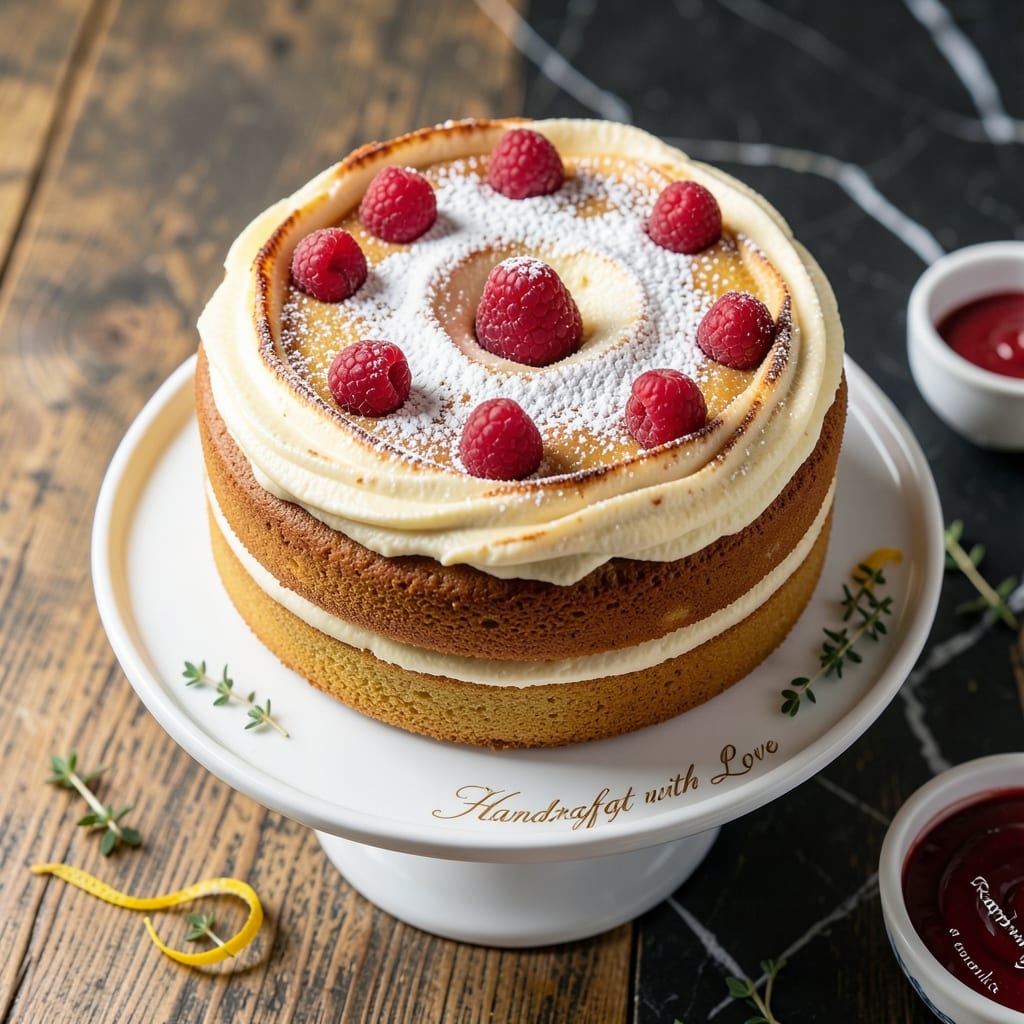
There’s something timeless about a classic vanilla cake made from scratch. This recipe delivers the perfect light and pillowy crumb with just the right sweetness.
I developed this method after years of testing, ensuring it works every time with simple ingredients. The vanilla essence shines through without overpowering the delicate texture.
You’ll love how the batter comes together smoothly, baking up golden with a tender interior. It’s the kind of cake that disappears quickly at any gathering.
Serve it plain, dusted with powdered sugar, or as a base for your favorite frosting. This is the foundation of countless dessert possibilities.
Ingredients for Plain Cake Recipe from Scratch
Simple, quality ingredients for a timeless vanilla cake with perfect texture.
| Ingredient | Amount | Notes |
|---|---|---|
| All-Purpose Flour 🌾 | 2 cups | Sifted for airy texture |
| Granulated Sugar 🍚 | 1 ½ cups | Fine grain for even distribution |
| Unsalted Butter 🧈 | ¾ cup | Room temperature, softened |
| Large Eggs 🥚 | 4 whole | Room temperature preferred |
| Whole Milk 🥛 | ¾ cup | Full-fat for richness |
| Pure Vanilla Extract 🌿 | 2 tsp | High-quality for best flavor |
| Baking Powder 🧂 | 2 tsp | Ensures proper rise |
| Baking Soda 🧂 | ¼ tsp | Balances acidity in batter |
| Salt 🧂 | ½ tsp | Fine sea salt preferred |
| Vegetable Oil 🫒 | 2 tbsp | For greasing pans |
The butter and vanilla are non-negotiable here. Plugra or European-style butter has higher fat content, which gives that melt-in-your-mouth quality. For vanilla, Nielsen-Massey or Rodelle are my go-tos—they’re pricier but the depth of flavor is worth it (the good stuff, not the imitation vanilla). Most supermarkets carry decent options, but specialty stores like Williams Sonoma have the premium picks.
No cake flour? Remove 2 tbsp all-purpose flour and replace with 2 tbsp cornstarch for a closer approximation. Short on milk? Half-and-half or buttermilk work in a pinch (adjust sugar slightly if using buttermilk). The eggs can be substituted with flax eggs if needed, though the texture won’t be quite as pillowy. Always check your baking powder’s expiration—old leavening agents are a cake’s worst enemy.
Batter keeps in the fridge for 24 hours if you need to prep ahead. The baked cake stays moist for 3 days at room temperature, wrapped tightly. For longer storage, freeze unfrosted layers for up to 3 months (thaw before decorating).
Why You’ll Love This Recipe
- One Bowl Wonder: I just dump flour, sugar, butter, eggs, and milk in one bowl—no fancy steps, no extra dishes.
- Buttery Richness: The melted butter and whole milk give it that old-fashioned, melt-in-your-mouth taste you can’t fake with a box mix.
- Birthday or Tuesday: Honestly, I’ve served this plain cake for celebrations and random weekday cravings—it works every time.
Step-by-Step Instructions for Plain Cake
Here’s my tested method for achieving that perfect light, pillowy texture with rich vanilla flavor.
Step 1: Prepare Pans and Preheat Oven
Begin by positioning your oven rack in the center and preheating to 350°F. This even heat distribution is crucial for a uniform rise. Grease two 9-inch round pans thoroughly with the 2 tablespoons vegetable oil, making sure to coat every surface including the sides.
Cut parchment circles to fit the bottoms of your pans and press them in. This prevents sticking and ensures clean release. I’ve found that even nonstick pans benefit from this extra insurance. Set the prepared pans aside while you make the batter.
Step 2: Cream Butter and Sugar to Ribbon Stage
In a large mixing bowl, beat the 0.75 cup unsalted butter with the 1.5 cups granulated sugar on medium-high speed for 3-4 minutes. You’re looking for a pale, fluffy texture where the mixture clings to the beaters in ribbons.
This creaming process incorporates air that gives your cake lift and creates that fine, tender crumb we’re after. Don’t rush this step—under-creamed butter leads to dense cake. Scrape down the sides of the bowl occasionally to ensure even mixing.
Step 3: Incorporate Eggs and Vanilla
Add the 4 whole large eggs one at a time, beating well after each addition for about 30 seconds. This gradual incorporation prevents curdling and ensures a stable emulsion. After the last egg, add the 2 teaspoons pure vanilla extract and mix until just combined.
The mixture should look smooth and slightly increased in volume. If it appears curdled at any point, add a spoonful of the measured 2 cups all-purpose flour and beat until smooth before continuing. This saves the emulsion and maintains the cake’s tender texture.
Step 4: Alternate Dry and Wet Ingredients
In a separate bowl, whisk together the remaining 2 cups all-purpose flour, 2 teaspoons baking powder, 0.25 teaspoon baking soda, and 0.5 teaspoon salt. With the mixer on low, add about a third of this dry mixture to the butter mixture and beat until just incorporated.
Pour in half of the 0.75 cup whole milk and mix until combined. Repeat, ending with the last third of dry ingredients. This alternating method prevents overmixing and develops just enough gluten for structure without toughness. The batter should be smooth and pourable but not thin.
Step 5: Bake to Golden Perfection
Divide the batter evenly between the prepared pans, smoothing the tops with a spatula. Bake at 350°F for 25-30 minutes, or until a toothpick inserted in the center comes out clean and the cakes spring back when lightly pressed.
Begin checking at 25 minutes—overbaking dries out cake. The edges should pull slightly from the pan and the surface should be a golden brown color. Cool in pans for 10 minutes, then turn out onto wire racks to cool completely before frosting or serving.
Pro Tips For Making Plain Cake Recipe From Scratch
- Room Temperature Butter: Take the butter out 1-2 hours before baking—creaming it properly with sugar traps air for a lighter crumb. I learned this the hard way after my first dense, flat cake.
- Sift the Flour: Sounds old-school, but sifting your all-purpose flour removes lumps and aerates it, giving you a smoother batter and finer texture.
- Don’t Overmix: Once you add the flour, mix just until combined—overworking the batter develops gluten, and nobody wants a tough cake.
- Check at 25 Minutes: Oven times vary wildly. Start testing for doneness 5 minutes early with a toothpick—better to pull it out a hair under than overbake and dry it out.
Essential Equipment for Perfect Results
Mixing Bowls
I always reach for my stainless steel mixing bowls from Cuisinox—they’re lightweight yet durable, and the nested set saves space. A 4-quart bowl is perfect for this batter. David swears by glass bowls, but I find stainless conducts heat better when creaming butter. 💡
Electric Mixer
A stand mixer with paddle attachment is ideal, but a hand mixer works fine too. I use my KitchenAid Artisan (a gift from Nana Mae) for even mixing. Beat on medium-high speed for proper aeration—this is non-negotiable for that pillowy texture.
Cake Pans
9-inch round pans with 2-inch sides are standard. I prefer Fat Daddio’s anodized aluminum from Central Market—they heat evenly and release cleanly. Always use parchment paper on the bottom, even with nonstick pans.
Measuring Tools
Accurate measurements matter in baking. I use OXO Good Grips measuring cups and spoons—the magnetic set stays organized. For flour, I spoon it into the cup and level with a knife. A kitchen scale is even better for precision.
Cooling Racks
Never skip the cooling rack! I have stainless steel racks from Wilton that allow air circulation underneath. Cool cakes in pans for 10 minutes, then transfer to racks. This prevents soggy bottoms and ensures even cooling. 🥛
Toothpick Test
For doneness testing, I keep a supply of wooden toothpicks handy. Insert one into the center—if it comes out clean or with a few moist crumbs, it’s done. Overbaking is the enemy of a tender crumb, so start checking at 25 minutes.
Nutrition Facts
Frequently Asked Questions
Can I use cake flour instead of all-purpose?
Yes! Cake flour will give an even lighter texture. Replace the 2 cups all-purpose flour with the same amount of cake flour, but omit the baking powder—cake flour already contains it.
Why did my cake turn out dense?
This usually happens from overmixing or under-creaming the butter and sugar. Beat the butter and sugar for the full 3-4 minutes and mix dry ingredients only until combined.
How do I know when it’s done baking?
Insert a toothpick in the center—it should come out clean or with a few moist crumbs. Also check that the edges pull slightly from the pan and the top springs back when touched.
Can I make this in a different pan size?
For a 9×13-inch pan, bake for 30-35 minutes. For cupcakes, fill liners ⅔ full and bake for 18-20 minutes. Adjust time based on visual cues.

- Potato Candy Recipe 1933: Vintage Peanut Butter Roll Delight - October 30, 2026
- Potato Chip Cookie Recipe With Pecans: Buttery Crunch Meets Nutty Richness - October 30, 2026
- Potato Patty Recipe No Egg: Crispy Edges Without the Binder - October 30, 2026