
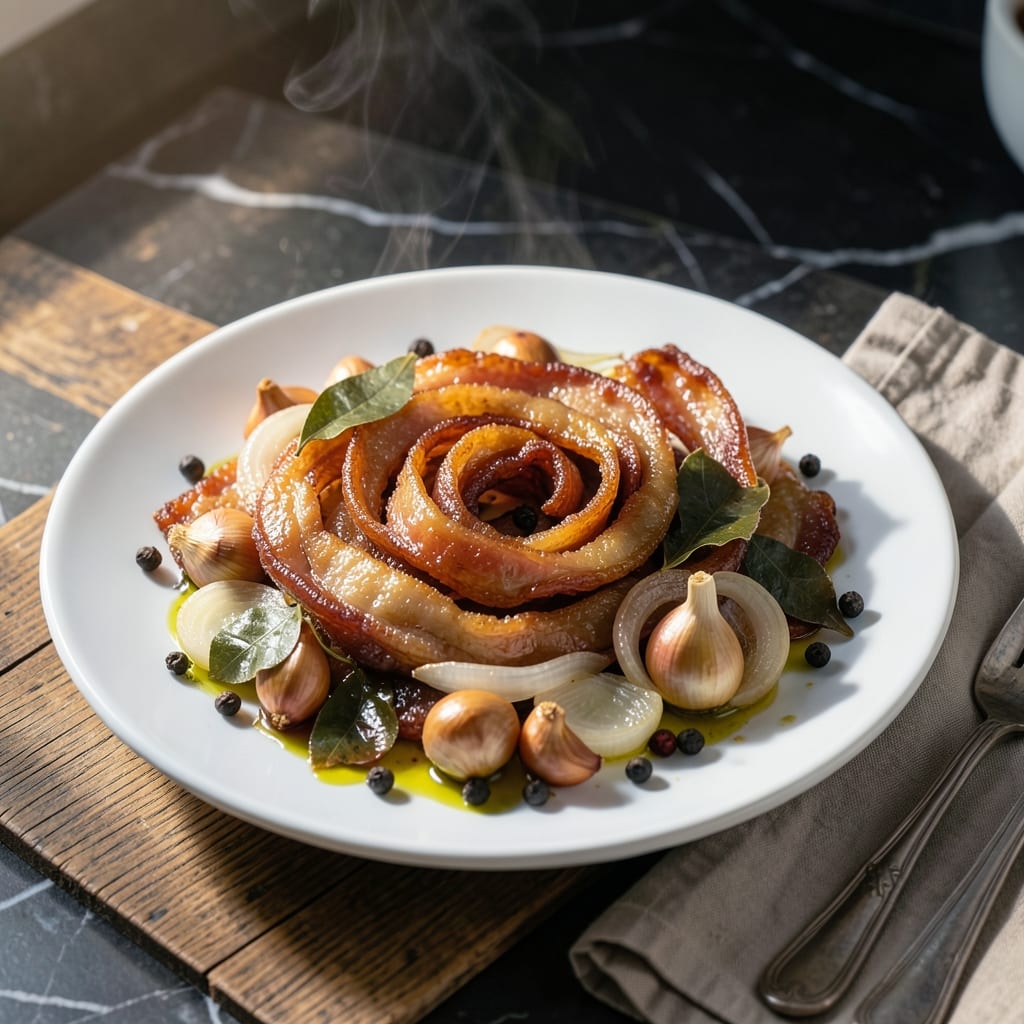
There’s a reason Filipino lechon is legendary, and this pork fat recipe captures that same crispy magic at home. I’ve perfected a method that transforms humble pork fat into golden, shatteringly crispy indulgence using traditional Pinoy techniques.
The secret lies in proper preparation and patient frying. Pork fat is rendered slowly until it turns translucent, then crisped to perfection. This creates layers of texture that make every bite irresistibly satisfying.
What emerges is a dish that’s both simple and extraordinary. The fat becomes light and airy when cooked right, with a delicate crunch that gives way to rich, savory flavor. It’s the kind of dish that disappears from the table in minutes.
Perfect as a side, topping, or snack on its own. This technique delivers authentic results every time.
Ingredients for Pork Fat Recipe Pinoy
Transform humble pork fat into golden, crispy perfection with these essential ingredients.
| Ingredient | Amount | Notes |
|---|---|---|
| Pork Fat 🥓 | 1 lb | Fresh, cut into even strips |
| Water 💧 | 2 cups | For initial boiling step |
| Salt 🧂 | 1 ½ tsp | Diamond Crystal kosher preferred |
| Garlic Cloves 🧄 | 6 cloves | Smashed for aromatic infusion |
| Bay Leaves 🍃 | 2 whole | Dried or fresh |
| Black Peppercorns 🌶️ | 1 tsp | Lightly crushed |
| White Vinegar 🍶 | ½ cup | For acidity and crispness |
| Neutral Cooking Oil 🫒 | 2 cups | For deep frying, like vegetable or canola |
| Onion 🧅 | 1 whole | Quartered for aromatic base |
| Soy Sauce 🥫 | 2 tbsp | Filipino brand like Silver Swan preferred |
| Calamansi Juice 🍈 | 1 tbsp | Or substitute lime juice |
| Sugar 🍚 | ½ tsp | Optional, balances saltiness |
The pork fat quality is paramount. Request fresh, unrendered pork fat from your butcher—avoid pre-packaged versions with additives. Asian markets often have the best selection, especially those catering to Filipino communities. Look for fat with a slight pink tint, indicating freshness. The fat-to-lean ratio should be high (80% fat or more). If buying in bulk, freeze immediately and use within 3 months for optimal texture.
No pork fat available? Chicken skin can work in a pinch, though the texture differs. For the vinegar, cane vinegar is traditional but apple cider vinegar works too. If you skip the calamansi, lime or lemon juice at equal amounts maintains the citrus note. The soy sauce should be Filipino-style—Silver Swan or Datu Puti are authentic choices. Sugar is optional but helps achieve that perfect sweet-salty balance characteristic of lechon.
Store raw pork fat in the freezer for up to 6 months. Once cooked, these crispy bits keep in an airtight container at room temperature for 1 week (though they’re best eaten fresh). Re-crisp in a dry pan or oven if they soften. The cooking oil can be reused once if filtered and stored properly—cool completely first.
Why You’ll Love This Recipe
- One Pot Wonder: I just toss pork fat, garlic, and bay leaves in a pot with water and let it simmer—no fancy steps, no stress.
- Garlic Bomb Flavor: The garlic cloves and bay leaves infuse the pork fat with this rich, savory depth that’s honestly irresistible.
- Feeds the Whole Barangay: I make a big batch and it’s perfect for rice toppings, stews, or even just snacking straight from the pan.
- Peso Stretcher: Pork fat is so cheap, but this turns it into something crave-worthy. I save so much compared to buying pre-made lard.
Step-by-Step Instructions for Crispy Lechon-Style Pork Fat
Achieve perfect crispness and rich flavor with this tested method for rendering and frying.
Step 1: Boil with Aromatics for Flavor Infusion
In a medium pot, combine the 1 lb Pork Fat strips with 2 cups Water, 1.5 tsp Salt, 6 cloves Garlic Cloves, 2 whole Bay Leaves, 1 tsp Black Peppercorns, 0.5 cup White Vinegar, and the 1 whole Onion quartered. The vinegar tenderizes while the spices penetrate deeply.
Bring to a boil over medium-high heat, then reduce to a simmer for 30-40 minutes until the pork fat turns translucent and the liquid reduces by half. This step removes impurities and ensures the final product stays crisp longer.
Step 2: Dry Thoroughly for Maximum Crispness
Drain the boiled pork fat and spread it in a single layer on a wire rack set over a baking sheet. Pat each strip completely dry with paper towels—any moisture will cause splattering during frying and prevent crisping.
Let the strips air-dry at room temperature for 30-60 minutes, or refrigerate uncovered for 1-2 hours for even better results. The surface should look matte and feel tacky to the touch, indicating the exterior is ready to crisp up beautifully.
Step 3: Deep-Fry in Batches to Golden Perfection
Heat the 2 cups Neutral Cooking Oil in a deep pot to 325-350°F. The oil is ready when a small piece of pork fat sizzles immediately upon contact. Fry the strips in batches to avoid overcrowding, which lowers the oil temperature and leads to greasy results.
Cook each batch for 8-10 minutes, stirring occasionally, until the strips are golden brown and crispy throughout. They should float to the surface when fully cooked. Use a slotted spoon to transfer to a paper towel-lined plate.
Step 4: Toss with Savory Finishing Sauce
In a large bowl, whisk together the 2 tbsp Soy Sauce, 1 tbsp Calamansi Juice, and 0.5 tsp Sugar until the sugar dissolves. The calamansi adds the signature Filipino tang that balances the richness of the fried pork.
Add the hot crispy pork fat strips and toss gently to coat evenly. The residual heat will help the sauce cling to every ridge and crevice. Serve immediately while the pork fat is at its peak crispness—the sauce will soften the exterior slightly over time.
Pro Tips For Making Pork Fat Recipe Pinoy
- Render Low and Slow: I learned this the hard way—crank the heat too high and your pork fat turns bitter and burns before it crisps. Keep it at medium-low, stir occasionally, and let the fat render out gradually, about 30-40 minutes.
- Cut Evenly: Sounds obvious, but I used to hack the fat into random chunks and wondered why some pieces cooked faster. Aim for 1-inch cubes so everything renders and crisps uniformly.
- Skip the Overcrowding: Resist the urge to dump all the fat in the pan at once. Too much in the pan lowers the temperature, and you’ll end up with soggy, unevenly cooked bits instead of golden, crispy cracklings.
- Salt at the End: My grandmother swore by this, and she was right: salt the pork fat after it’s rendered and crisped. Salting too early draws out moisture and steams the fat instead of frying it.
Make-Ahead Tips for This pork fat recipe pinoy
Pre-Fry Prep
I always boil and dry the pork fat strips a day ahead. After boiling with aromatics, let them cool completely, then refrigerate uncovered on a wire rack for 8-12 hours. This extended drying time removes all moisture for maximum crispness. 💡
Partial Frying
For make-ahead convenience, fry the strips until they’re just pale golden (4-5 minutes), then drain and cool completely. Store in an airtight container at room temperature for up to 2 days. Finish frying just before serving.
Sauce Separation
The finishing sauce can be mixed and stored separately in the fridge for up to 3 days. I use Silver Swan soy sauce for authentic flavor. Just whisk in the calamansi juice and sugar when ready to toss with the freshly fried pork fat.
Oil Management
Used frying oil can be cooled, strained through a fine-mesh sieve, and stored in a sealed container in a cool, dark place. It’s good for one more frying session if kept properly. Never reuse oil more than twice as it degrades.
Reheating Method
To revive day-old crispy pork fat, spread pieces on a baking sheet and warm at 350°F for 5-7 minutes. They’ll regain most of their crunch. Microwaving works in 15-second bursts but may soften the texture. ❄️
Freezing Option
For longer storage, freeze fully fried and cooled pork fat in a single layer before transferring to a freezer bag. They’ll keep for 1 month. Reheat from frozen in a 375°F oven for 10-12 minutes to restore crispness.
Nutrition Facts
Frequently Asked Questions
What’s the best oil for frying?
Use a neutral oil with a high smoke point like vegetable or canola. These handle 325-350°F without burning. Avoid olive oil—its low smoke point makes it unsuitable for deep frying.
Why do I need to boil the fat first?
Boiling removes impurities and renders some fat, ensuring a cleaner fry. The aromatics also infuse flavor deep into the strips during the 30-40 minutes simmer. This step is key for that authentic lechon taste.
Can I air-fry instead of deep-fry?
Yes, but results differ. Air-fry at 375°F for 12-15 minutes, shaking halfway. The texture won’t be as uniformly crispy, but it’s a healthier option. Watch closely to prevent burning.
How do I keep them crispy longer?
Drain on a wire rack, not paper towels, to avoid steam buildup. Store in an airtight container once completely cooled. Reheat in a dry pan or oven at 350°F for 5 minutes.

- Potato Candy Recipe 1933: Vintage Peanut Butter Roll Delight - October 30, 2026
- Potato Chip Cookie Recipe With Pecans: Buttery Crunch Meets Nutty Richness - October 30, 2026
- Potato Patty Recipe No Egg: Crispy Edges Without the Binder - October 30, 2026