
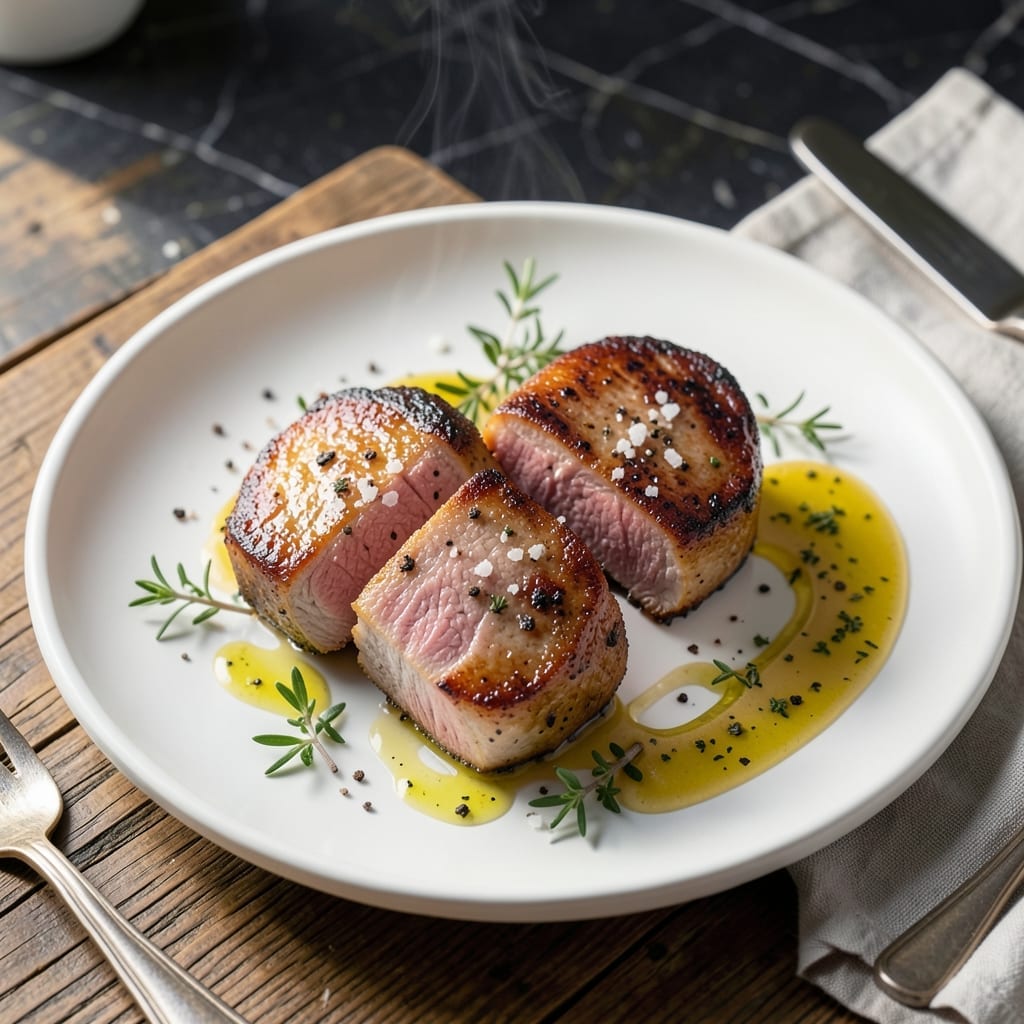
This pan-seared pork fillet medallions recipe delivers restaurant-quality results with a simple, elegant technique. The key is a hot pan, quick cooking, and a finishing touch of herb butter that transforms each bite.
I learned this method after years of trial and error, finding that pork fillet cooks beautifully when sliced into medallions. The even thickness ensures consistent doneness, while the herb butter adds a luxurious finish that feels special without extra effort.
The result is tender, juicy pork with a golden crust, elevated by the aromatic herbs. This dish proves that impressive meals don’t require complicated steps—just smart techniques and quality ingredients.
Serve with roasted vegetables or mashed potatoes for a complete meal that feels like a celebration.
Ingredients for Pork Fillet Medallions Recipe Jamie Oliver
Elevated yet approachable, these ingredients create restaurant-quality pork fillet medallions with minimal effort.
| Ingredient | Amount | Notes |
|---|---|---|
| Pork Fillet 🥩 | 1 ½ lb | Trimmed of excess fat, sliced into 1-inch medallions |
| Kosher Salt 🧂 | 1 ½ tsp | Diamond Crystal preferred for even seasoning |
| Freshly Ground Black Pepper 🌶️ | 1 tsp | Coarse grind for texture |
| Unsalted Butter 🧈 | 6 tbsp | Divided for cooking and herb butter |
| Extra-Virgin Olive Oil 🫒 | 2 tbsp | High smoke point variety |
| Fresh Thyme Leaves 🌿 | 2 tbsp | Stems removed, finely chopped |
| Fresh Rosemary Leaves 🌿 | 1 tbsp | Finely minced for even distribution |
| Garlic Cloves 🧄 | 3 cloves | Minced to a fine paste |
| Shallot 🧅 | 1 whole | Finely diced for herb butter |
| Dijon Mustard 🟡 | 1 tbsp | Smooth variety for depth |
| Dry White Wine 🍷 | ¼ cup | For deglazing the pan |
| Chicken Stock 🥣 | ½ cup | Low-sodium preferred |
| Lemon Juice 🍋 | 1 tsp | Freshly squeezed for brightness |
The pork fillet is non-negotiable here. Look for a center-cut piece with even thickness—this ensures consistent cooking. Most butchers at Whole Foods or local specialty markets will slice it into medallions for you upon request. The Kosher salt is critical; Diamond Crystal dissolves evenly and seasons more precisely than table salt. For the butter, Plugrá or Kerrygold deliver the rich, creamy base needed for a proper herb finish.
No white wine? Substitute with apple cider vinegar diluted with an equal amount of water. Shallots can be replaced with yellow onion at half the quantity, though the flavor will be slightly more pungent. If fresh herbs aren’t available, dried thyme and rosemary at one-third the amount work in a pinch (add them earlier in the cooking process). Vegetable stock can stand in for chicken stock if needed.
The pork medallions are best cooked immediately after slicing. Store the raw fillet in the fridge for up to 2 days before cooking. Herb butter can be made ahead and stored in the fridge for 3 days or frozen for 1 month. Always bring the pork to room temperature before searing for even cooking.
Why You’ll Love This Recipe
- One Pan Wonder: I love that this comes together in a single skillet—just sear the medallions in butter and olive oil, season with salt and pepper, and you’re done.
- Buttery Perfection: The combo of unsalted butter and olive oil gives the pork this rich, golden crust that’s honestly hard to resist.
- Dinner in Minutes: From fridge to plate in under 20 minutes, which is a lifesaver on those nights when time’s tight.
- Feeds the Family: A pork fillet stretches further than you’d think, and leftovers (if there are any) make killer sandwiches the next day.
Step-by-Step Instructions for Pork Fillet Medallions
Master the technique for perfectly seared medallions with a rich herb butter pan sauce.
Step 1: Season and Sear the Pork Fillet Medallions
Pat the pork fillet medallions dry with paper towels to ensure a good sear. Season both sides evenly with the 1.5 tsp kosher salt and 1 tsp freshly ground black pepper. The dry surface and proper seasoning are essential for developing flavor and color.
Heat a heavy skillet over medium-high heat until hot. Add 2 tbsp extra-virgin olive oil and swirl to coat the pan. When the oil shimmers, add the medallions in a single layer, leaving space between each piece. Sear undisturbed for 3-4 minutes per side until deep golden brown and a crust forms.
Transfer the seared medallions to a plate and tent loosely with foil. They should reach an internal temperature of 145°F after resting. The residual heat will carry the cooking process to perfection while you prepare the sauce.
Step 2: Prepare the Herb Butter Base
Reduce the heat to medium and add 2 tbsp unsalted butter to the same skillet. Once melted, add the finely diced shallot and cook for 2-3 minutes until softened and translucent. Stir frequently to prevent browning.
Add the 3 cloves minced garlic cloves, 2 tbsp fresh thyme leaves, and 1 tbsp fresh rosemary leaves. Sauté for 30-60 seconds until the aromatics release their fragrance. This builds the foundation of flavor for your pan sauce.
Step 3: Deglaze and Build the Pan Sauce
Pour in the 0.25 cup dry white wine to deglaze the pan, scraping up all the browned bits with a wooden spoon. These fond bits are packed with flavor and will dissolve into the sauce. Let the wine reduce by half, which should take about 2-3 minutes.
Stir in the 0.5 cup chicken stock and 1 tbsp Dijon mustard. Simmer for another 3-4 minutes until the liquid reduces slightly and begins to thicken. The sauce should coat the back of a spoon but remain fluid enough to drizzle.
Step 4: Finish with Butter and Serve
Reduce the heat to low and whisk in the remaining 4 tbsp unsalted butter, one tablespoon at a time, until fully emulsified. This creates a velvety, glossy sauce. Stir in the 1 tsp lemon juice for a touch of brightness that balances the richness.
Return the pork medallions to the skillet along with any accumulated juices. Spoon the sauce over the medallions and let them warm through for 1-2 minutes. The sauce should cling beautifully to each piece, enhancing both flavor and presentation.
Serve immediately, spooning additional sauce over the top. The medallions should be tender and juicy with a perfectly seared exterior, complemented by the aromatic herb butter sauce.
Pro Tips For Making Pork Fillet Medallions Recipe Jamie Oliver
- Pound the Fillet: I learned this the hard way—pounding the pork fillet to an even 1-inch thickness guarantees even cooking so you don’t end up with dry edges and raw centers.
- Hot Pan, Cold Butter: Crank the heat to medium-high for a golden crust, then add the cold butter at the end to baste the medallions without burning it.
- Rest Under Foil: Give it a solid 5 minutes under foil after cooking—skipping this means all those juices will end up on the cutting board, not in your meat.
- Dry the Surface: Pat the medallions bone-dry with paper towels before seasoning, or the salt won’t stick and the crust won’t form—sounds obvious, but I forgot this more times than I’d like to admit.
Pro Cooking Tips for This Recipe
Pan Temperature Control
Get your skillet ripping hot before adding oil—this ensures a proper sear. I use a heavy cast iron pan for even heat distribution. If the oil smokes immediately, your pan is ready. Too cool and your medallions will steam instead of sear. 🌡️
Even Slicing Matters
Slice your pork fillet into 1-inch medallions for uniform cooking. Use a sharp chef’s knife and cut perpendicular to the grain. Ask your butcher to slice it for you if you’re unsure—most will do it for free.
Don’t Overcrowd
Cook medallions in batches if needed to avoid crowding the pan. Overcrowding lowers the pan temperature, causing steaming. Leave at least 1 inch between pieces for proper browning. This step changed my pork cooking forever.
Rest for Juiciness
Always let seared medallions rest for 5-10 minutes before serving. Tent loosely with foil to keep warm. The internal temperature will rise to 145°F during resting, ensuring perfect doneness. 💡
Herb Butter Timing
Add fresh herbs to the butter at the very end. High heat can turn thyme and rosemary bitter. I learned this the hard way after burning a batch early in my cooking journey.
Sauce Consistency
Your pan sauce should coat the back of a spoon. If too thin, simmer longer. If too thick, add a splash of chicken stock. The emulsified butter gives it that glossy, restaurant-quality finish.
Nutrition Facts
Frequently Asked Questions
What thickness should medallions be for even cooking?
Slice them into 1-inch medallions for consistent doneness. Use a sharp knife and cut perpendicular to the grain. Ask your butcher to prepare them if you’re unsure.
Can I substitute the white wine in the sauce?
Yes, replace with equal parts apple cider vinegar and water. The acidity helps deglaze the pan and balance flavors just like wine.
How do I prevent the medallions from drying out?
Avoid overcooking—remove from pan at 140°F and let rest to 145°F. Tent with foil to retain moisture while finishing the sauce.
What’s the best pan for searing?
A heavy cast iron skillet works best for even heat distribution. Get it ripping hot before adding oil to ensure proper browning.

- Potato Candy Recipe 1933: Vintage Peanut Butter Roll Delight - October 30, 2026
- Potato Chip Cookie Recipe With Pecans: Buttery Crunch Meets Nutty Richness - October 30, 2026
- Potato Patty Recipe No Egg: Crispy Edges Without the Binder - October 30, 2026