
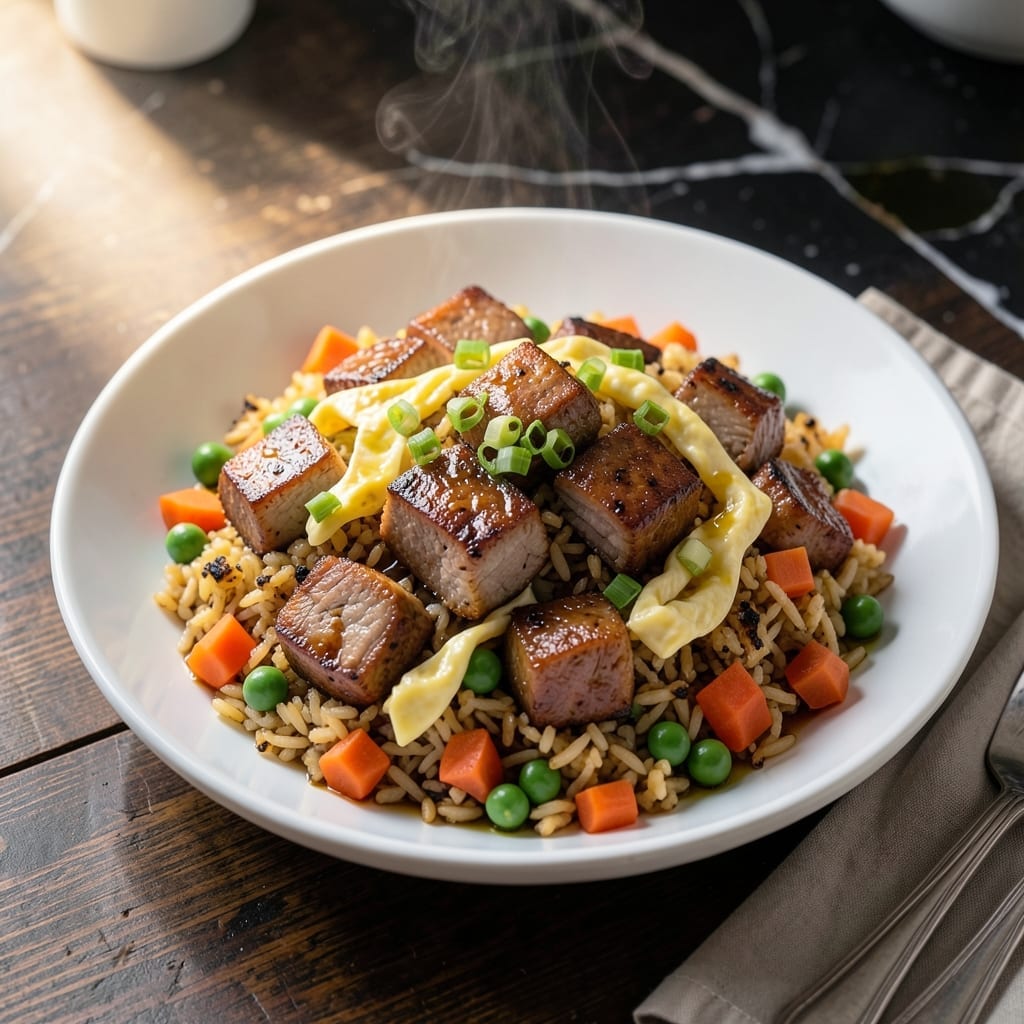
This recipe delivers the authentic taste of Chinese takeout right in your kitchen. I’ve tested it repeatedly to perfect the balance of savory pork, fluffy rice, and just the right amount of wok-hei flavor.
The key is using day-old rice and high heat to achieve that signature texture. Each ingredient—from the marinated pork to the scrambled eggs—plays a crucial role in building layers of traditional flavor.
You’ll end up with golden, slightly charred bits of rice and pork that capture the essence of street food stalls. The dish comes together quickly once you start cooking, making it perfect for busy weeknights.
Serve it hot with extra soy sauce on the side. This version stays true to the classic while being completely achievable at home.
Ingredients for Pork Fried Rice Recipe Chinese Style
Day-old rice, tender pork, and a few pantry staples bring this classic to life.
| Ingredient | Amount | Notes |
|---|---|---|
| Day-Old Cooked Rice 🍚 | 4 cups | Long-grain, preferably jasmine or basmati |
| Pork Shoulder 🐖 | ¾ lb | Cut into small cubes, boneless |
| Large Eggs 🥚 | 3 whole | Beaten for scrambling |
| Green Onions 🧅 | 4 whole | Thinly sliced, whites and greens separated |
| Carrot 🥕 | 1 whole | Peeled and finely diced |
| Frozen Peas 🟢 | 1 cup | Thawed before cooking |
| Garlic Cloves 🧄 | 3 cloves | Minced for maximum flavor |
| Soy Sauce 💧 | 3 tbsp | Low-sodium preferred for balance |
| Oyster Sauce 🍶 | 2 tbsp | Authentic flavor base |
| Sesame Oil 🫒 | 1 tbsp | Toasted variety for aroma |
| Vegetable Oil 🛢️ | 3 tbsp | High smoke point for wok frying |
| Ground White Pepper 🌶️ | ½ tsp | Traditional seasoning choice |
| Salt 🧂 | ½ tsp | Adjust to taste at end |
The rice is non-negotiable here—day-old and cold from the fridge (or even overnight) fries up fluffy instead of mushy. Jasmine rice is my go-to, but basmati works too. For the pork, shoulder or butt has the right fat-to-meat ratio for that juicy bite. Most Asian markets sell it pre-cubed, but any grocery store pork shoulder will do—just trim off any big chunks of fat first.
No oyster sauce? Hoisin sauce plus a dash of soy gets you close, but it’s not the same. Out of sesame oil? Skip it entirely rather than using regular oil—it adds that signature aroma. The peas can be fresh or frozen (no need to thaw if frozen). Want extra veg? Bell peppers or snap peas toss in nicely with the carrots.
Leftovers keep 3-4 days in the fridge, though the rice softens a bit. Reheat in a wok or skillet with a splash of water to revive it. Freezes for up to 3 months—just undercook the rice slightly if you plan to freeze it. Always serve it hot.
Why You’ll Love This Recipe
- One Pan Wonder: I toss everything—pork, eggs, rice—into a single wok, and dinner’s done in 20 minutes.
- Umami Bomb: The pork shoulder caramelizes with soy, hitting that sweet-savory note I crave every time.
- Meal Prep Hero: I make a double batch and it reheats like a dream for lunch the next day.
- Budget Stretcher: Honestly, it turns leftover rice and a cheap cut of pork into something ridicuously good.
Step-by-Step Instructions for Pork Fried Rice Chinese Style
Here’s how to achieve that perfect wok hei flavor with every bite.
Step 1: Prep and Velvet the Pork
Cut the 0.75 lb pork shoulder into ¼-inch cubes—this size cooks quickly and integrates well with the rice. Toss the pork with 1 tablespoon of the 3 tbsp soy sauce and 1 tablespoon of the 3 tbsp vegetable oil. This simple velveting step keeps the meat incredibly tender.
Let it marinate while you prep the rest. I’ve found this small step makes a huge difference in texture, preventing the pork from drying out during the high-heat stir-fry. The soy sauce also adds a base layer of umami that builds throughout the cooking process.
Step 2: Scramble Eggs and Cook Aromatics
Heat 1 tablespoon of the remaining vegetable oil in a wok over high heat until shimmering. Pour in the 3 beaten large eggs and let them set for 10 seconds before gently scrambling with a spatula. Cook until just set but still slightly runny—about 30-45 seconds total.
Remove the eggs and set aside. In the same wok, add the remaining 1 tablespoon vegetable oil, then the minced 3 cloves garlic cloves, whites of the 4 green onions, and the finely diced carrot. Stir-fry for 1-2 minutes until the garlic is fragrant and the carrots begin to soften.
Step 3: Cook Pork and Vegetables
Add the marinated pork to the wok and spread it out in a single layer. Let it sear undisturbed for 30 seconds before stirring. Cook for 2-3 minutes until the pork is no longer pink and starts to brown.
Add the 1 cup thawed frozen peas and cook for another 1 minute. The peas should turn bright green and heat through. This is where the dish really starts to come together—the pork releases its juices, which mix with the aromatics to create a flavorful base.
Step 4: Combine Rice and Seasonings
Add the 4 cups day-old cooked rice to the wok, breaking up any clumps with your spatula. The rice should be cold and dry for best results—this prevents it from turning mushy. Drizzle the 2 tbsp oyster sauce, remaining 2 tbsp soy sauce, and 1 tbsp sesame oil over the rice.
Toss everything together for 2-3 minutes until the rice is heated through and evenly coated. The high heat should create a slight char on some of the rice grains—that’s the wok hei flavor we’re after. Season with 0.5 tsp ground white pepper and 0.5 tsp salt.
Step 5: Finish with Eggs and Green Onions
Return the scrambled eggs to the wok and toss to combine. The eggs should break into small, fluffy pieces that distribute evenly throughout the dish. Add the green tops of the 4 green onions and stir-fry for another 30 seconds just until they wilt slightly.
Taste and adjust seasoning if needed. The finished dish should have a balance of savory, slightly sweet, and umami flavors with each grain of rice distinct yet coated in the delicious sauce. Serve immediately while hot for the best texture and flavor.
Pro Tips For Making Pork Fried Rice Recipe Chinese Style
- Use Cold Rice: Day-old rice from the fridge is drier and fries up fluffier—I learned this the hard way after making mushy fried rice with fresh rice more times than I’d like to admit.
- Velvet the Pork: Toss the pork shoulder with 1 teaspoon cornstarch and 1 tablespoon soy sauce before cooking; it stays tender and juicy, even when stir-fried over high heat.
- Cook Eggs First: Push the scrambled eggs to one side of the wok or pan before adding the pork and rice—this prevents them from turning rubbery or disappearing into the dish.
- High Heat Only: Crank the burner to max and work in small batches if needed; anything less and your pork fried rice will steam instead of getting that coveted smoky wok hei flavor.
Best Sauces and Condiments for This Recipe
Classic Soy Sauce Boost
I always keep extra low-sodium soy sauce on the table for serving. A drizzle of 1-2 teaspoons per bowl enhances the savory depth without overwhelming the dish. It’s the simplest way to adjust the seasoning to personal taste. 💛
Oyster Sauce Drizzle
For a richer finish, warm 1 tbsp oyster sauce in a small bowl and drizzle it over the top just before serving. This adds a glossy sheen and amplifies the umami flavor. I love how it highlights the charred rice bits.
Sesame Oil Accent
A few drops of toasted sesame oil right before eating adds a nutty aroma that ties everything together. Just ½ teaspoon per serving is enough to make a noticeable difference. This was Nonna’s secret for adding depth to her stir-fries.
Chili Oil Heat
For those who enjoy spice, a drizzle of chili oil or Sriracha adds a pleasant heat that contrasts beautifully with the savory pork. Start with ½ teaspoon and adjust to your preferred spice level. My Boston friends always reach for this option.
Green Onion Garnish
Fresh green onion tops add a crisp, fresh bite that cuts through the richness. I sprinkle an extra 2 tablespoons of thinly sliced greens on top for color and texture. It’s a small touch that makes the dish look restaurant-ready. ✨
Lime Wedges
A squeeze of fresh lime adds a bright, citrusy note that balances the dish’s savory flavors. Serve with lime wedges on the side for guests to add as they please. This trick works surprisingly well with fried rice.
Nutrition Facts
Frequently Asked Questions
Why use day-old rice for this dish?
Day-old rice has less moisture, so it fries up fluffy instead of mushy. Fresh rice tends to clump together in the wok.
Can I substitute chicken for pork?
Use 0.75 lb boneless chicken thighs, cut into small pieces. Cook through before adding vegetables for best results.
What if I don’t have a wok?
A large skillet works fine—just use high heat and cook in batches if needed. The flavor will still be delicious.
How do I prevent soggy fried rice?
Use cold rice, high heat, and avoid overcrowding the pan. Stir-fry in stages if your wok isn’t large enough.

- Potato Chip Cookie Recipe With Pecans: Buttery Crunch Meets Nutty Richness - October 30, 2026
- Potato Patty Recipe No Egg: Crispy Edges Without the Binder - October 30, 2026
- Paula Deen’s Potato Chip Cookies Recipe: Salty-Sweet Crunch in Every Bite - October 30, 2026