
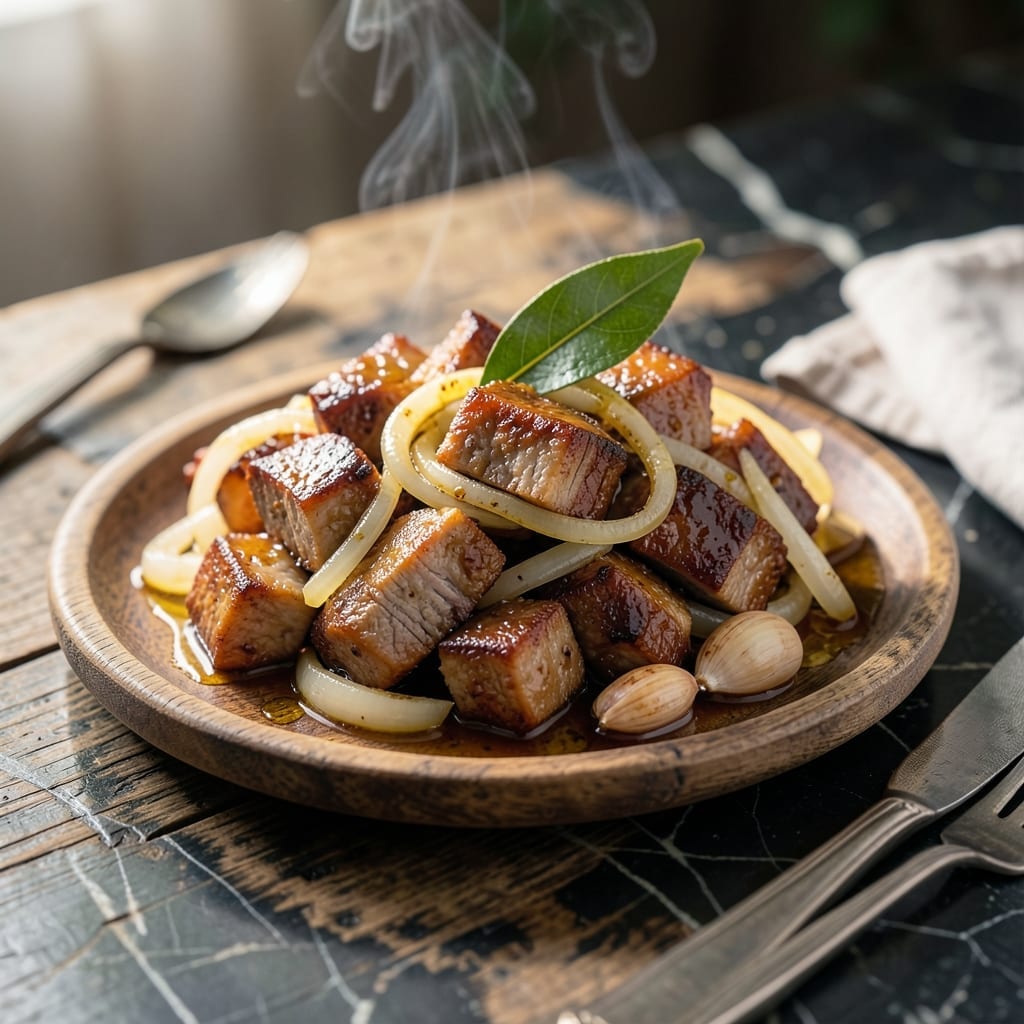
This Visayan pork stew brings the bold, tangy flavors of the Philippines to your kitchen table. I’ve tested this traditional method multiple times to ensure it delivers authentic results every time.
The secret lies in the balance of sour and savory—vinegar and tamarind create that signature tangy profile while pork belly provides rich depth. Traditional Bisaya preparation means slow simmering for tender meat.
What emerges is a hearty dish with meltingly soft pork pieces swimming in a complex, aromatic broth. The flavors develop beautifully over time, making it taste even better the next day.
Serve with steamed rice to soak up every drop of the incredible sauce. This recipe honors its cultural roots while working perfectly in home kitchens.
Ingredients for Pork Ginamay Recipe Bisaya
Traditional Bisaya ingredients create this tangy, complex pork stew with rich depth and aromatic broth.
| Ingredient | Amount | Notes |
|---|---|---|
| Pork Belly 🥩 | 2 lb | Cut into 1.5-inch cubes |
| White Vinegar 🍶 | ½ cup | Distilled or cane vinegar |
| Tamarind Paste 🍈 | 2 tbsp | Or tamarind soup base |
| Garlic Cloves 🧄 | 8 cloves | Minced finely |
| Yellow Onion 🧅 | 1 whole | Large, sliced thin |
| Bay Leaves 🌿 | 3 pieces | Dried, whole |
| Black Peppercorns 🌶️ | 1 tsp | Lightly crushed |
| Water 💧 | 4 cups | Or enough to cover pork |
| Soy Sauce 🫙 | 3 tbsp | Regular or light |
| Brown Sugar 🍚 | 1 tbsp | Optional, for balance |
| Salt 🧂 | 1 tsp | Adjust to taste |
| Green Chili Peppers 🌶️ | 2 pieces | Sliced, optional for heat |
The pork belly is non-negotiable for authentic texture and flavor. Look for fresh, skin-on pork belly at Asian markets or specialty butchers—supermarkets often carry it pre-cut. Tamarind paste (found at Filipino or Indian grocery stores) delivers that signature sourness. If unavailable, tamarind soup base packets work in a pinch. Bay leaves should be whole and dried, not ground.
No tamarind? Lime or calamansi juice at half the amount plus a little sugar mimics the tang. Vinegar is essential—cane vinegar is traditional but white works. For a milder sauce, reduce vinegar by one-third. Soy sauce can be swapped for fish sauce (vegetarian oyster sauce for a plant-based option). The brown sugar balances acidity—skip if you prefer a sharper taste.
This stew improves overnight as flavors meld deeply. Refrigerate in an airtight container for up to 4 days. For longer storage, freeze without potatoes (if added) for 3 months. Reheat gently to preserve the pork’s tender texture.
Why You’ll Love This Recipe
- One Pot Wonder: I just toss the pork belly, vinegar, tamarind, garlic, and onion in a pot and let it simmer—minimal mess, maximum flavor.
- Tangy-Savory Bomb: That mix of vinegar and tamarind gives it this sharp, tangy kick that cuts through the richness of the pork belly.
- Feeds the Squad: It’s my go-to for family gatherings. One big batch and everyone’s happy—even the picky eaters.
- Budget Stretcher: Pork belly is affordable, and the ingredients are simple. Honestly, it’s a flavor-packed meal that doesn’t break the bank.
Step-by-Step Instructions for Pork Ginamay
Here’s the method that delivers authentic tangy-savory flavor in every bite.
Step 1: Sear the Pork Belly for Depth of Flavor
Cut the 2 lb Pork Belly into 1.5-inch cubes as specified. Heat a heavy pot over medium-high heat without any oil—the pork will render its own fat. Add the pork in a single layer and sear undisturbed for 5-7 minutes, stirring occasionally, until the pieces develop a light golden crust on all sides.
This step builds the foundation of flavor. The rendered fat will later carry the tangy and savory notes of the dish. Don’t rush the browning—you want a deep color, not just light tan. Remove the pork and set aside temporarily, leaving the rendered fat in the pot.
Step 2: Sauté Aromatics Until Fragrant
In the same pot with the rendered pork fat, add the 8 cloves Garlic Cloves (minced finely) and 1 whole Yellow Onion (sliced thin). Sauté over medium heat for 3-4 minutes until the onions soften and turn translucent, and the garlic releases its aroma without browning.
Add the 2 pieces Green Chili Peppers (sliced, if using) and cook for another 1 minute. The aromatics should smell fragrant and sweet. This base layer ensures every spoonful of the stew is packed with authentic Visayan flavors.
Step 3: Build the Tangy-Savory Broth
Return the seared pork to the pot. Pour in the 0.5 cup White Vinegar, 2 tbsp Tamarind Paste, 3 tbsp Soy Sauce, 4 cups Water, 1 tbsp Brown Sugar, 1 tsp Salt, 3 pieces Bay Leaves, and 1 tsp Black Peppercorns (lightly crushed). Stir well to combine.
Bring the mixture to a boil, then reduce the heat to low. Let it simmer uncovered for 45-50 minutes, stirring occasionally. You’ll know it’s ready when the pork is fork-tender and the broth has developed a rich, slightly thickened consistency.
Step 4: Simmer to Perfection and Adjust Seasoning
Once the pork is tender, taste the broth and adjust the seasoning if needed. The tamarind paste and white vinegar should provide a balanced tanginess, while the soy sauce adds depth. If the stew is too sour, the brown sugar will help balance it out.
Simmer for an additional 10-15 minutes to allow the flavors to meld together. The final dish should have a harmonious blend of tangy, savory, and slightly sweet notes. Remove the bay leaves and black peppercorns before serving.
Pro Tips For Making Pork Ginamay Recipe Bisaya
- Boil First, Fry Later: Parboil the pork belly for 10-15 minutes to render excess fat before frying—I learned this the hard way after my first batch sat in a greasy pool.
- Balance the Sour: Use 1 part tamarind paste to 2 parts vinegar for that perfect Bisaya tang, and taste as you go—too much tamarind can overpower the dish.
- Skip the Overcrowding: Fry the pork in batches so it browns instead of steams, otherwise you’ll end up with pale, soggy meat even if you’re patient.
- Use Fresh Garlic: Crush the garlic cloves just before cooking—pre-minced garlic loses its punch and leaves the sauce tasting flat.
Serving Suggestions for This pork ginamay recipe bisaya
Classic Pairing
Steamed jasmine rice is the traditional accompaniment, soaking up the tangy broth perfectly. I use 1 cup rice per person—it’s the ideal ratio for this rich stew. The neutral flavor lets the pork ginamay shine. 💛
Fresh Contrasts
A simple side of pickled vegetables like atchara (pickled papaya) adds a refreshing crunch. I also love serving with sliced cucumbers and tomatoes for freshness. These cut through the richness beautifully.
Bread Option
For a heartier meal, serve with pandesal or crusty bread to dip into the sauce. The soft, slightly sweet pandesal balances the tangy flavors wonderfully. I warm them just before serving.
Garnish Ideas
Sprinkle with chopped green onions or cilantro for a pop of color and freshness. A squeeze of calamansi or lime juice right before eating enhances the tangy profile even more.
Family-Style Serving
Place the stew in a large bowl at the center of the table with rice and sides around it. This encourages sharing and creates a warm, communal dining experience—just like in Bisaya homes. ✨
Nutrition Facts
Frequently Asked Questions
What cut of pork works best for this dish?
Pork belly is traditional for its rich fat and tender texture. 2 lb of skin-on pork belly cut into 1.5-inch cubes gives the most authentic results. Avoid lean cuts like tenderloin.
Can I make it less sour?
Yes! Reduce the vinegar to 1/3 cup or add 1 tbsp brown sugar to balance the acidity. Taste as you go and adjust to your preference.
How long does it keep in the fridge?
Store in an airtight container for up to 4 days. The flavors deepen overnight, making leftovers even more delicious. Reheat gently on the stove.

- Potato Candy Recipe 1933: Vintage Peanut Butter Roll Delight - October 30, 2026
- Potato Chip Cookie Recipe With Pecans: Buttery Crunch Meets Nutty Richness - October 30, 2026
- Potato Patty Recipe No Egg: Crispy Edges Without the Binder - October 30, 2026