
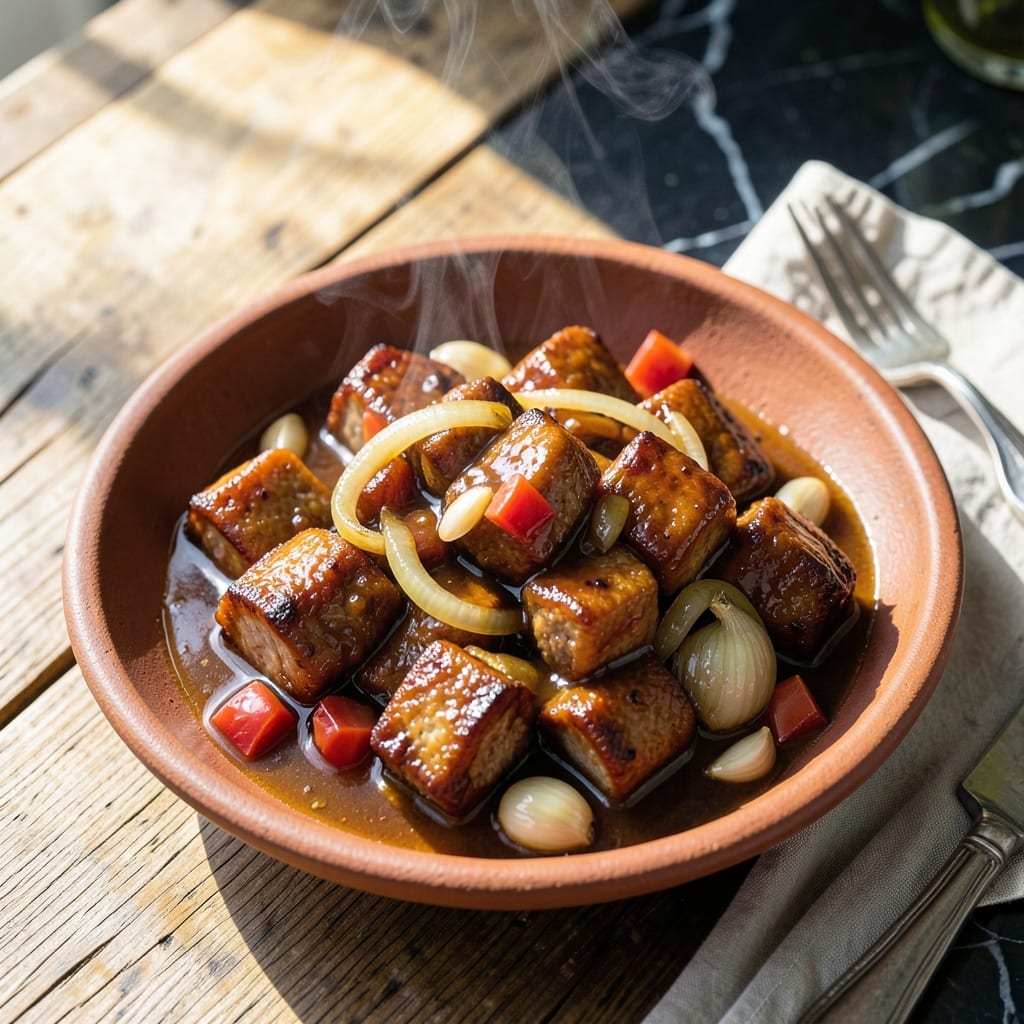
This Kapampangan classic transforms humble pork into a rich, tangy masterpiece with deep cultural roots.
I learned the importance of slow cooking and layering flavors during my time in Charleston, and this dish embodies those principles perfectly. The combination of vinegar, soy sauce, and tomatoes creates a complex sauce that clings to every piece of tender pork.
The secret lies in the balance—sweet, sour, and savory all in one bite. Traditional preparation involves browning the pork first to develop depth, then simmering until fall-apart tender.
Serve this with steamed rice to soak up every last drop of that incredible sauce. The result is a dish that’s both comforting and deeply satisfying.
Ingredients for Pork Estofado Recipe Panlasang Pinoy Kapampangan
Rich, tangy, and deeply savory—this stew starts with humble ingredients you probably have on hand.
| Ingredient | Amount | Notes |
|---|---|---|
| Pork Shoulder 🥩 | 2 lb | Cut into 2-inch cubes, bone-in preferred |
| White Vinegar 💧 | ½ cup | Cane or distilled white |
| Soy Sauce 🫒 | ⅓ cup | Regular or light variety |
| Tomato Sauce 🍅 | 1 cup | Canned, no salt added |
| Garlic Cloves 🧄 | 6 cloves | Peeled and minced |
| Yellow Onion 🧅 | 1 whole | Large, sliced into rings |
| Bay Leaves 🍃 | 3 pieces | Dried, whole leaves |
| Black Peppercorns 🌶️ | 1 tsp | Whole or freshly cracked |
| Brown Sugar 🧈 | 2 tbsp | Light or dark, packed |
| Potatoes 🥔 | 2 whole | Medium, peeled and quartered |
| Carrots 🥕 | 2 whole | Medium, peeled and sliced |
| Green Bell Pepper 🌶️ | 1 whole | Cored and sliced into strips |
| Cooking Oil 🫒 | 3 tbsp | Neutral oil like vegetable or canola |
| Salt 🧂 | 1 tsp | Kosher or sea salt preferred |
The pork shoulder is non-negotiable here—bone-in, well-marbled cuts from Costco or your local butcher give you that fall-apart texture. Look for pieces with a good fat cap (it renders down beautifully). Most Asian markets carry the exact cut used in traditional Kapampangan versions, often labeled as pork belly or picnic shoulder. Don’t trim the fat—it’s flavor insurance (and you can skim excess later).
No tomato sauce? Crushed tomatoes blended smooth works in a pinch. Out of white vinegar? Apple cider vinegar at the same amount brings a fruitier note that actually complements the dish. The soy sauce should be Filipino brands like Silver Swan or Datu Puti if you can find them—they’re saltier and more pungent. Skip the low-sodium stuff here; you need that deep umami.
This tastes even better the next day once the flavors meld. Keeps in the fridge for 4-5 days or freezes for 3 months. Pro tip: portion leftovers with some sauce into freezer bags—perfect for quick meals later (just thaw and reheat gently).
Why You’ll Love This Recipe
- One Pot Wonder: I just brown the pork shoulder, dump in vinegar, soy, tomato sauce and garlic, then let it simmer—no fancy steps.
- Rich Tangy Bite: That vinegar and tomato sauce combo gives it this sweet-sour depth I crave every single time.
- Feeds a Crowd: I made it for a family gathering and everyone went back for seconds—even the picky eaters.
- Budget Stretcher: Pork shoulder is cheap, and this recipe turns it into something that tastes like it cost way more.
Step-by-Step Instructions for Pork Estofado
Here’s the method I use for tender pork with that signature tangy-sweet sauce.
Step 1: Brown the Pork Shoulder
Heat the 3 tbsp cooking oil in a large pot over medium-high heat. Add the 2 lb pork shoulder cubes in batches, making sure not to overcrowd the pot. Brown them on all sides for about 5-7 minutes until they develop a deep golden-brown crust.
This step is crucial—don’t rush it. The caramelization adds depth of flavor to your dish. Remove the browned pork and set aside, leaving the rendered fat in the pot for the next step.
Step 2: Sauté Aromatics and Build Flavor Base
In the same pot, add the sliced 1 whole yellow onion and cook for 2-3 minutes until softened and translucent. Add the minced 6 cloves garlic cloves and cook for another 30 seconds until fragrant.
Stir in the 1 cup tomato sauce, 0.5 cup white vinegar, 0.33 cup soy sauce, 2 tbsp brown sugar, 3 pieces bay leaves, and 1 tsp black peppercorns. Let this mixture simmer for 2-3 minutes to meld the flavors.
Step 3: Simmer Pork Until Tender
Return the browned pork to the pot, along with any accumulated juices. Add enough water to just cover the pork—about 2 cups should do. Bring to a boil, then reduce heat to low, cover, and let it simmer for 45-60 minutes.
Check occasionally and add a splash of water if needed. The pork is ready when it’s fork-tender and the sauce has thickened slightly. This is when you’ll start to smell that rich, tangy aroma filling your kitchen.
Step 4: Add Vegetables and Finish Cooking
Add the 2 whole potatoes (quartered), 2 whole carrots (sliced), and 1 whole green bell pepper (sliced into strips). Stir to combine and simmer uncovered for another 15-20 minutes until the vegetables are tender and the sauce has reduced to your desired consistency.
Season with 1 tsp salt to taste, though remember the soy sauce already adds saltiness. The vegetables should be soft but still hold their shape, and the sauce should be thick enough to coat the back of a spoon.
Step 5: Adjust and Serve
Taste and adjust the seasoning if needed. I sometimes add a bit more brown sugar for sweetness or a splash of vinegar for extra tang. Discard the bay leaves before serving.
Ladle the estofado into bowls, making sure each serving has a good mix of pork and vegetables. The sauce should be glossy and rich, with the perfect balance of sweet, tangy, and savory flavors. Serve hot with steamed rice to soak up every last bit.
Pro Tips For Making Pork Estofado Recipe Panlasang Pinoy Kapampangan
- Brown the Pork: Sear the pork shoulder in batches over medium-high heat until deeply browned—I learned this the hard way after my first few batches turned out pale and watery.
- Balance the Vinegar: Use 1/2 cup white vinegar for every 2 lbs of pork, and let it simmer for at least 10 minutes to mellow the sharpness before adding soy sauce.
- Skip Pre-Salting: Resist the urge to salt the pork before browning; the soy sauce will season it plenty, and you’ll avoid an overly salty estofado.
- Simmer Uncovered: After adding tomato sauce, simmer uncovered for 20-25 minutes to thicken the sauce naturally—this is the only way to get that rich, clingy consistency.
Storing and Reheating Leftovers
Refrigerator Storage
Let your estofado cool completely at room temperature for no more than 2 hours before storing. I use glass containers with tight-fitting lids—PyREX is my go-to brand. This dish keeps beautifully in the fridge at 40°F or below for up to 4-5 days. ❄️
Freezer Storage
For longer storage, portion the estofado into freezer-safe bags or containers, leaving 1 inch of headspace for expansion. It freezes well for up to 3 months without losing flavor. I like using quart-sized freezer bags for individual servings.
Stovetop Reheating
Transfer your desired portion to a saucepan and warm over medium-low heat for 10-15 minutes, stirring occasionally. Add a splash of water or broth if the sauce looks too thick. This method preserves the texture of the pork and vegetables best. 🔥
Microwave Reheating
For quick meals, microwave individual portions covered with a damp paper towel. Heat on 70% power for 2-3 minutes, stir, then continue in 1-minute intervals until reaching 165°F. The sauce may separate slightly, but a good stir brings it back together.
Nutrition Facts
Frequently Asked Questions
Can I use a different cut of pork?
Pork belly works well for extra richness, but avoid lean cuts like tenderloin. Bone-in shoulder is ideal for authentic texture and flavor.
How do I balance the sour taste?
Add 1-2 tbsp brown sugar gradually until the tang mellows. The vinegar flavor softens as it simmers, so taste before adjusting.
Why did my sauce turn out thin?
Simmer uncovered for 5-10 extra minutes to reduce. If too thick, add 1/4 cup water and adjust seasoning.
Can I make this ahead of time?
The flavors deepen after 1-2 days in the fridge. Reheat gently on the stove for best results.

- Potato Candy Recipe 1933: Vintage Peanut Butter Roll Delight - October 30, 2026
- Potato Chip Cookie Recipe With Pecans: Buttery Crunch Meets Nutty Richness - October 30, 2026
- Potato Patty Recipe No Egg: Crispy Edges Without the Binder - October 30, 2026