
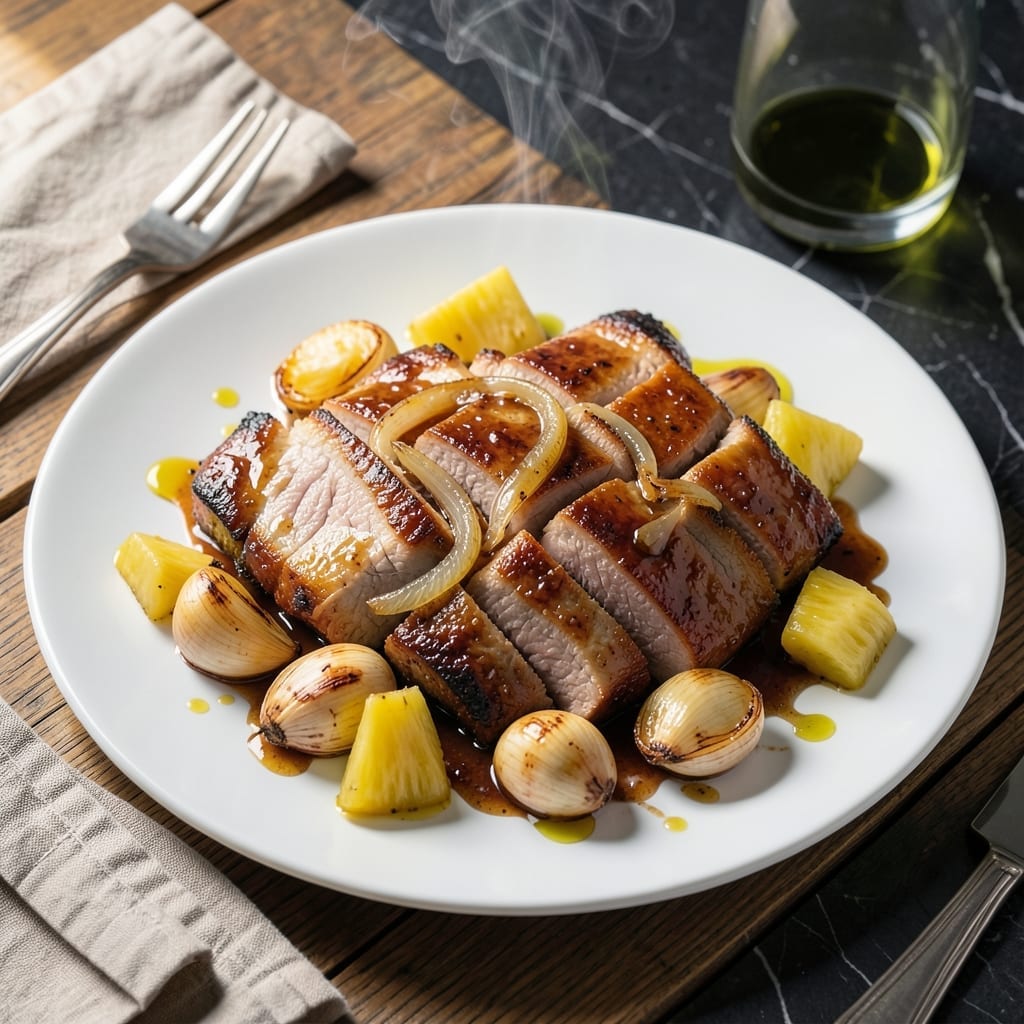
This Filipino-style pork ham delivers a perfect balance of sweet and savory flavors that defines authentic Panlasang Pinoy cooking. The dish transforms simple ingredients into a tender, caramelized masterpiece through a slow braising technique.
What makes this recipe special is the careful layering of pineapple juice, soy sauce, and brown sugar. These create a rich glaze that coats every piece of pork while keeping it juicy and flavorful throughout the cooking process.
The result is fall-off-the-bone pork with a sticky, glossy exterior that’s both satisfying and comforting. This method ensures each bite carries the deep, complex flavors that make Filipino cuisine so beloved.
Serve this with steamed rice to soak up every drop of the delicious sauce. Here’s how to make it at home.
Ingredients for Pork Ham Recipe Panlasang Pinoy
These carefully selected ingredients create an authentic Filipino-style pork ham with rich, caramelized flavors.
| Ingredient | Amount | Notes |
|---|---|---|
| Pork Shoulder 🥩 | 2 lb | Cut into large chunks, bone-in preferred |
| Pineapple Juice 🍍 | 1 ½ cups | Unsweetened, 100% pure |
| Soy Sauce 🫕 | ½ cup | Filipino brand preferred, like Silver Swan |
| Brown Sugar 🍚 | ½ cup | Packed, light or dark |
| Garlic Cloves 🧄 | 8 cloves | Peeled and minced |
| Yellow Onion 🧅 | 1 whole | Large, sliced into rings |
| Bay Leaves 🍃 | 3 pieces | Dried, whole leaves |
| Black Peppercorns 🌶️ | 1 tsp | Whole, lightly crushed |
| Water 💧 | 1 cup | For braising liquid |
| Star Anise ✨ | 2 pieces | Whole pods |
| Salt 🧂 | 1 tsp | Kosher or sea salt |
| Vegetable Oil 🫒 | 2 tbsp | For searing pork |
| Calamansi or Lemon Juice 🍋 | 2 tbsp | Freshly squeezed, for brightness |
The pork shoulder is non-negotiable for optimal texture—bone-in adds depth to the braise. Costco or a local Asian market will have the best cuts, often pre-portioned for stews. Look for pieces with good fat marbling (this renders down beautifully). Silver Swan soy sauce is the gold standard here, but any Filipino brand will deliver that authentic umami kick.
No pork shoulder? Pork butt works nearly as well. Substitute coconut water for pineapple juice if needed, though the flavor will shift slightly. Brown sugar can be swapped for muscovado (more molasses notes). If you’re missing star anise, a pinch of five-spice powder mimics the warm complexity. Calamansi is traditional, but regular lemon juice works in a pinch (just use a touch less).
The braising liquid can be prepped a day ahead—just refrigerate until ready to use. Leftovers keep for 4-5 days in the fridge and freeze beautifully for up to 3 months. Reheat gently to preserve the sticky glaze.
Why You’ll Love This Recipe
- 5-Minute Prep: I just toss pork shoulder with pineapple juice, soy sauce, brown sugar, and garlic—no fancy steps.
- Sweet-Savory Magic: The brown sugar caramelizes with soy sauce while garlic and pineapple juice balance it into this rich, tangy glaze.
- Feeds the Gang: One batch makes enough for a big family dinner or meal prep for the week.
- Stretches the Budget: Pork shoulder is affordable, and the simple pantry ingredients keep costs low without sacrificing flavor.
Step-by-Step Instructions for Filipino-Style Pork Ham
Master this traditional braising technique for tender pork with a perfect sweet-savory glaze.
Step 1: Sear the Pork Shoulder for Depth of Flavor
Heat the 2 tbsp vegetable oil in a large, heavy-bottomed pot over medium-high heat until shimmering. Pat the 2 lb pork shoulder chunks dry with paper towels—this ensures a proper sear rather than steam. Season all over with the 1 tsp salt.
Working in batches to avoid crowding, sear the pork on all sides for 3-4 minutes per side until deeply browned. You want a rich, caramelized crust that will form the flavor foundation of the dish. Remove the pork and set aside temporarily.
Step 2: Build the Aromatic Base and Deglaze
In the same pot, reduce heat to medium and add the sliced 1 whole yellow onion. Sauté for 3-4 minutes until softened and beginning to caramelize. Add the minced 8 cloves garlic cloves and cook for 1 minute until fragrant but not browned.
Pour in the 0.5 cup soy sauce and scrape the browned bits from the bottom of the pot with a wooden spoon. This deglazing step is crucial—it incorporates all those flavorful fond into your braising liquid. Add the 1.5 cups pineapple juice and bring to a gentle simmer.
Step 3: Braise with Spices Until Fork-Tender
Return the seared pork to the pot along with the 0.5 cup brown sugar, 3 pieces bay leaves, 2 pieces star anise, 1 tsp black peppercorns, and 1 cup water. Stir to combine and dissolve the sugar. The liquid should just cover the pork—add a splash more water if needed.
Bring to a boil, then reduce heat to low, cover, and simmer for 1.5 to 2 hours. Check occasionally and turn the pork pieces to ensure even cooking. The pork is done when it’s fork-tender and the sauce has reduced to a syrupy consistency. You’ll notice the meat easily pulls apart with a gentle nudge.
Step 4: Finish and Glaze the Pork
Once the pork is tender, increase the heat to medium-high and uncover. Let the sauce reduce for 5-7 minutes until it thickens into a glossy glaze that coats the back of a spoon. The pork should be lacquered in this rich, sweet-savory sauce.
Remove from heat and stir in the 2 tbsp calamansi or lemon juice. This final addition brightens the dish and balances the richness. Taste and adjust seasoning if needed—though the soy sauce and pineapple juice provide most of the seasoning, you might want a touch more salt or sugar.
Serve the pork ham hot, spooning the reduced sauce over the top. The meat should be fall-apart tender with a sticky, caramelized exterior, and the sauce should be thick enough to cling to every piece.
Pro Tips For Making Pork Ham Recipe Panlasang Pinoy
- Score the Fat: I learned this the hard way—cut shallow slits in the pork shoulder’s fat cap before marinating so the pineapple juice and soy sauce actually penetrate the meat, not just sit on top.
- Simmer, Don’t Boil: Keep the heat at a gentle simmer when cooking the pork in the marinade; a rolling boil makes the meat tough and turns the brown sugar into bitter caramel.
- Use Fresh Pineapple Juice: Skip the canned stuff—fresh pineapple juice has brighter acidity that balances the brown sugar and soy sauce way better, and it’s worth the extra 5 minutes to squeeze it.
- Baste with Pan Juices: After transferring the pork to the oven, spoon the leftover marinade over it every 15 minutes; this builds layers of sticky, sweet-savory glaze without drying out the meat.
Serving Suggestions for This Dish
Classic Filipino Pairings
Steamed white rice is the perfect companion—its neutral flavor lets the sweet-savory sauce shine. I always use jasmine rice for its fragrant aroma. The rice soaks up every drop of the rich, caramelized glaze beautifully. 💛
Fresh Contrasts
A simple side of atchara (Filipino pickled papaya) cuts through the richness with its tangy crunch. The acidity balances the dish’s sweetness perfectly. Alternatively, a light cucumber and tomato salad works wonderfully.
Comforting Sides
Mashed potatoes provide a creamy contrast to the tender pork. I like using Yukon Gold potatoes for their buttery texture. The sauce pairs especially well with the potatoes’ smooth consistency.
Vegetable Options
Steamed or stir-fried bok choy adds a healthy, slightly bitter element that complements the sweet glaze. The greens also add a nice pop of color to your plate.
Bread Alternatives
For a heartier meal, serve with warm pandesal (Filipino bread rolls). These soft, slightly sweet rolls are perfect for soaking up the delicious sauce. I often toast mine lightly for extra texture.
Drink Pairings
A cold glass of calamansi juice or sago’t gulaman (a Filipino drink with pearl tapioca) enhances the meal. The citrus notes in calamansi juice echo the dish’s bright finish. 🍹
Nutrition Facts
Frequently Asked Questions
Can I use a different cut of pork?
Yes, pork butt works nearly as well as shoulder. Avoid lean cuts like tenderloin—they’ll dry out during the long braise. Bone-in pieces add the best depth of flavor.
Why do we sear the pork first?
Searing creates a flavorful crust and deepens the dish’s complexity through the Maillard reaction. It also helps the pork retain moisture during the slow cooking process.
How do I know when it’s done?
The pork is ready when it’s fork-tender and easily pulls apart. The sauce should reduce to a syrupy consistency that coats the back of a spoon. This takes about 1.5-2 hours.
Can I make this ahead of time?
The flavors actually improve overnight. Store in an airtight container for up to 5 days in the fridge. Reheat gently to preserve the glaze.

- Potato Candy Recipe 1933: Vintage Peanut Butter Roll Delight - October 30, 2026
- Potato Chip Cookie Recipe With Pecans: Buttery Crunch Meets Nutty Richness - October 30, 2026
- Potato Patty Recipe No Egg: Crispy Edges Without the Binder - October 30, 2026