
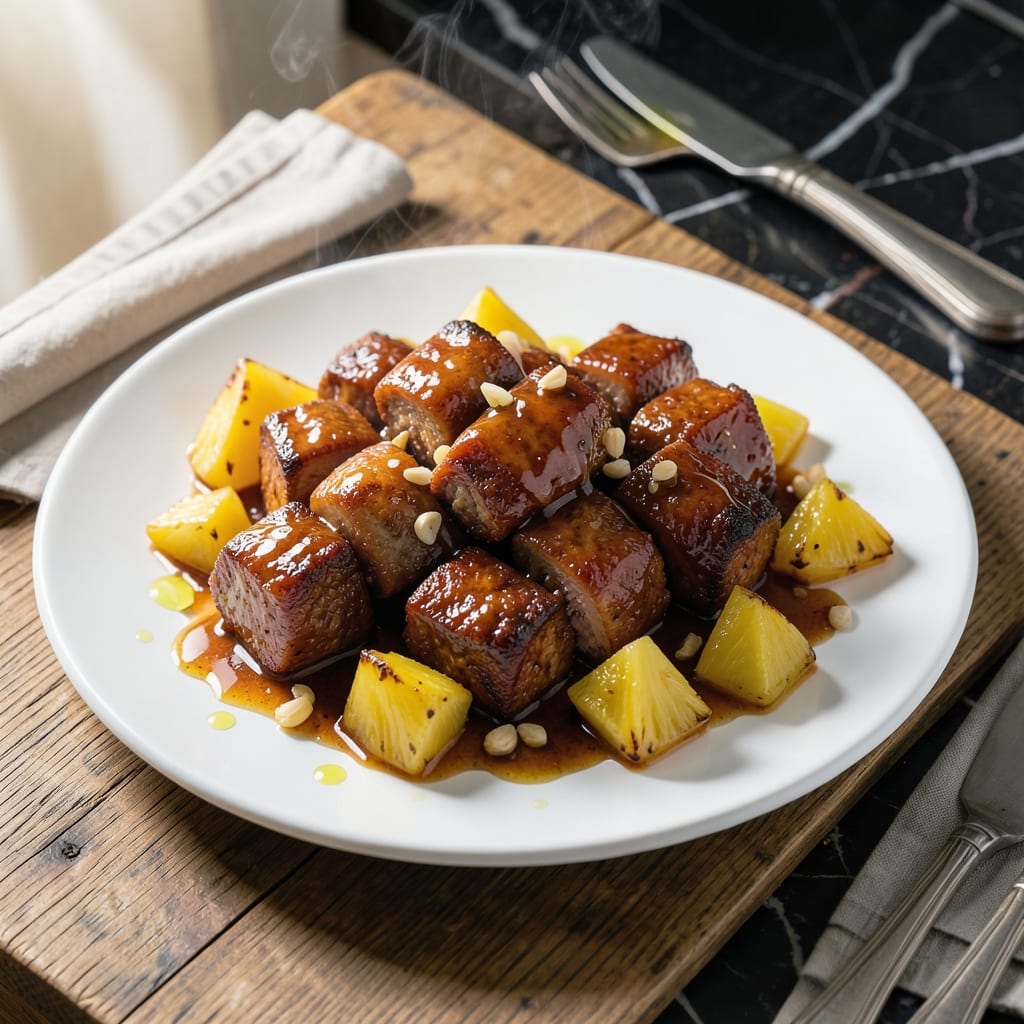
I first tasted this dish at a Filipino neighbor’s potluck in Cincinnati, and the balance of sweet and savory changed how I view pork forever.
This creation marries tender pork with a pineapple glaze that caramelizes into a sticky, sweet-savory coating. The traditional method uses simple ingredients but delivers complex flavors through slow simmering.
What emerges is fall-apart pork with a glossy, golden sauce that clings to every bite. The pineapple adds natural sweetness while soy sauce and garlic provide depth.
The aroma alone will have your family gathering in the kitchen before it’s even done.
Ingredients for Pork Hamonado Recipe Filipino Style Ingredients
Simple ingredients transform into a golden, sweet-savory Filipino masterpiece with minimal effort.
| Ingredient | Amount | Notes |
|---|---|---|
| Pork Shoulder 🥩 | 2 lb | Cut into 2-inch cubes, bone-in preferred |
| Pineapple Chunks 🍍 | 2 cups | Fresh or canned in juice, undrained |
| Pineapple Juice 🍹 | 1 cup | From fresh pineapple or canned |
| Soy Sauce 🫙 | ½ cup | Regular or light, avoid low-sodium |
| Brown Sugar 🥜 | ½ cup | Packed, light or dark |
| Garlic Cloves 🧄 | 6 cloves | Peeled and minced finely |
| Yellow Onion 🧅 | 1 whole | Large, thinly sliced |
| Bay Leaves 🌿 | 2 pieces | Dried, whole leaves |
| Ground Black Pepper 🌶️ | 1 tsp | Freshly ground for best flavor |
| Salt 🧂 | 1 tsp | Kosher or sea salt preferred |
| Vegetable Oil 🫒 | 2 tbsp | For searing pork cubes |
| White Vinegar 💧 | 2 tbsp | For balancing sweetness |
| Star Anise Pods ✨ | 2 pieces | Whole pods for aromatic depth |
| Water 💧 | 1 cup | For braising liquid |
The pork shoulder is non-negotiable for authentic texture. Bone-in cuts from Whole Foods or Costco deliver the best marbling and flavor. Look for pieces with visible fat streaking—this renders down into the sauce. Fresh pineapple is ideal (the enzyme bromelain helps tenderize), but canned in juice works in a pinch. Avoid heavy syrup versions—they make the glaze cloying.
No pork shoulder? Pork belly at half the quantity gives a richer result, but trim excess fat first. Brown sugar can be swapped for coconut sugar (same amount). For a deeper caramel, use dark brown. The soy sauce should be Filipino brands like Silver Swan or Datu Puti for authenticity, but any regular soy sauce works. If you lack star anise, a pinch of five-spice powder mimics its warmth.
The dish improves overnight as flavors meld. Store in an airtight container for up to 4 days refrigerated, or freeze for 3 months (the sauce thickens upon thawing). Reheat gently to preserve the glaze’s sheen. Always remove bay leaves and star anise before serving.
Why You’ll Love This Recipe
- I’ll be real: this makes enough for a big family dinner plus leftovers that taste even better the next day.
- One Pot Wonder: I just dump everything in a pot—Pork shoulder, pineapple juice, soy sauce, brown sugar—and let it simmer. Honestly, cleanup is a breeze.
- Sweet-Savory Magic: The brown sugar caramelizes with the soy sauce while the pineapple chunks add this bright, tangy contrast that’s ridicously good.
- Feeds the Crew: I’ll be real: this makes enough for a big family dinner plus leftovers that taste even better the next day.
Step-by-Step Instructions for Pork Hamonado
Master the technique for this iconic Filipino dish with balanced sweet and savory notes.
Step 1: Sear the Pork Shoulder for Deep Flavor
Heat the 2 tbsp vegetable oil in a large, heavy-bottomed pot over medium-high heat. Pat the 2 lb pork shoulder cubes dry with paper towels to ensure proper browning. Working in batches to avoid crowding, add the pork and sear for 3-4 minutes per side until deep golden brown on all surfaces.
This searing step creates a flavorful fond at the bottom of the pot, which will dissolve into the sauce later. Remove the seared pork and set aside. The meat should release easily from the pot when properly browned—don’t force it if it’s sticking.
Step 2: Build the Aromatic Base
In the same pot, reduce heat to medium and add the thinly sliced yellow onion. Sauté for 2-3 minutes until softened and just beginning to caramelize. Add the 6 cloves minced garlic and cook for 30 seconds until fragrant—be careful not to let it burn.
Stir in the 0.5 cup soy sauce, 0.5 cup brown sugar, 2 tbsp white vinegar, 1 tsp salt, and 1 tsp ground black pepper. Cook for 1-2 minutes, stirring constantly, until the sugar begins to dissolve and the mixture becomes slightly syrupy.
Step 3: Simmer with Pineapple and Spices
Return the seared pork to the pot along with the 2 cups pineapple chunks, 1 cup pineapple juice, 2 pieces bay leaves, 2 pieces star anise pods, and 1 cup water. Stir to combine, ensuring the pork is mostly submerged in the liquid.
Bring the mixture to a boil over high heat, then reduce to a gentle simmer. Cover and cook for 45-50 minutes, stirring occasionally, until the pork is fork-tender and the sauce has thickened slightly. The star anise will infuse the sauce with its distinctive licorice-like aroma.
Step 4: Reduce and Glaze to Perfection
Uncover the pot and increase the heat to medium-high. Simmer for an additional 10-15 minutes, stirring frequently, until the sauce reduces to a glossy glaze that coats the back of a spoon. The pineapple chunks should be soft and caramelized at this stage.
Taste and adjust seasoning if needed—the balance should be sweet with a tangy, savory depth. Remove the bay leaves and star anise pods before serving. The sauce will continue to thicken slightly as it cools.
Pro Tips For Making Pork Hamonado Recipe Filipino Style Ingredients
- Sear the Pork First: Brown the pork shoulder in the pot before adding liquids—I learned this the hard way after my first few batches came out pale and flavorless.
- Use Fresh Pineapple: Canned pineapple works in a pinch, but fresh chunks and juice make a real difference in brightness and depth of flavor.
- Simmer, Don’t Boil: Keep the heat low once the sauce is in; boiling toughens the meat and turns the sauce into a sticky, uneven mess.
- Reduce the Sauce: After the pork is tender, pull it out and reduce the sauce by half—this thickens it into that glossy, cling-to-the-meat consistency everyone expects.
Dietary Considerations for pork hamonado recipe filipino style ingredients
Gluten-Free Option
Swap regular soy sauce for tamari or certified gluten-free soy sauce like San-J. This maintains the dish’s authentic flavor while making it safe for gluten-sensitive eaters. I always keep a bottle in my Portland pantry for such adaptations.
Lower Sugar Version
Reduce the brown sugar by half and add 1 cup extra pineapple chunks for natural sweetness. The pineapple’s enzymes also help tenderize the pork. This modification cuts sugar significantly without sacrificing flavor.
Dairy-Free Assurance
This creation is naturally dairy-free as written. All ingredients—from pork shoulder to pineapple juice—contain no dairy derivatives. Perfect for lactose-intolerant friends or anyone avoiding dairy. 💪
Pork Alternatives
For a leaner option, use pork tenderloin instead of shoulder, reducing cooking time by 15-20 minutes. Chicken thighs also work well, though the texture differs. I’ve tested both with success at family gatherings.
Vegan Adaptation
Replace pork with 2 lb jackfruit or tofu cubes. Use the same sauce and method, but reduce simmering time to 20-25 minutes. The pineapple glaze works beautifully with plant-based proteins. 🌱
Allium Sensitivity
Omit the yellow onion and garlic, replacing them with 1 tbsp asafoetida powder (hing) for depth. This maintains the aromatic base without triggering sensitivities. I learned this trick from my Cincinnati neighbor.
Nutrition Facts
Frequently Asked Questions
Can I use fresh pineapple instead of canned?
Fresh pineapple works beautifully and adds extra brightness. Use 3 cups chopped to replace the 2 cups chunks + 1 cup juice. The natural enzymes help tenderize the pork too.
Why does my sauce turn out watery?
Simmer uncovered for 5-10 extra minutes on medium-high heat to reduce. Ensure pork is mostly submerged during cooking to prevent excess liquid. A cornstarch slurry can thicken it quickly if needed.
What’s the best cut for tender meat?
Pork shoulder is ideal for its marbling. If unavailable, pork belly (halved quantity) works but needs fat trimming. Avoid lean cuts like tenderloin—they dry out.
How long can I store leftovers?
Keep in an airtight container for up to 4 days refrigerated or 3 months frozen. Reheat gently to maintain the glaze’s texture. The flavors deepen overnight!

- Potato Patty Recipe No Egg: Crispy Edges Without the Binder - October 30, 2026
- Paula Deen’s Potato Chip Cookies Recipe: Salty-Sweet Crunch in Every Bite - October 30, 2026
- Potato Gnocchi Recipe Ideas: Pillowy Soft Dumplings With Rustic Charm - October 30, 2026