
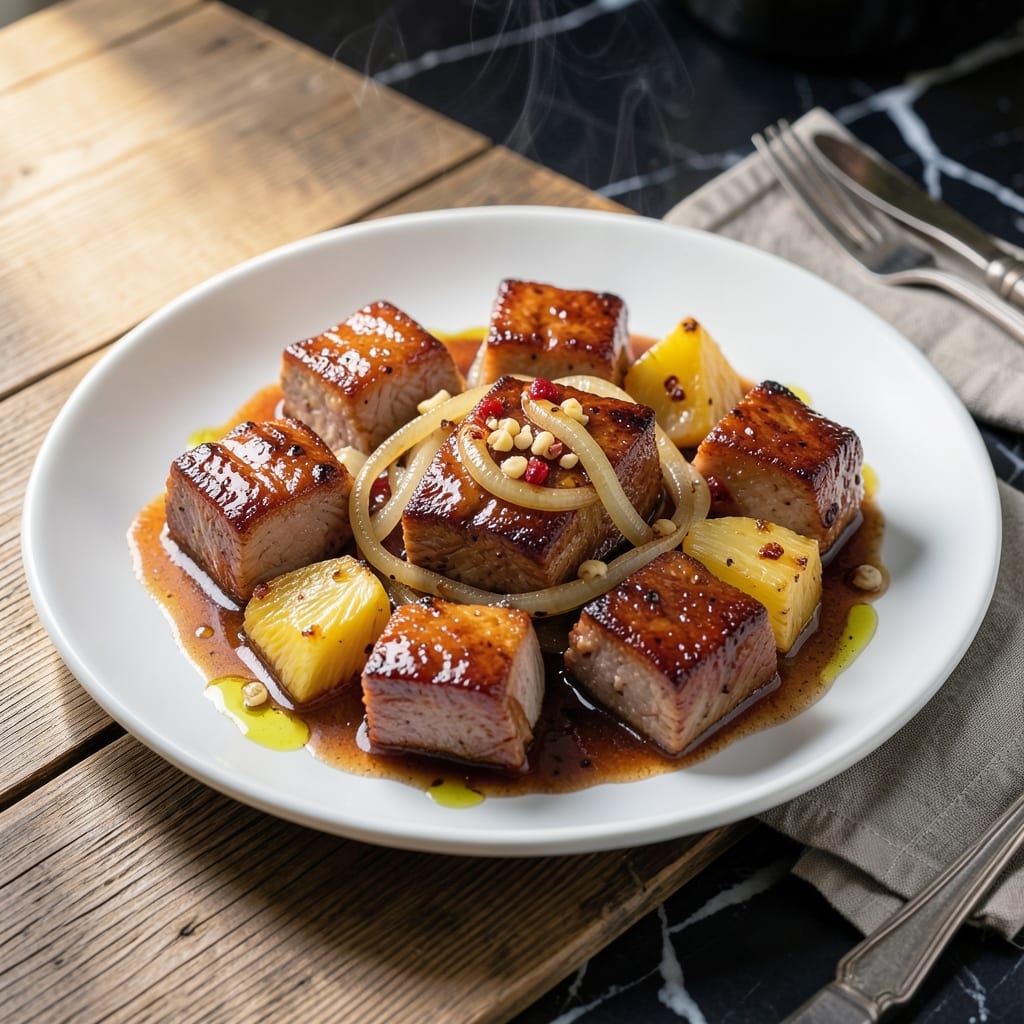
This Filipino braise perfectly balances sweet and savory, with tender pork and pineapple creating a dish that’s both comforting and complex.
I developed this recipe after testing multiple versions to achieve the right harmony between the ham’s saltiness and the fruit’s natural sweetness.
The slow cooking process transforms tough pork cuts into melt-in-your-mouth tenderness while allowing the flavors to meld beautifully.
Serve this with steamed rice to soak up every bit of the rich, caramelized sauce that develops during cooking.
Ingredients for Pork Hamonado with Pineapple Recipe Panlasang Pinoy
Sweet pineapple meets savory pork in this Filipino braise with bold, balanced flavors.
| Ingredient | Amount | Notes |
|---|---|---|
| Pork Shoulder 🥩 | 2 lb | Cut into 2-inch cubes, bone-in preferred |
| Pineapple Chunks 🍍 | 2 cups | Fresh or canned in juice, drained |
| Pineapple Juice 🥤 | 1 cup | Reserved from canned pineapple or fresh |
| Soy Sauce 🫕 | ½ cup | Low-sodium preferred for balance |
| Brown Sugar 🍚 | ½ cup | Packed, light or dark |
| Garlic Cloves 🧄 | 6 cloves | Minced for even distribution |
| Yellow Onion 🧅 | 1 whole | Large, thinly sliced |
| Bay Leaves 🍃 | 2 pieces | Dried, for aroma |
| Whole Black Peppercorns 🌶️ | 1 tsp | Lightly crushed for depth |
| Distilled White Vinegar 💧 | 2 tbsp | Balances sweetness with acidity |
| Vegetable Oil 🫒 | 2 tbsp | For searing pork |
| Salt 🧂 | 1 tsp | Adjust to taste at end |
The pork shoulder is key here—bone-in from Costco or butcher shops gives the richest flavor and stays juicy through the long braise. Look for pieces with good marbling (those white streaks of fat), which melt into the sauce. Dole pineapple in juice is my go-to for convenience, but fresh works if you’re feeling fancy. Just save that juice—it’s liquid gold for the braising liquid.
No pineapple juice? Orange juice with a splash of lemon gets you 90% there. Swap brown sugar for honey or maple syrup if that’s what you’ve got (just reduce by one-fourth). Coconut aminos can replace soy sauce for gluten-free, but it’s sweeter so cut the sugar back. The vinegar isn’t just for acid—it tenderizes the pork too (don’t skip it).
Leftovers taste even better the next day once everything marries. Keeps 4-5 days in the fridge, freezes beautifully for 3 months. I always make extra—this sauce is too good not to have seconds (or thirds).
Why You’ll Love This Recipe
- One Pot Wonder: I just toss the pork shoulder, pineapple juice, and soy sauce in a pan and let it simmer—minimal cleanup, maximum flavor.
- Sweet-Savory Magic: The brown sugar caramelizes with the soy sauce while the pineapple chunks add that bright, tangy contrast I crave.
- Feeds a Crowd: Honestly, this stretches easily for family dinners or potlucks, and it’s just as good reheated the next day.
Step-by-Step Instructions for Pork Hamonado With Pineapple
This method delivers tender pork in a balanced sweet-savory sauce with minimal effort.
Step 1: Sear the Pork Shoulder
Heat the 2 tbsp vegetable oil in a large, heavy-bottomed pot over medium-high heat. Add the 2 lb pork shoulder cubes in a single layer, working in batches if needed to avoid overcrowding.
Sear undisturbed for 3-4 minutes per side until deeply browned on all sides. The pork should release easily from the pot when it’s ready to turn. This step builds a flavor foundation—don’t skip it, even if the meat isn’t fully cooked through yet.
Step 2: Build the Braising Liquid
In the same pot, add the 1 whole yellow onion (thinly sliced) and 6 cloves garlic cloves (minced). Sauté for 2 minutes until fragrant but not browned. Stir in the 0.5 cup soy sauce, 0.5 cup brown sugar, 1 cup pineapple juice, and 2 tbsp distilled white vinegar.
Add the 2 pieces bay leaves, 1 tsp whole black peppercorns (lightly crushed), and 1 tsp salt. Return the seared pork to the pot along with any accumulated juices. The liquid should just cover the meat—add a splash of water if needed.
Step 3: Braise Until Fork-Tender
Bring the mixture to a boil, then reduce the heat to low. Cover and simmer gently for 1.5 to 2 hours, stirring occasionally. The pork is done when it shreds easily with a fork and the sauce has thickened slightly.
Resist the urge to lift the lid often—each peek releases heat and extends the cooking time. The aroma will tell you it’s working: rich, sweet, and tangy all at once.
Step 4: Add Pineapple and Finish
Stir in the 2 cups pineapple chunks and simmer uncovered for an additional 10-15 minutes. This step allows the fruit to absorb the flavors of the sauce while adding a bright, juicy contrast to the tender pork.
Taste and adjust the seasoning—add a pinch more salt if needed, or a splash of vinegar for extra tang. The sauce should coat the back of a spoon but still be pourable.
Discard the bay leaves before serving. The pork should be fall-apart tender, and the sauce glossy and aromatic.
Pro Tips For Making Pork Hamonado With Pineapple Recipe Panlasang Pinoy
- Sear the Pork First: Brown the pork shoulder pieces in batches over medium-high heat until deeply caramelized—I learned this the hard way after my first few attempts tasted bland. That crust locks in flavor and keeps the meat from turning mushy in the sauce.
- Use Fresh Pineapple: Canned pineapple works in a pinch, but fresh chunks add a brighter, sharper sweetness that balances the soy and brown sugar. My grandmother swore by this, and she was right.
- Simmer Low and Slow: After adding the pineapple juice and soy sauce, keep the heat at a gentle simmer for at least 45 minutes. After burning three batches, I finally figured out that a rolling boil makes the sauce split and the pork tough.
- Reduce the Sauce Last: Pull the pork out once it’s tender, then crank up the heat to thicken the sauce—this isn’t the prettiest method, but it’s the tastiest. Sounds weird, but it works, and you’ll get that glossy, sticky glaze clinging to every piece.
Serving Suggestions for Leftovers
Rice Pairing
Steamed jasmine rice is the classic choice—its fragrant aroma complements the dish perfectly. I use 1 cup rice to 1.5 cups water ratio for fluffy results. The rice soaks up the rich, caramelized sauce beautifully, creating a harmonious bite every time.
Vegetable Sides
For balance, serve with steamed bok choy or garlic sautéed green beans. The slight bitterness cuts through the sweetness of the pork. I blanch green beans for 2 minutes in boiling water before sautéing with garlic for crisp-tender texture. 🥗
Pickled Accompaniments
Filipino atchara (pickled green papaya) adds a refreshing crunch and tang. You can find it at Asian markets or make your own with julienned green papaya, carrots, and white vinegar. It brightens up the richness of the dish.
Bread Option
Warm pandesal (Filipino bread rolls) are perfect for soaking up the sauce. I like to toast them lightly and brush with garlic butter for extra flavor. These are easy to find at Filipino bakeries or make at home.
Garnish Ideas
Sprinkle with toasted sesame seeds or thinly sliced green onions just before serving. These add visual appeal and a subtle nutty or fresh flavor. A small drizzle of chili oil can add a nice kick for those who enjoy heat.
Drink Pairing
Serve with iced tea or calamansi juice to complement the meal. The citrus notes in calamansi juice enhance the dish’s flavors. I also enjoy a cold San Miguel beer with this hearty braise. 🍺
Nutrition Facts
Frequently Asked Questions
Can I use pork belly instead of shoulder?
Yes, but adjust the cooking time. Pork belly needs 2-2.5 hours to become tender. Shoulder is leaner and breaks down faster.
Why add vinegar to the braise?
Vinegar tenderizes the meat and balances the sweetness. 2 tbsp is enough to brighten flavors without overpowering them.
Can I make this in a slow cooker?
Sear the pork first, then cook on low for 6-7 hours. Add pineapple in the last 30 minutes to prevent mushiness.
How do I fix sauce that’s too sweet?
Stir in 1-2 tbsp vinegar or soy sauce to balance. Simmer uncovered for 5-10 minutes to reduce and concentrate flavors.

- Potato Candy Recipe 1933: Vintage Peanut Butter Roll Delight - October 30, 2026
- Potato Chip Cookie Recipe With Pecans: Buttery Crunch Meets Nutty Richness - October 30, 2026
- Potato Patty Recipe No Egg: Crispy Edges Without the Binder - October 30, 2026