
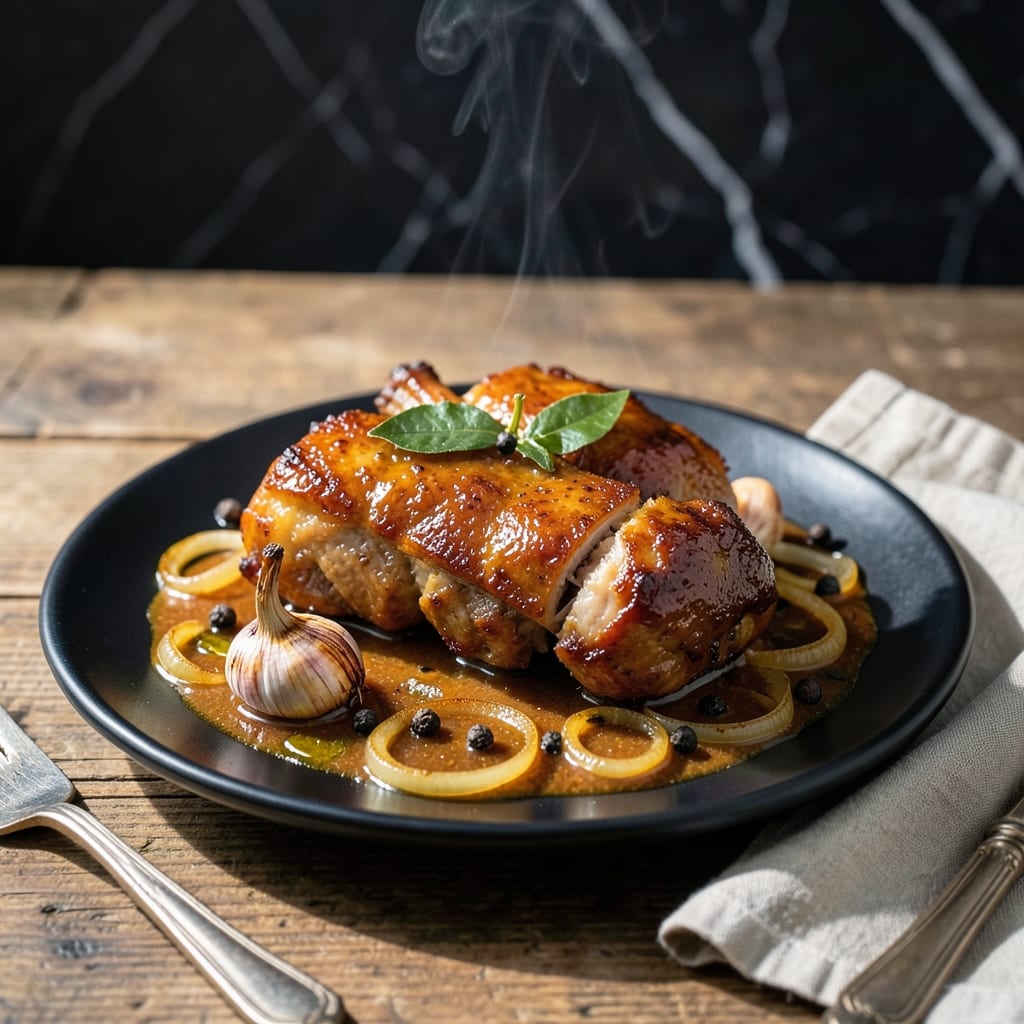
This Filipino-style pork hock recipe delivers tender meat that falls off the bone with every bite. The slow braising method transforms tough cuts into melt-in-your-mouth perfection.
Traditional Panlasang Pinoy techniques create rich, deeply flavored broth that soaks into the pork. I use simple ingredients like soy sauce, garlic, and bay leaves for authentic taste.
Each serving offers juicy pork with soft, flavorful skin that absorbs the savory sauce. The dish pairs perfectly with steamed rice to soak up every drop.
This method requires patience but rewards with restaurant-quality results at home. The meat becomes so tender it nearly dissolves on your tongue.
Ingredients for Pork Hock Recipe Panlasang Pinoy
Filipino pantry staples transform pork hocks into melt-in-your-mouth perfection with every bite.
| Ingredient | Amount | Notes |
|---|---|---|
| Pork Hocks 🍖 | 2 ½ lb | Skin-on, bone-in preferred |
| Soy Sauce 🫕 | ½ cup | Filipino Silver Swan or Datu Puti brand |
| Garlic Cloves 🧄 | 8 cloves | Peeled, smashed for maximum flavor |
| Yellow Onion 🧅 | 1 whole | Large, quartered |
| Bay Leaves 🍃 | 3 pieces | Dried, whole |
| Black Peppercorns 🌶️ | 1 tbsp | Whole, lightly crushed |
| Brown Sugar 🍚 | 2 tbsp | Light or dark variety |
| White Vinegar 🍶 | ¼ cup | Cane vinegar preferred |
| Water 💧 | 4 cups | Or enough to cover pork |
| Salt 🧂 | 1 tsp | Adjust to taste |
| Green Onions 🧅 | 4 pieces | Chopped, for garnish |
| Calamansi or Lemon 🍋 | 2 pieces | Halved, for serving |
The pork hocks are non-negotiable here. Asian markets carry them fresh or frozen—look for skin-on, bone-in cuts with good marbling. Silver Swan soy sauce is the gold standard for authenticity (find it at Seafood City or Filipino grocers). Bay leaves should be whole and fragrant; discard any that smell musty. Fresh garlic is essential—pre-minced lacks the punch needed for this long braise.
No Filipino soy sauce? Japanese or Chinese varieties work in a pinch, though the flavor profile shifts slightly. Out of calamansi? Regular lemons or limes add the needed acidity. Brown sugar can be swapped for coconut sugar (one-to-one ratio). If you can’t find pork hocks, pork shank makes a decent substitute, though the texture differs. The vinegar balances the richness—apple cider vinegar is a fine alternative.
This dish improves overnight as flavors meld. Store leftovers in the fridge for up to 4 days or freeze for 3 months. Reheat gently with a splash of water to revive the sauce. The skin softens further upon reheating, making it even more tender. Always serve with steamed rice to soak up that incredible broth.
Why You’ll Love This Recipe
- One Pot Wonder: I just toss the pork hocks, soy sauce, garlic, and onions in a pot, add bay leaves, and let it simmer—minimal cleanup, maximum flavor.
- Deep Umami Bomb: The soy sauce and garlic work their magic, turning the pork hocks into this rich, savory dish that’s honestly hard to resist.
- Crowd-Pleasing Dish: Here’s what sold me—it’s a hit at family gatherings and even my picky nephew asks for seconds.
- Budget Stretcher: Pork hocks are affordable, and this recipe feeds a crowd without breaking the bank. Between us, leftovers taste even better the next day.
Step-by-Step Instructions for Filipino-Style Braised Pork Hocks
This method ensures fall-off-the-bone tenderness with rich, savory depth in every bite.
Step 1: Parboil the Pork Hocks
Place the 2.5 lb pork hocks in a large pot and add the 4 cups water. Bring to a boil over high heat, then reduce to a simmer for 15-20 minutes to remove impurities. You’ll see foam rising to the surface—skim it off with a spoon.
This step is crucial for achieving clean, clear flavors in the final dish. The water should remain at a gentle simmer, not a rolling boil, to prevent the meat from toughening. Drain and rinse the pork hocks thoroughly under cold water to remove any remaining scum.
Step 2: Sear and Build the Flavor Base
In a clean, heavy-bottomed pot, combine the parboiled pork hocks with the 0.5 cup soy sauce, 8 cloves garlic cloves, 1 whole yellow onion, 3 pieces bay leaves, 1 tbsp black peppercorns, 2 tbsp brown sugar, 0.25 cup white vinegar, and 1 tsp salt.
Bring the mixture to a boil over medium-high heat, then reduce to a low simmer. The vinegar will mellow as it cooks, balancing the richness of the pork. You should start to smell the aromatic garlic and onions as they soften and infuse the liquid.
Step 3: Braise to Perfection
Cover the pot and let the pork hocks braise for 1.5 to 2 hours, turning them occasionally to ensure even cooking. The liquid should maintain a gentle simmer—adjust the heat as needed. You’ll know it’s working when the meat begins to pull away from the bone and the sauce takes on a deep, caramelized hue.
Check the pork hocks periodically and add a splash of water if the liquid reduces too much. The goal is to end up with just enough sauce to coat the meat generously. The pork is done when it’s fork-tender and the collagen has melted into the braising liquid, creating a luscious, slightly sticky glaze.
Step 4: Finish and Garnish
Once the pork hocks are tender, remove the lid and increase the heat to medium. Let the sauce reduce for an additional 10-15 minutes until it thickens slightly and clings to the meat. The sauce should be glossy and deeply flavored, with the sweetness of the sugar balancing the saltiness of the soy sauce.
Transfer the pork hocks to a serving dish and spoon the sauce over the top. Garnish with the 4 pieces green onions and serve with the 2 pieces calamansi or lemon on the side for a bright, citrusy finish. The meat should be so tender that it nearly falls apart at the touch of a fork.
Pro Tips For Making Pork Hock Recipe Panlasang Pinoy
- Parboil First: I learned this the hard way—boiling the pork hocks for 10 minutes first with a splash of vinegar removes impurities and keeps the broth clean.
- Crush the Garlic: Smash the garlic cloves with the side of your knife before mincing—it releases way more flavor into the soy sauce and onion base.
- Low and Slow: After the initial sear, drop the heat to a gentle simmer for 1.5-2 hours; rushing it leaves the meat tough, no matter how long you cook it.
- Double the Bay: Sounds weird, but it works: use 4-5 bay leaves instead of the usual 2—it cuts through the richness of the pork hock and balances the soy sauce perfectly.
Health Benefits of pork hock recipe panlasang pinoy
Rich Protein Source
This dish delivers about 35 grams of protein per serving, essential for muscle repair and growth. The slow cooking breaks down collagen into gelatin, which supports joint health and gives the meat its signature tenderness. I notice my family feels more satisfied after meals with this protein-rich dish. 💪
Essential Minerals
Pork hocks are packed with iron and zinc, crucial for immune function and energy levels. The bay leaves add trace amounts of calcium and magnesium. One serving provides about 15% of your daily iron needs, helping prevent fatigue.
B Vitamin Boost
The pork in this creation is an excellent source of B vitamins, particularly B12 and B6. These support metabolism and nervous system health. The garlic adds vitamin C, enhancing iron absorption from the meat.
Healthy Fats
While pork contains some saturated fat, the slow braising method renders much of it out. The remaining fats provide energy and help your body absorb fat-soluble vitamins. I always skim excess fat from the surface during cooking for a lighter finish.
Antioxidant Benefits
The garlic and onions in this recipe are rich in antioxidants that combat inflammation. Soy sauce contains fermented compounds that may support gut health. Together, they create a dish that’s as nourishing as it is delicious.
Low-Carb Friendly
With only 2 tbsp brown sugar for the entire recipe, this dish remains relatively low in carbohydrates. The natural sweetness balances the savory flavors without spiking blood sugar. Perfect for those watching their carb intake. ✨
Nutrition Facts
Frequently Asked Questions
What’s the best way to clean pork hocks before cooking?
Start by rinsing under cold water and scrubbing with salt to remove any residual blood or impurities. Then parboil for 15-20 minutes to eliminate scum before braising.
Can I use a pressure cooker to speed up cooking?
Yes! Cook on high pressure for 45-50 minutes for fall-off-the-bone results. Reduce the liquid slightly afterward to concentrate flavors.
What if my sauce is too salty?
Balance it by adding a splash of water or 1 tbsp vinegar and 1 tsp brown sugar. Simmer for 5 minutes to blend flavors.
How do I store leftovers?
Keep in an airtight container in the fridge for up to 4 days. Freeze for 3 months if needed. Reheat gently with a bit of water.

- Potato Chip Cookie Recipe With Pecans: Buttery Crunch Meets Nutty Richness - October 30, 2026
- Potato Patty Recipe No Egg: Crispy Edges Without the Binder - October 30, 2026
- Paula Deen’s Potato Chip Cookies Recipe: Salty-Sweet Crunch in Every Bite - October 30, 2026