
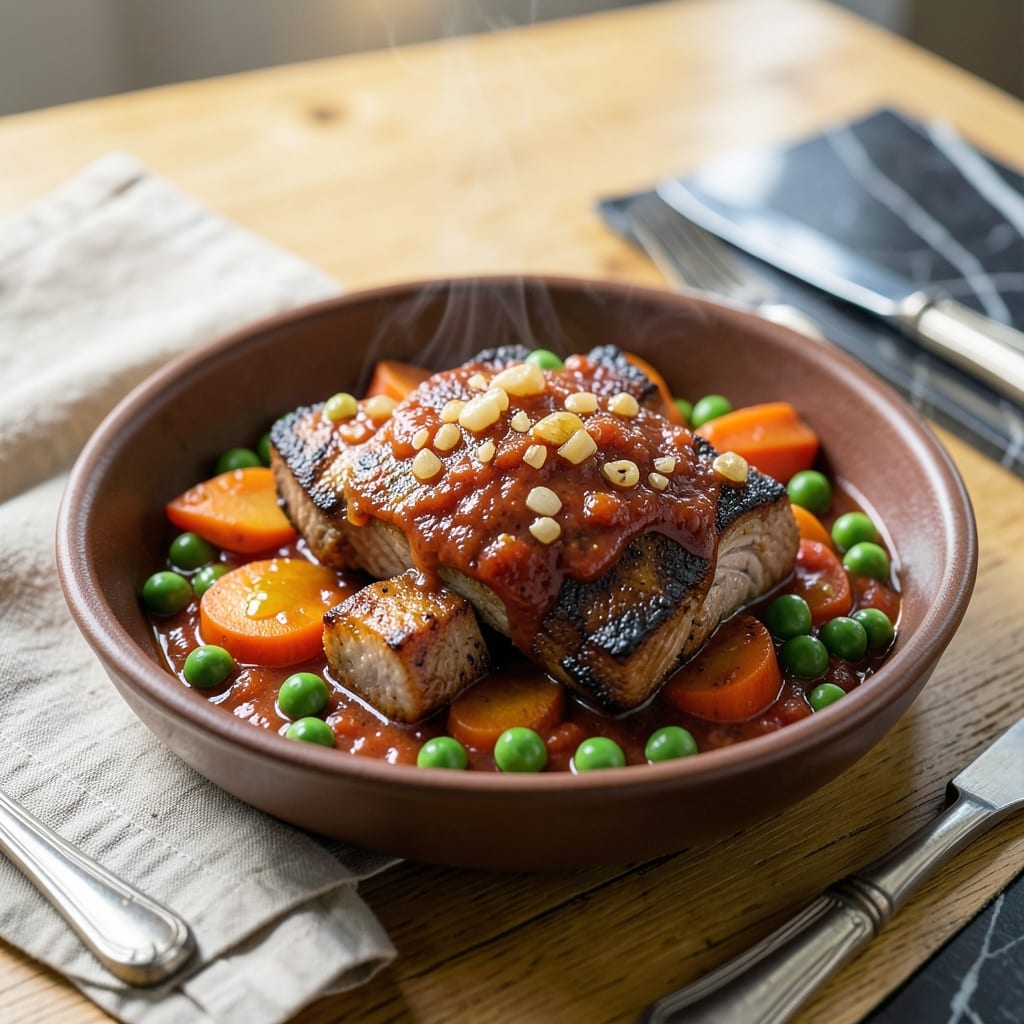
Island-style cooking transforms simple ingredients into deeply satisfying meals. This recipe brings together tender pork and sweet peas in a rich, tomato-based stew that’s a staple in Hawaiian households.
What makes this version special is the balance of flavors—savory pork, sweet peas, and a slightly tangy sauce that comes together in one pot. I’ve streamlined the process without sacrificing authenticity, using easy-to-find ingredients.
The result is a hearty, comforting stew with melt-in-your-mouth pork and vegetables that soak up every bit of the flavorful sauce. It’s the kind of dish that tastes even better the next day.
Serve with steamed rice to catch every last drop of the delicious sauce. This is comfort food at its finest.
Ingredients for Pork Guisantes Recipe Hawaii
Tender pork, sweet peas, and rich tomato sauce come together in this island-style stew.
| Ingredient | Amount | Notes |
|---|---|---|
| Pork Shoulder 🥩 | 1 ½ lb | Cut into 1-inch cubes, bone-in preferred |
| Green Peas 🌱 | 2 cups | Fresh or frozen, do not thaw |
| Tomato Sauce 🍅 | 1 ½ cups | Plain, no herbs added |
| Yellow Onion 🧅 | 1 whole | Medium-sized, finely diced |
| Garlic Cloves 🧄 | 5 cloves | Peeled and minced |
| Carrots 🥕 | 2 whole | Peeled, sliced into rounds |
| Potatoes 🥔 | 2 whole | Russet or Yukon Gold, cubed |
| Bay Leaves 🍃 | 2 pieces | Dried, whole leaves |
| Soy Sauce 🫒 | 2 tbsp | Low-sodium preferred |
| Apple Cider Vinegar 🍏 | 1 tbsp | For tangy balance |
| Brown Sugar 🍚 | 1 tbsp | Light or dark variety |
| Salt 🧂 | 1 tsp | Diamond Crystal kosher preferred |
| Black Pepper 🌶️ | ½ tsp | Freshly ground preferred |
| Vegetable Oil 🫒 | 2 tbsp | For browning pork |
| Water 💧 | 1 cup | For adjusting stew consistency |
The pork shoulder is non-negotiable here—bone-in pieces from a local butcher yield the most tender results, but pre-cubed pork from Foodland or Safeway works in a pinch. Look for well-marbled cuts with a good fat cap; this renders down into the sauce. For authenticity, Hawaiian-grown tomatoes in the sauce base add depth, but standard canned tomato sauce is perfectly acceptable for weeknight cooking.
No pork shoulder? Pork butt at equal weight is an excellent substitute with similar fat content. Fresh peas not available? Frozen peas at the same quantity work without compromise—just add them later to prevent mushiness. For a vegetarian twist, mushrooms or jackfruit can stand in, though the flavor profile will shift. Shoyu (Hawaiian soy sauce) can replace regular soy sauce for a more authentic island taste.
This stew improves overnight as flavors meld. Refrigerate in an airtight container for up to 4 days or freeze for 3 months. Reheat gently on the stove with a splash of water to restore consistency. The pork can be prepped a day ahead—brown it fresh, but the cubing can wait.
Why You’ll Love This Recipe
- One Pot Wonder: I just brown the pork shoulder, toss in the peas, tomato sauce, onion, and garlic, then let it simmer—easy cleanup with zero fuss.
- Rich Local Flavor: The garlic and tomato sauce blend into this deep, savory gravy that soaks into every bite of tender pork.
- Feeds the Whole Crew: Between us, this is my go-to for potlucks or Sunday dinner—it stretches far and tastes even better the next day.
- Budget Stretcher: Pork shoulder is cheap, peas are frozen, and one batch gives us two meals. Honestly, it’s a weeknight lifesaver.
Step-by-Step Instructions for Pork Guisantes
Master the island-inspired technique for building layers of flavor in this hearty stew.
Step 1: Brown the Pork Shoulder
Heat the 2 tbsp vegetable oil in a large Dutch oven over medium-high heat until shimmering. Add the 1.5 lb pork shoulder cubes in a single layer, being careful not to overcrowd the pan. I sear them in batches if necessary to ensure proper browning.
Cook undisturbed for 4-5 minutes until the bottom develops a deep golden crust, then stir and continue cooking for another 3-4 minutes until all sides are evenly browned. This caramelization builds the foundation of flavor for your creation.
Step 2: Sauté the Aromatics
Reduce heat to medium and add the 1 whole yellow onion, 5 cloves garlic cloves, 2 whole carrots, and 2 whole potatoes to the pot. Cook for 5-6 minutes, stirring occasionally, until the onion becomes translucent and the vegetables begin to soften.
Add the 2 tbsp soy sauce, 1 tbsp brown sugar, 1 tsp salt, and 0.5 tsp black pepper. Stir to coat the pork and vegetables evenly, allowing the sugar to caramelize slightly and deepen the color.
Step 3: Build the Stew Base
Pour in the 1.5 cups tomato sauce and 1 tbsp apple cider vinegar, stirring to deglaze the pan and lift all the browned bits from the bottom. Add the 2 pieces bay leaves and 1 cup water, then bring the mixture to a gentle simmer.
Once simmering, add the 2 cups green peas. I prefer frozen peas here as they hold their shape better during the long cooking process. The liquid should just cover the pork and vegetables.
Step 4: Simmer to Perfection
Reduce heat to low, cover the pot, and let the stew simmer gently for 45-50 minutes. Stir occasionally to prevent sticking, and check that the liquid maintains a slow bubble. The pork should become fork-tender and the potatoes easily pierced with a knife.
If the stew becomes too thick before the pork is fully cooked, add a splash of water to maintain the desired consistency. The peas should remain vibrant and distinct, not mushy.
Taste and adjust the seasoning if needed, though the soy sauce and tomato base typically provide sufficient saltiness. The flavors should meld beautifully, with the tang of vinegar balancing the richness of the pork.
Pro Tips For Making Pork Guisantes Recipe Hawaii
- Brown the Pork Well: Sear the pork shoulder in batches over medium-high heat until deeply browned—this builds the rich base flavor that defines guisantes. I learned this the hard way when my first few attempts tasted flat because I rushed this step.
- Use Fresh Peas: If possible, grab fresh green peas instead of frozen; they hold their texture better in the long simmer. Frozen works in a pinch, but add them 10 minutes later to avoid mush.
- Deglaze the Pan: After browning the pork, pour in a splash of water or broth to scrape up those browned bits before adding tomato sauce. Sounds weird, but it works—those bits are pure flavor.
- Simmer Low and Slow: Once everything’s in the pot, keep the heat low enough that the sauce barely bubbles. After burning three batches, I finally figured out that a rolling boil turns the pork tough and the sauce bitter.
Dietary Considerations for pork guisantes recipe hawaii
Gluten-Free Adaptation
This dish is naturally gluten-free if you use tamari instead of regular soy sauce. I pick up San-J Tamari at New Seasons Market—it has the same depth of flavor without the wheat. Always check labels, as some brands add fillers.
Lower Sodium Option
To reduce sodium, swap the soy sauce for coconut aminos and cut the added salt in half. The apple cider vinegar and tomato sauce already contribute plenty of flavor. I find Coconut Secret brand has the cleanest taste.
Dairy-Free By Default
No dairy is used in this recipe, making it safe for lactose-intolerant folks. The richness comes from the pork and vegetables, so there’s no need for butter or cream. My daughter Lily’s best friend is dairy-free, and she loves this stew.
Vegetarian Swap
Replace pork with 1.5 lb mushrooms or young jackfruit for a meat-free version. Cremini mushrooms work best for texture. Sear them just like the pork to develop that deep, savory flavor. 🌱
Low-Carb Adjustments
For a low-carb take, skip the potatoes and add extra carrots or cauliflower florets instead. The peas still add natural sweetness, but you’ll cut the starch significantly. I’ve tried this with riced cauliflower too—it soaks up the sauce beautifully.
Allergen Note
The only common allergen here is soy in the sauce. If needed, use coconut aminos as mentioned above. For nut allergies, this dish is already safe, as it contains no tree nuts or peanuts. 💡
Nutrition Facts
Frequently Asked Questions
What cut of pork works best?
Pork shoulder is ideal for its marbling and tenderness after slow cooking. Pork butt is a great alternative with similar fat content. Avoid lean cuts like tenderloin as they dry out quickly.
Can I use fresh peas instead of frozen?
Yes, but add them later to prevent overcooking. Fresh peas need only 10-15 minutes to soften, so stir them in during the last part of simmering. Frozen peas work perfectly when added at the start.
How do I fix a too-thick stew?
Thin it with small splashes of water or broth until it reaches your preferred consistency. Stir well after each addition and simmer for 2-3 minutes to blend flavors.

- Potato Chip Cookie Recipe With Pecans: Buttery Crunch Meets Nutty Richness - October 30, 2026
- Potato Patty Recipe No Egg: Crispy Edges Without the Binder - October 30, 2026
- Paula Deen’s Potato Chip Cookies Recipe: Salty-Sweet Crunch in Every Bite - October 30, 2026