
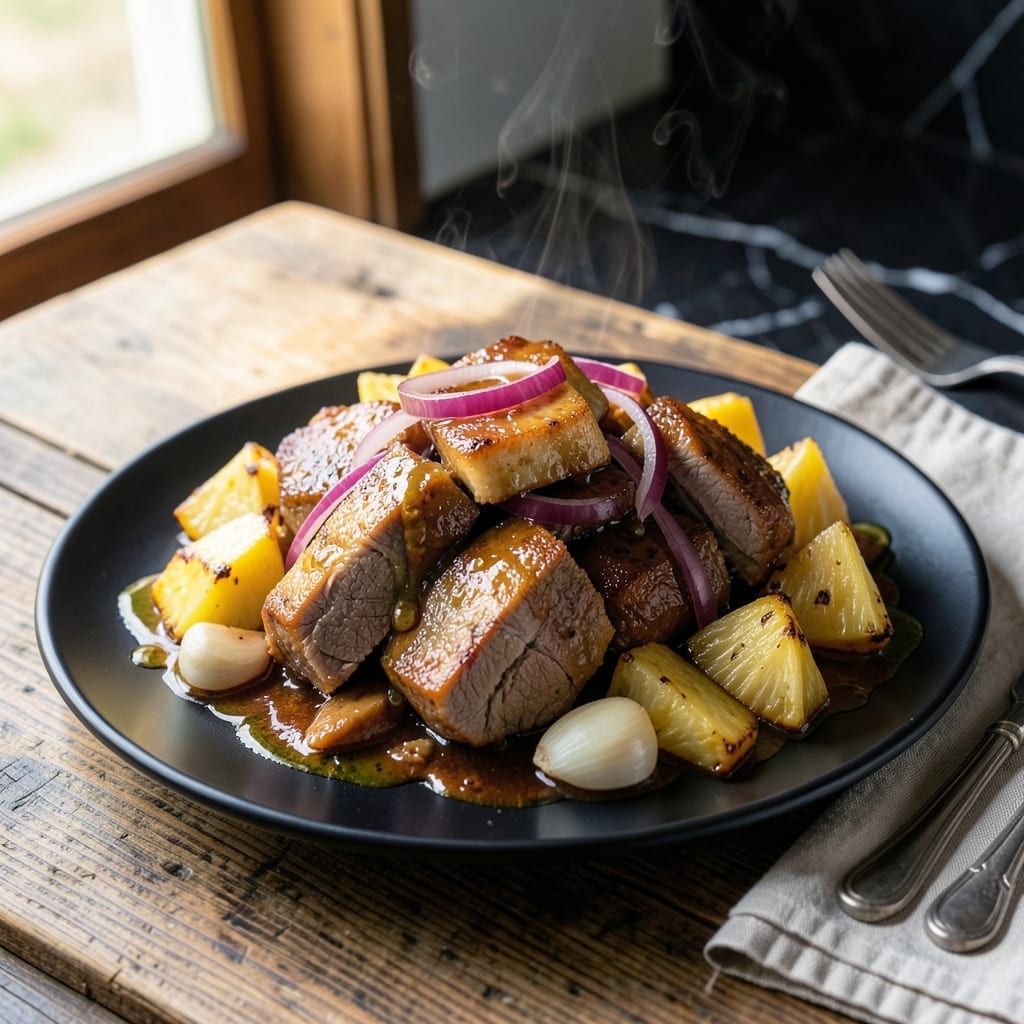
This Filipino dish transforms humble pork into a tender, fall-apart masterpiece with minimal effort. I first tried humba at a Portland potluck and was stunned by how simple ingredients could create such complex flavors.
The magic lies in slow braising pork belly in a mix of soy sauce, vinegar, and pineapple until it absorbs every bit of the savory-sweet sauce. Traditional versions often include banana leaves for aroma, but a Dutch oven works perfectly.
What emerges is melt-in-your-mouth pork with a glossy, caramelized sauce that’s perfect over rice. The pineapple adds just enough sweetness to balance the salty soy and tangy vinegar.
This dish keeps well and tastes even better the next day, making it ideal for meal prep or feeding a crowd.
Ingredients for Pork Humba Recipe Ingredients
Simple ingredients create complex flavors in this slow-braised Filipino classic.
| Ingredient | Amount | Notes |
|---|---|---|
| Pork Belly 🥩 | 2 lb | Cut into 2-inch chunks |
| Soy Sauce 🫒 | ¾ cup | Use dark soy for depth |
| White Vinegar 💧 | ½ cup | Or substitute apple cider vinegar |
| Pineapple Chunks 🍍 | 1 cup | Fresh or canned in juice |
| Garlic Cloves 🧄 | 6 cloves | Minced for full flavor |
| Red Onion 🧅 | 1 whole | Thinly sliced |
| Brown Sugar 🍚 | ¼ cup | Light or dark works |
| Bay Leaves 🍃 | 2 pieces | Dried or fresh |
| Whole Black Peppercorns 🌶️ | 1 tsp | Lightly crushed |
| Water 💧 | 1 cup | To thin the sauce |
| Banana Leaves 🌿 | 2 sheets | Optional for aroma |
| Green Onions 🧅 | 3 whole | Sliced for garnish |
| Vegetable Oil 🫒 | 2 tbsp | For searing pork |
| Salt 🧂 | 1 tsp | To taste |
The pork belly is key here. Look for skin-on pieces at Asian grocery stores or Costco—they render beautifully during the long braise. If you can’t find pork belly, pork shoulder works in a pinch (though the texture won’t be as luxurious). The soy sauce should be a good quality brand like Silver Swan or Datu Puti—Filipino brands have the right balance of salt and sweetness.
No pineapple chunks? Crushed pineapple works too (just drain well). Out of vinegar? Rice vinegar at half the amount gives a milder tang. The banana leaves are traditional but not dealbreakers—parchment paper in your Dutch oven mimics the effect. For extra depth, add a splash of fish sauce (if not vegetarian) or mushroom soy sauce as a substitute.
This tastes even better the next day. Keeps in the fridge for 4-5 days and freezes beautifully for 3 months. The sauce thickens as it cools, so thin with a little water when reheating (worth the extra minute).
Why You’ll Love This Recipe
- One Pot Wonder: I just throw everything in and let it simmer—pork belly soaks up the soy and pineapple like a dream.
- Sweet-Savory Magic: The pineapple chunks and garlic create this sticky, tangy glaze that’s honestly impossible to resist.
- Feeds a Crowd: I make a big batch on Sunday and it’s my lunch all week—tastes even better the next day.
- Budget Friendly: Pork belly is cheap, and a little goes a long way with bold flavors from vinegar and soy.
Step-by-Step Instructions for Pork Humba
Here’s the method. Straightforward, tested, works every time.
Step 1: Sear the Pork Belly
Begin by cutting the 2 lb pork belly into 2-inch chunks. Heat the 2 tbsp vegetable oil in a large pot over medium-high heat. When the oil shimmers, add the pork belly pieces in a single layer, working in batches if necessary to avoid crowding the pot.
Sear the pork for 5-7 minutes until golden brown on all sides. Don’t stir too frequently—let each piece develop a deep brown crust before turning. This step builds the foundation of flavor and ensures the meat stays tender during the long braise. Transfer the seared pork to a plate and set aside.
Step 2: Sauté Aromatics and Build the Braising Liquid
In the same pot, reduce the heat to medium and add the thinly sliced red onion. Sauté for 3-4 minutes until softened and translucent. Add the minced garlic cloves and cook for 30 seconds until fragrant—be careful not to let it burn.
Stir in the 0.75 cup soy sauce, 0.5 cup white vinegar, 0.25 cup brown sugar, 1 cup water, 2 pieces bay leaves, and 1 tsp whole black peppercorns. Bring the mixture to a gentle simmer, stirring to dissolve the sugar. This creates a rich, tangy, and slightly sweet base for the braise.
Step 3: Braise the Pork Until Fork-Tender
Return the seared pork belly to the pot, along with any accumulated juices. Add the 1 cup pineapple chunks and stir to combine. If using the 2 sheets banana leaves, line the bottom of the pot with one sheet before adding the pork, and cover the top with the second sheet for added aroma.
Reduce the heat to low, cover the pot, and let it braise for 1.5 to 2 hours. Check occasionally and stir gently to prevent sticking. The pork is done when it is fork-tender and the sauce has thickened slightly. If the sauce reduces too much, add a splash of water to maintain the desired consistency.
Step 4: Adjust Seasoning and Garnish
Once the pork is tender, taste the sauce and adjust the seasoning if needed. I often find that the 1 tsp salt enhances the flavors, but add it gradually to suit your preference. The balance should be a harmonious blend of savory, sweet, and tangy.
Discard the bay leaves and banana leaves (if used). Transfer the pork humba to a serving dish and garnish with the 3 whole green onions, thinly sliced. Serve hot with steamed rice to soak up the rich, flavorful sauce. The dish should have a glossy, caramelized appearance with tender pork that easily pulls apart.
Pro Tips For Making Pork Humba Recipe Ingredients
- Parboil the Pork: Simmer the pork belly in water for 10 minutes first to remove impurities—this keeps your humba sauce clean and clear instead of greasy.
- Brown the Garlic: Fry the garlic cloves until golden before adding liquids; it adds a deep, nutty flavor that raw garlic just can’t deliver.
- Skip the Overcooking: Pork belly turns tough if boiled too long in the sauce—add it back only after the sauce thickens, then simmer gently for 30 minutes.
- Use Fresh Pineapple: Canned pineapple works, but fresh chunks release natural juices that balance the soy-vinegar tang better and prevent a metallic aftertaste.
Common Mistakes When Making This Recipe
Skipping the Sear
I know it’s tempting to dump everything in the pot, but skipping the sear on your 2 lb pork belly means missing out on the deep, caramelized flavors that make this dish special. Those 5-7 minutes of browning create the foundation for the entire braise. 🔥
Overcrowding the Pot
When searing, give each piece of pork space to breathe. Crowding the pot steams the meat instead of browning it. I cook in batches if needed—it’s worth the extra 5 minutes for that perfect crust on each chunk.
Using Wrong Vinegar
White vinegar gives the right sharpness to balance the sweetness. Apple cider vinegar works, but balsamic or red wine vinegar will overpower the dish. Stick to the 0.5 cup of white vinegar for authentic flavor.
Rushing the Braise
This dish needs time for the pork to become fork-tender. Reduce heat to low and let it cook undisturbed for 1.5-2 hours. I check occasionally but resist the urge to stir too often.
Forgetting to Taste
The sauce should balance savory, sweet, and tangy. After braising, taste and adjust with 1 tsp salt if needed. I often find it needs a pinch more sugar or vinegar to get that perfect harmony. 💡
Skipping the Rest
Like most braised dishes, this tastes even better the next day. Let it rest 10-15 minutes after cooking so the pork reabsorbs the sauce. The flavors meld beautifully during this time.
Nutrition Facts
Frequently Asked Questions
Can I substitute pork shoulder for pork belly?
Yes, but expect a leaner texture. Pork shoulder needs 30 minutes more braising to become tender. The flavor will still be delicious, though not as rich as with pork belly.
Why use banana leaves in this recipe?
Banana leaves add a subtle earthy aroma and help keep the pork moist during the 1.5-2 hour braise. If unavailable, parchment paper works as a substitute.
How do I know when the pork is done?
The pork is ready when it easily pulls apart with a fork. If it resists, continue braising on low heat and check every 15 minutes.
Can I make this dish ahead of time?
The flavors deepen after a day in the fridge for up to 4-5 days. Reheat gently with a splash of water to thin the sauce.

- Potato Patty Recipe No Egg: Crispy Edges Without the Binder - October 30, 2026
- Paula Deen’s Potato Chip Cookies Recipe: Salty-Sweet Crunch in Every Bite - October 30, 2026
- Potato Gnocchi Recipe Ideas: Pillowy Soft Dumplings With Rustic Charm - October 30, 2026