
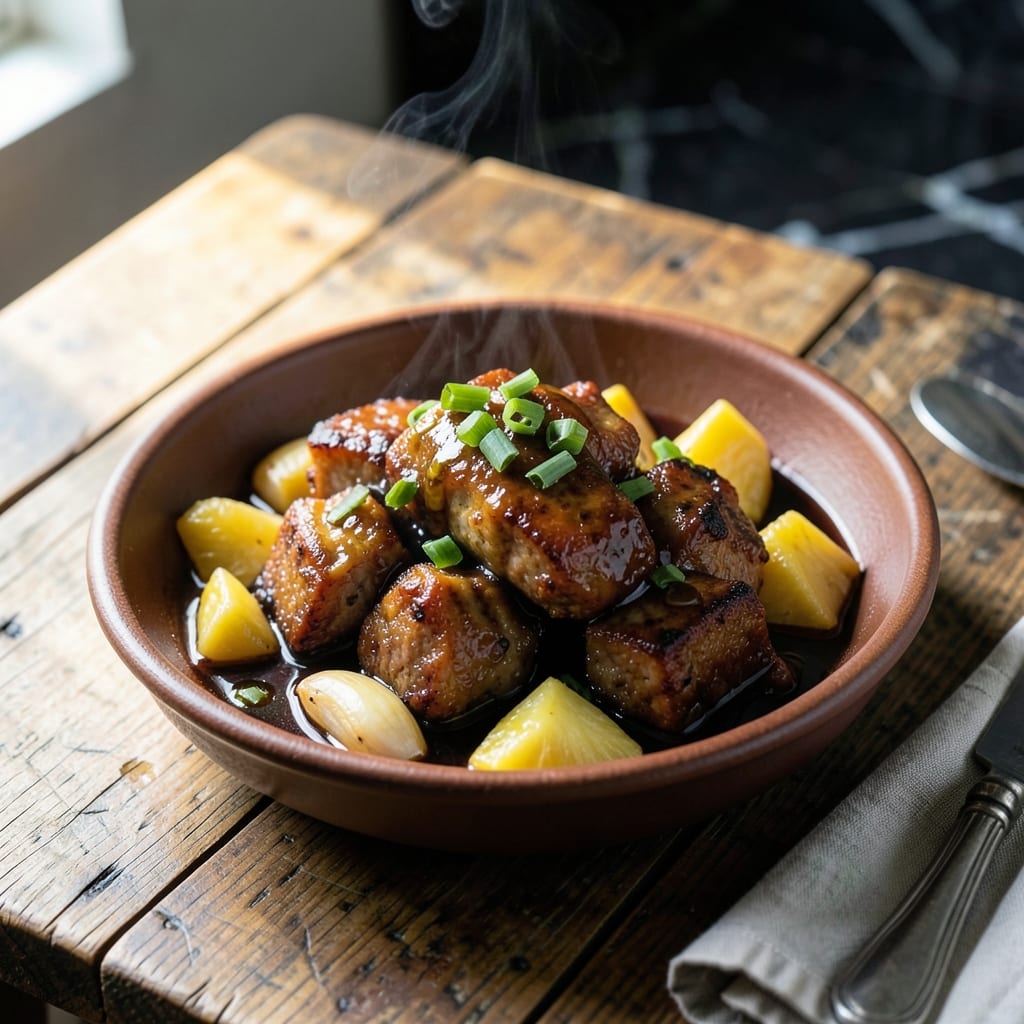
This slow cooker version captures the heart of traditional Filipino humba with minimal effort. The combination of soy sauce, vinegar, and pineapple creates a perfect balance of sweet, tangy, and savory flavors that penetrate the pork as it cooks.
I’ve adapted this recipe for the home kitchen, using 8 hours on low heat to achieve the same fall-apart tenderness you’d get from hours of stovetop braising. The pineapple adds natural sweetness that complements the rich pork beautifully.
The result is melt-in-your-mouth pork with a glossy, flavorful sauce that’s perfect over rice. This dish brings authentic Filipino comfort food to your table without the all-day commitment.
Serve with steamed jasmine rice to soak up every last bit of the delicious sauce.
Ingredients for Pork Humba Recipe Slow Cooker
Rich pork shoulder meets sweet pineapple and tangy vinegar for that signature Filipino balance.
| Ingredient | Amount | Notes |
|---|---|---|
| Pork Shoulder 🐖 | 2 lb | Cut into 2-inch cubes, fat trimmed |
| Soy Sauce 🫕 | ¾ cup | Use low-sodium if preferred |
| White Vinegar 🧪 | ½ cup | Cane vinegar for authenticity |
| Pineapple Chunks 🍍 | 1 cup | Fresh or canned in juice |
| Brown Sugar 🍚 | ¼ cup | Packed, for sweetness balance |
| Garlic Cloves 🧄 | 8 cloves | Minced, for aromatic base |
| Yellow Onion 🧅 | 1 whole | Large, thinly sliced |
| Bay Leaves 🍃 | 2 pieces | Dried, for depth |
| Black Peppercorns 🌶️ | 1 tsp | Whole or coarsely crushed |
| Star Anise Pods ⭐ | 2 pieces | Optional, for traditional flavor |
| Water 💧 | ½ cup | For braising liquid |
| Green Onions 🌱 | 4 whole | Thinly sliced, for garnish |
| Vegetable Oil 🫒 | 1 tbsp | For searing pork |
The pork shoulder is key—bone-in adds flavor but boneless works fine (just trim excess fat). I grab mine from Costco for big batches, or Whole Foods if I want organic. Look for good marbling; it melts into the sauce. The soy sauce should be Filipino brands like Silver Swan or Datu Puti if you can find them. For vinegar, cane vinegar is traditional, but white vinegar works in a pinch.
No pineapple chunks? Crushed pineapple (drained) adds texture—just reduce the sugar a bit. Swap brown sugar for coconut sugar if you want a deeper molasses note. Fresh garlic is non-negotiable, but jarred minced in a pinch (don’t tell my lola). Star anise is traditional but can be skipped—add extra black peppercorns instead. The bay leaves? Don’t substitute; they’re subtle but essential.
This tastes even better the next day—4-5 days in the fridge, freezes for 3 months. Reheat gently to keep the pork tender. Leftovers make killer sandwiches (trust me on this) or stir into fried rice. Always serve with steamed jasmine rice to soak up that glossy sauce.
Why You’ll Love This Recipe
- Set and Forget: I toss everything in the slow cooker before work and come home to tender pork falling apart in its own sweet-savory sauce.
- Sweet-Savory Magic: The brown sugar caramelizes with the soy and vinegar, while pineapple adds this bright, tangy pop I can’t get enough of.
- Feeds the Crew: This makes enough for dinner plus leftovers for lunch the next day—my teens actually fight over the last bits.
Step-by-Step Instructions for Filipino Braised Pork with Pineapple
This slow cooker method delivers tender pork with rich, tangy-sweet sauce every time.
Step 1: Sear the Pork Shoulder for Depth of Flavor
Heat the 1 tbsp vegetable oil in a large skillet over medium-high heat until it shimmers. Add the 2 lb Pork Shoulder cubes in a single layer, being careful not to overcrowd the pan. Sear for 3-4 minutes per side until deeply browned on all surfaces.
This browning step creates the Maillard reaction, developing complex flavors that will infuse the entire dish. The pork should release easily from the pan when it’s ready to turn. Transfer the seared pork to your slow cooker, leaving any rendered fat behind.
Step 2: Build the Aromatic Braising Liquid
In the same skillet, add the 8 cloves garlic cloves and 1 whole yellow onion. Sauté for 2-3 minutes until the onions soften and become translucent. The garlic should just begin to turn golden brown at the edges but not burn.
Pour in the 0.75 cup soy sauce, 0.5 cup white vinegar, 0.25 cup brown sugar, 1 cup pineapple chunks, 2 pieces bay leaves, 1 tsp black peppercorns, and 2 pieces star anise pods. Stir to combine, then add the 0.5 cup water.
Let this mixture come to a gentle boil, then pour it over the pork in the slow cooker.
Step 3: Slow Cook to Tender Perfection
Cover the slow cooker and set it to low heat. Cook for 6-7 hours until the pork is fall-apart tender. You’ll know it’s ready when the meat easily shreds with a fork and the sauce has thickened slightly.
Resist the temptation to lift the lid during cooking—each time you do, you add 20-30 minutes to the cooking time. The pork should be completely submerged in the braising liquid for even cooking and maximum flavor absorption.
Step 4: Adjust and Finish the Dish
Once the pork is tender, remove the 2 pieces bay leaves and 2 pieces star anise pods from the sauce. Taste and adjust the seasoning if needed, though the soy sauce should provide enough saltiness.
If the sauce seems too thin, remove the lid and cook on high heat for an additional 30 minutes to reduce and thicken it. The final sauce should coat the back of a spoon and have a beautiful balance of sweet, tangy, and savory flavors.
Step 5: Garnish and Serve
Ladle the pork and sauce into serving bowls. Garnish with the 4 whole green onions, thinly sliced. The green onions add a fresh, crisp contrast to the rich, tender pork.
This dish tastes even better the next day as the flavors continue to meld. Serve with steamed rice to soak up every last bit of the delicious sauce.
Pro Tips For Making Pork Humba Recipe Slow Cooker
- Sear the Pork First: I learned this the hard way—browning the pork shoulder in a hot pan for 3-4 minutes per side before slow cooking locks in way more flavor than dumping it in raw.
- Balance the Tang: After one too many vinegar-heavy batches, I now use 2 parts soy sauce to 1 part white vinegar—this keeps the humba rich instead of harsh.
- Skip the Early Stir: Resist the urge to stir for the first 2 hours; letting the pork sit undisturbed helps it absorb the pineapple-brown sugar glaze properly.
- Use Fresh Pineapple: Sounds weird, but it works: fresh pineapple chunks hold their shape better than canned, and their natural acidity cuts through the pork’s richness.
Storing and Reheating This Dish
Refrigerator Storage
Let your humba cool for no more than 2 hours before transferring to airtight containers. I use glass containers with locking lids. Store in the fridge at 40°F or below for up to 5 days. The flavors deepen overnight. ❄️
Freezer Storage
For longer storage, freeze in heavy-duty freezer bags or airtight containers. Portion into meal-sized servings before freezing. This dish freezes beautifully for up to 3 months without losing quality. Leave 1 inch headspace for expansion.
Stovetop Reheating
Gently reheat on the stovetop over medium-low heat for best results. Add ¼ cup water or pineapple juice to prevent drying. Stir occasionally and heat until reaching 165°F. This method preserves the pork’s tenderness. 🔥
Microwave Reheating
For quick meals, microwave covered with a damp paper towel. Use 50% power in 1-minute intervals, stirring between each. This prevents the sauce from separating and keeps the pork moist.
Make-Ahead Tip
This dish actually improves overnight. Prepare it a day ahead for deeper flavor development. When ready to serve, reheat gently and garnish with fresh green onions. The flavors will be even more harmonious.
Nutrition Facts
Frequently Asked Questions
Can I use pork loin instead of shoulder?
Pork shoulder is ideal for its fat content and tenderness. Pork loin will work but may dry out. If using loin, reduce cooking time to 4-5 hours on low and add ½ cup extra liquid.
Why sear the pork first?
Searing creates the Maillard reaction, adding deep flavor. It also renders fat, which enhances the sauce. Skip this only if short on time, but expect less complex taste.
Can I make this in an Instant Pot?
Yes! Sear pork using the sauté function, then pressure cook on high for 35 minutes with a 10-minute natural release. The texture will be slightly different but still delicious.
How do I fix sauce that’s too salty?
Balance with 1-2 tbsp brown sugar or ½ cup pineapple juice. Stir well and taste before adding more. The sweetness will counteract the saltiness.

- Potato Candy Recipe 1933: Vintage Peanut Butter Roll Delight - October 30, 2026
- Potato Chip Cookie Recipe With Pecans: Buttery Crunch Meets Nutty Richness - October 30, 2026
- Potato Patty Recipe No Egg: Crispy Edges Without the Binder - October 30, 2026