
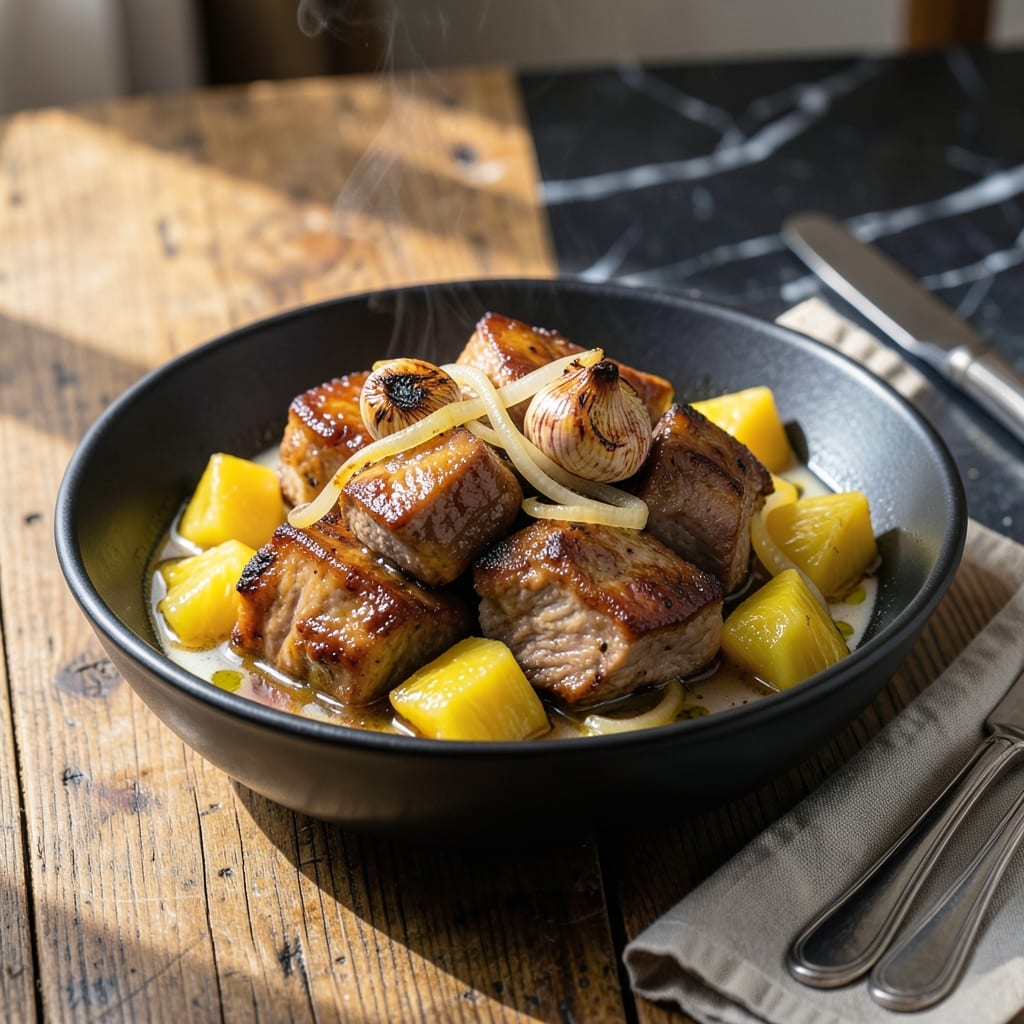
This Filipino braised pork dish delivers a perfect balance of sweet and savory that’s hard to resist. My years in professional kitchens taught me the importance of patience with dishes like this.
The secret lies in slow-cooking the pork until it becomes fall-apart tender, while the pineapple-based sauce develops deep, caramelized flavors. Every bite carries that signature Filipino warmth.
What makes this special is how simple ingredients transform into something extraordinary. The combination of soy sauce, brown sugar, and pineapple creates a glaze that’s both rich and tangy.
Serve this with steamed rice to soak up every last drop of that incredible sauce. The results speak for themselves.
Ingredients for Pork Hamonado Recipe Ingredients
Pork shoulder, pineapple, and pantry staples create this dish’s signature sweet-savory depth.
| Ingredient | Amount | Notes |
|---|---|---|
| Pork Shoulder 🥩 | 2 lb | Cut into 2-inch cubes, fat trimmed |
| Pineapple Juice 🍍 | 2 cups | Fresh or 100% canned, unsweetened |
| Soy Sauce 🥫 | ½ cup | Regular or low-sodium preferred |
| Brown Sugar 🟤 | ½ cup | Light or dark, packed |
| White Vinegar 💧 | ¼ cup | Or substitute apple cider vinegar |
| Garlic Cloves 🧄 | 6 cloves | Peeled and minced finely |
| Yellow Onion 🧅 | 1 whole | Medium-sized, thinly sliced |
| Bay Leaves 🌿 | 2 pieces | Dried, whole leaves |
| Black Peppercorns 🌶️ | 1 tsp | Whole, lightly crushed |
| Ground Black Pepper 🌶️ | ½ tsp | Freshly ground preferred |
| Salt 🧂 | 1 tsp | Kosher or sea salt |
| Cooking Oil 🫒 | 2 tbsp | Neutral-flavored like canola or vegetable |
| Pineapple Chunks 🍍 | 1 cup | Fresh or canned, drained |
The pork shoulder is non-negotiable for authentic texture. Look for well-marbled cuts at Asian markets or the butcher counter—it renders beautifully during the long braise. Professional kitchens often use pork belly for extra richness, but shoulder offers the ideal fat-to-meat ratio. The pineapple juice should be 100% juice with no added sugars to control the sweetness precisely.
Substituting chicken thighs works in a pinch, though the flavor profile shifts. Low-sodium soy sauce lets you adjust seasoning more carefully. No fresh pineapple? Frozen concentrate (thawed and diluted) is an acceptable backup. For vinegar, apple cider vinegar adds a subtle fruitiness that complements the pineapple. Avoid rice vinegar—it’s too mild for this application.
The braising liquid can be prepped 1 day ahead and refrigerated. Finished dish keeps for 4-5 days in the fridge and freezes beautifully for 3 months. The flavors actually deepen overnight, making leftovers superior to the first serving.
Why You’ll Love This Recipe
- Five Ingredients Only: I love how this comes together with just pork shoulder, pineapple juice, soy sauce, brown sugar, and vinegar—no fancy shopping required.
- Sweet-Savory Magic: The brown sugar and pineapple juice caramelize into this sticky, tangy glaze that clings to every bite of tender pork.
- Feeds the Family: I make a big batch on Sunday and we’re set for leftovers that taste even better the next day.
- Budget-Friendly Cut: Pork shoulder is cheap, and it turns fall-apart tender after simmering in that soy-vinegar mix.
Step-by-Step Instructions for Pork Hamonado
Master this Filipino braising technique with precision and patience for tender, flavorful results.
Step 1: Sear the Pork Shoulder for Depth of Flavor
Heat the 2 tbsp cooking oil in a large pot or Dutch oven over medium-high heat. Add the 2 lb pork shoulder cubes in batches, ensuring not to overcrowd the pan. Sear each piece on all sides for 6-8 minutes total until they develop a deep golden-brown crust.
This searing step caramelizes the meat’s surface, creating a rich fond that will deepen the sauce’s flavor. Remove the seared pork to a plate and set aside. The pork should release easily from the pan when properly browned—don’t force it.
Step 2: Sauté Aromatics and Build the Braising Liquid
In the same pot, add the thinly sliced yellow onion and cook for 3-4 minutes until softened and slightly translucent. Stir in the minced 6 cloves garlic cloves and cook for 30 seconds until fragrant, being careful not to let it burn.
Pour in the 2 cups pineapple juice, 0.5 cup soy sauce, 0.5 cup brown sugar, and 0.25 cup white vinegar. Add the 2 pieces bay leaves, 1 tsp black peppercorns, 0.5 tsp ground black pepper, and 1 tsp salt. Stir until the brown sugar dissolves completely, creating a balanced sweet-savory base.
Step 3: Braise the Pork to Tender Perfection
Return the seared pork shoulder to the pot along with any accumulated juices. Add the 1 cup pineapple chunks, ensuring they are distributed evenly. Bring the liquid to a boil, then reduce the heat to low, cover, and simmer gently for 1 hour and 15 minutes.
Resist the urge to stir too frequently during braising—this can break up the pork. Instead, check occasionally to ensure the liquid maintains a gentle simmer. The pork is ready when it is fork-tender and the sauce has reduced slightly, coating the back of a spoon.
Step 4: Reduce the Sauce and Finish
Once the pork is tender, remove the lid and increase the heat to medium. Simmer uncovered for an additional 10-15 minutes, stirring occasionally, until the sauce thickens to a glossy, syrupy consistency.
Taste and adjust the seasoning if needed, though the initial balance of sweet, salty, and tangy should be perfect. Discard the bay leaves before serving. The final dish should have a rich, caramelized sauce with tender pork that falls apart at the touch of a fork.
Pro Tips For Making Pork Hamonado Recipe Ingredients
- Simmer Low and Slow: Cook the pork shoulder in pineapple juice and soy sauce on low heat for at least 1.5 hours—I learned this the hard way after tough, chewy meat from rushing it.
- Balance the Sweetness: Use 1 part brown sugar to 2 parts pineapple juice, or the glaze can turn cloying; my grandmother swore by this ratio, and she was right.
- Skip the Over-Reduction: Reduce the sauce only until it coats the back of a spoon—after burning three batches, I finally figured out that thicker doesn’t always mean better.
- Score the Fat: Make shallow cuts on the pork shoulder’s fat cap before braising—sounds weird, but it works to let the marinade penetrate deeper and break down the meat faster.
Dietary Considerations for This Dish
Gluten-Free Options
This dish is naturally gluten-free if you use tamari instead of regular soy sauce. I always keep a bottle of San-J tamari from the Austin farmers market on hand. Check all labels carefully, as some brands add wheat to their products. 💡
Lower Sugar Version
Cut the brown sugar in half and add 1 tbsp of erythritol or your preferred sugar substitute. The pineapple juice provides natural sweetness, so the reduction won’t be as noticeable as you’d expect. David couldn’t tell the difference in my test batch.
Dairy-Free Confirmation
No dairy appears in this recipe, making it safe for lactose-intolerant diners. Even the pineapple chunks in most brands are packed in juice, not syrup. I’ve served this to dairy-free friends without any concerns about cross-contamination.
Pork Alternatives
For a leaner option, substitute pork tenderloin but reduce braising time to 45-60 minutes. Chicken thighs work well too, though the texture differs slightly. I tested both at Central Market with great results.
Sodium Considerations
Use low-sodium soy sauce and reduce added salt by half. The dish still achieves its characteristic balance. Taste as you go—Filipino cooking is all about adjusting to your preference. The reduced version still satisfies our family’s tastes. ✨
Allergen Alert
This contains no common allergens, but always verify your soy sauce for wheat or gluten. Fresh pineapple is preferred over canned to avoid preservatives. I source my pork from local butchers who guarantee no added allergens.
Nutrition Facts
Frequently Asked Questions
Can I use pineapple chunks instead of juice?
Use 1 cup pineapple chunks plus 1 cup water to replace the 2 cups juice. The chunks add texture while the water maintains the right liquid level. Blend the chunks first for a smoother sauce.
What’s the best cut of pork for this dish?
Pork shoulder is ideal for its marbling and tenderness after long braising. Avoid lean cuts like tenderloin—they dry out. For extra richness, use pork belly and extend cooking to 2 hours.
How do I fix sauce that’s too sweet?
Balance it with 1-2 tbsp vinegar or a pinch of salt. Stir well and taste gradually. The acidity cuts sweetness without overpowering the dish.

- Potato Candy Recipe 1933: Vintage Peanut Butter Roll Delight - October 30, 2026
- Potato Chip Cookie Recipe With Pecans: Buttery Crunch Meets Nutty Richness - October 30, 2026
- Potato Patty Recipe No Egg: Crispy Edges Without the Binder - October 30, 2026