
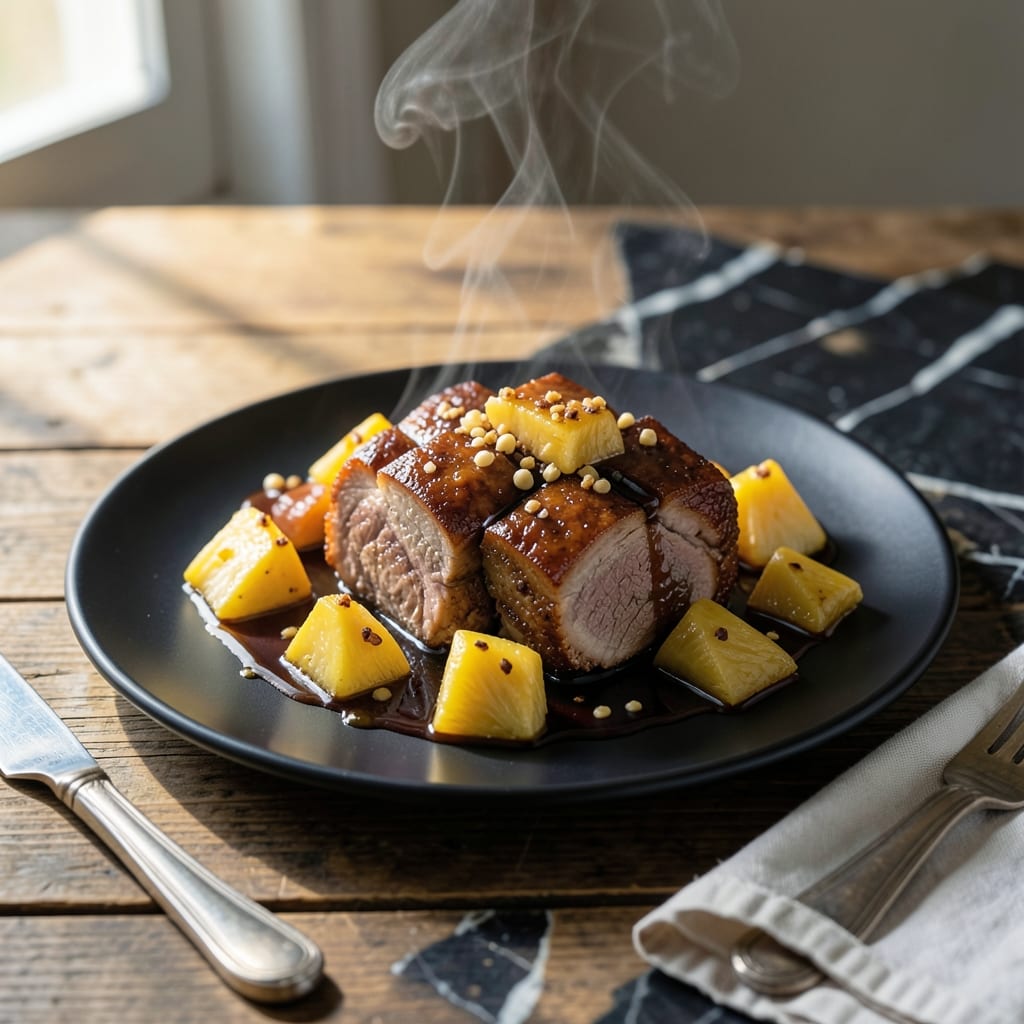
This Filipino pork dish delivers rich, savory flavors with a touch of pineapple sweetness. Slow-braised pork belly becomes tender and aromatic, absorbing every spice and sauce note deeply.
Traditional Tagalog preparation methods transform simple ingredients into something extraordinary. The pineapple adds a bright contrast to the rich pork, balancing the bold garlic and soy notes perfectly.
You’ll achieve restaurant-quality results with this proven technique. The meat falls apart beautifully while the sauce reduces to a glossy, flavorful coating.
Serve with steamed rice to soak up every drop of that incredible sauce. This dish brings authentic Filipino comfort to your table.
Ingredients for Pork Humba Recipe Tagalog
Slow-braised pork belly and pineapple create this deeply aromatic Filipino classic with bold layers.
| Ingredient | Amount | Notes |
|---|---|---|
| Pork Belly 🥩 | 2 lb | Cut into 2-inch cubes, skin-on |
| Pineapple Chunks 🍍 | 1 cup | Fresh or canned in juice, drained |
| Soy Sauce 🫒 | ½ cup | Filipino brand preferred |
| White Vinegar 💧 | ¼ cup | Balances richness of pork |
| Brown Sugar 🍚 | ¼ cup | Packed, for caramelization |
| Garlic Cloves 🧄 | 8 cloves | Peeled and minced |
| Yellow Onion 🧅 | 1 whole | Large, thinly sliced |
| Bay Leaves 🍃 | 2 pieces | Dried, for aromatic depth |
| Black Peppercorns 🌶️ | 1 tsp | Whole, lightly crushed |
| Star Anise Pods ⭐ | 2 pieces | Essential for authenticity |
| Salt 🧂 | 1 tsp | Adjust to taste |
| Water 💧 | 1 cup | For braising liquid |
| Vegetable Oil 🫒 | 2 tbsp | For searing pork |
The pork belly is non-negotiable here. Asian markets often carry pre-cut cubes with ideal fat-to-meat ratio, but any fresh pork belly works—just trim excess skin if needed. San Miguel or Silver Swan soy sauce (found at Seafood City or Filipino grocers) adds authenticity. Look for pork with good marbling; the fat renders down beautifully during braising, creating that signature unctuous sauce.
No fresh pineapple? Canned in juice (not syrup) is perfectly acceptable. For depth, palm sugar or coconut sugar can replace brown sugar. The vinegar must be white—cane vinegar at half the amount adds a nice twist. Star anise is traditional, but a pinch of ground anise works in a pinch. If you skip the bay leaves, add extra garlic for complexity.
This dish tastes even better the next day as flavors meld. Store in an airtight container for up to 5 days in the fridge or freeze for 3 months. Reheat gently to preserve the tender texture of the pork.
Why You’ll Love This Recipe
- One Pot Wonder: I just throw everything in, let it simmer, and the pork belly soaks up that soy-vinegar-sugar magic all on its own.
- Sweet & Tangy Fix: The pineapple chunks caramelize with the brown sugar, creating this sticky, crave-worthy glaze that coats every bite.
- Weeknight Hero: Honestly, it’s my go-to for busy evenings—tastes like I slaved for hours, but it’s hands-off after the first 10 minutes.
- Budget Stretcher: Pork belly is affordable, and leftovers taste even better the next day. I’ll be real: I make extra just for that.
Step-by-Step Instructions for Slow-Braised Pork Belly with Pineapple Tang
Master the art of this Filipino classic through precise technique and layered flavors.
Step 1: Sear the Pork Belly for Depth of Flavor
Heat the 2 tbsp vegetable oil in a large, heavy pot over medium-high heat. When the oil shimmers, add the 2 lb pork belly cubes in a single layer, skin-side down. Sear undisturbed for 5-6 minutes until the skin develops a deep golden-brown crust.
This initial browning creates the Maillard reaction that builds complex flavors. Turn the pieces carefully with tongs to sear all sides evenly. The pork should release from the pot naturally when properly browned—don’t force it. Remove the pork to a plate and set aside.
Step 2: Build the Aromatic Foundation
In the same pot, reduce heat to medium. Add the 1 whole yellow onion and sauté for 3-4 minutes until softened and translucent. Add the 8 cloves garlic cloves and cook for 1 minute until fragrant but not browned.
Stir in the 0.5 cup soy sauce, 0.25 cup white vinegar, 0.25 cup brown sugar, 1 tsp salt, 1 tsp black peppercorns, 2 pieces bay leaves, and 2 pieces star anise pods. Cook for 2 minutes, stirring constantly, until the sugar dissolves and the mixture becomes deeply aromatic.
Step 3: Braise the Pork to Tenderness
Return the seared pork belly to the pot along with any accumulated juices. Pour in the 1 cup water and 1 cup pineapple chunks. The liquid should cover about two-thirds of the pork. Bring to a boil, then reduce heat to low.
Cover and simmer for 2 to 2.5 hours, turning the pork occasionally, until the meat is fork-tender and the sauce has reduced to a glossy, thick consistency. Check the liquid level periodically—if it reduces too quickly, add a splash of water. The sauce should coat the back of a spoon and the pork should fall apart easily when pierced.
Step 4: Reduce and Glaze the Pork
Once the pork is tender, remove the lid and increase heat to medium. Simmer uncovered for an additional 15-20 minutes, turning the pork occasionally, until the sauce thickens into a rich glaze and the pork develops a sticky, caramelized exterior.
The pineapple chunks should be soft and infused with the savory-sweet sauce. Discard the bay leaves and star anise pods before serving. Taste and adjust seasoning if needed, though the flavors should be perfectly balanced between sweet, tangy, and umami.
Pro Tips For Making Pork Humba Recipe Tagalog
- Simmer Low and Slow: Cook the pork belly on low heat for at least 1.5 hours—rushing it with high heat leaves the meat tough and the sauce bitter. I learned this the hard way after my first batch turned chewy and over-reduced.
- Brown the Belly First: Sear the pork belly in a hot pan for 3-4 minutes per side before braising. My grandmother swore by this, and it actually changes the outcome by adding depth to the sauce.
- Skip the Fresh Pineapple: Use canned pineapple chunks instead of fresh—they hold their shape better during long cooking, and the syrup adds natural sweetness. Fresh ones just turn mushy and water down the sauce.
- Balance the Sauce: Taste and adjust the sauce before serving—add a splash of vinegar if it’s too sweet, or a pinch of sugar if the soy sauce overpowers. Sounds weird, but it works every time.
Dietary Considerations for These Flavors
Gluten-Free Option
This dish is naturally gluten-free when using tamari instead of regular soy sauce. I recommend San-J Tamari (available at New Seasons Market) for the best flavor. Always check your soy sauce labels carefully, as many brands contain wheat.
Lower Sodium Alternative
To reduce sodium, use low-sodium soy sauce and cut the amount by 25%. Balance the flavors with an extra 1 tbsp vinegar and 1 tsp coconut sugar. The pineapple’s natural sweetness helps compensate for the reduced salt content. 💡
Dairy-Free Naturally
This recipe contains no dairy ingredients, making it perfect for lactose-intolerant diners. The rich pork and pineapple create a satisfying meal without any need for milk, cheese, or butter. Serve with steamed rice for a completely dairy-free experience.
Pork Substitutions
For a lighter version, use pork shoulder instead of belly—it has less fat but still becomes tender. Trim visible fat before cooking. Chicken thighs also work well; reduce braising time to 1 hour and add ½ cup extra water to prevent drying.
Vegetarian Adaptation
Replace pork with mushroom caps or tofu cubes. Sear mushrooms for 3-4 minutes per side before braising. Use the same sauce and braising time, but check doneness earlier. The star anise and pineapple provide the authentic Filipino flavor profile.
Sugar Alternatives
For a less sweet version, reduce brown sugar to 2 tbsp or use coconut sugar for a deeper caramel note. The pineapple’s natural sugars still provide plenty of sweetness to balance the vinegar’s tang. 🥗
Nutrition Facts
Frequently Asked Questions
Can I use pork shoulder instead of belly?
Yes, pork shoulder works well as a leaner alternative. Trim visible fat and expect slightly less richness. The cooking time remains similar at 2-2.5 hours.
What if I don’t have star anise?
Substitute with ½ tsp ground anise or a pinch of cinnamon. While not identical, these add warm spice notes. Authentic flavor comes from star anise, so try to find it at Asian markets.
How do I know when the pork is done?
The meat should fall apart easily with a fork. The sauce will thicken to coat the back of a spoon after 2-2.5 hours of braising. Check occasionally and add water if needed.
Can I make this ahead of time?
The flavors deepen overnight. Store in an airtight container for up to 5 days in the fridge. Reheat gently on the stove with a splash of water.

- Potato Patty Recipe No Egg: Crispy Edges Without the Binder - October 30, 2026
- Paula Deen’s Potato Chip Cookies Recipe: Salty-Sweet Crunch in Every Bite - October 30, 2026
- Potato Gnocchi Recipe Ideas: Pillowy Soft Dumplings With Rustic Charm - October 30, 2026