
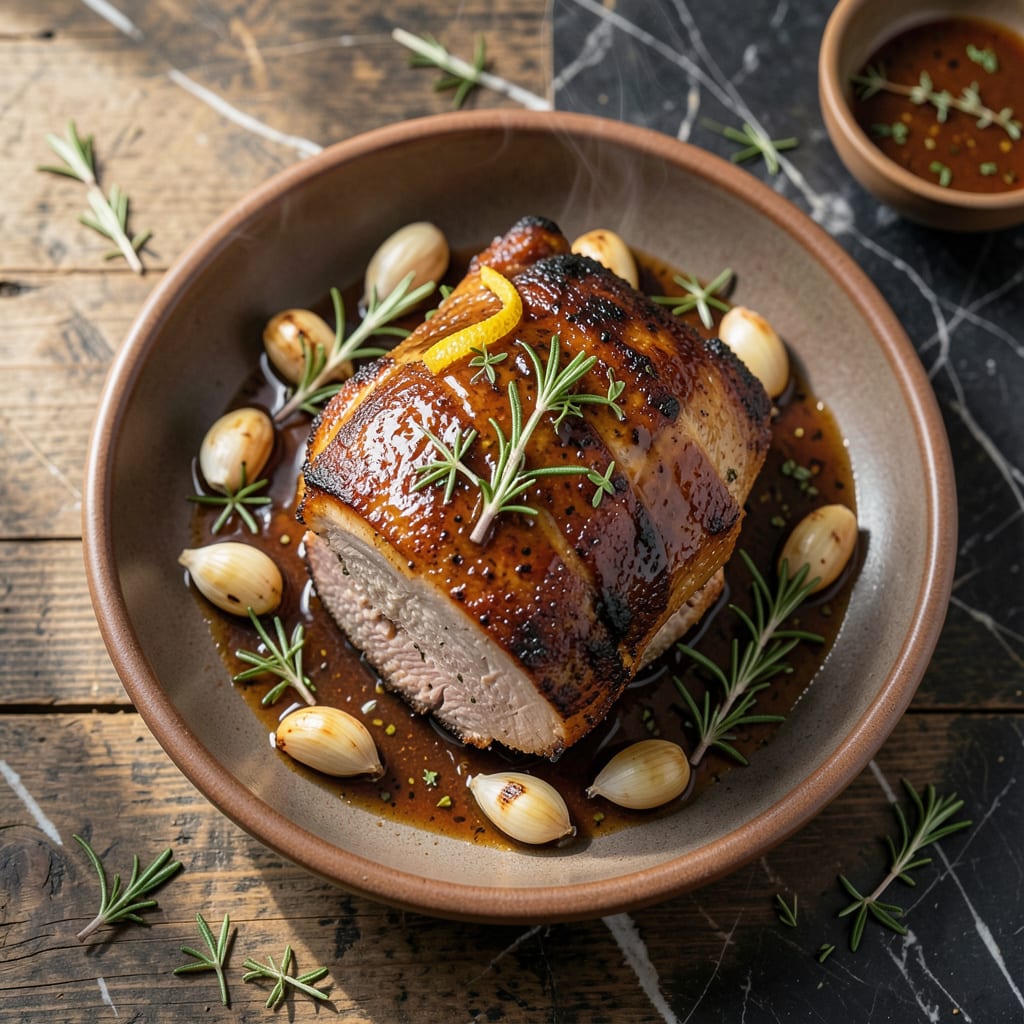
I discovered the secret to juicy oven pork by accident—high heat first, then slow roasting. The herb crust forms a flavorful seal that locks in all the natural moisture.
This method transforms a simple cut into a tender, aromatic centerpiece. You’ll get perfectly cooked meat with a golden crust, ready to serve with your favorite sides.
Ingredients for Pork in the Oven
Herb-crusted pork needs simple, bold ingredients to shine with juicy results.
| Ingredient | Amount | Notes |
|---|---|---|
| Pork Shoulder 🥩 | 2 lb | Boneless, trimmed of excess fat |
| Olive Oil 🫒 | 2 tbsp | Extra-virgin for richness |
| Fresh Rosemary 🌿 | 2 tbsp | Finely chopped, stems discarded |
| Fresh Thyme 🍃 | 2 tbsp | Leaves only, no stems |
| Garlic Cloves 🧄 | 6 cloves | Minced for maximum flavor |
| Dijon Mustard 🟡 | 2 tbsp | Smooth, not whole grain |
| Kosher Salt 🧂 | 1 ½ tsp | Diamond Crystal preferred |
| Black Pepper 🌶️ | 1 tsp | Freshly ground for best flavor |
| Dried Oregano 🌿 | 1 tsp | Mediterranean variety ideal |
| Brown Sugar 🍚 | 1 tbsp | Light or dark works |
| Red Wine Vinegar 💧 | 1 tbsp | Balances the richness |
| Chicken Stock 🥣 | ½ cup | Low-sodium preferred |
The pork shoulder is key here—look for well-marbled cuts at Whole Foods or your local butcher. Avoid pre-ground herbs; fresh rosemary and thyme make all the difference in the crust. I grab mine from the produce section and use the leftovers in roasted potatoes. The garlic should be plump and firm, not sprouting (a sign it’s past its prime).
No fresh herbs? Dried at one-third the amount works in a pinch, though the flavor won’t be as vibrant. Swap pork shoulder for pork loin if you prefer leaner meat (just reduce cooking time). Out of Dijon? Whole-grain mustard adds texture, or use a mix of yellow mustard and a pinch of turmeric. Chicken stock can be vegetable broth for a lighter touch.
This keeps beautifully—store leftovers in an airtight container for up to 4 days in the fridge. The flavors deepen overnight, so it’s even better reheated. For freezing, slice first, then wrap portions tightly (lasts 3 months).
Why You’ll Love This Recipe
- Hands-Off Cooking: I just rub the pork shoulder with olive oil, herbs, and garlic, then let the oven do all the work.
- Herb-Infused Perfection: The rosemary and thyme crust with roasted garlic cloves makes every bite ridiculously flavorful.
- Feeds a Crowd: One pork shoulder serves my whole family with leftovers for sandwiches the next day.
Step-by-Step Instructions for Herb-Crusted Pork in the Oven
Here’s how to achieve perfectly juicy, herb-crusted pork with minimal effort and maximum flavor.
Step 1: Prepare the Herb Marinade
In a small bowl, combine the 2 tbsp Dijon mustard, 2 tbsp Olive Oil, 2 tbsp Fresh Rosemary, 2 tbsp Fresh Thyme, minced 6 cloves Garlic Cloves, 1 tbsp Brown Sugar, 1 tbsp Red Wine Vinegar, 1.5 tsp Kosher Salt, 1 tsp Black Pepper, and 1 tsp Dried Oregano.
Whisk until the mixture is smooth and all the herbs are evenly distributed. This marinade infuses the pork with aromatic flavors and helps create that beautiful, flavorful crust. I always let this sit for 5 minutes to allow the flavors to meld together before using it.
Step 2: Coat and Marinate the Pork
Pat the 2 lb Pork Shoulder dry with paper towels to ensure the marinade adheres properly. Place the pork in a large bowl or resealable bag and pour the marinade over it. Use your hands to rub the marinade all over the pork, making sure every surface is thoroughly coated.
Let the pork marinate at room temperature for 30 minutes, or cover and refrigerate for up to 4 hours for deeper flavor penetration. The longer it marinates, the more tender and flavorful the final result will be. Just don’t exceed 4 hours, or the acid in the vinegar can start to break down the meat too much.
Step 3: Sear the Pork for Extra Flavor
Preheat your oven to 375°F. Heat a large oven-safe skillet or Dutch oven over medium-high heat. Add the pork and sear for 3-4 minutes per side until deeply browned. This searing step is crucial for building layers of flavor and ensuring a beautiful crust.
If the pork sticks slightly, don’t force it—let it release naturally when it’s ready. Once browned on all sides, remove the pork from the skillet and set it aside briefly. The fond (browned bits) left in the pan will add incredible depth to the final dish.
Step 4: Roast to Juicy Perfection
Return the pork to the skillet and pour 0.5 cup Chicken Stock into the pan. This liquid will create steam, keeping the pork moist as it roasts. Cover the skillet with a lid or foil and transfer it to the preheated oven.
Roast for 1.5 to 2 hours, turning the pork halfway through, until the internal temperature reaches 195°F. At this temperature, the connective tissues in the pork shoulder break down, resulting in fall-apart tenderness. The meat should pull away easily from a fork when it’s done.
Step 5: Rest and Serve
Once the pork reaches the desired temperature, remove it from the oven and transfer it to a cutting board. Tent it loosely with foil and let it rest for 15 minutes before slicing or shredding. This resting period allows the juices to redistribute throughout the meat.
Serve the pork with the pan juices spooned over the top for maximum flavor. The result should be succulent, herb-infused, and incredibly tender, with a rich crust that’s packed with the flavors of rosemary, thyme, and garlic. This dish is sure to impress with its depth of flavor and melt-in-your-mouth texture.
Pro Tips For Making Pork In The Oven
- Start Hot, Finish Low: Sear the pork shoulder at 450°F for 20 minutes first, then drop to 300°F to slow-roast. I learned this the hard way—skipping the high heat leaves the crust sad and pale.
- Score the Fat: Cut 1/4-inch slits in the fat cap before seasoning so the olive oil, rosemary, and garlic actually penetrate. Sounds tedious, but it makes a real difference in flavor distribution.
- Skip the Dried Herbs: Fresh rosemary and thyme bruise easily—just rub them between your palms before sprinkling to release their oils. Dried versions taste dusty here and won’t hold up to the long cook.
- Rest Under Foil: Pull the pork out when it hits 195°F internal, tent it with foil, and let it sit 15 minutes. My grandmother swore by this, and she was right: it keeps the juices from pooling on the cutting board.
Dietary Considerations for These Flavors
Gluten-Free Friendly
This recipe is naturally gluten-free since it relies on fresh herbs, olive oil, and pork without any wheat-based ingredients. Just double-check your Dijon mustard and chicken stock labels—some brands add flour as a thickener. I always reach for Annie’s or Whole Foods 365 for safe options.
Low-Carb Adaptation
The only carb source here is the 1 tbsp brown sugar in the marinade. For strict keto, replace it with 1 tbsp erythritol or simply omit it—the herbs and garlic provide plenty of flavor. The pork itself has 0g net carbs, making this ideal for low-carb diets.
Dairy-Free Naturally
No dairy appears in this recipe, so it’s safe for lactose-intolerant diners. The richness comes from olive oil and the pork’s natural fats. Even the Dijon mustard is typically dairy-free, but verify your brand to be certain.
Allergen Awareness
Watch for mustard allergies—substitute 1 tbsp apple cider vinegar if needed. The garlic can be reduced to 3 cloves for those with sensitivities. Always check spice blends for hidden allergens like soy or wheat in commercial dried oregano. 💡
Sodium Considerations
To reduce sodium, use low-sodium chicken stock and cut the kosher salt to 1 tsp. The Dijon mustard adds saltiness too, so taste before adding extra. Fresh herbs mean you won’t miss the salt—rosemary and thyme pack a flavor punch.
Protein-Packed
Each serving delivers about 40g of protein from the 2 lb pork shoulder, perfect for muscle maintenance. The high protein-to-fat ratio makes this dish satisfying without being overly heavy. I pair it with a light salad to balance the meal. 💪
Nutrition Facts
Frequently Asked Questions
What temperature should I use for roasting?
Start with a sear, then roast at 375°F covered for 1.5-2 hours. This ensures tender meat with a crispy crust.
Can I use a different cut of pork?
Yes! Pork loin works but needs less time—check at 145°F. Shoulder is ideal for pull-apart texture.
How do I know when it’s done?
Use a meat thermometer: 195°F for shoulder, 145°F for loin. The meat should pull apart easily.
What if my pork is dry?
Overcooking or skipping the rest causes this. Always rest for 15 minutes and use enough liquid.

- BBQ Bison Recipe Steaks: Smoky Grill Mastery with Bold Flavor - September 28, 2026
- Chicken Breast Recipe Tender: Brine-Soaked Juiciness Without Overcooking - September 28, 2026
- Baked Chicken Recipe for Acid Reflux: Gentle Flavors for Sensitive Stomachs - September 28, 2026