
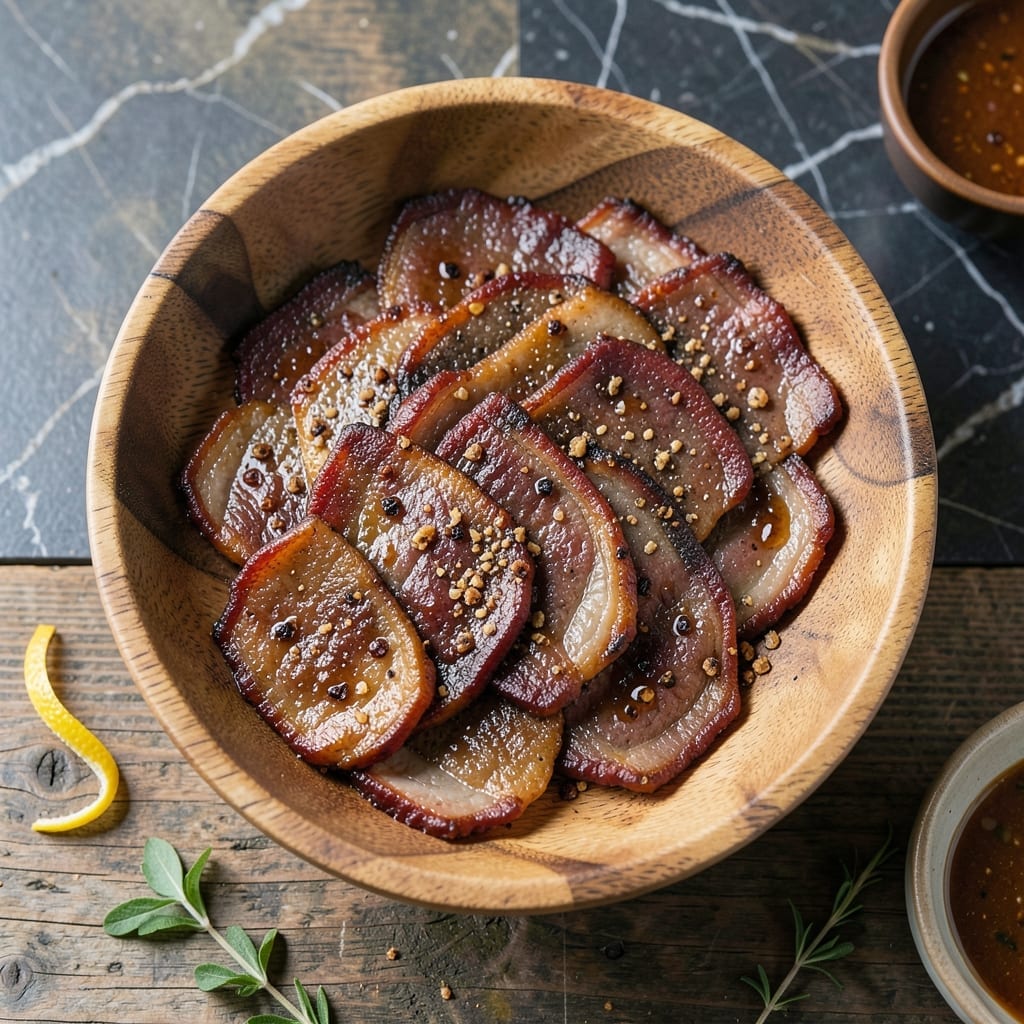
Making pork jerky at home delivers a homemade snack with superior flavor and texture to store-bought versions. This oven method produces consistent results without specialized equipment.
I developed this technique while perfecting my BBQ competition recipes, adapting professional drying methods for home kitchens. The process transforms fresh pork into chewy, savory strips with concentrated flavor.
The key is thin, even slicing and proper seasoning before low-temperature drying. This preserves the meat while achieving the ideal jerky texture. The result is a protein-rich snack you can customize to your taste.
This method ensures safe, delicious jerky with minimal effort. The oven provides precise temperature control for reliable results every time.
Ingredients for Pork Jerky Recipe Oven
Lean pork loin and bold spices create this chewy, savory homemade snack with minimal effort.
| Ingredient | Amount | Notes |
|---|---|---|
| Pork Loin 🐖 | 1 ½ lb | Lean, trimmed of fat |
| Soy Sauce 🥢 | ½ cup | Low-sodium preferred |
| Worcestershire Sauce 🫒 | 2 tbsp | Anchovy-free if needed |
| Brown Sugar 🍚 | ¼ cup | Light or dark variety |
| Smoked Paprika 🌶️ | 1 tbsp | For deep smoky flavor |
| Garlic Powder 🧄 | 1 tbsp | Not garlic salt |
| Onion Powder 🧅 | 1 tbsp | Fresh ground preferred |
| Black Pepper 🌶️ | 1 tsp | Freshly ground preferred |
| Cayenne Pepper 🔥 | ½ tsp | Adjust for heat preference |
| Liquid Smoke 💨 | 1 tsp | Optional for added depth |
| Salt 🧂 | 1 tsp | Kosher or sea salt |
The pork loin needs to be lean—Costco or Sam’s Club have great pre-trimmed options. Look for pieces with minimal fat marbling (fat doesn’t dry well). I always buy extra and freeze it for next time. Trim any visible fat yourself before slicing—this prevents spoilage during storage. The meat should be cold when slicing for clean, even strips.
No pork loin? Pork shoulder works but requires more trimming. Swap soy sauce for tamari for gluten-free. Out of brown sugar? Coconut sugar or maple syrup (reduce liquid slightly). Skip the liquid smoke if you’re using smoked paprika. For extra heat, add crushed red pepper at half the cayenne amount.
Store finished jerky in an airtight container with a paper towel to absorb moisture. Keeps at room temperature for 1 week, in the fridge for 2 weeks, or freezes for 3 months. Perfect for hiking trips or lunchbox snacks (the kids love it).
Why You’ll Love This Recipe
- Oven Simple: I just mix the marinade, coat the pork loin, and let the oven do the work—no dehydrator needed.
- Sweet & Smoky: The brown sugar caramelizes while the smoked paprika adds that deep, campfire-like flavor I crave.
- Trail or Tailgate: Honestly, it’s my go-to for hiking snacks or game day munchies—equally at home in a ziplock or on a charcuterie board.
- Budget Stretcher: A single pork loin makes enough jerky to last for weeks, and it’s way cheaper than store-bought.
Step-by-Step Instructions for Oven Pork Jerky
Here’s the method I use for perfectly chewy, flavorful jerky with no special equipment.
Step 1: Prepare and Slice the Pork Loin
Start by partially freezing the 1.5 lb Pork Loin for 30-45 minutes to make slicing easier. This firms up the meat so you can achieve uniform ¼-inch thick slices, which is crucial for even drying.
Trim off any visible fat from the pork loin, as fat doesn’t dry properly and can cause spoilage. Slice against the grain for the most tender jerky. I use a sharp chef’s knife and make sure each slice is consistent in thickness—this ensures all pieces dry at the same rate.
Step 2: Create the Flavorful Marinade
In a large bowl, whisk together the 0.5 cup Soy Sauce, 2 tbsp Worcestershire Sauce, 0.25 cup Brown Sugar, 1 tbsp Smoked Paprika, 1 tbsp Garlic Powder, 1 tbsp Onion Powder, 1 tsp Black Pepper, 0.5 tsp Cayenne Pepper, 1 tsp Liquid Smoke, and 1 tsp Salt until the brown sugar fully dissolves.
The brown sugar adds sweetness to balance the saltiness of the soy sauce, while the smoked paprika and liquid smoke create that deep, smoky flavor characteristic of great jerky. Taste the marinade and adjust the cayenne if you prefer more or less heat.
Add the pork slices to the marinade, ensuring each piece is fully coated. Cover and refrigerate for at least 4 hours, but I prefer overnight for maximum flavor penetration. Stir the pork occasionally during marinating to redistribute the flavors.
Step 3: Arrange and Begin Drying
Preheat your oven to its lowest setting, ideally 170-175°F. If your oven doesn’t go that low, set it to 200°F and prop the door open slightly with a wooden spoon to maintain a lower temperature.
Remove the pork from the marinade and pat dry with paper towels—this helps the jerky dry faster and prevents steaming. Arrange the slices on wire racks set over baking sheets, making sure they don’t touch each other. This allows air to circulate around each piece for even drying.
Step 4: Bake Until Perfectly Chewy
Place the racks in the oven and bake for 2-3 hours, flipping the slices halfway through. The exact time depends on your oven temperature and the thickness of your slices. You want the jerky to be dry to the touch but still slightly pliable when cooled.
Check for doneness by removing a piece and letting it cool—it should be leathery but not brittle. If it snaps when bent, it’s overdone. If it’s still moist, return it to the oven for another 15-30 minutes.
Step 5: Cool and Store Properly
Let the jerky cool completely on the racks. It will continue to dry slightly as it cools. Once at room temperature, test again for your preferred texture.
Store in an airtight container in the refrigerator for up to 1 week, or freeze for longer storage. For the best texture, I recommend keeping a paper towel in the container to absorb any residual moisture. This homemade jerky makes a fantastic snack or gift that’s far superior to store-bought versions.
Pro Tips For Making Pork Jerky Recipe Oven
- Slice Against the Grain: Cut the pork loin into ¼-inch strips against the grain—this makes the jerky easier to chew and actually changes the texture.
- Pat the Meat Dry: After marinating, blot the pork strips with paper towels to remove excess moisture. I learned this the hard way—wet meat steams instead of drying in the oven.
- Use Low and Slow: Set your oven to 175°F and prop the door open slightly with a wooden spoon for airflow. Sounds weird, but it works: this prevents the jerky from cooking too fast and turning brittle.
- Skip the Fat: Trim all visible fat from the pork loin before slicing—fat doesn’t dry out and can make your jerky go rancid faster. My grandmother swore by this, and she was right.
Serving Suggestions for Leftovers
Party Platter Presentation
Arrange your jerky in a circular pattern on a wooden serving board for a rustic BBQ feel. I love pairing it with sharp cheddar cubes and water crackers for a full snack spread. This setup always impresses at my Southern gatherings. 💛
Trail Mix Upgrade
Chop the jerky into ½-inch pieces and mix with raw almonds, dried cranberries, and dark chocolate chunks for a protein-packed trail mix. I pack this for BBQ competition days when I need sustained energy.
Gift Jar Idea
Layer jerky strips with parchment paper in a mason jar, alternating with dried apple slices for a beautiful presentation. Tie with twine and add a handwritten tag—I’ve given these as gifts at the Atlanta BBQ festivals.
Beer Pairing
A cold IPA cuts through the richness perfectly—the hoppy bitterness complements the smoky-sweet flavor. For non-alcoholic options, ginger beer provides a spicy contrast that works wonderfully. 🍺
Salad Topper
Tear jerky into small pieces and sprinkle over a spinach salad with blue cheese crumbles and balsamic vinaigrette. The salty jerky pairs beautifully with the tangy dressing—this is my go-to lunch after long days at The Smoky Pig.
Nutrition Facts
Frequently Asked Questions
What’s the best cut for making jerky?
Lean pork loin works best for jerky. It has minimal fat, which is crucial since fat doesn’t dry properly and can spoil. Pork shoulder can work but requires more trimming.
How thin should I slice the meat?
Aim for ¼-inch thick slices. Partially freezing the meat for 30-45 minutes makes slicing easier and more uniform. Consistent thickness ensures even drying.
How do I know when it’s done?
Jerky is done when it’s dry to the touch but still pliable. Let a piece cool—it should be leathery, not brittle. If it snaps, it’s overdone.
Can I make it without liquid smoke?
Skip the liquid smoke and use smoked paprika in the marinade for a deep smoky flavor. The jerky will still be delicious.

- Potato Chip Cookie Recipe With Pecans: Buttery Crunch Meets Nutty Richness - October 30, 2026
- Potato Patty Recipe No Egg: Crispy Edges Without the Binder - October 30, 2026
- Paula Deen’s Potato Chip Cookies Recipe: Salty-Sweet Crunch in Every Bite - October 30, 2026