
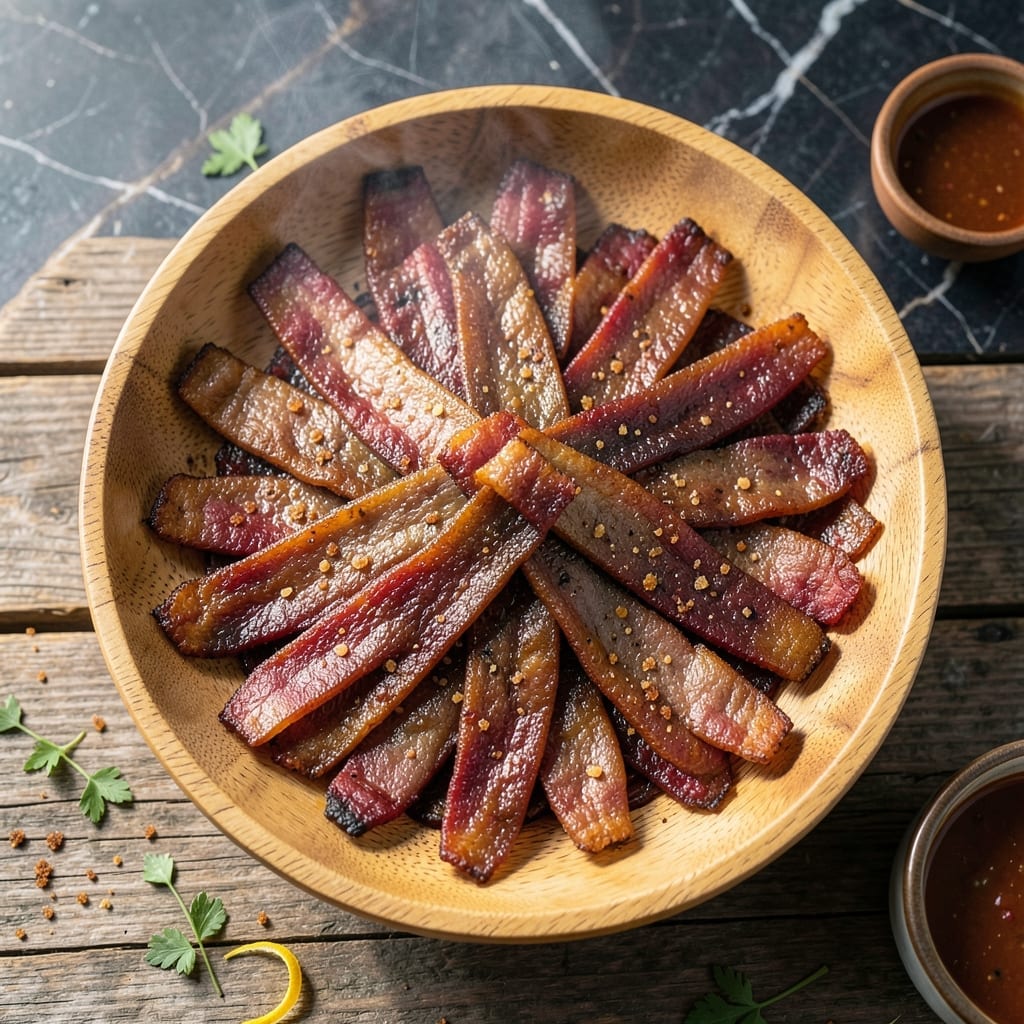
This smoker method transforms pork into chewy, deeply flavored jerky with a perfect balance of sweet, salty, and smoky notes. My Southern roots taught me that great jerky starts with quality meat and precise technique.
Using a smoker ensures even heat distribution and that signature wood-fired taste. The marinating process is where the magic begins, allowing flavors to penetrate deeply before the slow smoking process.
The result is tender yet firm jerky with a rich mahogany color and complex flavor profile. Each bite delivers the concentrated essence of pork enhanced by hours of low, steady smoking.
Safety is paramount when handling pork for jerky, and I’ll share the essential steps to ensure your creation is both delicious and safe to enjoy.
Ingredients for Pork Jerky Recipe Smoker
Quality pork and bold marinade flavors create this smoky, chewy homemade delight.
| Ingredient | Amount | Notes |
|---|---|---|
| Pork Shoulder 🐷 | 2 lb | Lean, trimmed of fat |
| Soy Sauce 🫙 | ¾ cup | Low-sodium preferred |
| Worcestershire Sauce 🫙 | 2 tbsp | For depth of flavor |
| Brown Sugar 🍚 | ½ cup | Light or dark variety |
| Liquid Smoke 🔥 | 1 tbsp | Hickory or mesquite |
| Garlic Powder 🧄 | 1 tbsp | Fresh ground preferred |
| Onion Powder 🧅 | 1 tbsp | For savory base notes |
| Black Pepper 🌶️ | 1 tbsp | Coarsely ground |
| Paprika 🌶️ | 1 tbsp | Sweet or smoked variety |
| Cayenne Pepper 🔥 | ½ tsp | Adjust for heat preference |
| Salt 🧂 | 1 tbsp | Kosher or sea salt |
| Apple Cider Vinegar 🍏 | 2 tbsp | For acidity balance |
The pork is everything here. Pork shoulder gives you the right fat-to-meat ratio for chewy jerky—avoid lean cuts like tenderloin. I grab mine from Costco or a local butcher with good turnover. Ask for the shoulder to be sliced into 1/4-inch strips (or do it yourself at home). Look for vibrant pink color with minimal visible fat—this ensures even smoking and safe results.
No Worcestershire? Coconut aminos plus a dash of fish-free soy works in a pinch. Out of liquid smoke? Double the paprika and add a pinch of smoked salt. Brown sugar can be swapped for maple syrup (reduce by half). If you’re watching sodium, low-sodium soy sauce is a must. The vinegar cuts through the richness—apple cider or white wine both work (avoid balsamic, it’s too sweet).
Marinate the pork for 12-24 hours—overnight is ideal. Smoked jerky keeps in an airtight container for 2 weeks at room temp, or 3 months in the freezer. Always check for doneness (no moisture, slight bend but no snap).
Why You’ll Love This Recipe
- Minimal Effort: I just mix the marinade, coat the pork shoulder slices, and let the smoker do the rest.
- Sweet & Smoky: The brown sugar caramelizes while the liquid smoke adds that deep, campfire taste I crave.
- Trail-Ready Snack: I pack this for hiking trips or long drives—no refrigerator needed, and it never lasts long.
- Budget Stretcher: A cheap pork shoulder cut turns into gourmet jerky that costs pennies per serving.
Step-by-Step Instructions for Smoked Pork Jerky
Here’s my proven method for transforming pork shoulder into tender, smoky jerky with perfect texture.
Step 1: Prepare and Slice the Pork Shoulder
Start by partially freezing the 2 lb Pork Shoulder for 30-45 minutes to make slicing easier. Trim any visible fat, as fat doesn’t dry properly and can cause spoilage. Using a sharp knife, slice against the grain into ¼-inch thick strips of even width.
Consistent thickness is crucial—thicker slices won’t dry thoroughly, while too-thin pieces may become brittle. The strips should look uniform, about the width of a pencil. This step ensures even drying and a consistent chew in every bite.
Step 2: Mix and Apply the Jerky Marinade
In a large bowl, whisk together the 0.75 cup Soy Sauce, 2 tbsp Worcestershire Sauce, 0.5 cup Brown Sugar, 1 tbsp Liquid Smoke, 1 tbsp Garlic Powder, 1 tbsp Onion Powder, 1 tbsp Black Pepper, 1 tbsp Paprika, 0.5 tsp Cayenne Pepper, 1 tbsp Salt, and 2 tbsp Apple Cider Vinegar until the sugar dissolves completely.
Add the pork strips to the marinade and massage to ensure every piece is fully coated. Cover and refrigerate for 12-24 hours, stirring or shaking the bowl occasionally. The longer the pork marinates, the deeper the flavor penetration.
Step 3: Arrange and Pre-Dry the Jerky
Remove the pork strips from the marinade and pat them dry with paper towels. This step is essential—excess moisture prevents proper drying and can lead to steaming rather than dehydrating. Discard the used marinade.
Arrange the strips on your smoker racks or dehydrator trays without overlapping. Leave a little space between each piece to allow for proper air circulation. This prevents sticking and ensures even exposure to heat and smoke.
Step 4: Smoke the Jerky to Perfection
Preheat your smoker to 160-175°F. Smoke the jerky for 3-5 hours, checking periodically after the first 2 hours. The jerky is done when it bends but doesn’t snap—this indicates it’s chewy but not brittle.
Use a reliable meat thermometer to verify the internal temperature reaches 160°F to ensure safety. If your smoker runs hot, monitor closely to avoid over-drying. The finished jerky should be dark, slightly sticky to the touch, and have a firm but pliable texture.
Step 5: Cool and Store the Jerky
Transfer the smoked jerky to a wire rack and let it cool completely at room temperature for 1-2 hours. This cooling period allows the jerky to firm up slightly and develop its final texture.
Store the cooled jerky in an airtight container in the refrigerator for up to 2 weeks, or freeze for longer storage. For best results, use a vacuum sealer to extend freshness. Enjoy your homemade, smoky jerky as a protein-packed snack!
Pro Tips For Making Pork Jerky Recipe Smoker
- Dry the Meat First: Pat the pork shoulder strips completely dry before marinating—excess moisture prevents the jerky from absorbing the soy and Worcestershire properly.
- Use a Cure: I learned this the hard way—add 1 teaspoon of Prague Powder #1 per pound of pork to prevent spoilage during the long, low smoke.
- Watch the Temperature: Keep your smoker between 165-180°F; any higher and the sugar in the marinade will caramelize too fast, leaving the inside underdried.
- Skip the Liquid Smoke: Sounds weird, but it works: omit the liquid smoke since the smoker already adds plenty of flavor, and the jerky won’t taste artificially strong.
Best Sauces and Condiments for This Dish
Spicy Dipping Sauce
This Sriracha-lime aioli is my go-to for jerky. Mix ½ cup mayo, 2 tbsp Sriracha, 1 tbsp lime juice, and 1 tsp honey. The creamy heat pairs perfectly with smoky pork. I learned this combo from a pitmaster in Charleston. 🌶️
Sweet and Tangy Glaze
Simmer ¼ cup apple cider vinegar, 2 tbsp brown sugar, and 1 tbsp mustard until thickened. Brush lightly on jerky after smoking for extra shine. The vinegar echoes the marinade beautifully.
Classic BBQ Sauce
Use a Southern-style vinegar-based sauce for authenticity. I love Sticky Fingers Carolina Gold—its tang cuts through the richness. Apply sparingly to avoid overpowering the jerky’s natural flavor.
Herb Yogurt Dip
Combine 1 cup Greek yogurt, 1 tbsp chopped dill, and 1 minced garlic clove. The cool creaminess contrasts the smoky chew. This was my grandma’s trick for balancing bold flavors. 💡
Mustard Varieties
Dijon offers sharpness, while whole-grain mustard adds texture. Mix with 1 tsp honey for sweetness. Both complement the jerky’s saltiness without overpowering it.
Hot Honey Drizzle
Warm ¼ cup honey with ½ tsp cayenne for 1 minute. Drizzle sparingly over jerky just before serving. The sweet-spicy contrast makes each bite unforgettable.
Nutrition Facts
Frequently Asked Questions
What’s the best wood for smoking jerky?
Hickory or apple wood are ideal for pork jerky. Hickory provides a strong, classic smoke flavor, while apple offers a milder, sweeter note. Avoid mesquite as it can be overpowering for jerky.
Can I use a different cut of pork?
Pork shoulder is best, but pork loin works too if trimmed of all fat. Avoid fatty cuts like ribs or belly—they won’t dry properly and can spoil faster. Always slice against the grain.
How do I know when the jerky is done?
It should bend but not snap when cooled. Check that strips are dry to the touch with no moisture. Use a thermometer to confirm internal temp reaches 160°F for safety.
Can I make jerky without a smoker?
Yes! Use an oven set to its lowest temperature (170°F or less) with the door slightly open. A dehydrator also works well at 160°F for 4-6 hours.

- Potato Chip Cookie Recipe With Pecans: Buttery Crunch Meets Nutty Richness - October 30, 2026
- Potato Patty Recipe No Egg: Crispy Edges Without the Binder - October 30, 2026
- Paula Deen’s Potato Chip Cookies Recipe: Salty-Sweet Crunch in Every Bite - October 30, 2026