
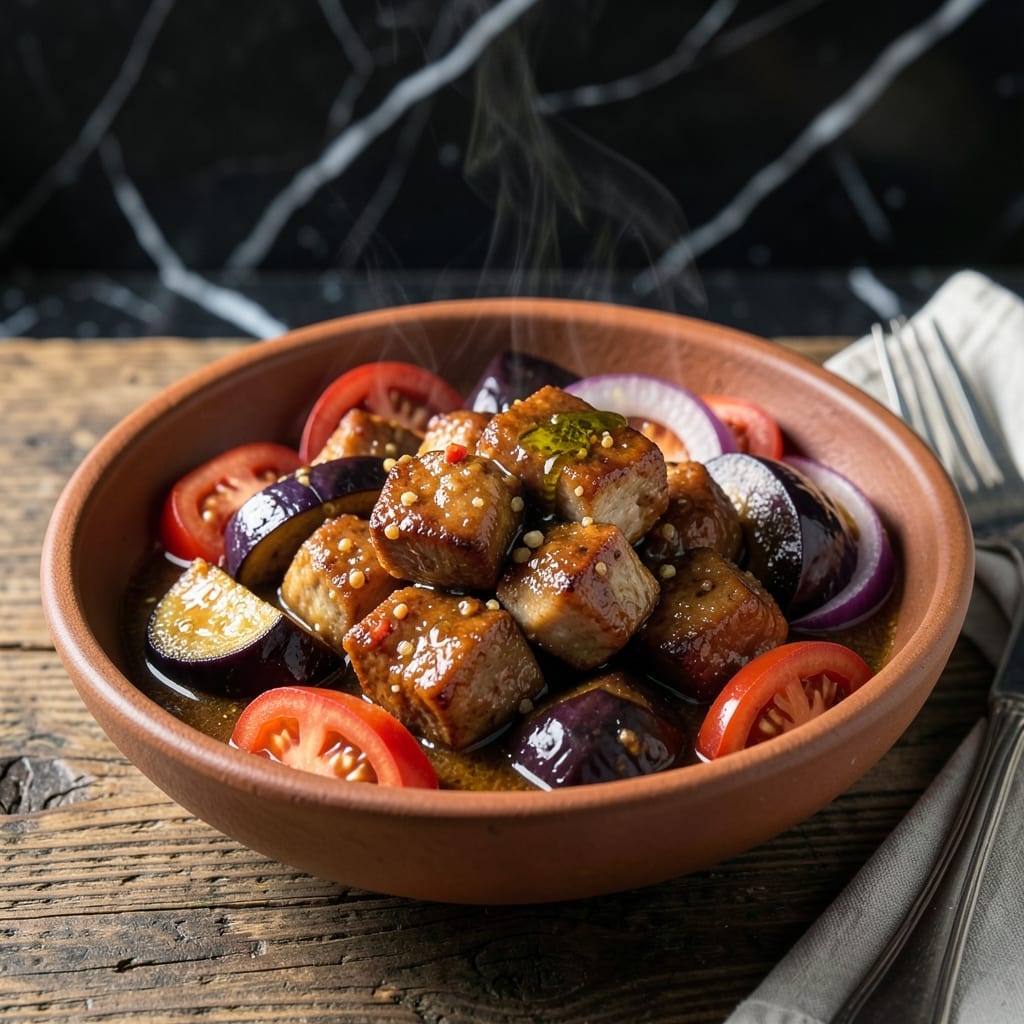
This authentic Filipino stew brings bold, umami-rich flavors to your table using traditional bagoong and fresh eggplant.
I developed this method after years of testing to balance the fermented shrimp paste with tender pork and silky talong. The key is proper blooming of the bagoong in hot oil to mellow its intensity.
The pork becomes fall-apart tender while the eggplant absorbs the savory sauce, creating a dish that’s both hearty and deeply flavorful. Each bite delivers that signature Filipino taste.
Serve with steamed rice to soak up every drop of the rich, aromatic sauce. This is comfort food at its most authentic.
Ingredients for Pork Binagoongan Recipe with Talong
Pantry staples meet bold Filipino flavors. Nothing exotic, just authentic ingredients.
| Ingredient | Amount | Notes |
|---|---|---|
| Pork Belly 🥩 | 1 ½ lb | Cut into 2-inch cubes, skin-on |
| Eggplant 🍆 | 2 whole | Asian variety preferred, sliced |
| Fermented Shrimp Paste 🍤 | ½ cup | Bagoong alamang or bagoong isda |
| Garlic Cloves 🧄 | 8 cloves | Minced finely |
| Red Onion 🧅 | 1 whole | Medium, sliced thinly |
| Tomatoes 🍅 | 3 whole | Ripe, quartered |
| Green Chili Peppers 🌶️ | 2 whole | Sliced, seeds removed for less heat |
| Vegetable Oil 🫒 | ½ cup | For blooming bagoong and frying |
| Fish Sauce 🐟 | 2 tbsp | Patis, for umami depth |
| Water 💧 | 2 cups | For simmering sauce |
| Salt 🧂 | 1 tsp | Adjust to taste after blooming |
| Black Pepper 🌶️ | ½ tsp | Freshly ground |
| Bay Leaves 🍃 | 2 pieces | For aromatic simmering |
The bagoong is non-negotiable here. Filipino markets carry the best—bagoong alamang (shrimp) or bagoong isda (fish). Look for brands like Barrio Fiesta or Rufina. Pork belly gives you that melt-in-your-mouth texture (trust me, shoulder works but isn’t the same). Asian eggplant is ideal—thinner skin, fewer seeds—but regular eggplant in a pinch (just salt and drain first).
No bagoong? Miso paste gets you close but not quite the same funk. Out of pork belly? Pork shoulder at a longer simmer time works. Asian eggplant missing? Regular eggplant’s fine (peel if the skin’s tough). Fish sauce at one-third the amount can sub for patis. The key is blooming that shrimp paste in oil first—don’t skip this step (worth the extra minute).
This stew tastes even better the next day. Keeps 3-4 days in the fridge, freezes for 3 months (the pork stays tender). Reheat gently—eggplant can get mushy if boiled hard. Always serve with steamed rice (non-negotiable for soaking up that sauce).
Why You’ll Love This Recipe
- One Pan Meal: I just toss the pork belly, eggplant, and shrimp paste together—no fancy techniques, no extra dishes.
- Umami Bomb: The fermented shrimp paste with crispy pork and silky talong creates this deep, salty-savory flavor that’s hard to beat.
- Feeds the Crew: I make a big batch for Sunday lunch, and it disappears fast—even the picky eaters go back for seconds.
- Budget Stretcher: Pork belly and eggplant are cheap, and a little shrimp paste goes a long way. Honestly, it’s my go-to when I need to feed everyone without breaking the bank.
Step-by-Step Instructions for Pork Binagoongan With Talong
Here’s the authentic method I use to create this rich, umami-packed Filipino stew.
Step 1: Bloom the Fermented Shrimp Paste
Heat ½ cup vegetable oil in a large pot over medium heat. Add the ½ cup fermented shrimp paste and sauté for 3-4 minutes, stirring constantly. You’ll notice the paste darken slightly and release its pungent aroma—that’s how you know it’s ready.
This blooming process mellows the shrimp paste’s intensity while deepening its flavor. I reduce the heat to low at this point to prevent burning. The oil should gently bubble around the edges, not smoke. This step is crucial for building the stew’s signature depth.
Step 2: Build the Aromatic Base
Add the 8 cloves minced garlic to the pot first and cook for 30 seconds until fragrant. Then stir in the sliced red onion, quartered tomatoes, and sliced green chili peppers. Cook this mixture for 5-6 minutes until the onions soften and the tomatoes begin to break down.
The vegetables should release their juices, creating a thick, aromatic base. I press the tomatoes with the back of my spoon to help them disintegrate faster. This creates a natural sweetness that balances the saltiness of the shrimp paste beautifully.
Step 3: Brown the Pork Belly
Push the aromatics to one side of the pot and increase heat to medium-high. Add the 1.5 lb pork belly cubes in a single layer. Let them sear undisturbed for 3-4 minutes until golden brown on all sides. The skin should crisp slightly while the fat renders into the sauce.
I work in batches if needed to avoid crowding the pot—this ensures proper browning rather than steaming. The pork will continue cooking later, so don’t worry about it being fully done at this stage. You’re just developing flavor and texture here.
Step 4: Simmer with Eggplant
Pour in the 2 cups water and add the 2 pieces bay leaves, 2 tbsp fish sauce, 1 tsp salt, and ½ tsp black pepper. Stir to combine, then add the 2 whole sliced eggplant. Bring to a boil, then reduce heat to low.
Cover and simmer for 30-40 minutes until the pork becomes fork-tender and the eggplant absorbs all the flavors. I check occasionally and add a splash of water if the sauce reduces too much. The eggplant should be soft but still hold its shape.
Step 5: Adjust and Serve
Remove the lid and simmer for an additional 5 minutes to let the sauce thicken slightly. Taste and adjust seasoning if needed—I often find the shrimp paste provides enough salt, but the fish sauce adds that extra umami kick.
Discard the bay leaves before serving. The stew should have a rich, thick sauce that clings to the pork and eggplant. Serve hot over steamed rice to soak up every bit of that incredible, complex flavor. The eggplant will have absorbed all the savory goodness of the shrimp paste and pork.
Pro Tips For Making Pork Binagoongan Recipe With Talong
- Sauté Shrimp Paste First: I learned this the hard way—cook the bagoong in oil for 2-3 minutes before adding anything else. It mellows the saltiness and deepens the umami flavor that defines this dish.
- Salt the Eggplant: Sprinkle sliced talong with a pinch of salt and let sit for 10 minutes. It draws out bitterness and helps them hold shape when simmered in the sauce.
- Brown the Pork Well: Don’t rush the pork belly—sear it in batches until deeply golden. This builds a crispy base that stands up to the bold shrimp paste sauce.
- Use Belly with Skin: Sounds weird, but it works: pork belly with the skin on stays juicier and adds a pleasant chew. Ask your butcher to leave it on if possible.
Dietary Considerations for These Flavors
Gluten-Free Naturally
This dish is inherently gluten-free since it relies on fermented shrimp paste, pork, and vegetables without any wheat-based ingredients. I always double-check my bagoong brand—Barrio Fiesta is certified gluten-free. 💪
Dairy-Free by Design
With no dairy products in the recipe, this stew is perfect for lactose-intolerant diners. The richness comes from pork fat and umami-packed fermented shrimp paste instead of cream or cheese. I’ve served this to dairy-sensitive friends with zero issues.
Low-Carb Option
To reduce carbs, replace the eggplant with zucchini or cauliflower—both absorb the sauce beautifully. Skip the rice or serve over cauliflower rice. The pork and shrimp paste provide ample flavor without added starches.
Sodium Awareness
Fermented shrimp paste and fish sauce are high in sodium. I use low-sodium fish sauce and reduce the total amount by half. Taste as you go—you can always add more but can’t take it out. 💡
Allergen Note
Shellfish allergies require caution here. The fermented shrimp paste is the primary concern. For a shellfish-free version, substitute miso paste though the flavor profile will differ slightly.
Balanced Serving
Pair with steamed bok choy or a cucumber salad to add freshness and fiber. The vibrant green balances the rich, savory flavors while keeping the meal light and nutritious.
Nutrition Facts
Frequently Asked Questions
Can I use regular eggplant instead of Asian?
Yes, but salt and drain it first to remove bitterness. Asian eggplant is ideal due to its thinner skin and fewer seeds, but regular works in a pinch.
How do I reduce the strong shrimp paste smell?
Blooming the paste in hot oil first mellows its intensity. Cook it for 3-4 minutes until it darkens slightly, which deepens the flavor and reduces the pungency.
What if my sauce is too salty?
Add 1 cup water or unsalted broth and simmer for 5-10 minutes. Taste before adding more liquid. Balancing is easier than fixing oversalted food.
Can I make this ahead of time?
The flavors deepen overnight. Store in an airtight container for up to 3 days in the fridge or freeze for 3 months.

- Potato Chip Cookie Recipe With Pecans: Buttery Crunch Meets Nutty Richness - October 30, 2026
- Potato Patty Recipe No Egg: Crispy Edges Without the Binder - October 30, 2026
- Paula Deen’s Potato Chip Cookies Recipe: Salty-Sweet Crunch in Every Bite - October 30, 2026