
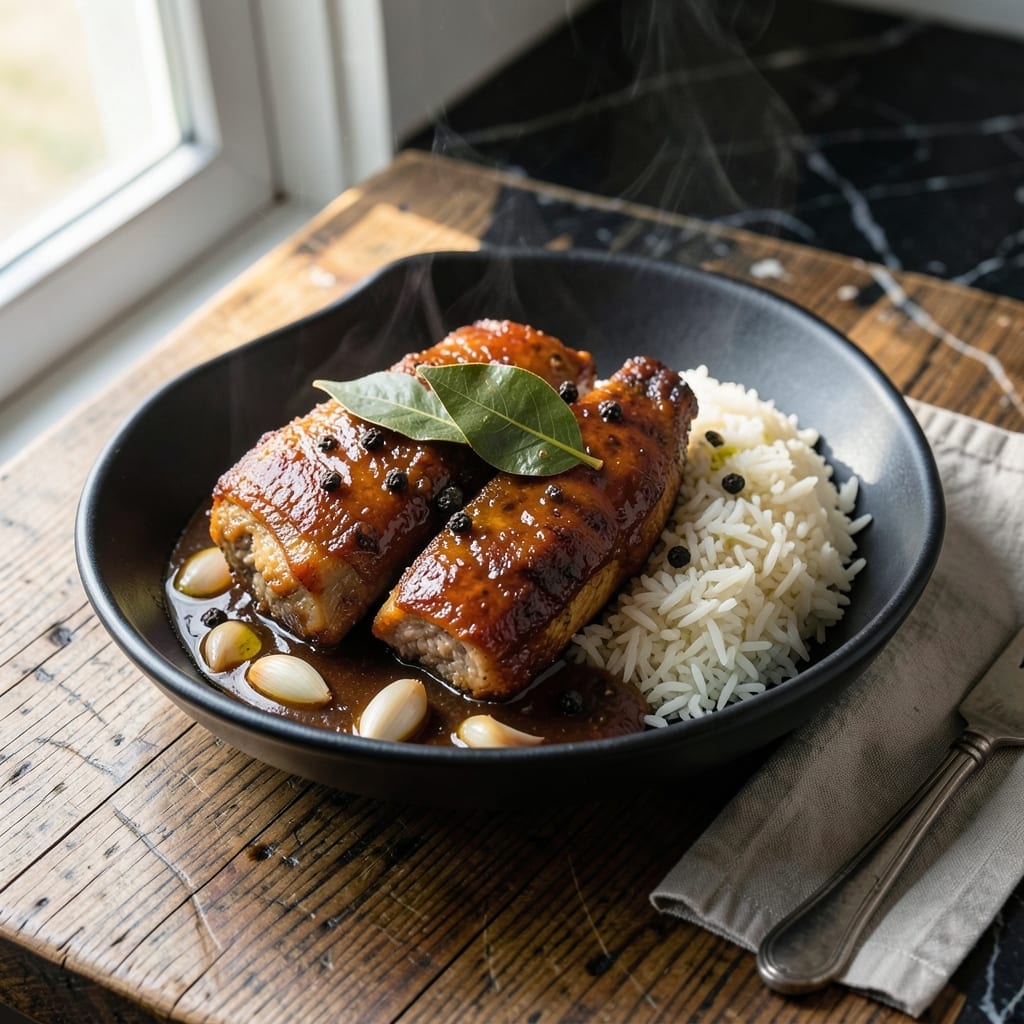
This traditional Filipino dish delivers perfectly balanced flavors with every bite. The combination of tangy vinegar, savory soy sauce, and aromatic garlic creates a braising liquid that transforms pork into tender, fall-off-the-bone perfection.
I discovered this method while exploring Pacific Northwest Filipino markets, where the scent of simmering adobo filled the air. The key is patience—allowing the pork to braise slowly in its flavorful marinade until it absorbs every note of the traditional seasoning.
What emerges is a dish that’s both comforting and complex, with meat so tender it nearly dissolves in your mouth. The sauce reduces to a glossy, rich consistency that clings to each piece, delivering authentic Filipino flavor in every bite.
Serve with steamed rice to soak up every drop of the traditional braising liquid. This is Filipino home cooking at its finest.
Ingredients for Pork Adobo Recipe List
Nothing exotic here—just pork, vinegar, soy sauce, and patience for that signature Filipino tang.
| Ingredient | Amount | Notes |
|---|---|---|
| Pork Shoulder 🐷 | 2 lb | Cut into 2-inch pieces, bone-in preferred |
| Soy Sauce 🫒 | ¾ cup | Filipino brands like Silver Swan or Datu Puti preferred |
| White Vinegar 🍶 | ¾ cup | Cane vinegar for authentic flavor |
| Garlic Cloves 🧄 | 12 cloves | Peeled and smashed for maximum flavor |
| Bay Leaves 🍃 | 3 pieces | Dried or fresh, whole |
| Black Peppercorns 🌶️ | 1 tbsp | Whole, lightly crushed |
| Brown Sugar 🧈 | 2 tbsp | Optional, for balancing acidity |
| Water 💧 | 1 cup | For braising liquid |
| Cooking Oil 🫒 | 2 tbsp | Neutral oil for searing |
| Green Onions 🧅 | ½ cup | Thinly sliced for garnish |
| Salt 🧂 | 1 tsp | Adjust to taste after cooking |
The pork is everything. Pork shoulder with good marbling (bone-in if you can find it) gives you that melt-in-your-mouth texture. I grab mine from local Filipino markets—they often carry the right cuts already chunked. The soy sauce matters too: Silver Swan or Datu Puti are the gold standard here (the Filipino brands have that perfect balance of salt and umami). Don’t skip the bay leaves—they’re subtle but essential.
No cane vinegar? Apple cider vinegar works in a pinch (white vinegar is too harsh). Out of fresh garlic? Double the amount of garlic powder—but fresh is really better here. Want it sweeter? Add an extra tablespoon of brown sugar. For a tangier kick, use half vinegar, half calamansi juice (if you’re lucky enough to find it). The peppercorns can be pre-ground if that’s what you’ve got, but whole crushed ones have more depth.
This tastes even better the next day once the flavors meld. Keeps in the fridge for 4-5 days, and the sauce thickens up nicely when reheated. Freezes beautifully for up to 3 months (portion before freezing for easy meals). Always serve with rice—it’s the only way to soak up that incredible sauce.
Why You’ll Love This Recipe
- One Pot Wonder: I toss everything in a single pot—pork, soy sauce, vinegar, garlic—and let it simmer. No fancy techniques, just set it and forget it.
- Tangy Savory Magic: The soy-vinegar combo with garlic hits that sweet spot between salty and tangy. Honestly, it’s the kind of flavor that lingers in the best way.
- Meal Prep Hero: I make a big batch on Sunday and it tastes even better reheated for lunch. Between us, leftovers disappear fast.
- Budget Friendly: Pork shoulder is cheap, and the pantry staples do all the heavy lifting. I’ll be real—this feeds my family for days without breaking the bank.
Step-by-Step Instructions for Pork Adobo
Here’s the traditional method that delivers tender meat with a rich, tangy-savory sauce every time.
Step 1: Sear the Pork Shoulder
Heat the 2 tablespoons cooking oil in a large pot or Dutch oven over medium-high heat. While it heats, pat the 2 lb pork shoulder pieces dry with paper towels. This step ensures a good sear instead of steaming.
Add the pork in a single layer, being careful not to overcrowd the pot. Sear undisturbed for 3-4 minutes per side until deeply golden brown. You’ll know it’s ready to flip when the pieces release easily from the bottom. Transfer the seared pork to a plate and set aside.
Step 2: Build the Adobo Base
In the same pot, add the 12 cloves garlic cloves, 1 tablespoon black peppercorns, and 3 pieces bay leaves. Sauté for 1-2 minutes until the garlic is lightly golden and fragrant—don’t let it burn.
Pour in the 0.75 cup soy sauce, 0.75 cup white vinegar, 1 cup water, and 2 tablespoons brown sugar. Stir to combine, scraping up any browned bits from the bottom of the pot. These bits add depth of flavor to the sauce.
Step 3: Braise Until Fork-Tender
Return the seared pork to the pot, along with any accumulated juices. The liquid should just cover the meat—if it doesn’t, add a splash more water. Bring the mixture to a boil, then reduce the heat to low to maintain a gentle simmer.
Cover and let it braise for 1.5 to 2 hours, turning the pork pieces occasionally. The dish is done when the pork is fork-tender and the sauce has reduced slightly, coating the back of a spoon. This slow cooking process allows the flavors to meld beautifully.
Step 4: Adjust Seasoning and Finish
Once the pork is tender, taste the sauce and adjust the seasoning with 1 teaspoon salt if needed. Remember, the soy sauce is already salty, so go easy. Remove the bay leaves and discard them.
If the sauce is too thin, simmer uncovered for an additional 5-10 minutes to thicken it. For a glossier finish, you can reduce it further. The sauce should cling to the pork and have a balanced tangy-savory flavor.
Step 5: Garnish and Serve
Transfer the pork adobo to a serving dish and spoon the sauce over the top. Garnish with the 0.5 cup green onions, thinly sliced. The green onions add a fresh, bright contrast to the rich, braised pork.
Serve hot over steamed rice, which soaks up the delicious sauce. For the best experience, let the dish sit for 10 minutes off the heat before serving—this allows the flavors to settle and deepen even further.
Pro Tips For Making Pork Adobo Recipe List
- Sear the Pork First: Brown the pork shoulder in the pot before adding liquids—this builds a deep, caramelized base that makes the adobo sauce richer.
- Balance the Vinegar: Taste as you go and adjust the vinegar; too much can make it harsh, but just enough (about 1/2 cup for 1 lb pork) brightens the dish without overpowering.
- Don’t Boil the Sauce: Keep it at a gentle simmer, not a rolling boil, or the vinegar will evaporate too quickly and leave the adobo overly salty.
- Add Bay Late: I learned this the hard way—add the bay leaves in the last 20 minutes of cooking so their flavor doesn’t turn bitter.
Make-Ahead Tips for This pork adobo recipe list
Overnight Marination
For even deeper flavor, let the pork marinate in the soy-vinegar mixture overnight in the fridge. I use a gallon-sized zip-top bag to keep everything contained. The acid in the vinegar tenderizes the meat beautifully while infusing it with those classic adobo flavors. 💡
Bulk Cooking
This recipe scales perfectly for meal prep. I often make a double batch in my 7-quart Dutch oven—just increase the cooking time by 30-45 minutes. The leftovers taste even better the next day as the flavors continue to develop.
Freezing Portions
Portion the cooled adobo into airtight containers before freezing. It keeps well for up to 3 months in the freezer. I like using 16-ounce mason jars for individual servings—just leave 1 inch of headspace for expansion. ❄️
Reheating Methods
To reheat from frozen, thaw overnight in the fridge. On the stovetop, warm over medium-low heat with a splash of water for 10-15 minutes. For microwave reheating, use 50% power in 2-minute intervals, stirring between each.
Sauce Consistency
If the sauce thickens too much during storage, stir in ¼ cup water when reheating. The starch from the pork will help it reincorporate beautifully. I always taste before serving—sometimes it needs a pinch of brown sugar to balance the acidity.
Make-Ahead Garnish
Slice the green onions up to a day ahead and store them in a damp paper towel in the fridge. This keeps them crisp and fresh for garnishing. Add them just before serving for that perfect pop of color and texture.
Nutrition Facts
Frequently Asked Questions
Can I use a different cut of pork?
Pork shoulder is ideal for its marbling, but pork belly or baby back ribs work too. Avoid lean cuts like tenderloin as they dry out during the 1.5-2 hour braise.
Why does the vinegar not curdle the pork?
The acid softens the meat, but the soy sauce and braising liquid balance it. Unlike ceviche, the pork cooks fully in liquid, preventing curdling.
Can I make this in a slow cooker?
Yes! Sear the pork first, then cook on low for 6-8 hours or high for 4. Add vinegar at the end to preserve its sharpness.
How do I fix overly salty adobo?
Add a splash of water or vinegar and simmer uncovered for 10 minutes. A pinch of brown sugar can also balance the saltiness.

- Potato Chip Cookie Recipe With Pecans: Buttery Crunch Meets Nutty Richness - October 30, 2026
- Potato Patty Recipe No Egg: Crispy Edges Without the Binder - October 30, 2026
- Paula Deen’s Potato Chip Cookies Recipe: Salty-Sweet Crunch in Every Bite - October 30, 2026