
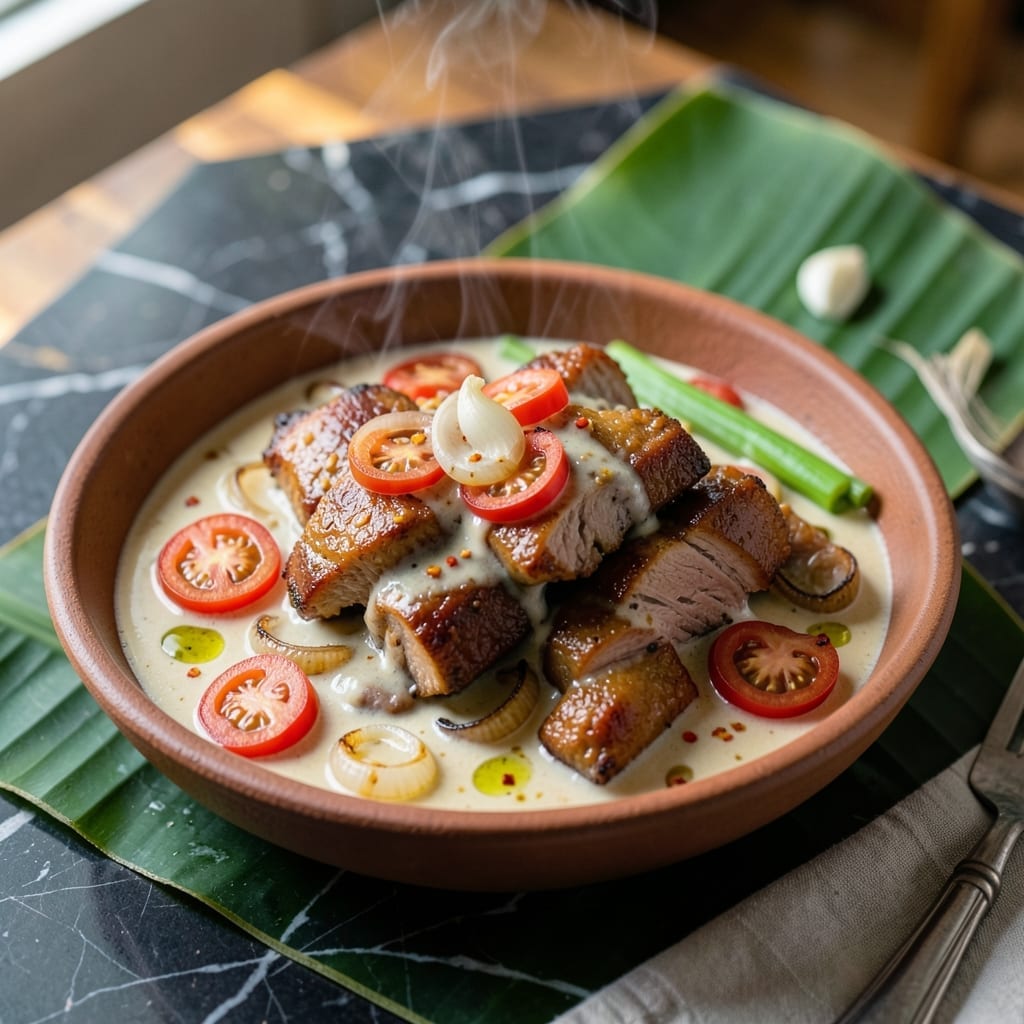
This Filipino pork stew brings bold flavors together in perfect harmony. My grandmother’s handwritten notes called for shrimp paste and coconut milk, a combination I once found intimidating.
The dish transforms simple pork into something extraordinary through slow simmering. Shrimp paste adds its distinctive umami depth while coconut milk creates a rich, velvety sauce that coats every piece.
What emerges is tender pork in a complex sauce that’s both salty and creamy. The aromas alone will transport you to a Filipino kitchen, where this dish has been perfected over generations.
Serve with steamed rice to soak up every drop of the flavorful sauce. The process is straightforward, but the results taste anything but simple.
Ingredients for Pork Binagoongan with Gata Recipe Panlasang Pinoy
Pork belly, shrimp paste, and coconut milk make this Filipino stew unforgettable with every bite.
| Ingredient | Amount | Notes |
|---|---|---|
| Pork Belly 🥩 | 1 ½ lb | Cut into 1-inch cubes |
| Shrimp Paste 🦐 | 3 tbsp | Filipino bagoong preferred |
| Coconut Milk 🥥 | 2 cups | Full-fat for creaminess |
| Onion 🧅 | 1 whole | Medium, finely chopped |
| Garlic Cloves 🧄 | 6 cloves | Minced for depth |
| Tomatoes 🍅 | 2 whole | Medium, diced |
| Green Chilies 🌶️ | 2 whole | Sliced, seeds removed |
| Eggplant 🍆 | 1 whole | Asian variety, cubed |
| String Beans 🌿 | 1 cup | Trimmed, cut into 2-inch pieces |
| Fish Sauce 🐟 | 2 tbsp | For umami boost |
| Soy Sauce 🫒 | 1 tbsp | Light or all-purpose |
| Black Pepper 🌶️ | ½ tsp | Freshly ground preferred |
| Cooking Oil 🫒 | 2 tbsp | Neutral-flavored for sautéing |
| Salt 🧂 | 1 tsp | Adjust to taste |
The shrimp paste is non-negotiable here. Filipino bagoong (shrimp paste) gives that authentic depth—look for it at Asian markets or the international aisle. I always grab the Barbaras brand if available. Pork belly is ideal, but pork shoulder works too (just trim excess fat). Coconut milk should be full-fat—Thai Kitchen or Aroy-D are reliable brands that don’t separate weirdly.
No shrimp paste? Anchovy paste at half the amount gets you close but won’t be the same. Out of pork belly? Chicken thighs hold up well to the long simmer. Coconut milk substitute? Heavy cream plus a splash of water (but you’ll miss the tropical note). The green chilies can be jalapeños or serranos. For the veggies, zucchini or okra can stand in for eggplant.
This actually tastes better the next day once the flavors meld. Keeps 3-4 days in the fridge, freezes for 2 months. Reheat gently to avoid separating the coconut milk. Always serve with steamed rice—it’s the perfect vessel for that rich, salty-sweet sauce.
Why You’ll Love This Recipe
- One Pot Wonder: I just toss the pork belly, shrimp paste, and coconut milk together—no fancy steps, just simmer and let the flavors meld.
- Rich Comfort: That salty shrimp paste with creamy gata? Honestly, it’s the kind of savory depth I crave with steamed rice.
- Feeds a Crowd: I made this for a family gathering last week—everyone went back for seconds, even the picky eaters.
- Budget Keeper: Pork belly stretches far here, and the ingredients are pantry staples I always have on hand.
Step-by-Step Instructions for Pork Binagoongan with Gata
Here’s how I achieve that perfect balance of rich, savory shrimp paste with creamy coconut milk.
Step 1: Sauté Aromatics and Brown the Pork
Heat the 2 tbsp cooking oil in a large pot over medium heat. Add the 1 whole onion and sauté for 2-3 minutes until it softens and turns translucent. The aroma should be sweet and inviting, not burnt.
Stir in the 6 cloves garlic cloves and cook for 30 seconds until fragrant. Add the 1.5 lb pork belly cubes and cook for 5-7 minutes, stirring occasionally, until the edges turn light golden brown. This builds a flavorful base for the stew.
Step 2: Build the Flavor Foundation
Push the pork to one side of the pot and add the 3 tbsp shrimp paste to the cleared space. Toast it for 1 minute, stirring constantly, until it becomes fragrant and slightly deepens in color. This step removes the raw edge from the shrimp paste and enhances its umami richness.
Add the 2 whole tomatoes and 2 whole green chilies, stirring to combine with the pork and shrimp paste. Cook for another 2-3 minutes until the tomatoes begin to soften and release their juices. The mixture should look glossy and smell incredibly aromatic.
Step 3: Simmer the Vegetables and Pork
Pour in the 2 cups coconut milk, then add the 1 cup string beans, 1 whole eggplant, 2 tbsp fish sauce, 1 tbsp soy sauce, 1 tsp salt, and 0.5 tsp black pepper. Stir well to combine.
Bring the mixture to a gentle boil, then reduce the heat to low. Cover and let it simmer for 25-30 minutes, stirring occasionally, until the pork is tender and the vegetables are cooked through. The eggplant should be soft but still hold its shape.
Step 4: Adjust and Finish the Stew
After simmering, taste the stew and adjust the seasoning if needed. The shrimp paste should be bold but balanced by the creaminess of the coconut milk. If it tastes too salty, add a splash of water to mellow it out.
Remove the lid and let it cook uncovered for an additional 5 minutes to thicken the sauce slightly. The final dish should have a rich, creamy texture with pork that’s fork-tender and vegetables that have absorbed all the bold flavors. Serve hot over steamed rice.
Pro Tips For Making Pork Binagoongan With Gata Recipe Panlasang Pinoy
- Sauté Shrimp Paste First: I learned this the hard way—bloom the bagoong in a little oil for 2-3 minutes before adding anything else to mellow its harsh saltiness and deepen the flavor.
- Brown the Pork Well: Give the pork belly a solid sear on medium-high heat until golden (about 4-5 minutes) to lock in juices and prevent it from turning chewy later.
- Use Full-Fat Coconut Milk: Skip the light version; the rich, creamy fat in full-fat gata balances the shrimp paste’s funk and keeps the sauce from splitting.
- Simmer Low and Slow: After adding coconut milk, keep it at a gentle simmer—boiling hard will curdle the sauce and turn your dish into an oily, separated mess.
Regional Styles of pork binagoongan with gata recipe panlasang pinoy
Pampanga Style
In Pampanga, the culinary capital of the Philippines, they often add 1 tbsp calamansi juice at the end for a bright citrus note that cuts through the richness. The dish is traditionally cooked in a palayok (clay pot) over charcoal, which adds a subtle smokiness. 🗺️
Bicol Region
Bicolanos are famous for their coconut milk dishes, and their version of this stew often includes 1 cup spinach or pechay added at the end. They also use more chili peppers—sometimes up to 4 pieces—for extra heat. The coconut milk is often reduced longer for a thicker sauce.
Visayan Approach
The Visayan version typically uses pork shoulder instead of belly, making it slightly leaner. They often add 1 tbsp vinegar during cooking to balance the saltiness of the shrimp paste. I find this version particularly tangy and refreshing.
Manila Adaptation
In urban Manila, where time is often limited, the dish is sometimes made with canned coconut milk (like Aroy-D) and pre-minced garlic for convenience. The shrimp paste is still non-negotiable, but they might use 2 tbsp instead of 3 for a milder flavor.
Ilocos Variation
In the Ilocos region, they often include 1 cup bitter melon (ampalaya) for a distinctive bitter contrast to the rich sauce. The pork is sometimes replaced with goat meat for a gamier flavor. This version is less common but incredibly flavorful.
Modern Fusion
Some modern Filipino chefs add 1 tsp lemongrass paste or 2 kaffir lime leaves while simmering for an extra layer of aroma. I’ve tried this at home and it adds a lovely floral note that complements the coconut milk beautifully. ✨
Nutrition Facts
Frequently Asked Questions
Can I use chicken instead of pork?
Yes, chicken thighs work well as they hold up to long simmering. Use the same amount by weight and follow the recipe as written, but reduce cooking time to 20 minutes to prevent dryness.
What if I don’t have shrimp paste?
Use 1.5 tbsp anchovy paste as a substitute, though the flavor won’t be identical. Add it at the same step as shrimp paste, toasting briefly to develop depth.
How do I store leftovers?
Keep in an airtight container in the fridge for up to 3-4 days. Reheat gently on the stove, adding a splash of water or coconut milk if the sauce thickens too much.
Can I make this dish less salty?
Reduce shrimp paste to 2 tbsp and omit added salt. Taste before adding fish sauce, as brands vary in saltiness. Adjust gradually for balance.

- Potato Chip Cookie Recipe With Pecans: Buttery Crunch Meets Nutty Richness - October 30, 2026
- Potato Patty Recipe No Egg: Crispy Edges Without the Binder - October 30, 2026
- Paula Deen’s Potato Chip Cookies Recipe: Salty-Sweet Crunch in Every Bite - October 30, 2026