
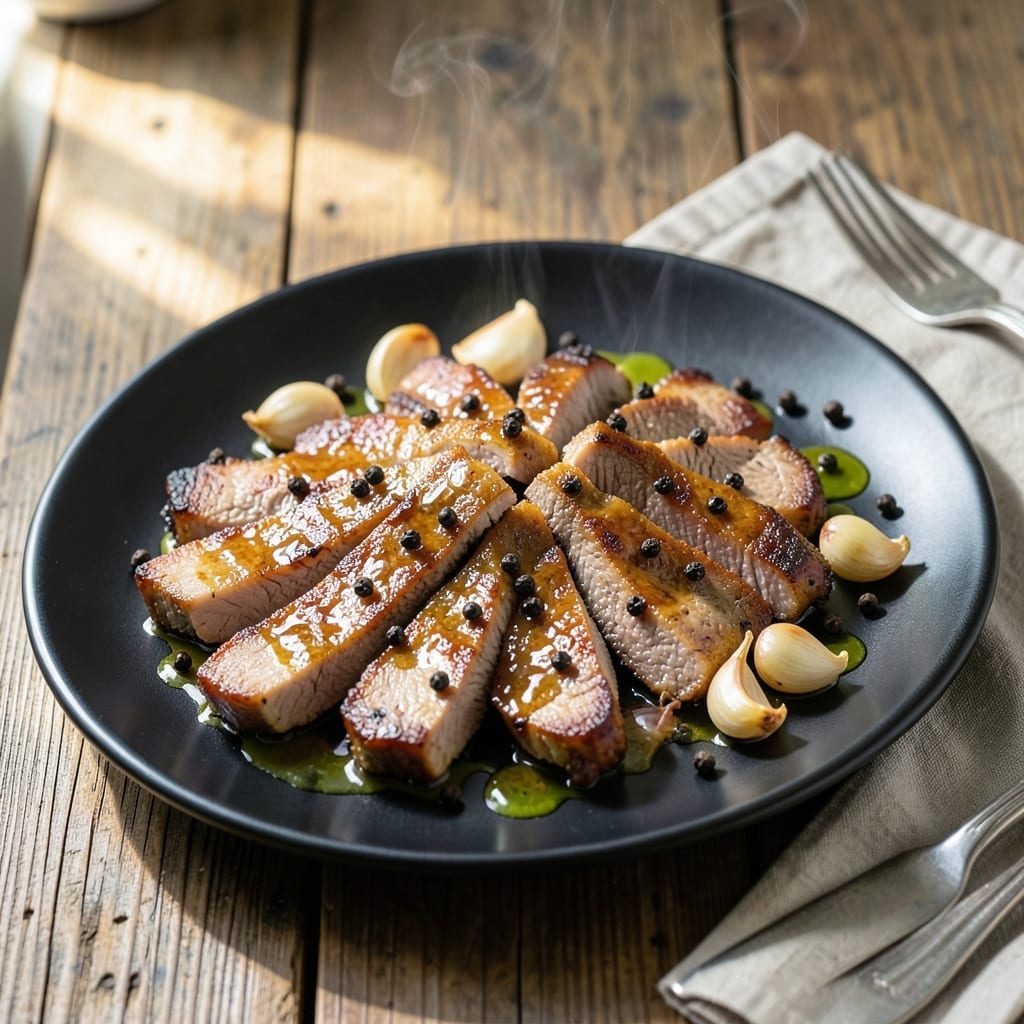
This Filipino pork jowl recipe delivers the crispy texture and rich flavor of traditional lechon kawali with a modern twist. The secret lies in the double-cooking method that guarantees perfectly rendered fat and golden-brown skin.
I developed this version after testing multiple techniques to achieve that ideal balance between tender meat and shatteringly crispy exterior. The garlic soy glaze adds a savory depth that complements the pork’s natural richness.
What results is a centerpiece dish that showcases the best of Filipino comfort food, with layers of flavor and texture in every bite. The glaze caramelizes beautifully during the final cooking stage.
Serve with steamed rice and pickled vegetables for an authentic meal. This method ensures consistent results every time.
Ingredients for Pork Jowl Recipe Pinoy
Pantry staples and a few specialty items create this Filipino masterpiece with shatteringly crisp skin.
| Ingredient | Amount | Notes |
|---|---|---|
| Pork Jowl 🥓 | 2 lb | Skin-on, cut into large pieces |
| Garlic Cloves 🧄 | 8 cloves | Minced for glaze |
| Soy Sauce 🫒 | ½ cup | Use Filipino brand preferred |
| Brown Sugar 🍚 | ¼ cup | Light or dark variety |
| White Vinegar 💧 | 3 tbsp | For acidity balance |
| Black Peppercorns 🌶️ | 1 tbsp | Whole, for boiling |
| Bay Leaves 🍃 | 3 pieces | Dried for aroma |
| Salt 🧂 | 1 ½ tbsp | Kosher or sea salt |
| Water 💧 | 4 cups | For initial boiling |
| Vegetable Oil 🫒 | 2 cups | For deep frying |
| Calamansi Juice 🍋 | 2 tbsp | Freshly squeezed if available |
| Green Onions 🧅 | 4 whole | Thinly sliced for garnish |
The pork jowl is non-negotiable here. Filipino markets or Asian grocery stores are your best bet—look for pieces with even fat marbling and intact skin. The skin thickness determines your crisp factor, so ask for skin-on cuts. I’ve had luck with Seafood City and Filipino Star Market chains. Avoid pre-frozen jowl if possible; fresh renders better.
No calamansi? Lime juice at half the amount works in a pinch. For the soy sauce, Silver Swan or Datu Puti are authentic choices—avoid low-sodium as it lacks depth. Brown sugar can be swapped for coconut sugar (one-to-one ratio). If you’re out of vinegar, rice vinegar adds a milder tang. The bay leaves are traditional but thyme sprigs offer a similar earthy note.
Store raw jowl in the coldest part of your fridge for up to 2 days. The garlic soy glaze keeps for 1 week refrigerated in a sealed jar. Fried pork doesn’t reheat well—best eaten fresh, but leftovers keep 3-4 days and can be revived in a hot oven for a few minutes.
Why You’ll Love This Recipe
- One Pan Magic: I just toss the jowl, garlic, soy sauce, and brown sugar in a pan and let the vinegar work its tangy magic.
- Sweet-Savory Rush: That caramelized brown sugar with the salty soy sauce? I’ll admit I sneak bites before it even hits the plate.
- Weeknight Hero: Between us, it’s my Tuesday night lifesaver—ready before the rice finishes cooking.
- Budget Stretcher: A single cut of pork jowl feeds my whole family, and leftovers taste even better the next day.
Step-by-Step Instructions for Crispy Lechon Kawali With Garlic Soy Glaze
Master the technique for achieving perfectly crispy skin and tender meat with this traditional Filipino method.
Step 1: Boil the Pork Jowl with Aromatics
In a large pot, combine the 2 lb Pork Jowl, 4 cups Water, 1.5 tbsp Salt, 1 tbsp Black Peppercorns, and 3 pieces Bay Leaves. Bring to a boil over high heat, then reduce to a simmer.
Cook for 45-60 minutes until the pork is tender but not falling apart. The meat should be fork-tender but still hold its shape. Skim off any foam that rises to the surface during boiling for a cleaner result.
This parboiling step removes impurities and begins the tenderizing process while infusing the pork with subtle aromatic flavors.
Step 2: Dry and Deep-Fry to Crispy Perfection
Drain the pork jowl and pat it completely dry with paper towels. I emphasize completely dry—any moisture will cause oil splatter and prevent achieving that coveted crispy texture.
Heat the 2 cups Vegetable Oil in a deep pot to 350-375°F. Carefully add the pork jowl pieces, ensuring not to overcrowd the pot. Fry for 15-20 minutes, turning occasionally, until the skin is golden brown and blistered and the exterior is deeply crispy throughout.
Use a slotted spoon to transfer the pork to a wire rack set over a baking sheet to drain excess oil while maintaining crispness.
Step 3: Create the Garlic Soy Glaze
In a saucepan, combine the 0.5 cup Soy Sauce, 0.25 cup Brown Sugar, 3 tbsp White Vinegar, minced 8 cloves Garlic Cloves, and 2 tbsp Calamansi Juice. Simmer over medium heat for 5-7 minutes until slightly thickened.
The glaze should reduce by about one-third and coat the back of a spoon. Stir frequently to prevent burning, especially as the sugar caramelizes. The aroma will be intensely savory with sweet and tangy notes.
Step 4: Glaze and Garnish for Serving
Once the pork jowl is crispy, brush or pour the warm garlic soy glaze generously over all surfaces. The hot glaze will sizzle slightly as it hits the crispy skin, creating an irresistible sticky coating.
Let the glazed pork rest for 5 minutes to allow the flavors to meld. Slice into serving pieces and garnish with thinly sliced 4 whole Green Onions for a fresh contrast to the rich, crispy pork.
The final result should have a perfect balance of textures: shatteringly crisp skin giving way to succulent meat, all enhanced by the complex sweet-savory glaze.
Pro Tips For Making Pork Jowl Recipe Pinoy
- Score the Skin: Cut shallow slits in the pork jowl skin before marinating—I learned this the hard way after my first batch came out tough and chewy. The cuts let the soy-vinegar marinade penetrate deeper.
- Balance the Marinade: Use 1 part white vinegar to 2 parts soy sauce, plus 1 tablespoon brown sugar per cup of liquid. Sounds weird, but it works: the acidity tenderizes while the sugar caramelizes.
- Low and Slow First: Start the jowl on medium-low heat for 30 minutes to render fat, then finish with a high-heat sear. After burning three batches, I finally figured out this prevents bitter, charred edges.
- Rest Before Slicing: Give it a solid 10 minutes under foil after cooking—my grandmother swore by this, and she was right: the juices redistribute instead of pooling on the cutting board.
Dietary Considerations for This Dish
Gluten-Free Friendly
This dish is naturally gluten-free when using tamari instead of regular soy sauce. I recommend San-J tamari for its rich flavor. Always check your soy sauce labels for hidden wheat. 💡
High Protein Content
The 2 lb Pork Jowl provides substantial protein—about 40g per serving. The double-cooking method preserves these nutrients while rendering the fat cap beautifully crispy.
Pair with steamed rice and extra vegetables to create a balanced meal that satisfies without being overly heavy.
Sodium Considerations
With 1.5 tbsp Salt and 0.5 cup Soy Sauce, this dish is naturally high in sodium. I reduce the salt to 1 tbsp when serving with salty sides like pickled vegetables.
Fat Content Note
Pork jowl is fatty by nature—expect about 60g fat per serving. The boiling step helps render some fat before frying. For a lighter version, trim excess fat before cooking.
Dietary Swaps
For lower sodium, use low-sodium soy sauce and increase the Calamansi Juice to 3 tbsp for brightness. The vinegar and citrus help balance the richness without added salt.
Nutrition Facts
Frequently Asked Questions
What if I can’t find pork jowl?
Pork belly works as a substitute for similar texture and flavor. Use the same cooking method but reduce frying time to 12-15 minutes as belly cooks faster.
Can I bake instead of frying?
Yes! Bake at 400°F for 45-60 minutes after boiling. The skin won’t be as crispy but will still develop good texture. Brush with oil before baking.
How do I store leftovers?
Keep in an airtight container in the fridge for up to 4 days. Reheat in a 375°F oven for 10-15 minutes to restore crispness.
Why is my skin not crispy?
Moisture is the enemy! Pat the jowl completely dry after boiling and ensure oil is at 350-375°F before frying. Overcrowding the pot also prevents crisping.

- Potato Patty Recipe No Egg: Crispy Edges Without the Binder - October 30, 2026
- Paula Deen’s Potato Chip Cookies Recipe: Salty-Sweet Crunch in Every Bite - October 30, 2026
- Potato Gnocchi Recipe Ideas: Pillowy Soft Dumplings With Rustic Charm - October 30, 2026