
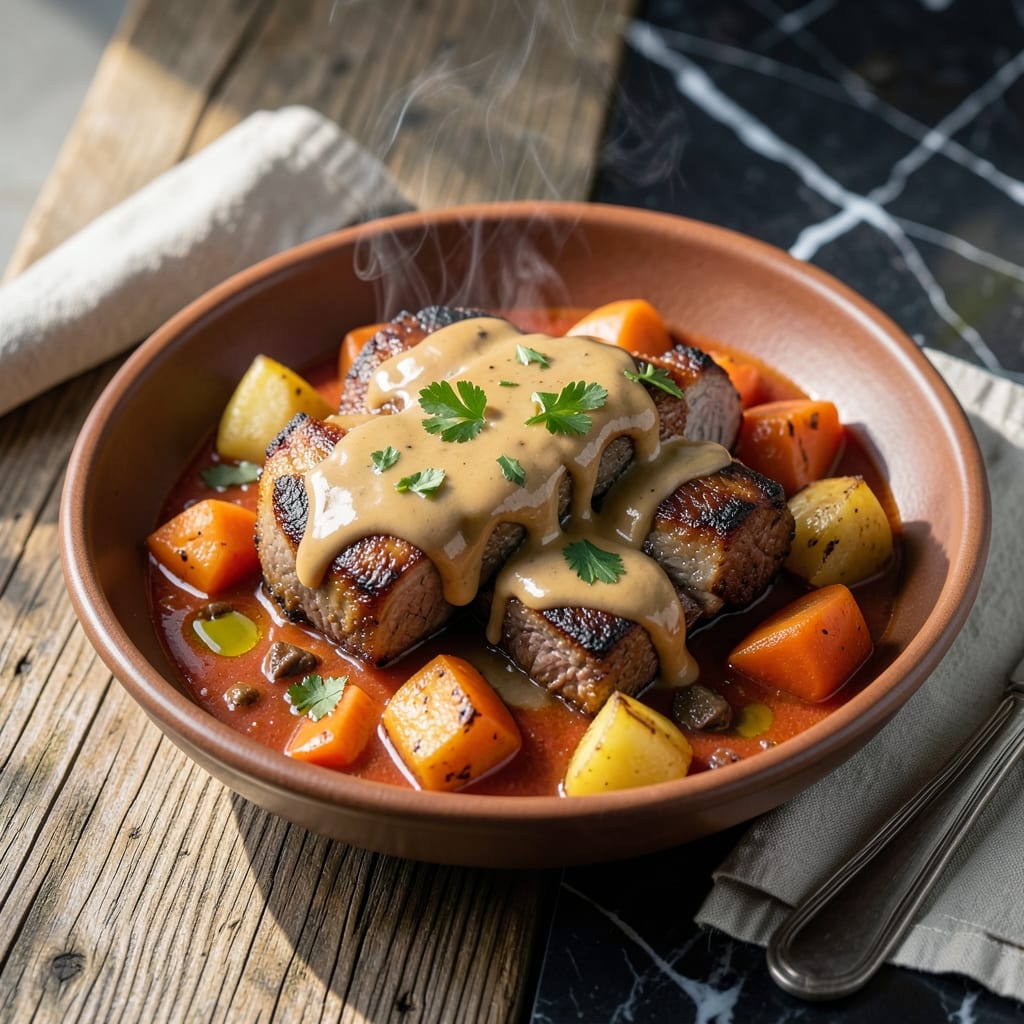
This Filipino stew transforms simple pork into a deeply flavorful dish with a rich, nutty sauce. The addition of peanut butter creates an unexpected depth that balances the tangy tomato base perfectly.
I developed this recipe to capture the traditional kaldereta technique while making it accessible for home cooks. The slow cooking process allows the pork to become fork-tender and the sauce to thicken beautifully.
What emerges is a hearty, comforting stew with layers of savory, sweet, and nutty flavors. Each bite delivers tender pork and a velvety sauce that begs to be soaked up with rice.
This dish brings the warmth of Filipino comfort food to your table with authentic taste and technique.
Ingredients for Pork Kaldereta Recipe with Peanut Butter
Rich, savory ingredients come together for a stew with authentic Filipino depth and flavor.
| Ingredient | Amount | Notes |
|---|---|---|
| Pork Shoulder 🥩 | 2 lb | Cut into 2-inch cubes, bone-in preferred |
| Tomato Sauce 🍅 | 2 cups | Plain, no herbs added |
| Peanut Butter 🥜 | ½ cup | Creamy, unsweetened variety |
| Liver Spread 🍖 | ¼ cup | Chicken liver pâté works best |
| Carrots 🥕 | 2 whole | Peeled and sliced into rounds |
| Potatoes 🥔 | 2 whole | Yukon Gold, peeled and cubed |
| Red Bell Pepper 🌶️ | 1 whole | Seeded and diced |
| Onion 🧅 | 1 whole | Yellow or white, chopped |
| Garlic Cloves 🧄 | 6 cloves | Minced for depth of flavor |
| Soy Sauce 🫙 | 3 tbsp | Low-sodium if preferred |
| Vinegar 💧 | 2 tbsp | White vinegar or cane vinegar |
| Bay Leaves 🍃 | 2 pieces | Dried, for aroma |
| Salt 🧂 | 1 tsp | Adjust to taste |
| Black Pepper 🌶️ | ½ tsp | Freshly ground preferred |
| Olive Oil 🫒 | 2 tbsp | For sautéing aromatics |
The pork shoulder is non-negotiable for that fall-apart texture—bone-in adds richness but boneless works too. Asian markets often have liver spread in the canned goods section; 50/50 is a common brand. For the peanut butter, natural unsweetened (just peanuts and salt) keeps the flavor clean. I always grab my pork from local butchers when possible—they’ll cube it for you if you ask nicely.
No liver spread? Chicken liver pâté is the closest swap, but you can skip it entirely (the peanut butter covers the nutty depth). Crunchy peanut butter works but smooth blends better. Out of tomato sauce? Blended canned tomatoes plus a pinch of sugar mimics the balance. For potatoes, russets hold shape better than waxy varieties. Vinegar is flexible—apple cider or rice vinegar both work.
The stew tastes even better the next day once the flavors meld. Keeps in the fridge for 4-5 days and freezes beautifully for up to 3 months. Reheat gently on the stove—microwaving can separate the peanut butter. Always make extra; it’s that good.
Why You’ll Love This Recipe
- I’ll be real: it tastes even better the next day, and the flavors just keep getting bolder.
- One Pot Wonder: I just brown the pork shoulder, dump everything else in, and let it simmer—no fancy techniques, no stress.
- Rich & Nutty: Honestly, the peanut butter and liver spread combo gives it this deep, savory-sweet depth that’s ridicously good.
- Feeds a Crowd: Between us, I’ve served this at potlucks and family dinners, and it’s always the first to disappear.
Step-by-Step Instructions for Pork Kaldereta with Peanut Butter
Here’s the method. Straightforward, tested, works every time.
Step 1: Sear the Pork Shoulder
Heat the 2 tbsp olive oil in a large pot over medium-high heat. Add the 2 lb Pork Shoulder cubes and sear for 5-7 minutes until browned on all sides. I press down gently with a wooden spoon to ensure even contact with the pot.
This step builds a flavorful fond at the bottom of the pot, which will deepen the stew’s taste. Don’t overcrowd the pot—work in batches if needed to avoid steaming the pork instead of browning it.
Step 2: Sauté Aromatics and Build the Base
In the same pot, add the onion, 6 cloves Garlic Cloves, and red bell pepper. Sauté for 3-4 minutes until the onion is translucent and the garlic is fragrant. Be careful not to let the garlic burn.
Stir in the 2 cups Tomato Sauce, 3 tbsp Soy Sauce, 2 tbsp Vinegar, 1 tsp Salt, and 0.5 tsp Black Pepper. Add the 2 pieces Bay Leaves and let the mixture simmer for 5 minutes to meld the flavors.
Step 3: Simmer with Vegetables and Liver Spread
Return the seared pork to the pot along with the 2 whole Carrots, 2 whole Potatoes, and 0.25 cup Liver Spread. Stir well to combine, ensuring the liver spread dissolves into the sauce. Pour in enough water to just cover the pork and vegetables.
Bring to a boil, then reduce heat to low. Cover and simmer for 45-50 minutes until the pork is fork-tender and the potatoes are soft. Stir occasionally to prevent sticking.
Step 4: Finish with Peanut Butter
Once the pork and vegetables are tender, stir in the 0.5 cup Peanut Butter. Mix thoroughly until the peanut butter is fully incorporated and the sauce thickens slightly. This should take 3-5 minutes over low heat.
Taste and adjust seasoning if needed. The sauce should be rich, nutty, and slightly tangy from the vinegar. Remove the bay leaves before serving.
Let the kaldereta sit for 10 minutes off the heat before serving to allow the flavors to meld together. This dish tastes even better the next day.
Pro Tips For Making Pork Kaldereta Recipe With Peanut Butter
- Brown the Pork Well: Sear the pork shoulder in batches over medium-high heat until deeply browned—about 4-5 minutes per side. Skipping this or crowding the pan makes the kaldereta taste flat.
- Bloom the Liver Spread: Cook the liver spread with garlic and onions for 2-3 minutes until it darkens slightly. I learned this the hard way—raw-tasting liver spread ruins the sauce.
- Thin the Peanut Butter: Mix the peanut butter with a splash of hot stew liquid before stirring it in. Otherwise, it clumps and leaves stubborn streaks in your sauce.
- Add Carrots Late: Toss the carrots in during the last 20 minutes of cooking. They’ll stay firm and sweet instead of turning to mush.
Pro Cooking Tips for This Recipe
Mastering the Sear
Don’t rush the searing step—give each 2-inch pork cube 5-7 minutes of undisturbed time per side. I use a heavy Dutch oven for even heat distribution. A proper sear creates the fond that deepens the stew’s complex flavors. 🔥
Peanut Butter Integration
When adding the ½ cup peanut butter, work it in gradually over low heat. Stir constantly to prevent clumping—this ensures a silky, lump-free sauce. I find natural unsweetened blends in most smoothly.
Liver Spread Trick
For the ¼ cup liver spread, warm it slightly in the microwave first. This helps it dissolve effortlessly into the sauce. If you can’t find it, chicken liver pâté works as a perfect substitute.
Simmering Perfection
Keep the simmer gentle—tiny bubbles, not a rolling boil. I check the pork at 45 minutes; it should pull apart easily. The potatoes will finish cooking in the residual heat if they’re cubed small. ⏰
Resting Time
That 10-minute rest off heat is non-negotiable. It lets the peanut butter fully emulsify into the sauce. I always taste and adjust salt after resting—the flavors intensify as it sits.
Nutrition Facts
Frequently Asked Questions
What can I use instead of liver spread?
Chicken liver pâté is the closest substitute. You can also omit it entirely since the peanut butter provides rich depth. For a vegetarian option, try mushroom pâté for umami.
Why does my sauce look separated?
Peanut butter can separate if heated too quickly. Stir constantly over low heat for 3-5 minutes until smooth. If it happens, remove from heat and whisk vigorously.
Can I make this in a slow cooker?
Yes! Sear the pork first, then transfer everything to the slow cooker. Cook on low for 6-7 hours or high for 4 hours. Add peanut butter in the last 30 minutes.
How do I store leftovers?
Keep in an airtight container in the fridge for up to 5 days. For longer storage, freeze for 3 months. Reheat gently on the stove to prevent separation.

- Potato Chip Cookie Recipe With Pecans: Buttery Crunch Meets Nutty Richness - October 30, 2026
- Potato Patty Recipe No Egg: Crispy Edges Without the Binder - October 30, 2026
- Paula Deen’s Potato Chip Cookies Recipe: Salty-Sweet Crunch in Every Bite - October 30, 2026