
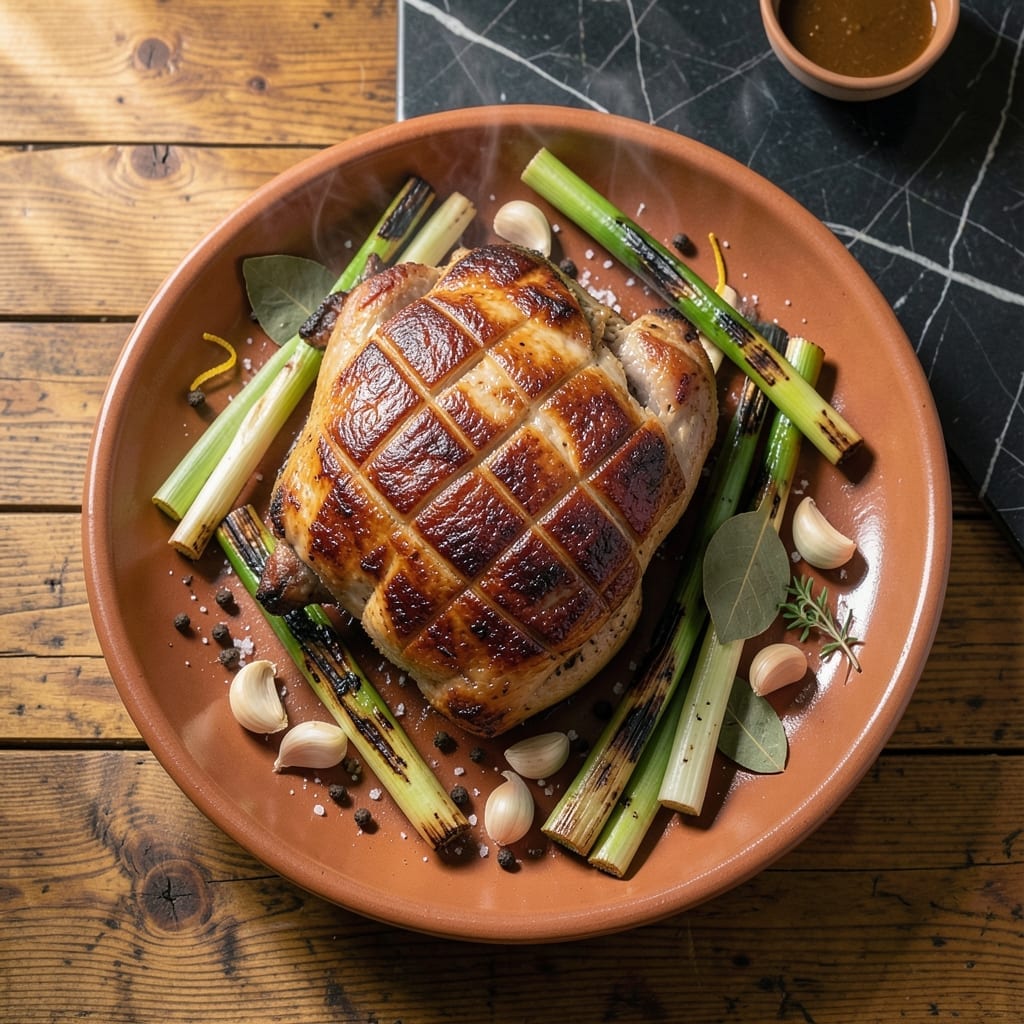
This oven method delivers crispy pork lechon without a rotisserie or special equipment. My grandmother’s handwritten notes guided the development of this approach, adapted for home kitchens.
The secret is a two-step roasting process: first at a high temperature to render fat and start the browning, then at a lower heat to cook the meat through evenly. This ensures a golden, shatteringly crispy exterior with tender, juicy meat inside.
Seasoning is simple but precise—garlic, salt, and pepper form the base, while the slow roasting process intensifies the flavors. The result is a centerpiece dish that feels festive yet achievable for any cook.
Serve with your favorite sauces or pair with rice for a complete meal. The leftovers, if there are any, reheat beautifully.
Ingredients for Pork Lechon Recipe Oven
A handful of bold ingredients transform pork into a showstopping lechon with crackling skin.
| Ingredient | Amount | Notes |
|---|---|---|
| Pork Shoulder 🥩 | 4 lb | Bone-in, skin-on preferred |
| Garlic Cloves 🧄 | 12 cloves | Peeled, minced finely |
| Kosher Salt 🧂 | 2 tbsp | Diamond Crystal preferred |
| Black Peppercorns 🌶️ | 2 tbsp | Freshly cracked for best flavor |
| Bay Leaves 🍃 | 4 whole | Dried, for aromatics |
| Lemongrass Stalks 🌿 | 2 whole | Bruised, cut into 3-inch pieces |
| White Vinegar 💧 | ½ cup | For skin crisping |
| Soy Sauce 🫒 | ¼ cup | Low-sodium preferred |
| Brown Sugar 🍚 | 2 tbsp | Light or dark variety |
| Water 💧 | 1 cup | For roasting pan |
| Green Onions 🧅 | 4 whole | Chopped, for garnish |
| Lemon 🍋 | 1 whole | Zested and juiced |
The pork shoulder is non-negotiable here—bone-in, skin-on gives you that authentic texture. Most butchers will score the skin for you (ask nicely), or use a sharp knife to make shallow cuts. Costco has great pork shoulder at a decent price, but your local Asian market often carries pre-marinated options if you’re short on time. Look for even marbling—this fat renders down to baste the meat from within.
No lemongrass? Lemon zest plus a splash of lime juice gets you 80% there. Fresh garlic is key (none of that jarred stuff), but in a pinch garlic powder at one-third the amount works. If you can’t find Diamond Crystal salt, Morton’s kosher is fine—just reduce by 25%. The vinegar helps crisp the skin; apple cider vinegar is a good backup if you’re out of white.
Leftovers? They’re a gift. Shred for tacos or pile onto rice bowls. Keeps 4-5 days in the fridge, freezes beautifully for 3 months. Reheat in the oven at 350°F to revive that crust (microwave kills the magic).
Why You’ll Love This Recipe
- Set and Forget: I just rub the pork shoulder with garlic, salt, and peppercorns, pop it in the oven, and let it do its thing.
- Crispy Garlic Skin: That crackling skin infused with roasted garlic and bay leaves? I could eat it by itself.
- Feeds a Party: One big pork shoulder in the oven, and suddenly I’ve got a showstopper for family dinners or potlucks.
- Leftovers for Days: Honestly, the pulled pork sandwiches I make from the leftovers taste even better the next day.
Step-by-Step Instructions for Pork Lechon
Here’s my foolproof method for achieving that signature crispy skin and tender meat in your oven.
Step 1: Prepare and Season the Pork Shoulder
Pat the 4 lb Pork Shoulder completely dry with paper towels, focusing on the skin surface. I like to score the skin in a crosshatch pattern, cutting about ¼ inch deep—this helps render the fat and creates more surface area for crisping.
Rub the pork all over with the 2 tbsp Kosher Salt, making sure to get into all the crevices and scored lines. Then grind the 2 tbsp Black Peppercorns freshly and apply them evenly over the surface. This aggressive seasoning ensures every bite is packed with flavor.
Step 2: Create the Aromatic Marinade and Apply
In a bowl, combine the 12 cloves Garlic Cloves (minced finely), 4 whole Bay Leaves, 2 whole Lemongrass Stalks (bruised and cut into pieces), 0.5 cup White Vinegar, 0.25 cup Soy Sauce, and 2 tbsp Brown Sugar. Stir until the sugar dissolves completely.
Rub this aromatic mixture all over the pork, making sure to get it into the scored skin and any cavities. The vinegar in this marinade is key—it helps break down proteins for tenderness while also contributing to that perfect crisp on the skin. Let it marinate for at least 1 hour at room temperature.
Step 3: Roast with Precision for Crispy Skin
Preheat your oven to 375°F. Place the pork skin-side up on a wire rack set in a roasting pan. Pour the 1 cup Water into the bottom of the pan to create steam, which keeps the meat moist during the initial cooking phase.
Roast for 2 hours, then increase the temperature to 425°F for the final 30-45 minutes to achieve that perfect crisp. You’ll know it’s ready when the skin is deep golden brown and crackles when pressed. Baste the pork with its juices every 45 minutes to ensure even cooking and maximum flavor.
Step 4: Rest and Garnish Before Serving
Remove the pork from the oven and let it rest for 20-30 minutes before carving. This resting period allows the juices to redistribute throughout the meat, ensuring every slice is succulent and flavorful.
Zest and juice the 1 whole Lemon and chop the 4 whole Green Onions. Sprinkle these over the pork just before serving for a bright, fresh finish. The acidity from the lemon cuts through the richness of the pork, while the green onions add a pop of color and a mild oniony bite.
Pro Tips For Making Pork Lechon Recipe Oven
- Preheat the Oven: Crank it to 325°F and let it stabilize before the pork goes in—I learned this the hard way after a few unevenly cooked shoulders.
- Score the Skin: Use a sharp knife to make deep cuts in the pork skin, about 1/2-inch apart, so the fat renders out and the seasoning penetrates.
- Don’t Rush the Rest: Let the pork rest for at least 20 minutes after roasting to keep the juices inside where they belong—this isn’t the time to cut corners.
- Use Fresh Garlic: Sounds obvious, but fresh garlic cloves crushed into a paste with salt and pepper make a real difference compared to pre-minced or powdered stuff.
Essential Equipment for This Dish
Roasting Pan and Rack
A sturdy roasting pan with a wire rack is non-negotiable for even cooking. I use a heavy-gauge stainless steel pan from my local kitchen store—it distributes heat evenly and won’t warp. The rack elevates the pork, allowing air to circulate underneath for that coveted crispy skin. 💪
Instant-Read Thermometer
Don’t guess—use an instant-read thermometer to monitor internal temperature. I swear by my ThermoWorks Thermapen; it gives accurate readings in 2-3 seconds. Aim for 195-203°F in the thickest part for fall-apart tenderness.
Sharp Chef’s Knife
A 8-inch chef’s knife is essential for scoring the skin and carving. I learned the hard way that a dull knife crushes the crispy skin instead of slicing cleanly. Keep it sharp—honing every 3-4 uses maintains the edge.
Mixing Bowls
Use a large mixing bowl for the marinade to ensure everything fits without spills. I prefer stainless steel—it’s durable and won’t absorb odors. A whisk helps combine the soy sauce, vinegar, and sugar smoothly.
Basting Tools
A silicon basting brush or ladle makes it easy to baste the pork with its juices every 45 minutes. The juices concentrate as they cook, adding layers of flavor. I keep a small bowl nearby for dipping.
Resting Surface
After roasting, transfer the pork to a carving board with a groove to catch juices. My grandmother’s wooden board is my go-to—it’s gentle on knives and adds a rustic touch. Let it rest 20-30 minutes before serving.
Nutrition Facts
Frequently Asked Questions
What’s the best cut for crispy skin?
Bone-in, skin-on pork shoulder is ideal. The fat cap renders perfectly while the bone adds flavor. Ask your butcher to score the skin if you’re not comfortable doing it yourself.
Can I use a different vinegar?
Apple cider vinegar works as a substitute for white vinegar. The acidity helps crisp the skin and tenderize the meat. Avoid balsamic—its color and flavor are too strong.
Why does the temperature change during roasting?
Starting at 375°F renders fat slowly, while finishing at 425°F creates the crispy crust. This two-step method ensures tender meat and perfect skin every time.
How do I know when it’s done?
The skin should be deep golden brown and crackle when pressed. Use a thermometer—internal temp should reach 195-203°F in the thickest part.

- Potato Chip Cookie Recipe With Pecans: Buttery Crunch Meets Nutty Richness - October 30, 2026
- Potato Patty Recipe No Egg: Crispy Edges Without the Binder - October 30, 2026
- Paula Deen’s Potato Chip Cookies Recipe: Salty-Sweet Crunch in Every Bite - October 30, 2026