
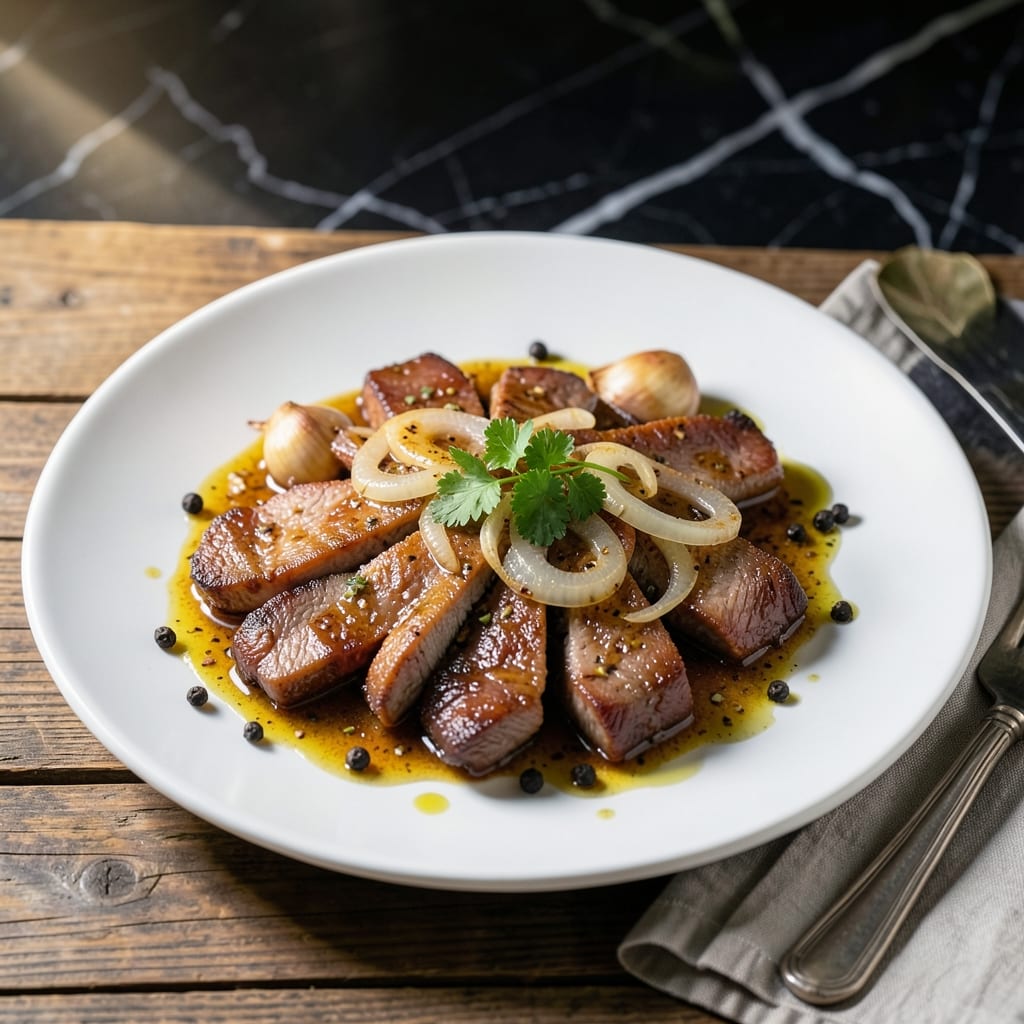
This Filipino pork tongue dish transforms humble ingredients into a tender, flavorful centerpiece for special occasions. My grandmother’s handwritten notes guided this version, proving traditional recipes don’t need complexity to shine.
The key is slow cooking the lengua until fall-apart tender, then finishing with a rich sauce that absorbs every bit of flavor. I’ve simplified her intuitive method into clear steps anyone can follow without losing authenticity.
What emerges is a dish that’s both elegant and comforting, with pork tongue so soft it melts in your mouth. The sauce, built from the cooking liquid, delivers deep umami with every bite.
Serve with steamed rice to soak up every drop of that savory sauce. This is home cooking at its most satisfying.
Ingredients for Pork Lengua Recipe Panlasang Pinoy
Transform humble cuts into something extraordinary with these carefully chosen ingredients.
| Ingredient | Amount | Notes |
|---|---|---|
| Pork Tongue 🐷 | 2 lb | Fresh, cleaned thoroughly |
| Water 💧 | 8 cups | For boiling tongue |
| Bay Leaves 🍃 | 2 pieces | Dried, for aroma |
| Black Peppercorns 🌶️ | 1 tsp | Whole, for broth |
| Onion 🧅 | 1 whole | Yellow or white, quartered |
| Garlic Cloves 🧄 | 6 cloves | Peeled, smashed |
| Salt 🧂 | 1 tbsp | Kosher or sea salt |
| Tomato Sauce 🍅 | 1 cup | Canned or fresh |
| Soy Sauce 🫙 | ½ cup | Filipino brand preferred |
| Calamansi Juice 🍋 | 2 tbsp | Or substitute lemon juice |
| Brown Sugar 🟤 | 2 tbsp | Packed, for balance |
| Green Peas 🌱 | 1 cup | Frozen or fresh |
| Carrots 🥕 | 2 whole | Peeled, sliced into rounds |
| Potatoes 🥔 | 2 whole | Peeled, cubed |
| Olive Oil 🫒 | 2 tbsp | For sautéing aromatics |
The pork tongue is the star here. Asian markets usually have the best selection—look for fresh, not frozen. Ask the butcher to clean and skin it for you (saves a messy step). If you’re buying frozen, thaw it completely in the fridge overnight. Filipino soy sauce brands like Silver Swan or Datu Puti are ideal for that authentic flavor, but any good-quality soy sauce works in a pinch.
No calamansi? Lemon or lime juice at a 1:1 ratio gets you 90% there. Out of tomato sauce? Tomato paste thinned with water works—just use about half the amount. The green peas can be swapped for bell peppers if you prefer more texture. For the brown sugar, light or dark both work, but dark adds a deeper caramel note. Don’t skip the bay leaves—they add a subtle complexity that’s hard to replicate.
Leftovers keep beautifully in the fridge for up to 4 days and actually taste better the next day. Freeze for 3 months if you’re making ahead. Reheat gently on the stove with a splash of water to keep the sauce from breaking. Always serve with steamed rice—it’s the only way to soak up that incredible sauce.
Why You’ll Love This Recipe
- Set It and Forget: I just simmer the tongue with bay leaves, peppercorns, and onion—no stirring, no fuss.
- Rich, Savory Depth: The slow-cooked pork tongue soaks up the aromatic spices, making every bite deeply flavorful.
- Feeds a Fiesta: This dish is my go-to for family gatherings; it’s hearty and always impresses.
- Budget Stretcher: One tongue serves six, and leftovers taste even better the next day.
Step-by-Step Instructions for Slow-Cooked Filipino Pork Tongue
Here’s how I transform this humble cut into a melt-in-your-mouth masterpiece.
Step 1: Clean and Boil the Pork Tongue
Rinse the 2 lb Pork Tongue thoroughly under cold water, then rub with 1 tbsp Salt to remove any impurities. This step is crucial for eliminating the gamey taste that tongue can sometimes have. Place it in a large pot and cover with the 8 cups Water.
Add 2 pieces Bay Leaves, 1 tsp Black Peppercorns, 1 whole Onion (quartered), and 6 cloves Garlic Cloves (smashed). Bring to a rolling boil over high heat, then reduce to a simmer. Cook for 45-60 minutes until the tongue is fork-tender. You’ll know it’s ready when a knife slides in with minimal resistance.
Step 2: Peel and Slice the Tongue
Drain the tongue and let it cool slightly until safe to handle. Using a sharp knife, peel off the tough outer skin—this reveals the tender meat beneath. I find it easiest to start at the thick end and work my way down, using the knife tip to lift the skin as I go.
Once peeled, slice the tongue into ½-inch thick pieces. This uniform thickness ensures even cooking in the next steps. Set aside the sliced tongue and reserve 2 cups of the broth for the sauce—this adds depth of flavor that water simply can’t match.
Step 3: Sauté Aromatics and Build the Sauce
Heat 2 tbsp Olive Oil in a clean pot over medium heat. Add the sliced tongue and sear for 2-3 minutes until lightly browned. This step develops a rich fond that will flavor your sauce beautifully. Remove the tongue and set aside.
In the same pot, sauté the remaining onion and garlic until soft and fragrant. Add 1 cup Tomato Sauce, 0.5 cup Soy Sauce, 2 tbsp Calamansi Juice, and 2 tbsp Brown Sugar. Stir well and let it simmer for 5 minutes until the sauce thickens slightly and develops a glossy sheen.
Step 4: Simmer with Vegetables
Return the tongue to the pot and add 1 cup Green Peas, 2 whole Carrots (sliced into rounds), and 2 whole Potatoes (cubed). Pour in the reserved broth and bring to a gentle simmer. I always add the carrots and potatoes first as they take longer to cook.
Cover and simmer for 20-25 minutes until the vegetables are tender and the flavors have melded together. The sauce should reduce slightly, coating the tongue and vegetables in a rich, savory glaze. Taste and adjust seasoning if needed, though the soy sauce and calamansi should provide a perfect balance of salty and tangy.
Pro Tips For Making Pork Lengua Recipe Panlasang Pinoy
- Simmer Low and Slow: I learned this the hard way—boiling pork tongue too hard makes it tough. Keep it at a gentle simmer for 2 to 3 hours so the meat stays tender and soaks up the bay leaves and peppercorns.
- Scrape the Tongue: After boiling, peel off that white outer skin while the tongue is still warm. It’s easier to remove cleanly then, and no one wants chewy bits in their finished dish.
- Skip the Salt Early: Sounds weird, but it works: don’t salt the water at the start. The tongue releases impurities as it cooks, and salting too soon can make it taste bitter.
- Chill Before Slicing: Once cooked, let the tongue cool in the broth for 15 minutes, then refrigerate it for 30. Slicing is cleaner and neater when the meat firms up a bit.
Perfect Pairings for This Dish
Rice Pairings
Steamed jasmine rice is my go-to—its floral aroma complements the rich sauce beautifully. For a heartier option, try garlic fried rice with crispy bits. I always make extra rice because the sauce is too good to waste. 🍚
Vegetable Sides
A simple stir-fried bok choy with garlic adds freshness to balance the richness. For crunch, serve with atchara (Filipino pickled papaya). Both cut through the dish’s unctuous texture perfectly.
Beverage Matches
Calamansi juice is the classic choice—I mix ½ cup concentrate with 4 cups water and ice. For beer lovers, San Miguel Pale Pilsen is crisp enough to cleanse your palate between bites. 🍺
Comforting Additions
My grandmother always served this with sinangag (garlic rice) and a fried egg on top. The runny yolk mixes into the sauce for extra decadence. I still follow her lead for weekend family meals.
Light Contrasts
A cool cucumber and tomato salad with lime dressing offers a refreshing counterpoint. The acidity brightens each mouthful of the rich pork tongue. This simple side takes just 10 minutes to prepare.
Nutrition Facts
Frequently Asked Questions
Do I need to peel the tongue before cooking?
No, boil it first with aromatics for 45-60 minutes. The skin peels off easily after cooking when the meat is tender. Trying to peel raw tongue is difficult and messy.
Can I use a pressure cooker to speed this up?
Yes! Pressure cook the tongue for 25-30 minutes instead of boiling. This cuts cooking time significantly while keeping the meat just as tender. Reduce the liquid slightly afterward to concentrate flavors.
What if my sauce is too salty?
Balance it with 1-2 tbsp brown sugar or a splash of calamansi juice. You can also dilute with a little water or reserved broth. Taste as you adjust to avoid overcorrecting.
How do I know when the tongue is fully cooked?
It should be fork-tender—when a knife or fork slides in with minimal resistance. The meat will also pull away slightly from the skin. For food safety, the internal temperature should reach 160°F.

- Potato Chip Cookie Recipe With Pecans: Buttery Crunch Meets Nutty Richness - October 30, 2026
- Potato Patty Recipe No Egg: Crispy Edges Without the Binder - October 30, 2026
- Paula Deen’s Potato Chip Cookies Recipe: Salty-Sweet Crunch in Every Bite - October 30, 2026