
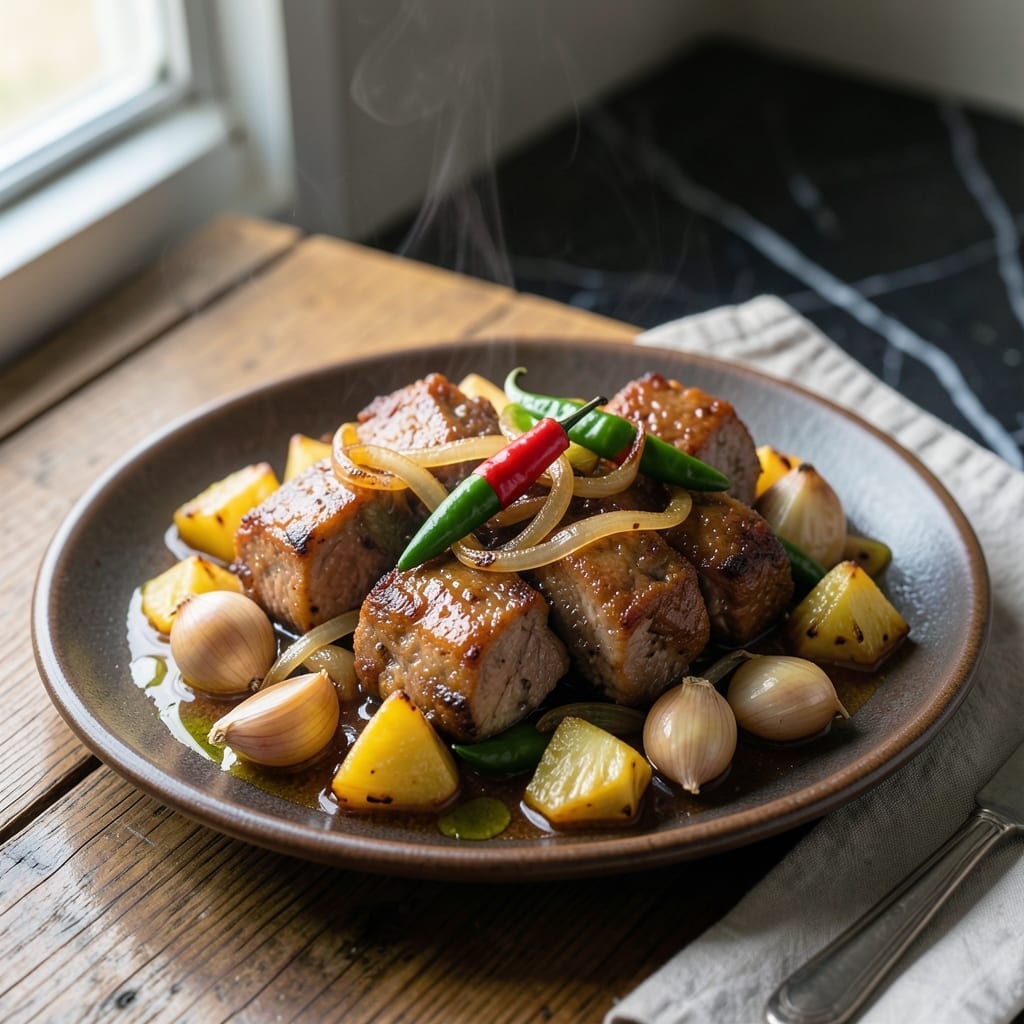
This Filipino pork humba brings rich, tangy-sweet flavors to your table with minimal effort. I discovered this dish through my grandmother’s handwritten notes—vague but full of potential.
The slow-cooked pork absorbs pineapple and soy sauce, creating a tender, caramelized result. No complicated techniques, just patience and simple ingredients.
What emerges is a dish that’s both comforting and complex, with layers of savory and sweet. The meat falls apart at the touch, while the sauce reduces to a glossy, flavorful glaze.
Perfect for family dinners or special occasions. Here’s how to make it at home.
Ingredients for Pork Humba Recipe Panlasang Pinoy
A handful of pantry staples and a little patience create this Filipino classic.
| Ingredient | Amount | Notes |
|---|---|---|
| Pork Belly 🥩 | 2 lb | Cut into 2-inch cubes, skin-on |
| Pineapple Juice 🍍 | 1 cup | Unsweetened, canned or fresh |
| Soy Sauce 🫒 | ½ cup | Regular or low-sodium |
| Brown Sugar 🍚 | ½ cup | Packed for caramelization |
| White Vinegar 💧 | ¼ cup | Balances sweetness |
| Garlic Cloves 🧄 | 8 cloves | Minced for depth of flavor |
| Yellow Onion 🧅 | 1 whole | Medium, thinly sliced |
| Bay Leaves 🌿 | 3 pieces | Dried for aromatic base |
| Whole Black Peppercorns 🌶️ | 1 tsp | Lightly crushed for freshness |
| Dried Oregano 🍃 | 1 tsp | Mediterranean variety preferred |
| Water 💧 | 1 cup | For braising liquid |
| Pineapple Chunks 🍍 | 1 cup | Optional, for serving |
| Vegetable Oil 🫒 | 2 tbsp | For browning pork |
| Salt 🧂 | 1 tsp | Adjust to taste |
The pork belly is non-negotiable for authentic humba. Look for skin-on cuts at Asian markets or specialty butchers—it renders down beautifully into the sauce. Costco sometimes carries it pre-cut, which saves prep time. For the soy sauce, Silver Swan or Delfino (Filipino brands) add that signature depth, but any good-quality soy sauce works in a pinch.
No pineapple juice? Fresh pineapple blended with water (1:1 ratio) mimics the canned stuff perfectly. Brown sugar can be swapped for coconut sugar if you prefer a deeper caramel note. Apple cider vinegar works as a substitute for white vinegar—just use the same amount. The bay leaves are traditional, but a pinch of ground allspice (about 1/8 tsp) can stand in if you’re out.
This tastes even better the next day. Store in an airtight container in the fridge for up to 5 days, or freeze for 3 months. Reheat gently on the stove with a splash of water to loosen the sauce (the good stuff, not the pre-shredded kind).
Why You’ll Love This Recipe
- One Pot Wonder: I just toss in pork belly, pineapple juice, and a few pantry staples then let it simmer—minimal cleanup, maximum flavor.
- Sweet & Tangy Magic: The brown sugar caramelizes while the vinegar and pineapple juice cut through the richness of the pork belly. Ridiculously good.
- Feeds a Crowd: Between us, this dish stretches further than I expected—great for family gatherings or meal prep for the week.
- Budget-Friendly Luxury: Pork belly is affordable here, and the sauce is built from ingredients I always have. I’ll be real: it tastes like I spent hours on it.
Step-by-Step Instructions for Pork Humba
This slow-cooked dish comes together beautifully with just a little patience and attention to detail.
Step 1: Brown the Pork Belly
Heat the 2 tbsp vegetable oil in a large, heavy pot over medium-high heat. Add the 2 lb pork belly cubes and brown them on all sides for 8-10 minutes. You want each piece to develop a rich, golden crust—this adds depth of flavor to the finished dish.
Don’t rush this step. I like to work in batches if needed to avoid crowding the pot, which would steam the pork instead of browning it. Once browned, transfer the pork to a plate and set aside.
Step 2: Sauté Aromatics and Build the Base
In the same pot, add the 1 whole yellow onion and sauté for 3-4 minutes until softened and translucent. Then add the 8 cloves garlic cloves and cook for another 1 minute until fragrant. Stir in the 0.5 cup brown sugar and let it caramelize slightly, creating a glossy, amber-colored base.
This step is where the magic starts. The sugar will melt and begin to bubble, coating the onions and garlic in a sweet, sticky layer. Keep the heat at medium to prevent burning.
Step 3: Add Liquids and Simmer
Return the pork to the pot. Pour in the 1 cup pineapple juice, 0.5 cup soy sauce, 0.25 cup white vinegar, and 1 cup water. Add the 3 pieces bay leaves, 1 tsp whole black peppercorns, 1 tsp dried oregano, and 1 tsp salt. Stir well to combine.
Bring the mixture to a boil, then reduce the heat to low. Cover and let it simmer for 1.5 to 2 hours, stirring occasionally, until the pork is fork-tender and the sauce has thickened into a rich, syrupy consistency.
Step 4: Finish and Serve
Once the pork is tender, uncover the pot and let it simmer for an additional 10-15 minutes to reduce the sauce further. The sauce should cling to the pork and have a glossy, slightly sticky texture. Taste and adjust seasoning with additional salt if needed.
Remove the bay leaves and whole black peppercorns before serving. Transfer the pork humba to a serving dish and garnish with the 1 cup pineapple chunks if desired. Serve hot with steamed rice to soak up every last bit of the delicious sauce.
Pro Tips For Making Pork Humba Recipe Panlasang Pinoy
- Brown the Belly: Sear the pork belly in batches over medium-high heat until deeply browned—this builds flavor and prevents a watery sauce later. I learned this the hard way after skipping it once and ending up with pale, bland meat.
- Balance the Sweetness: Taste the sauce before adding all the brown sugar; pineapple juice already adds sweetness, and you can always adjust later. Sounds obvious, but I’ve ruined a batch by dumping it all in at once.
- Simmer Low and Slow: Once the sauce is in, keep the heat low and let it bubble gently for at least 1 hour. After burning two batches, I finally figured out that vigorous boiling makes the sauce split and the meat tough.
- Use Fresh Pineapple Juice: Skip the canned stuff if you can—fresh pineapple juice adds a brighter, more vibrant tang that pairs perfectly with the soy and vinegar. My grandmother swore by this, and she was right.
Flavor Customization for These Flavors
Sweet and Tangy Boost
For a more pronounced sweet-tart balance, increase the pineapple juice to 1½ cups and add ¼ cup more brown sugar. This creates a glossier, stickier sauce that clings beautifully to the pork. I love this version when serving with plain steamed rice. 💛
Spiced Up Version
Add 1-2 dried chili peppers or ½ tsp red pepper flakes along with the bay leaves for a subtle kick. The heat complements the sweetness without overpowering. For a smoky depth, I sometimes toss in ½ tsp smoked paprika with the aromatics.
Extra Umami Depth
Swap 2 tbsp of soy sauce for 2 tbsp fish sauce to intensify the savory base. This small change adds complexity that my grandmother would approve of. A splash of oyster sauce (1 tbsp) at the end also works wonders.
Citrus Twist
Brighten the dish by adding zest of 1 orange or 2 tbsp calamansi juice with the pineapple juice. The citrus lifts the richness beautifully. I discovered this trick after finding calamansi at our local Asian market.
Herb-Infused Variation
Enhance the aromatic profile with 2 crushed lemongrass stalks or 1 tsp fresh thyme tied in cheesecloth. Remove before serving. This adds a fragrant layer that pairs perfectly with the caramelized pork.
Creamy Finish
Stir in ½ cup coconut milk during the final 15 minutes of cooking for a richer, creamier sauce. This variation nods to other Filipino dishes while keeping the humba’s signature sweet-savory balance. 🔥
Nutrition Facts
Frequently Asked Questions
Can I use a different cut of pork?
Pork shoulder works well as an alternative to belly. It has good fat marbling for flavor and becomes tender after 2 hours of slow cooking. Avoid lean cuts like tenderloin as they dry out.
Why does the sauce need to reduce?
Reducing concentrates the sweet, tangy flavors and creates a glossy texture that clings to the meat. Simmer uncovered for the last 10-15 minutes to achieve this consistency.
Can I make this in a slow cooker?
Yes! Brown the pork first, then transfer everything to the slow cooker. Cook on low for 6-8 hours or high for 4-5 hours. Finish by reducing the sauce on the stovetop.
How do I fix sauce that’s too sweet?
Balance it with a splash of vinegar or soy sauce. Add 1 tbsp at a time, tasting as you go until the flavor harmonizes.

- Potato Chip Cookie Recipe With Pecans: Buttery Crunch Meets Nutty Richness - October 30, 2026
- Potato Patty Recipe No Egg: Crispy Edges Without the Binder - October 30, 2026
- Paula Deen’s Potato Chip Cookies Recipe: Salty-Sweet Crunch in Every Bite - October 30, 2026