
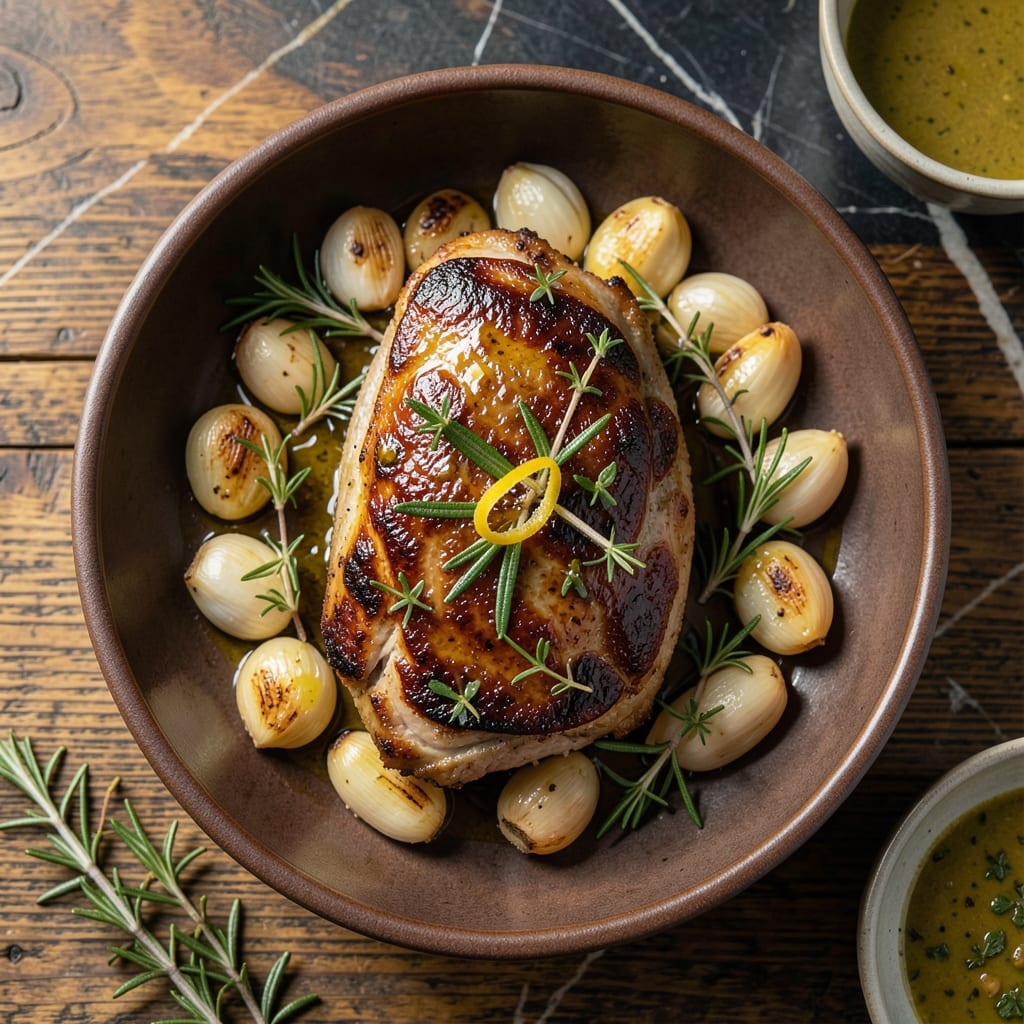
This herb-crusted pork loin delivers restaurant-quality results with minimal effort. The oven does most of the work while you prepare the sides, making it ideal for busy weeknights or Sunday dinners.
I developed this method after years of experimenting with different herb blends and cooking times. The key is a simple rub of garlic, rosemary, and thyme that forms a golden crust while keeping the meat juicy.
The pork emerges from the oven with a beautiful browned exterior and tender interior. A 10-minute rest before slicing ensures every piece stays moist and flavorful.
This dish pairs perfectly with roasted vegetables or mashed potatoes. The leftovers make exceptional sandwiches the next day.
Ingredients for Pork Loin Boneless Recipe Oven
Pantry staples meet fresh herbs for this oven-roasted centerpiece. Simple but stunning results every time.
| Ingredient | Amount | Notes |
|---|---|---|
| Boneless Pork Loin 🥩 | 2 lb | Center-cut, trimmed of fat |
| Fresh Garlic Cloves 🧄 | 6 cloves | Minced for maximum flavor |
| Fresh Rosemary 🌿 | 2 tbsp | Finely chopped, stems removed |
| Fresh Thyme Leaves 🍃 | 2 tbsp | Stripped from stems |
| Olive Oil 🫒 | ¼ cup | Extra-virgin for richness |
| Kosher Salt 🧂 | 1 ½ tsp | Diamond Crystal preferred |
| Black Pepper 🌶️ | 1 tsp | Freshly ground for best flavor |
| Dijon Mustard 🟡 | 2 tbsp | Smooth, not whole grain |
| Dry White Wine 🍷 | ½ cup | Sauvignon Blanc or Pinot Grigio |
| Chicken Stock 🍲 | ½ cup | Low-sodium preferred |
| Unsalted Butter 🧈 | 2 tbsp | Melted for basting |
| Yellow Onion 🧅 | 1 whole | Medium, finely diced |
The pork loin is the star here. Center-cut pieces cook more evenly and stay juicier—ask your butcher to trim the fat cap for you (most will do it for free). For herbs, fresh is non-negotiable; those dried flakes won’t give you that vibrant crust. I grab my rosemary and thyme from Whole Foods or the local farmers market. Look for bright green leaves with no wilting.
No white wine? Apple cider vinegar with water (1:3 ratio) works in a pinch. Dried herbs at one-third the amount if you’re desperate, but fresh is worth the effort. The Dijon can be swapped for regular mustard, but it won’t have the same depth. For the stock, vegetable broth keeps it vegetarian-friendly if needed. Butter can be olive oil for a lighter finish.
The uncooked pork keeps in the fridge for 2-3 days—just pat it dry before rubbing. Leftovers? Slice and store in airtight containers for 4-5 days, or freeze for 3 months. Reheat gently in a skillet to keep the crust crisp.
Why You’ll Love This Recipe
- One Pan Magic: I just rub the pork loin with olive oil, garlic, rosemary, and thyme, pop it in the oven, and let it do its thing—no flipping, no fuss.
- Herb-Crusted Heaven: The garlic and fresh herbs create this insane crust that makes every bite burst with flavor.
- Weeknight Hero: I throw this together on busy evenings and it still feels like a proper meal.
- Leftovers for Days: One roast feeds us twice—sandwiches the next day taste even better.
Step-by-Step Instructions for Pork Loin Boneless Oven
Here’s the method that guarantees juicy, herb-crusted perfection with minimal effort.
Step 1: Prepare the Herb Marinade and Season the Pork
In a small bowl, combine the 0.25 cup olive oil, minced 6 cloves fresh garlic cloves, finely chopped 2 tbsp fresh rosemary, stripped 2 tbsp fresh thyme leaves, 2 tbsp Dijon mustard, 1.5 tsp kosher salt, and 1 tsp black pepper. Whisk until the herbs are evenly distributed throughout the mixture.
Pat the 2 lb boneless pork loin completely dry with paper towels—this ensures the marinade adheres properly and promotes better browning. Place the pork in a shallow dish and pour the herb marinade over it, turning to coat every surface. Let it sit at room temperature for 30 minutes to allow the flavors to penetrate.
Step 2: Sear the Pork for a Golden Crust
Preheat your oven to 375°F. While the oven heats, place a large oven-safe skillet or Dutch oven over medium-high heat. Add the 2 tbsp unsalted butter and let it melt until it starts to foam but not brown.
Remove the pork from the marinade (reserve any leftover marinade) and place it in the hot skillet. Sear for 2-3 minutes per side until deeply golden brown and a crust forms. This step locks in juices and adds a rich, caramelized layer of flavor. Transfer the pork to a plate temporarily.
Step 3: Deglaze and Roast to Perfection
In the same skillet, add the finely diced 1 whole yellow onion and cook for 2-3 minutes until it begins to soften and turn translucent. Pour in the 0.5 cup dry white wine to deglaze the pan, scraping up all the browned bits from the bottom—this adds incredible depth to your sauce.
Return the pork to the skillet, along with any reserved marinade. Pour in the 0.5 cup chicken stock, ensuring the liquid comes about halfway up the pork. Transfer the skillet to the preheated oven and roast uncovered for 45-55 minutes, or until the internal temperature reaches 145°F.
Step 4: Rest and Serve
Remove the pork from the oven and transfer it to a cutting board. Tent loosely with foil and let it rest for 10-15 minutes—this allows the juices to redistribute, ensuring every slice is moist and flavorful. The internal temperature will rise to about 150°F during resting, which is ideal for pork.
Slice the pork into ½-inch thick medallions and arrange on a serving platter. Spoon the pan juices and onions over the top for extra flavor. Serve immediately while warm, with the herb-infused sauce spooned over each serving. The pork should be tender, juicy, and perfectly complemented by the aromatic herbs.
Pro Tips For Making Pork Loin Boneless Recipe Oven
- Preheat the Pan: I learned this the hard way—sear the pork loin in a screaming hot pan for 2-3 minutes per side before transferring to the oven to lock in the juices and get that golden crust.
- Score the Fat: Use a sharp knife to make shallow cuts in the fat cap every inch or so—this helps the olive oil, garlic, and herbs penetrate deeper and crisp up the surface.
- Skip the Overcrowding: Resist the urge to cram the pork loin into a small baking dish; give it space so the heat circulates evenly and the meat cooks through without steaming.
- Rest Under Foil: After pulling it from the oven, tent the pork loosely with foil and let it rest for at least 10 minutes—this keeps it juicy and makes slicing a breeze.
Make-Ahead Tips for Leftovers
Overnight Herb Marinade
For maximum flavor, I prepare the herb marinade the night before and let the pork sit in it overnight in the fridge. The garlic, rosemary, and thyme deeply penetrate the meat, creating a more robust crust. Just
Pre-Sear Option
If you’re really pressed for time, you can sear the pork the evening before. After searing, let it cool completely, then refrigerate it in the skillet with the marinade. The next day, just add the white wine and chicken stock, then pop it straight into the oven.
Partial Cook Method
I sometimes partially cook the pork in the morning, then finish it in the evening. Roast it at 325°F until it reaches 120°F internal temperature, then let it sit in the fridge. Two hours before serving, return it to the oven to finish cooking to 145°F.
Make-Ahead Pan Sauce
The pan sauce can be made separately and reheated. After cooking the pork, strain the pan juices into a saucepan, skim off excess fat, and reduce by half. Store in an airtight container for up to 3 days, then reheat gently before serving. 💫
Cold Serving Idea
This pork makes excellent cold sandwiches the next day. Slice it thin and serve on crusty bread with Dijon mustard and arugula. The flavors intensify overnight, making leftovers just as delicious as the original meal.
Freezer Prep
You can freeze the uncooked marinated pork for up to 3 months. Thaw it overnight in the fridge before cooking. I like to freeze it in the marinade in a zip-top bag, squeezing out as much air as possible to prevent freezer burn.
Nutrition Facts
Frequently Asked Questions
What temperature should the oven be set to?
Preheat your oven to 375°F for even cooking and a perfect golden crust. This temperature ensures the pork cooks through without drying out.
How long should I let the pork rest after cooking?
Always rest the pork for 10-15 minutes before slicing. This allows juices to redistribute, keeping every bite tender and flavorful.
Can I use a different cut of pork for this recipe?
Stick with boneless pork loin for best results. Pork tenderloin cooks faster and may dry out, while shoulder or butt cuts have more fat and a different texture.
What if my pork loin is larger than 2 pounds?
Adjust cooking time by adding 10-12 minutes per additional pound. Use a meat thermometer to check for 145°F internal temperature.

- Potato Chip Cookie Recipe With Pecans: Buttery Crunch Meets Nutty Richness - October 30, 2026
- Potato Patty Recipe No Egg: Crispy Edges Without the Binder - October 30, 2026
- Paula Deen’s Potato Chip Cookies Recipe: Salty-Sweet Crunch in Every Bite - October 30, 2026