
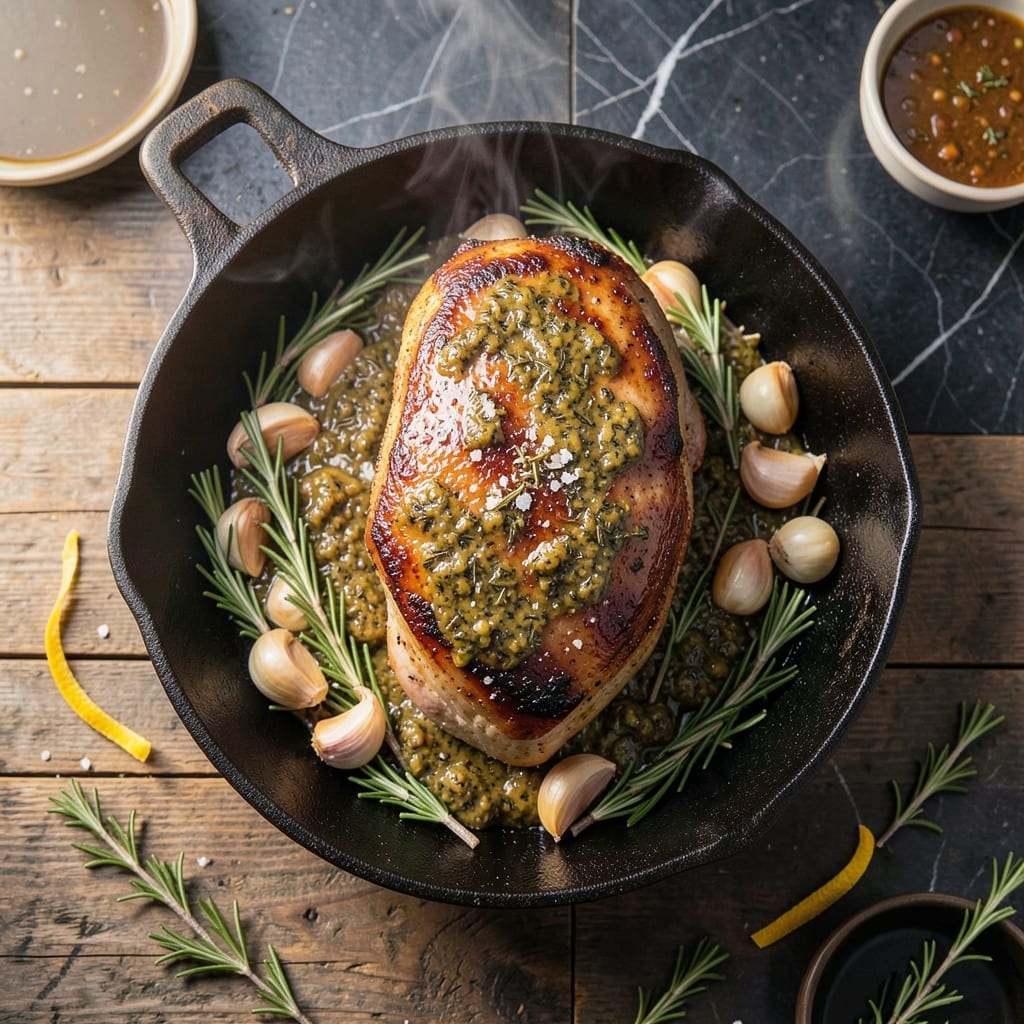
There’s an art to roasting pork loin end that turns tough cuts into tender, juicy perfection. I’ve spent years refining this technique in professional kitchens and at home.
This method relies on a simple garlic-rosemary infusion and precise oven control. The result is a roast with a golden crust and moist, flavorful meat every time.
The secret lies in allowing the pork to rest after roasting, ensuring the juices redistribute. It’s a foolproof approach that delivers consistent results.
Serve with roasted vegetables or mashed potatoes for a complete meal. Here’s how to achieve it.
Ingredients for Pork Loin End Roast Recipe Oven
Professional kitchens rely on these precise ingredients for consistent, foolproof results every time.
| Ingredient | Amount | Notes |
|---|---|---|
| Pork Loin End Roast 🥩 | 3 lb | Bone-in preferred for flavor |
| Fresh Rosemary Sprigs 🌿 | 4 whole | Stems removed, finely chopped |
| Garlic Cloves 🧄 | 6 cloves | Minced for infusion |
| Extra-Virgin Olive Oil 🫒 | ¼ cup | For searing and roasting |
| Kosher Salt 🧂 | 2 tsp | Diamond Crystal preferred |
| Freshly Ground Black Pepper 🌶️ | 1 ½ tsp | Coarse grind recommended |
| Dijon Mustard 🟡 | 2 tbsp | For crust adhesion |
| Dry White Wine 🍷 | ½ cup | Sauvignon Blanc or Pinot Grigio |
| Chicken Stock 🥣 | 1 cup | Low-sodium for control |
| Unsalted Butter 🧈 | 2 tbsp | For basting finish |
| Yellow Onion 🧅 | 1 whole | Roughly chopped for pan |
| Carrots 🥕 | 3 whole | Peeled, cut into chunks |
| Celery Stalks 🌿 | 2 whole | Cut into large pieces |
The pork loin end roast is non-negotiable here—bone-in delivers superior flavor and moisture retention. Source from Whole Foods or a trusted butcher for consistent quality. The rosemary must be fresh; dried lacks the aromatic potency this dish demands. For the garlic, organic cloves from the produce section outperform pre-peeled varieties in both flavor and texture.
No white wine? Substitute additional chicken stock with 1 tbsp apple cider vinegar. Dijon mustard can be replaced with whole-grain mustard at equal volume. For the stock, homemade or high-quality boxed (like Better Than Bouillon) yields optimal results. The butter can be omitted, but it contributes a luxurious finish to the crust.
Store the pork in its original packaging on a tray in the coldest part of your fridge for up to 3 days. The rosemary and garlic keep 1 week refrigerated in sealed containers. Prepped aromatics can be held 24 hours ahead, covered and chilled.
Why You’ll Love This Recipe
- Set It and Forget: I toss the pork with rosemary, garlic, and oil, then let the oven do the work for hours.
- Crispy Herb Crust: The salt and fresh rosemary form this ridiculous golden crust that cracks with every slice.
- Feeds a Sunday Crowd: Between us, this one roast stretches to feed six with enough for sandwiches the next day.
- Budget Roast Star: Honestly, the loin end costs half what the center does, but tastes just as rich with that garlic-infused oil.
Step-by-Step Instructions for Pork Loin End Roast
Master this technique for perfectly cooked pork with aromatic herbs and rich pan juices.
Step 1: Prepare the Aromatic Rub and Sear the Roast
Finely chop the stems from the 4 whole Fresh Rosemary Sprigs and mince the 6 cloves Garlic Cloves. In a small bowl, combine the chopped rosemary, minced garlic, 2 tsp Kosher Salt, 1.5 tsp Freshly Ground Black Pepper, 2 tbsp Dijon Mustard, and 0.25 cup Extra-Virgin Olive Oil to create a thick paste.
Pat the 3 lb Pork Loin End Roast dry with paper towels, then rub the paste evenly over all surfaces. This creates a flavorful crust that seals in juices. Heat a large oven-safe skillet or Dutch oven over medium-high heat and sear the roast on all sides until deep golden brown, about 3-4 minutes per side.
Step 2: Build the Roasting Foundation with Vegetables
While the roast sears, roughly chop the 1 whole Yellow Onion, peel and cut the 3 whole Carrots into chunks, and cut the 2 whole Celery Stalks into large pieces. These vegetables will create a flavorful base and prevent the roast from sticking to the pan.
Once the pork is seared, remove it from the skillet and set it aside. Add the chopped onion, carrots, and celery to the same skillet. Cook for 3-4 minutes until the vegetables begin to soften and develop light caramelization. This builds a rich foundation for the pan sauce.
Step 3: Deglaze and Begin the Oven Roasting Process
Return the seared pork loin end roast to the skillet, placing it on top of the vegetables. Pour the 0.5 cup Dry White Wine into the skillet, using a wooden spoon to scrape up any browned bits from the bottom. These fond bits are packed with flavor and will dissolve into the liquid.
Transfer the skillet to a preheated 375°F oven. Roast uncovered for 45 minutes, basting the pork occasionally with the pan juices. The wine and vegetable moisture will create steam, keeping the meat tender while the exterior develops a beautiful crust.
Step 4: Add Liquids and Complete the Roasting
After 45 minutes, carefully remove the skillet from the oven. Pour the 1 cup Chicken Stock around the pork, being careful not to wash off the crust. Return the skillet to the oven and continue roasting for another 30-45 minutes.
The pork is done when an instant-read thermometer inserted into the thickest part registers 145°F. At this point, the meat should be tender with juices that run slightly pink. Transfer the roast to a cutting board and tent loosely with foil to rest for 15 minutes.
Step 5: Create the Pan Sauce and Serve
Place the skillet with the vegetables and pan juices on the stovetop over medium heat. Stir in the 2 tbsp Unsalted Butter and cook for 2-3 minutes, mashing the vegetables slightly to release their flavors into the sauce. The sauce should thicken slightly and become glossy.
Strain the sauce if a smoother consistency is desired, or leave the vegetables whole for a rustic presentation. Slice the rested pork loin end roast against the grain into ½-inch thick pieces and arrange on a serving platter. Spoon the pan sauce over the top and serve immediately.
Pro Tips For Making Pork Loin End Roast Recipe Oven
- Rest Before Slicing: Let the roast rest 10-15 minutes after pulling it from the oven—this keeps the juices locked in instead of all over your cutting board.
- Score the Fat Cap: I learned this the hard way: slice shallow cuts into the fat cap before seasoning so the rosemary and salt actually penetrate the meat.
- Use a Meat Thermometer: Skip the guessing game—pull it at 145°F internal temp, then let it carry over to perfect doneness while resting.
- Crush the Garlic: Smash the garlic cloves with the flat side of your knife before using—it releases way more flavor into the oil and rosemary rub.
Wine and Beer Pairings for This Recipe
White Wine Selections
For this dish, I love a crisp Sauvignon Blanc from New Zealand—its bright acidity and citrus notes cut through the richness beautifully. A Pinot Grigio from Alto Adige also works wonderfully, offering a clean, mineral finish. 🍷
Red Wine Pairings
A lighter red like Pinot Noir from Oregon complements the rosemary and garlic without overpowering the pork. For bolder flavors, try a Chianti Classico—its earthy notes and bright acidity balance the dish perfectly.
Craft Beer Options
An American Amber Ale with its malty sweetness and mild hop bitterness pairs well. I also enjoy a Hefeweizen—its banana and clove esters enhance the herbaceous notes in the roast. 🍺
Local Brews
Here in the Southeast, I often reach for a SweetWater 420 or Terrapin Rye Pale Ale. Their balanced profiles stand up to the roast’s bold flavors without competing.
Non-Alcoholic Choices
For a non-alcoholic option, try a sparkling apple cider with a splash of ginger beer. The effervescence and sweetness cleanse the palate between bites.
Serving Temperature
Serve white wines chilled at 45-50°F and reds slightly below room temperature at 60-65°F. This ensures the flavors harmonize with the dish.
Nutrition Facts
Frequently Asked Questions
What temperature should the oven be set to?
Preheat your oven to 375°F for even cooking. This temperature ensures a perfect crust forms while keeping the inside juicy.
How long should it rest after cooking?
Let the roast rest for 15 minutes after removing it from the oven. This allows the juices to redistribute, ensuring every slice stays moist and flavorful.
Can I use dried rosemary instead of fresh?
Fresh rosemary is ideal, but you can substitute with dried. Use 1/3 the amount, as dried herbs are more concentrated. The flavor will be slightly different but still delicious.
What’s the best way to tell when it’s done?
Use a meat thermometer inserted into the thickest part. It’s perfectly cooked at 145°F, with juices running slightly pink. Never guess—precision matters!

- Potato Chip Cookie Recipe With Pecans: Buttery Crunch Meets Nutty Richness - October 30, 2026
- Potato Patty Recipe No Egg: Crispy Edges Without the Binder - October 30, 2026
- Paula Deen’s Potato Chip Cookies Recipe: Salty-Sweet Crunch in Every Bite - October 30, 2026