
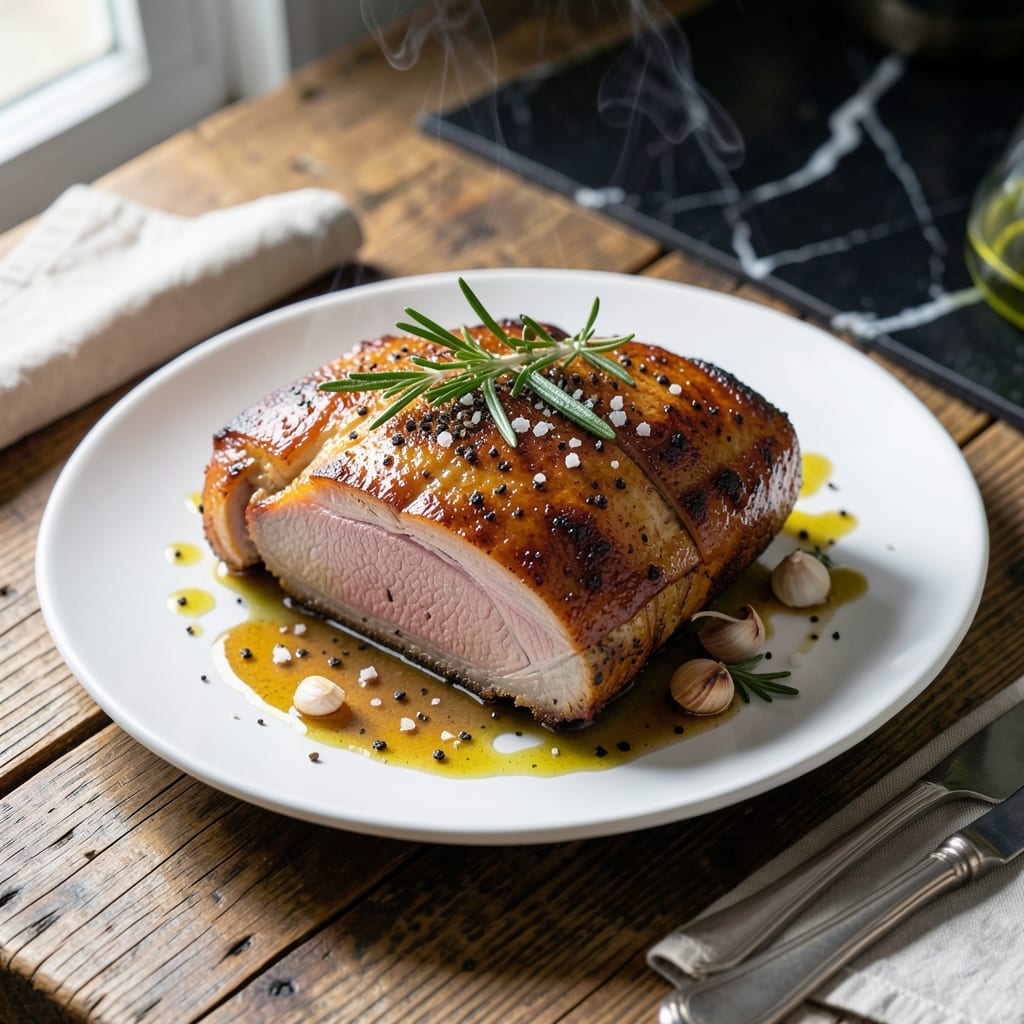
This slow-roasted pork loin transforms a simple cut into an elegant centerpiece for any dinner table. The garlic and rosemary create a fragrant crust that seals in juices while delivering bold, aromatic flavor.
I developed this method after years of testing different approaches, and the key is patience. Low and slow cooking ensures the meat stays tender and juicy, never dry or tough. The result is perfectly cooked pork with a golden, herb-infused exterior.
The beauty of this dish lies in its versatility. Serve it with roasted potatoes and green beans for a classic meal, or pair it with apple chutney for a touch of sweetness. Leftovers make incredible sandwiches the next day.
This recipe proves that impressive meals don’t require complicated techniques. With just a few ingredients and time, you’ll create something truly special.
Ingredients for Pork Loin Recipe Ideas
Elegant centerpiece starts with pork loin, garlic, rosemary, and a few pantry staples.
| Ingredient | Amount | Notes |
|---|---|---|
| Pork Loin 🥩 | 2 lb | Boneless, center-cut preferred |
| Fresh Rosemary Sprigs 🌿 | 4 whole | Stems removed, chopped |
| Garlic Cloves 🧄 | 6 cloves | Minced for maximum flavor |
| Olive Oil 🫒 | 3 tbsp | Extra-virgin for richness |
| Kosher Salt 🧂 | 1 ½ tsp | Diamond Crystal preferred |
| Black Pepper 🌶️ | 1 tsp | Freshly ground for best results |
| Dijon Mustard 🟡 | 2 tbsp | Smooth, high-quality brand |
| Dry White Wine 🍷 | ½ cup | Sauvignon Blanc or Pinot Grigio |
| Chicken Stock 🍲 | ½ cup | Low-sodium preferred |
| Unsalted Butter 🧈 | 2 tbsp | Softened for basting |
| Yellow Onion 🧅 | 1 whole | Medium-sized, finely chopped |
| Carrots 🥕 | 2 whole | Peeled and roughly chopped |
| Celery Stalks 🌿 | 2 whole | Trimmed and chopped |
The pork loin is the foundation—center-cut boneless ensures even cooking and optimal tenderness. Source from a trusted butcher or the meat counter at Whole Foods for the best marbling. The rosemary should be fresh, not dried; look for vibrant green sprigs with a strong aroma. Garlic cloves should be plump and firm, avoiding any with green shoots (a sign of bitterness).
No white wine? Apple cider vinegar diluted with water (1:3 ratio) works in a pinch, though the depth of flavor won’t be identical. Dried rosemary can substitute at one-third the amount, but fresh delivers superior aromatic quality. For the stock, homemade or high-quality boxed (like Imagine or Pacific Foods) elevates the dish significantly.
Store raw pork in the coldest part of the fridge for up to 2 days before cooking. Leftovers keep for 4-5 days refrigerated or freeze for 3 months. Reheat gently to preserve moisture—this dish tastes even better the next day.
Why You’ll Love This Recipe
- One Pan Magic: I just rub the pork loin with olive oil, salt, smashed garlic, and rosemary, then roast—no marinating, no flipping, no stress.
- Garlic-Rosemary Heaven: The aroma alone hooks me, and that first bite of crispy, herb-infused crust over tender meat? Ridiculously good.
- Sunday or Tuesday: I serve it for family dinners or slice it thin for lunch wraps the next day—works every time.
- Budget Feast: One pork loin feeds us for days, and honestly, it costs less than takeout for the same number of meals.
Step-by-Step Instructions for Slow-Roasted Pork Loin With Garlic And Rosemary
This method ensures tender, flavorful pork loin with a golden crust and aromatic pan sauce.
Step 1: Prepare the Pork Loin and Aromatics
Pat the 2 lb Pork Loin dry with paper towels—this ensures a proper sear. Season all sides with the 1.5 tsp Kosher Salt and 1 tsp Black Pepper, pressing gently so the seasoning adheres. Let it sit at room temperature for 30 minutes to take the chill off.
Finely chop the stems from the 4 whole Fresh Rosemary Sprigs and mince the 6 cloves Garlic Cloves. In a small bowl, combine 3 tbsp Olive Oil, the 2 tbsp Dijon Mustard, rosemary, and garlic to create a paste. Rub this mixture all over the pork loin, coating it evenly. This builds a flavorful crust as it roasts.
Step 2: Sear the Pork Loin for Depth of Flavor
Preheat your oven to 325°F. In a large Dutch oven or oven-safe skillet, heat 1 tbsp Olive Oil from the 3 tbsp over medium-high heat. Once shimmering, add the pork loin and sear on all sides for 2-3 minutes per side until deep golden brown. This creates a flavorful fond that will enrich the sauce later.
Remove the pork loin and set it aside. In the same pot, add the finely chopped 1 whole Yellow Onion, roughly chopped 2 whole Carrots, and chopped 2 whole Celery Stalks. Cook for 5 minutes until the onion softens and begins to brown slightly.
Step 3: Deglaze and Begin Slow Roasting
Pour in the 0.5 cup Dry White Wine to deglaze the pot, scraping up any browned bits with a wooden spoon. Let it simmer for 2 minutes until reduced by half. This step captures all the caramelized flavors from the searing process.
Return the pork loin to the pot, nestling it among the vegetables. Add the 0.5 cup Chicken Stock and bring to a gentle simmer. Cover with a tight-fitting lid and transfer to the preheated oven.
Step 4: Slow-Roast to Perfection
Roast the pork loin for 1 hour to 1 hour 15 minutes, or until the internal temperature reaches 145°F on an instant-read thermometer. Baste the pork loin with the pan juices every 30 minutes to keep it moist and build layers of flavor.
The pork loin is done when it’s tender and juicy with a rich, golden-brown crust. The vegetables should be soft and infused with the aromatic flavors of the rosemary and garlic.
Step 5: Rest, Finish the Sauce, and Serve
Transfer the pork loin to a cutting board and tent loosely with foil. Let it rest for 10-15 minutes to allow the juices to redistribute. Meanwhile, place the pot with the vegetables and pan juices over medium heat on the stovetop.
Stir in the 2 tbsp Unsalted Butter and simmer for 3-4 minutes until the sauce thickens slightly. Slice the pork loin into ½-inch thick pieces and serve with the sauce spooned over the top. The result is a dish with incredibly tender meat and a rich, savory pan sauce.
Pro Tips For Making Pork Loin Recipe Ideas
- Dry the Loin: Pat the pork loin completely dry with paper towels before seasoning—I learned this the hard way after my first few roasts came out steamed instead of crisp.
- Score the Skin: Use a sharp knife to make shallow cuts in the fat cap, about 1/4-inch deep, so the rosemary and garlic flavors penetrate deeper.
- Rest Before Slicing: Let it rest under foil for at least 10 minutes after cooking, or all those juices will end up on the cutting board instead of in the meat.
- Smash the Garlic: Crush the garlic cloves with the flat side of your knife before chopping—they’ll release more flavor into the olive oil and rosemary rub.
Pro Cooking Tips for Great pork loin recipe ideas
Temp Control Matters
Use a leave-in probe thermometer like my ThermoWorks Smoke to monitor internal temp. Pull the pork at 140°F—it’ll rise to 145°F while resting. This prevents overcooking. 🌡️
Sear Like a Pro
Pat the loin bone-dry before searing to avoid steaming. Use medium-high heat and don’t move the meat for 2-3 minutes per side. A cast iron skillet gives the best crust.
Baste for Flavor
Spoon pan juices over the pork every 20-30 minutes during roasting. This adds moisture and layers of garlic-rosemary flavor. I use a silicone basting brush for easy application.
Rest Properly
Let the pork rest for 10-15 minutes under foil before slicing. This keeps juices inside the meat, not on your cutting board. Resist the urge to skip this step.
Slice Against Grain
Identify the grain direction and slice perpendicular to it. Aim for ½-inch thick slices for the perfect bite. A sharp 8-inch chef’s knife makes clean cuts.
Sauce Perfection
Simmer pan juices with 2 tbsp butter for 3-4 minutes to thicken. Strain if you prefer a smooth sauce, or leave the veggies for rustic texture. 💡
Nutrition Facts
Frequently Asked Questions
What’s the best way to season pork loin?
A simple mix of kosher salt, black pepper, and fresh herbs like rosemary works perfectly. For extra flavor, add minced garlic and Dijon mustard to create a paste for rubbing.
How long should I cook a 2 lb pork loin?
At 325°F, slow-roast for 1 hour to 1 hour 15 minutes. Use a meat thermometer to ensure the internal temperature reaches 145°F for safe, tender results.
Can I use a different herb instead of rosemary?
Yes! Try thyme, sage, or oregano for a different flavor profile. Each herb pairs well with pork, but adjust quantities as some can be stronger than rosemary.
Why is resting the pork important?
Resting for 10-15 minutes lets juices redistribute throughout the meat. Skipping this step can lead to dry pork, as the juices will spill out when sliced.

- Potato Patty Recipe No Egg: Crispy Edges Without the Binder - October 30, 2026
- Paula Deen’s Potato Chip Cookies Recipe: Salty-Sweet Crunch in Every Bite - October 30, 2026
- Potato Gnocchi Recipe Ideas: Pillowy Soft Dumplings With Rustic Charm - October 30, 2026