
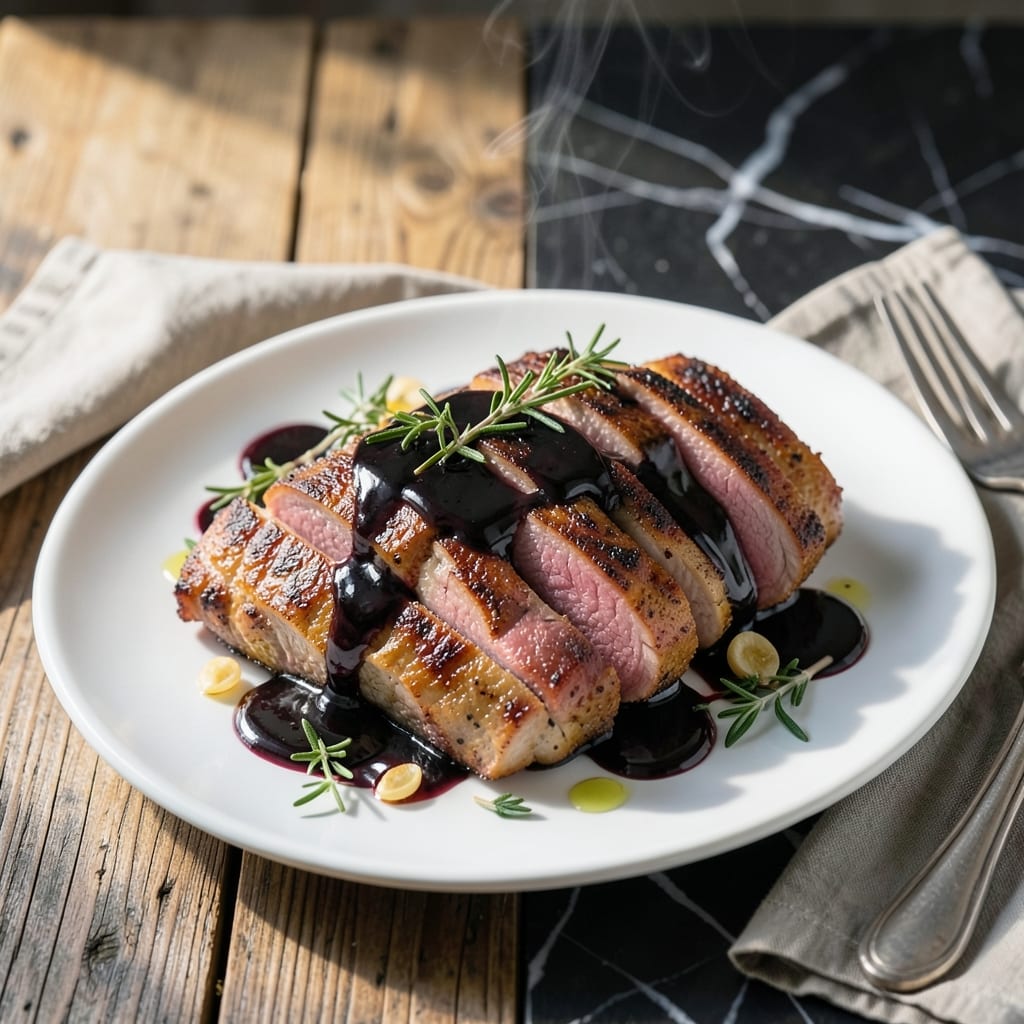
This pork loin recipe transforms a simple cut into a centerpiece dish with minimal effort. The balsamic vinegar creates a juicy interior while building a rich, caramelized crust that locks in flavor.
I developed this method after testing multiple glazes in my small Boston kitchen. The herb-infused balsamic reduction adds depth without overpowering the natural pork flavor, making it perfect for weeknight dinners or special occasions.
The result is tender, succulent meat with a glossy finish that looks as impressive as it tastes. Each bite delivers the perfect balance of sweet, tangy, and savory notes that complement the pork beautifully.
Serve with roasted vegetables or mashed potatoes to soak up every drop of the flavorful pan juices. This dish proves that extraordinary meals don’t require complicated techniques.
Ingredients for Pork Loin Recipe with Balsamic Vinegar
Transform a simple pork loin into a centerpiece with these quality ingredients and herb-infused balsamic glaze components.
| Ingredient | Amount | Notes |
|---|---|---|
| Pork Loin 🥩 | 2 lb | Boneless, trimmed of excess fat |
| Balsamic Vinegar 🫒 | ½ cup | Aged for depth of flavor |
| Olive Oil 🫒 | 2 tbsp | Extra-virgin for richness |
| Garlic Cloves 🧄 | 4 cloves | Minced for the glaze |
| Fresh Rosemary 🌿 | 2 tbsp | Finely chopped, stems removed |
| Fresh Thyme 🍃 | 2 tbsp | Leaves stripped from stems |
| Dijon Mustard 🟡 | 1 tbsp | For tangy depth in glaze |
| Honey 🍯 | 2 tbsp | Balances vinegar acidity |
| Kosher Salt 🧂 | 1 ½ tsp | Diamond Crystal preferred |
| Ground Black Pepper 🌶️ | 1 tsp | Freshly ground for best flavor |
| Brown Sugar 🏽 | 1 tbsp | Light or dark variety |
| Chicken Broth 🍲 | ¼ cup | Low-sodium for reduction control |
| Unsalted Butter 🧈 | 1 tbsp | For finishing the sauce |
The pork loin quality is non-negotiable. Boneless center-cut from a reputable butcher or Whole Foods ensures even cooking and optimal juiciness. Look for a roast with a thin fat cap, not too much marbling—this cut stays lean. For the balsamic vinegar, aged 12 years or more provides the necessary depth and sweetness. Most grocery stores carry decent options, but Trader Joe’s has a surprisingly good aged balsamic for the price.
No fresh herbs? Dried at one-third the amount works, though fresh delivers superior aroma. Substitute maple syrup for the honey if needed. For a more robust glaze, add 1 tsp soy sauce to the reduction. If your pork loin is larger than 2 pounds, scale the glaze ingredients proportionally. The chicken broth can be replaced with vegetable broth for a slightly lighter flavor profile.
The glaze can be made 2 days ahead and reheated gently before serving. Store leftover pork wrapped tightly in the refrigerator for up to 4 days. Reheat slices in a skillet with a splash of broth to maintain moisture. The balsamic reduction thickens as it cools—this is normal and desired.
Why You’ll Love This Recipe
- One Pan Wonder: I love that this comes together in a single pan—just sear the pork, then let the balsamic, garlic, and rosemary do their magic while I set the table.
- Sweet and Savory: The balsamic vinegar caramelizes into this glossy, tangy glaze that pairs perfectly with the rosemary’s earthy punch. Honestly, it’s the kind of flavor I crave all week.
- Feeds a Crowd: This pork loin is my go-to for Sunday dinners or when friends drop by unexpectedly. One roast, plenty of servings, and everyone leaves happy.
- Leftovers Rock: Cold slices taste even better the next day in sandwiches or salads. I’ll be real: sometimes I make extra just for the leftovers.
Step-by-Step Instructions for Pork Loin With Balsamic Vinegar
Master these steps for perfectly juicy pork with a rich, herb-infused glaze every time.
Step 1: Season and Sear the Pork Loin
Pat the 2 lb Pork Loin dry with paper towels to ensure a good sear. Season generously on all sides with the 1.5 tsp Kosher Salt and 1 tsp Ground Black Pepper. I rub the seasoning in firmly so it adheres well to the meat.
Heat the 2 tbsp Olive Oil in a large oven-safe skillet over medium-high heat until shimmering. Sear the pork loin for 4-5 minutes per side until deeply golden brown on all surfaces. This creates a flavorful crust and locks in juices. Remove the pork and set aside on a plate.
Step 2: Build the Aromatic Glaze Base
Reduce heat to medium and add the 4 cloves Garlic Cloves, 2 tbsp Fresh Rosemary, and 2 tbsp Fresh Thyme to the same skillet. Sauté for 1 minute until fragrant, stirring constantly to prevent burning.
Add the 0.5 cup Balsamic Vinegar, 1 tbsp Dijon Mustard, 2 tbsp Honey, and 1 tbsp Brown Sugar. Stir to combine and scrape up any browned bits from the bottom of the pan. Let this mixture simmer for 2-3 minutes until it thickens slightly and the vinegar smell mellows.
Step 3: Deglaze and Finish the Sauce
Pour in the 0.25 cup Chicken Broth and return the seared pork loin to the skillet, spooning the glaze over the top. The liquid should come about halfway up the pork. Bring to a gentle simmer.
Reduce heat to medium-low, cover the skillet, and let cook for 15-20 minutes, turning the pork occasionally to coat in the glaze. The pork is done when an internal thermometer reads 145°F and the juices run clear.
Step 4: Rest and Final Glaze Reduction
Transfer the pork to a cutting board and tent loosely with foil. Return the skillet to medium heat and let the glaze reduce for 3-4 minutes until it thickens enough to coat the back of a spoon.
Remove from heat and stir in the 1 tbsp Unsalted Butter until melted and fully incorporated. This adds a glossy finish to the sauce. Slice the pork against the grain into ½-inch thick pieces and serve drizzled with the reduced glaze.
Pro Tips For Making Pork Loin Recipe With Balsamic Vinegar
- Sear High, Finish Low: Start with a screaming hot pan to get that deep brown crust on the pork loin, then reduce to medium-low to cook it through without drying it out—I learned this the hard way after serving chewy pork to dinner guests.
- Score the Fat: Cut shallow slits in the fat cap of the pork loin before cooking so the balsamic vinegar and olive oil can penetrate deeper, making every bite more flavorful.
- Reduce the Balsamic: Simmer the balsamic vinegar with a splash of olive oil for 2-3 minutes first to thicken it slightly—this keeps it from sliding right off the pork when you baste.
- Rest Before Slicing: Let the pork loin rest under foil for at least 10 minutes after cooking, or all those juices will end up on the cutting board instead of in your mouth.
Regional Styles of This Dish
Italian Approach
In Italy, I’d use rosemary and thyme liberally, as my Nonna did, and add 1 tsp fennel seeds to the glaze for an authentic touch. The balsamic vinegar is already a staple here, but I’d opt for Aceto Balsamico di Modena for a true regional flavor. 🗺️
Southern US Style
For a Southern twist, I’d add 1 tbsp apple cider vinegar to the glaze and swap the honey for maple syrup. A pinch of smoked paprika in the seasoning gives it that deep, smoky flavor typical of Southern barbecue traditions.
French Technique
In France, I’d deglaze the pan with ¼ cup dry white wine before adding the balsamic vinegar. A splash of Dijon mustard (already in the recipe) ties it to classic French preparations. Finish with a pat of herb butter for extra richness.
Asian Fusion
To give it an Asian-inspired spin, I’d add 1 tbsp soy sauce and 1 tsp grated ginger to the glaze. The balsamic vinegar’s acidity pairs beautifully with these flavors, creating a sweet-savory balance. Serve with steamed jasmine rice. 💛
New England Comfort
In my Boston kitchen, I’d lean into local flavors by adding 2 tbsp apple cider to the glaze for a touch of New England charm. The cider’s natural sweetness complements the balsamic perfectly, making it feel like home.
Nutrition Facts
Frequently Asked Questions
How do I know when the pork is done?
Use a meat thermometer—the internal temp should reach 145°F. The juices should run clear, not pink.
Can I use a different vinegar?
Apple cider vinegar works, but aged balsamic adds the best depth. Avoid white vinegar—it’s too harsh for this dish.
Why rest the pork before slicing?
Resting for 5-10 minutes lets juices redistribute. Skipping this step risks dry meat.
What if my glaze is too thin?
Simmer it longer to reduce. Add 1 tsp cornstarch mixed with water for a quick fix.

- Potato Chip Cookie Recipe With Pecans: Buttery Crunch Meets Nutty Richness - October 30, 2026
- Potato Patty Recipe No Egg: Crispy Edges Without the Binder - October 30, 2026
- Paula Deen’s Potato Chip Cookies Recipe: Salty-Sweet Crunch in Every Bite - October 30, 2026